


![Kong Interview Preparation Guide [2025]](https://www.devopstraininginstitute.com/blog/uploads/images/202509/image_430x256_68dbb95326997.jpg)


15 Real-World CI/CD Test Cases for Training
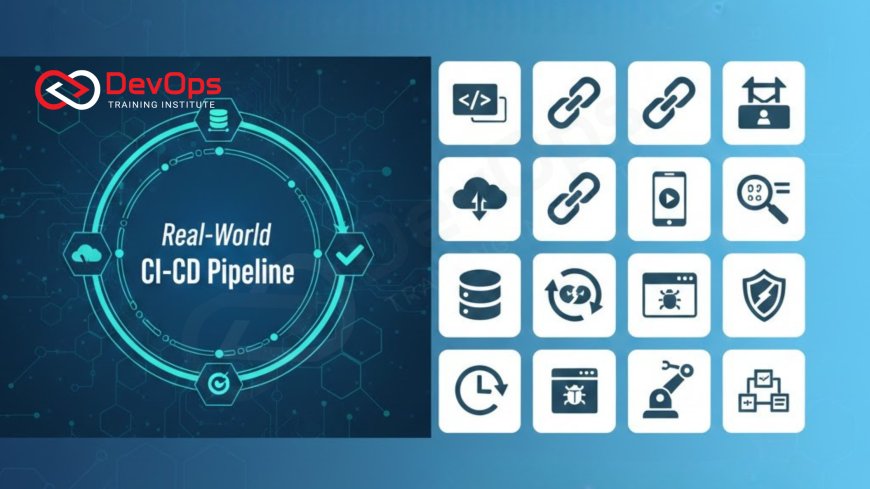
Accelerate your DevOps training with 15 real-world CI/CD Test Cases designed to challenge and validate practical pipeline skills, focusing on security, resilience, and multi-cloud deployment scenarios. These essential scenarios cover critical steps like automated rollback logic, infrastructure testing, secrets injection, and blue/green deployment orchestration. Mastering these hands-on test cases, often neglected in theoretical learning, ensures you can build and troubleshoot robust, enterprise-grade pipelines that maintain zero-downtime releases, security compliance, and continuous delivery velocity in production environments, making your skills highly valuable and immediately applicable in the job market.
Introduction
The journey to becoming a proficient DevOps Engineer culminates in the ability to build and, more importantly, troubleshoot a resilient Continuous Integration/Continuous Delivery (CI/CD) pipeline. While understanding the theory of tools like Jenkins, GitLab CI, and Kubernetes is necessary, real-world competence is proven by managing complex failure scenarios and ensuring that the automation chain remains secure and reliable under pressure. The most critical skills are often the ones related to failure mitigation—knowing how to ensure an automated deployment rolls back safely when production metrics suddenly degrade, or how to inject sensitive secrets securely without exposing them in the build logs.
This guide presents 15 essential, real-world CI/CD Test Cases. These are not simple "Hello World" exercises; they are practical scenarios focused on validating resilience, security, and enterprise-level deployment complexity. They force trainees to think beyond the happy path and integrate the core principles of the DevOps methodology into their automation scripts. By successfully tackling these test cases, you will bridge the gap between theoretical knowledge and the production-ready skills demanded by top technology companies, gaining the confidence needed to manage mission-critical deployments and complex infrastructure configurations.
Each test case below is designed to be implemented using common DevOps tools (e.g., Jenkins/GitLab CI, Terraform, Docker, Kubernetes) and requires the integration of multiple best practices, transforming your learning environment into a simulation of a high-velocity, low-risk engineering organization. Mastering these scenarios ensures your pipeline is robust, reliable, and ready to handle the unpredictable challenges of the cloud environment.
Phase 1: Resilience and Recovery Testing
A resilient pipeline must not only recover from failure but must be tested to ensure the recovery mechanism works correctly. This set of test cases focuses on validating the pipeline's robustness, ensuring that critical failures do not result in corrupted state, security breaches, or system downtime, which is often the most important differentiator between a junior and a senior DevOps Engineer.
1. Automated Rollback Validation: Commit a change that passes unit tests but causes a critical failure (e.g., HTTP 500 error, high latency, or memory leak detected by a performance test) immediately after deployment to the Staging environment. The Test Case: Validate that the pipeline's automated rollback mechanism detects the failure (via a monitoring gate check) and successfully reverts the application to the previous, known-good version without manual intervention. The pipeline must also alert the development team, ensuring the failed version is blocked from further deployment.
2. IaC State Corruption Recovery: Intentionally corrupt the remote Terraform state file (e.g., manually modify a resource in the cloud console without using Terraform, creating drift, or directly tampering with the state file in S3/Azure Blob Storage). The Test Case: Validate that the subsequent terraform plan run in the CI/CD pipeline correctly detects the drift, and that the team's defined manual recovery or automated remediation process (using terraform import or state rollback) can safely restore the correct state without destroying or recreating production resources unnecessarily, preserving the stability of the live cloud infrastructure.
3. Build Agent Failure Resilience: Configure the pipeline to run a lengthy build or test job on a dynamically provisioned CI agent (e.g., a Kubernetes Pod or ephemeral VM). During the job execution, manually terminate the agent. The Test Case: Validate that the CI server (e.g., Jenkins Master) automatically detects the agent's sudden disappearance, properly marks the build as failed, and does not lose the state of any dependent upstream jobs. The pipeline should cleanly restart the job on a new, healthy agent, ensuring the entire automation chain can withstand temporary resource failures without major service interruption.
4. Unrecoverable Database Migration Failure: Design a database schema migration script that will inevitably fail upon deployment (e.g., by attempting to drop a column that is still in use by the old application version). The Test Case: Validate that the deployment process detects the failed migration within the transaction and that the entire application deployment automatically stops and rolls back, ensuring the database is left in a consistent and usable state (data integrity preserved). This requires the pipeline to execute schema changes transactionally, or use database migration tools with built-in rollback capabilities to preserve data consistency.
Phase 2: Security and Compliance Gates
The DevSecOps principle mandates that security testing is embedded directly into the pipeline. These test cases validate the pipeline's ability to act as an effective security gate, preventing vulnerable or non-compliant code and infrastructure from ever reaching the live environment. These checks are non-negotiable in an enterprise context where compliance, auditability, and data protection are paramount concerns.
5. Container Image Vulnerability Gate: Introduce an external, vulnerable open-source library dependency into the application code's build file (e.g., a critical CVE in a Python package or Node.js module). The Test Case: Validate that the CI/CD pipeline automatically runs a container vulnerability scanner (like Trivy) immediately after the Docker image build. The pipeline must detect the high-severity CVE and fail the job instantly, blocking the vulnerable image from being pushed to the container registry and subsequently deployed, preventing the creation of a security risk in the production environment.
6. IaC Security Misconfiguration Check: Modify a Terraform file to introduce a critical cloud security misconfiguration (e.g., change an AWS S3 bucket property to public_read = true, or configure a database instance without mandatory encryption). The Test Case: Validate that the pipeline automatically runs an IaC security scanning tool (like Checkov or tfsec) against the terraform plan output. The pipeline must fail the job and explicitly report the misconfiguration in the pull request, preventing the deployment of non-compliant and risky infrastructure to the cloud, enforcing security compliance as code.
7. Dynamic Secrets Injection Validation: Remove or expire the temporary access token for the centralized secrets manager (e.g., HashiCorp Vault) that the application uses to retrieve its database credentials at runtime. The Test Case: Validate that the deployment process correctly fails early when the dynamic secrets injection script cannot retrieve the credentials, ensuring that the application does not attempt to start up with hardcoded or non-existent secrets. The pipeline must explicitly log the security failure and provide a clear remediation path without exposing any sensitive credential information in the build logs, adhering to the highest standard of security and protocol management.
8. Identity and Access Management (IAM) Policy Gate: Attempt to deploy a new infrastructure component (e.g., an EC2 instance) that requires an IAM role with overly broad permissions (e.g., s3: on all resources). The Test Case: Validate that a Policy as Code (PaC) tool (like Open Policy Agent - OPA) checks the resource's IAM definition and automatically rejects the deployment, enforcing the organization's rule against wildcards or overly permissive access policies, thus upholding the principle of least privilege required for robust cloud security.
Phase 3: Deployment Strategy and Quality Assurance
These test cases validate the implementation of advanced deployment strategies (key for zero-downtime releases) and ensure that the pipeline rigorously enforces application quality gates, maintaining the reliability and performance of the production application and infrastructure. These practices enable high deployment frequency while mitigating the inherent risks of introducing change into a live system, which is a core tenet of the DevOps methodology.
9. Blue/Green Zero-Downtime Test: Run a load test against the currently deployed (Blue) environment while the pipeline deploys a new version (Green). The Test Case: Validate that the load test experiences zero connection drops, zero downtime, and that the traffic switch from Blue to Green occurs instantly and reliably (via Load Balancer/DNS manipulation) only after all post-deployment health checks on the Green environment pass successfully, confirming true zero-downtime release capability.
10. Canary Analysis Failure Test: Deploy a new application version via a Canary Release, routing a small percentage of production traffic (e.g., 5%) to the new version. The new version should contain a small, non-catastrophic bug that only causes a slight increase in latency or a minor increase in error rate (e.g., 100ms higher p95 latency). The Test Case: Validate that the monitoring system detects this statistically significant, negative performance trend in the canary group and automatically prevents the full rollout, ensuring the deployment is halted and the canary traffic is switched back to the stable version before major impact to users.
11. Database Schema Rollback Verification: Deploy a new application version and an accompanying, non-destructive, forward-compatible database migration (e.g., adding a new nullable column). Then, deliberately trigger a manual application rollback to the old version. The Test Case: Validate that the old application version correctly functions with the new schema in place (forward compatibility achieved), demonstrating that the schema migration was managed safely and independently of the application's immediate deployment success, maintaining data integrity for the live service.
12. Infrastructure as Code (IaC) End-to-End Test: Use an external testing framework (like Terratest or InSpec) to provision a complete, disposable staging environment using your Terraform code. The Test Case: Validate that after the environment is provisioned, the framework runs connectivity tests (e.g., pings the servers, ensures firewall rules are correct) and verifies specific resource properties (e.g., ensures the database is encrypted and running the correct version). The test should then cleanly tear down the entire infrastructure, demonstrating that your IaC is fully functional and auditable, which is essential for managing complex local area network services in the cloud.
| # | Test Case Focus Area | Primary Goal | Tools/Concepts Required |
|---|---|---|---|
| 1 | Automated Rollback Validation | Verify failure detection and recovery (MTTR) logic. | Monitoring Gates, Rollback Strategy (e.g., Kubernetes Deployment), Alerting |
| 3 | Build Agent Failure Resilience | Ensure the CI server can handle sudden agent loss without manual intervention. | Dynamic Agents (Kubernetes/Cloud), Robust CI Orchestration (Jenkins/GitLab) |
| 5 | Container Image Vulnerability Gate | Block vulnerable images from deployment (Shift Left Security). | Trivy/Clair Scanner, Docker, CI Pipeline Failure Logic |
| 9 | Blue/Green Zero-Downtime Test | Validate continuous availability during traffic switching and deployment. | Load Balancer API/DNS Control, Health Checks, Traffic Shifting Automation |
| 12 | IaC End-to-End Test | Prove IaC provisioning correctness and cleanup functionality. | Terraform, Terratest/InSpec, Cloud APIs, Automated Teardown |
Phase 4: Operational and Advanced Scenarios
The final phase of test cases covers scenarios that involve operational complexity, often related to data management, cross-team collaboration, and efficiency. These are the details that ensure the pipeline is not just technically sound but also viable and safe for use in a real, revenue-generating, multi-user enterprise environment where every second of downtime translates directly into a financial loss and an erosion of customer trust.
13. Configuration Drift Detection and Remediation: After deploying an infrastructure stack via Terraform, manually change a minor cloud resource setting (e.g., instance size or a tag) via the cloud console, creating configuration drift. The Test Case: Validate that a scheduled CI job running terraform plan detects the unauthorized change and alerts the DevOps team with an explicit report of the drift, initiating the process to either approve the change and update the Terraform state or roll the resource back to the correct code-defined state, ensuring the infrastructure remains auditable and consistent.
14. Artifact Immutability and Security Test: Configure the pipeline to build a unique application artifact (e.g., a Docker image) and store it in a container registry with a cryptographic hash (SHA). Then, attempt to delete or manually modify the artifact in the registry and try to deploy the artifact via the pipeline. The Test Case: Validate that the pipeline's deployment stage (e.g., Kubernetes controller or deployment script) detects the missing or corrupted artifact (by verifying the hash or checking access controls) and fails the deployment instantly, enforcing the principle that the artifact built and tested must be exactly the one deployed, maintaining the integrity of the software supply chain.
15. Pipeline Parameter Injection and Security: Create a parameterized build that allows a user to specify the target deployment environment (Dev, Staging, Prod). The Test Case: Validate that the pipeline uses the parameter securely (e.g., passing it only to IaC execution, not exposing it in logs) and that it enforces mandatory, non-overrideable approval gates for deploying to the Production environment, even if the deployment script is technically identical to Staging. Furthermore, verify that a user without production permissions is correctly denied the ability to even trigger the Production stage, ensuring robust authorization and access control is applied to the deployment workflow.
Phase 5: The Underlying System Knowledge
Successfully executing these complex test cases requires more than just knowing tool syntax; it requires a deep understanding of the underlying system architecture and networking protocols. For instance, testing a rollback validation scenario requires knowledge of how load balancers manage traffic flow and how the network TCP/IP models manage connections. When configuring an IaC End-to-End Test, understanding the security protocols of network components and how virtual firewalls isolate services is critical for ensuring the test's validity.
Understanding networking concepts like MAC addresses and IP addresses is vital for debugging connectivity during multi-step deployments, especially when setting up ingress or egress firewall rules for microservices that span different subnets or cloud regions. The DevOps Engineer must be able to use troubleshooting tools (like curl or dig) to verify that the application endpoints are correctly exposed and responding before declaring the deployment successful, ensuring that the application is fully reachable and functional for end-users immediately after the switch. This integration of low-level system knowledge with high-level cloud automation is the signature skill set of an expert engineer.
Phase 6: Continuous Learning from Failure
The true value of these CI/CD Test Cases is that they institutionalize a culture of continuous learning from failure. Every time a test case fails (whether intentionally during training or unintentionally in a live environment), the focus should be on improving the system and the pipeline itself, rather than blaming an individual. By running these scenarios, engineering teams learn the exact failure modes of their automated systems and can proactively implement more robust checks, better monitoring, and improved rollback logic, directly adhering to the blameless culture that defines the core DevOps methodology. This iterative improvement process is what ensures the pipeline remains resilient and reliable in the long term, adapting to new technologies and evolving security threats over time.
Phase 7: Training with Intent and Certification
These test cases should form the practical core of any certification or training regimen for the DevOps Engineer role. Translating the requirements of these scenarios into code requires expertise across the entire toolchain: writing complex pipeline script logic (Groovy/YAML), using Terraform to provision resources, leveraging Docker for consistency, and applying security tools like Trivy and OPA. Successfully completing a majority of these tests not only validates a candidate's technical skills but also demonstrates their ability to think systematically about resilience, security, and continuous delivery in a production context, making their skills immediately valuable to potential employers.
Conclusion
Mastering continuous delivery in the real world means mastering complexity, failure, and security. The 15 CI/CD Test Cases detailed in this guide provide the indispensable, practical roadmap for any aspiring DevOps Engineer looking to build a production-ready skill set. By successfully implementing and validating scenarios involving automated rollbacks, IaC drift detection, zero-downtime Blue/Green deployments, and mandatory security scanning gates, you prove your capacity to handle the most challenging aspects of modern software release management. These hands-on exercises instill the crucial blend of technical automation, security awareness, and resilience engineering that defines high-performing DevOps teams, ensuring your skills are immediately valuable and highly sought after in the industry.
Frequently Asked Questions
What is the purpose of testing an Automated Rollback?
The purpose is to validate that the deployment process detects a failure in production and correctly reverts the system to the last stable version without manual intervention.
How do you intentionally corrupt a Terraform state file?
You corrupt it by manually modifying a cloud resource (e.g., resizing an instance) outside of Terraform, creating configuration drift, or by directly editing the state file in its remote location.
What is the benefit of a Blue/Green Zero-Downtime Test?
It validates that the pipeline can switch traffic between the old and new environments instantly and safely, ensuring continuous availability for end-users during the deployment.
Which tool is best for IaC Security Misconfiguration Checks?
Tools like Checkov or tfsec are best for scanning Terraform or CloudFormation files statically to detect and block insecure resource configurations before deployment.
What is the meaning of Artifact Immutability?
Artifact immutability means the deployed code package (e.g., a Docker image) is exactly the one that was built and tested, verified by a cryptographic hash (SHA) or strong access controls.
How does Kubernetes aid in the Build Agent Failure Resilience test?
Kubernetes aids by allowing the CI system to run agents as disposable Pods; when one fails, the orchestrator automatically schedules a new, clean Pod to take its place.
Why are security permissions tested before deployment?
Permissions are tested to enforce the principle of least privilege, ensuring that the deployed application's service accounts only have the minimal access necessary to function.
What is the role of Terratest in a CI/CD pipeline?
Terratest is an external testing framework that provisions infrastructure via Terraform, runs verification tests against the live resources, and then tears down the entire environment, proving IaC correctness.
How does a Canary Release scenario mitigate risk?
A Canary Release mitigates risk by exposing the new version to only a small percentage of real users, allowing the team to monitor its impact and halt the rollout if performance metrics decline.
What must be validated in the Secrets Injection Test?
The test must validate that the application receives credentials at runtime only from the vault and fails safely if the connection to the vault is lost, without exposing any secrets in logs.
Why is Database Migration Failure the hardest test case?
It is the hardest because it requires the pipeline to handle data integrity, ensuring that a failed schema change is fully rolled back, leaving the database in a consistent, usable state for the old application version.
What is the key takeaway from the IaC State Corruption Recovery test?
The key takeaway is that the DevOps team must have audited procedures and skills to safely recover a corrupted remote Terraform state without accidentally destroying live production resources.
What is Configuration Drift Detection?
Configuration Drift Detection is the process of periodically comparing the live cloud resource configuration against the desired state defined in the version-controlled IaC code and alerting on any discrepancies.
How does the load test relate to Blue/Green deployment?
A load test runs continuously during the deployment to ensure the user experience remains stable, verifying that the traffic switch is seamless and maintains continuous service availability.
What tool is typically used for security policy enforcement in the pipeline?
Policy as Code (PaC) tools like OPA (Open Policy Agent) are typically used to check resource definitions against organization-wide security and compliance rules before deployment approval.
What's Your Reaction?
 Like
0
Like
0
 Dislike
0
Dislike
0
 Love
0
Love
0
 Funny
0
Funny
0
 Angry
0
Angry
0
 Sad
0
Sad
0
 Wow
0
Wow
0

![100+ Azure DevOps Interview Questions and Answers [Updated 2025]](https://www.devopstraininginstitute.com/blog/uploads/images/202509/image_140x98_68c40aa9a3834.jpg)




![Future Scope of DevOps Careers in Pune [Updated 2025]](https://www.devopstraininginstitute.com/blog/uploads/images/202510/image_140x98_68e3a84652312.jpg)