


![Kong Interview Preparation Guide [2025]](https://www.devopstraininginstitute.com/blog/uploads/images/202509/image_430x256_68dbb95326997.jpg)


Top 20 CI/CD Tools You Will See in 2025
Explore the definitive list of the top 20 CI/CD tools shaping software delivery in 2025, reflecting the major shift towards GitOps, Kubernetes-native automation, and integrated security. This comprehensive guide details the strengths of industry giants like Jenkins and GitLab, multi-cloud platforms like Spinnaker and Harness, and cloud-native innovators like Argo CD and Google Cloud Build. Learn how these tools are evolving to include AI-powered verification, advanced deployment strategies, and streamlined DevOps practices, helping you choose the right platform to maximize speed, reliability, and governance in your modern software development pipeline and securing your competitive edge.
Introduction: The Evolution of Continuous Delivery
The practice of Continuous Integration and Continuous Delivery (CI/CD) has evolved rapidly from basic automated scripts into sophisticated, intelligent platforms that form the automated factory floor of modern software development. In 2025, the CI/CD landscape is defined by several key technological shifts: the dominance of containers and Kubernetes, the adoption of the declarative GitOps model, and the critical need to embed security and advanced verification directly into the pipeline. These advancements have pushed the traditional CI/CD server into becoming a strategic platform, capable of managing complex multi-cloud deployments, orchestrating security scans, and making autonomous decisions based on real-time operational data. Understanding this rapidly evolving toolchain is essential for any DevOps Engineer aiming to build fast, reliable, and compliant systems.
The marketplace is segmented between three main categories: flexible, battle-tested open-source solutions that offer ultimate customization; managed cloud-native services that prioritize deep integration within a single vendor's ecosystem; and new-generation commercial platforms focused entirely on solving the challenges of advanced, high-risk Continuous Deployment (CD). For any organization, the decision of which tool to adopt hinges on balancing the cost of ownership, the need for customization, the requirement for multi-cloud compatibility, and the strategic direction of their application architecture. The right pipeline choice directly influences everything from developer experience to system reliability, making this one of the most critical decisions in the entire software development lifecycle.
This comprehensive guide breaks down the top 20 CI/CD tools that are currently dominating the enterprise market and those poised for significant growth in 2025. These tools are the engines driving digital transformation, reflecting the best practices adopted by high-performing organizations that deploy code to production multiple times a day with high confidence and minimal risk, embodying the core principles of the DevOps methodology for efficiency and scale.
Phase 1: The Open Source Titans and Cloud-Agnostic Flexors
These tools represent the highly customizable foundations of many enterprise CI/CD pipelines. They are chosen by organizations that require maximum flexibility, extensive integration with diverse technologies (including legacy systems), or full control over their build infrastructure, often utilizing the core operating system knowledge inherent in Linux administration for deployment targets. Their longevity and massive communities make them indispensable for complex, heterogeneous environments.
1. Jenkins: The original open-source automation server remains dominant. Its massive plugin ecosystem is its greatest strength, allowing seamless integration with virtually any tool, cloud provider, or custom script. In 2025, enterprises continue to rely on Jenkins for its sheer flexibility and its ability to manage hybrid deployments, often running Jenkins-as-Code (using the Jenkinsfile) on Kubernetes for scalable CI execution.
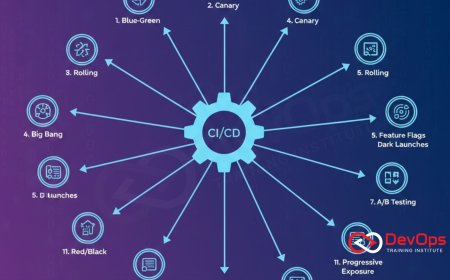
2. Spinnaker: An open-source, multi-cloud Continuous Delivery platform developed by Netflix. Spinnaker specializes in complex CD, offering native support for advanced deployment strategies like Canary, Blue/Green, and Rolling updates across AWS, Azure, and GCP. Its maturity and governance features make it the go-to choice for large organizations managing high-velocity, multi-cloud releases with rigorous risk mitigation requirements.
3. GoCD: An open-source Continuous Delivery server from ThoughtWorks that excels at visualizing and modeling complex deployment workflows via its Value Stream Map (VSM). GoCD focuses purely on CD orchestration, providing end-to-end visibility of the entire path to production. It helps organizations break down monolithic deployments into manageable stages, enforcing strong governance and pipeline transparency across the entire flow.
4. TeamCity: A powerful, developer-friendly CI/CD server from JetBrains. Known for its polished user interface, intelligent testing features, and comprehensive build reporting, TeamCity offers robust self-hosted and cloud options. Its strong out-of-the-box features reduce reliance on external plugins, making it popular in enterprises, particularly those with significant investment in the Java and .NET ecosystems, ensuring reliable, centralized control over the build process.
Phase 2: Unified Platforms and Cloud Provider Integrations
The trend toward toolchain consolidation is driving the popularity of all-in-one platforms that tightly integrate version control, security, and the CI/CD pipeline. Meanwhile, the major cloud providers continue to enhance their native managed services, offering the deepest and most seamless CI/CD experience for organizations fully committed to their respective clouds, effectively eliminating the need for external tooling for many core automation tasks. These solutions offer simplicity, scalability, and deep security integration without the maintenance overhead.
5. GitLab CI/CD: As the unified DevOps methodology platform, GitLab CI/CD integrates seamlessly with its Git repository, issue tracking, and powerful security scanning (SAST/DAST) features. Its simple YAML configuration and native support for Kubernetes and GitOps principles make it an incredibly strong contender for enterprises seeking to consolidate their toolchain and enforce DevSecOps practices. Its Auto DevOps feature automatically sets up full pipelines for new projects.
6. GitHub Actions: A cloud-native, event-driven CI/CD platform built directly into GitHub. Its popularity has exploded due to its simplicity, its use of reusable workflows ("actions"), and its tight integration with the largest version control system on the planet. Enterprises leveraging GitHub Actions benefit from powerful, customizable automation that runs directly alongside their code and pull request workflows, making the CI/CD experience highly developer-centric and efficient, accelerating the review and merge process.
7. Azure Pipelines (Azure DevOps): Microsoft's highly robust, hybrid CI/CD solution that supports deployment to virtually any platform (Azure, AWS, GCP, on-premise). Its strength lies in its deep integration with the broader Azure DevOps suite (Boards, Repos, Test Plans) and Azure Active Directory, making it the top choice for hybrid environments and companies with significant investment in Microsoft's enterprise ecosystem. It features flexible YAML pipelines and powerful agent management for complex deployments.
8. AWS CodePipeline: The fully managed CI/CD orchestrator for Amazon Web Services. AWS CodePipeline's core strength is its zero-configuration integration with all other AWS developer tools (CodeBuild, CodeDeploy) and services (S3, EKS, Lambda). This seamless, native automation makes it the fastest path to continuous delivery for organizations that are all-in on AWS, leveraging the managed infrastructure and security controls of the AWS cloud. It is designed for minimal setup and maximum integration depth.
9. Google Cloud Build: GCP's serverless CI/CD offering. Cloud Build executes builds extremely fast using a pay-per-use model, eliminating build server management entirely. It integrates natively with GCP’s Container Registry and deployment targets like GKE and Cloud Run. Its speed and serverless nature make it ideal for high-velocity, cloud-native applications on GCP, providing powerful container-based build environments that are both scalable and cost-efficient.
10. CircleCI: A fast, cloud-based CI/CD platform known for its speed, simplicity, and excellent parallelization capabilities. CircleCI is highly popular for its quick setup and robust support for containers. Its use of reusable configuration snippets called "Orbs" helps organizations define standardized, repeatable pipeline components, accelerating the process of setting up new projects and ensuring consistency across diverse engineering teams. It offers both cloud and self-hosted runners.
Phase 3: Kubernetes-Native and Advanced Delivery Platforms
The movement towards Kubernetes and GitOps has created a demand for specialized tools designed to manage continuous deployment (CD) specifically within containerized environments. These platforms provide advanced, declarative control, automated security checks, and machine learning-powered verification to manage the high risks associated with frequent, high-scale application releases, making them crucial for the most advanced DevOps organizations.
11. Argo CD: The leading Kubernetes-native, open-source GitOps tool. Argo CD operates by declaratively managing applications defined in Git, ensuring the live state of the Kubernetes cluster continuously matches the desired state in the repository. Its features include automated drift detection, reconciliation, and excellent visualization of the application state, making it a critical choice for any organization that has adopted GitOps principles for managing cloud-native infrastructure.
12. Harness: A next-generation, commercial Continuous Delivery-as-a-Service (CDaaS) platform. Harness differentiates itself with AI/ML-powered deployment verification, using machine learning to automatically analyze pre- and post-deployment metrics, logs, and traces to verify release health and trigger intelligent, automated rollbacks. It focuses heavily on enterprise governance, security, and complexity management across multiple clouds, offering advanced features that drastically reduce deployment risk for mission-critical applications.
13. Codefresh: A CI/CD platform built specifically for Kubernetes and GitOps workflows, often leveraging the power of Argo CD. Codefresh provides deep visibility into the container images, environment health, and deployment history, allowing developers to debug quickly and see the exact state of their deployed applications. Its focus on the container ecosystem and developer experience makes it a powerful, unified choice for teams building complex microservices that require rapid iteration and troubleshooting capabilities.
14. Octopus Deploy: A sophisticated commercial Continuous Delivery tool that specializes purely in release orchestration, environment management, and runbook automation. It excels at managing complex deployments across multiple targets (cloud, on-premise, multi-tenant SaaS environments) and provides strong governance, auditing, and compliance features, making it the choice for organizations in regulated industries that require strict control over their deployment and change management process.
15. Pulumi: While primarily an Infrastructure as Code (IaC) tool, Pulumi is increasingly used as a CI/CD orchestrator due to its ability to define infrastructure using general-purpose programming languages (Python, Go). This capability allows DevOps Engineers to define build, test, and deployment logic directly in their application code, often simplifying the pipeline into standard application build tools and providing robust integration with native testing frameworks.
Table: Key CI/CD Tool Categories and Core Features
The following table summarizes the different functional categories and key enterprise features of the top 20 CI/CD tools, helping to clarify the distinctions between open-source, cloud-native, and specialized commercial platforms, highlighting the core capability that drives their adoption in large organizations.
| # | Tool | Primary Category | Key Strength in 2025 | Target Environment Focus |
|---|---|---|---|---|
| 1 | Jenkins | Open Source CI/CD Server | Ultimate customization, massive plugin ecosystem, hybrid support. | Legacy & Hybrid/Any Cloud |
| 5 | GitLab CI/CD | Unified DevOps Platform | Single application for SCM, CI/CD, and integrated DevSecOps practices. | Cloud-Native & Hybrid |
| 8 | AWS CodePipeline | Cloud-Native CI/CD | Deep, managed integration with all AWS services, minimal setup overhead. | AWS Ecosystem |
| 11 | Argo CD | Kubernetes / GitOps CD | Declarative deployment, automated drift detection, K8s-native control. | Kubernetes (Any Cloud) |
| 12 | Harness | CDaaS / AI-Powered Verification | Machine learning-based verification and automated intelligent rollbacks for complex deployments. | Multi-Cloud & Enterprise |
Phase 4: Emerging and Highly Specialized Tools
Beyond the major platforms, the CI/CD ecosystem includes specialized tools that address niche enterprise needs, often focusing on areas like mobile development, infrastructure automation, or hybrid application management. These tools are often critical in specific industries or for organizations with unique architectural constraints, demonstrating the maturity and diversity of the overall market. Their specialization allows them to excel at specific tasks where generalist tools may require extensive custom scripting.
16. Bitrise: A cloud-based CI/CD platform built specifically for mobile app development (iOS and Android). Bitrise offers mobile-specific features like native build environments, automated code signing, and seamless deployment to the App Store and Google Play. Its specialization addresses the complex, high-friction environment of mobile releases, making it essential for enterprises that rely heavily on their mobile product delivery pipeline.
17. Codefresh: As mentioned previously, Codefresh is built on an open-source foundation, and its strength lies in providing a full CI/CD experience optimized for containers and K8s. It offers features like live debugging of pipelines and integrated Docker image scanning, making it a powerful platform for teams focused on speed and agility in a cloud-native architecture, accelerating the inner loop of the development process significantly.
18. Octopus Deploy: Often integrated with CI tools like Jenkins or TeamCity, Octopus Deploy functions as a sophisticated CD layer for release orchestration. It manages complex deployment targets (on-premise, multi-tenancy, regulated systems) with a focus on governance, detailed auditing, and automated runbooks for routine operational tasks, reducing the risk of human error during critical production changes.
19. Concourse CI: An open-source CI/CD system designed around simplicity, reproducibility, and containerization. Concourse treats builds, tests, and deployments as tasks within a resource-based pipeline model. Its use of containers for every job ensures that pipelines are clean, reproducible, and easily debuggable, making it a reliable choice for organizations that prioritize a highly reproducible build environment and clear visual definition of their pipeline components.
20. Harness: (As detailed in the table and Phase 3, Harness's focus on AI-driven verification and multi-cloud governance ensures it remains a top-tier choice for future-proofing enterprise deployments, addressing the need for both speed and safety through advanced automation.)
Phase 5: The Impact of Cloud-Native on CI/CD Strategy
The strategic shift of the entire industry toward cloud-native architecture—characterized by microservices, containers, and serverless functions—has completely reshaped CI/CD priorities for 2025. Today’s pipelines must be defined as code, stored in Git, and designed to manage infrastructure declaratively. This means that successful CI/CD solutions must not only execute code builds but must also orchestrate the complex deployment of immutable infrastructure, managing tasks often delegated to external tools like Terraform and Kubernetes. The increasing complexity of modern applications demands that the pipeline itself is treated as a core application, subject to rigorous testing and version control.
The core philosophy of this shift aligns with the history of Linux—the operating system that underpins most of the cloud and container technologies. Linux's open-source movement drove standardization and portability, principles that are now mirrored in cloud-native tools like Kubernetes and Argo CD. The best CI/CD pipelines of 2025 abstract the underlying platform differences, allowing development teams to focus purely on business logic, knowing that the automated pipeline handles the complex, multi-cloud reality of testing, security scanning, and deployment reliably. This separation of concerns is the essence of high-performing engineering organizations that scale efficiently.
Phase 6: Key Features Driving Enterprise Adoption in 2025
Enterprise adoption of a CI/CD tool is driven less by low initial cost and more by features that minimize long-term risk and operational overhead. The following capabilities are non-negotiable for Fortune 500 companies selecting their pipeline platform in 2025:
- GitOps and Declarative Deployment: The ability to manage the deployment using Git as the single source of truth (Argo CD, GitLab CI/CD), providing auditability and automated reconciliation.
- AI-Powered Verification: Tools like Harness and CircleCI using machine learning to verify deployments against baseline metrics, minimizing the need for manual approval gates and ensuring safety at scale.
- Advanced Security Gates: Native integration of security scanning (SAST/DAST, vulnerability scanning) into the pipeline (GitLab CI/CD, Azure Pipelines), enforcing a security policy that is continuously enforced from the commit stage onwards, ensuring DevSecOps practices are non-optional.
- Multi-Cloud/Hybrid Capability: Support for deploying applications consistently across AWS, Azure, GCP, and on-premise targets (Spinnaker, Octopus Deploy), mitigating vendor lock-in and maximizing regional agility.
- Pipeline as Code (PaC) and Standardization: Defining all pipelines in version-controlled YAML or Groovy files, often leveraging standardized templates or "Orbs" to accelerate the setup of new projects and enforce enterprise-wide coding standards for CI/CD definitions.
Conclusion
The CI/CD landscape in 2025 is rich, mature, and highly competitive, offering powerful tools for every architectural need, from open-source flexibility to managed cloud simplicity. The top 20 tools are all shifting towards greater automation, Kubernetes-native control, and intelligent decision-making, ensuring that the software delivery pipeline is fast, safe, and governed by code. For organizations, the optimal pipeline choice requires a strategic alignment between architectural needs (Is Kubernetes core?), organizational scale (Do you need Spinnaker's multi-cloud CD?), and security priorities (Do you need Harness's AI-driven verification?).
Ultimately, the most successful CI/CD pipeline of 2025 is one that minimizes manual effort, provides instantaneous feedback to developers, and enforces security and governance automatically throughout the entire delivery process. By mastering the principles embodied by these 20 tools—especially GitOps, pipeline as code, and continuous verification—organizations can ensure their continuous delivery capability remains the competitive advantage that drives speed, resilience, and growth in the fast-paced digital economy.
Frequently Asked Questions
What is the difference between CI and CD?
CI (Continuous Integration) automates building and testing code upon every commit. CD (Continuous Delivery/Deployment) automates the release and deployment of that code to environments.
Why are Kubernetes-native CI/CD tools growing in popularity?
They are popular because they integrate directly with the Kubernetes API, simplify deployment management via declarative manifests, and naturally support the GitOps workflow.
What is the main strength of Jenkins in 2025?
Its main strength is its massive plugin ecosystem and its flexibility, allowing complex integrations with legacy systems and providing full control over the build environment.
What is the purpose of the open-source tool Spinnaker?
Spinnaker is an open-source tool dedicated to Continuous Deployment, specializing in advanced risk mitigation strategies like automated Canary and Blue/Green releases across multi-cloud.
How does Harness use AI in its pipeline?
Harness uses AI/ML to automatically verify deployment health by analyzing metrics, logs, and traces, enabling intelligent, automated rollbacks when performance dips below baseline.
What is GitOps, and what tool exemplifies it?
GitOps uses Git as the single source of truth for declarative infrastructure and applications. Argo CD is a prime example, automating cluster state reconciliation from Git.
How does GitLab CI/CD simplify DevSecOps?
It simplifies DevSecOps by natively integrating security scanning (SAST/DAST) directly into the pipeline definition, making security checks a mandatory part of every code push.
What is a key advantage of using Google Cloud Build?
The key advantage of Cloud Build is its serverless CI execution model, which ensures very fast build times and a pay-per-use cost structure without managing build servers.
What is the benefit of using GitHub Actions over Jenkins?
GitHub Actions offers superior developer experience and tighter integration with the code repository and pull request workflow, minimizing context switching and pipeline configuration time.
What role does the Linux foundation play in CI/CD?
The Linux foundation is crucial because it underpins the operating systems, containers, and orchestration tools (Kubernetes) upon which virtually all modern CI/CD pipelines run.
What are "Orbs" in CircleCI?
Orbs are reusable configuration snippets that help organizations standardize common tasks across multiple projects, accelerating pipeline setup and enforcing best practices.
How does TeamCity differentiate itself from Jenkins?
TeamCity offers a more polished user interface, stronger out-of-the-box features, and simplified management, often appealing to organizations seeking a more commercial, integrated experience.
What is the purpose of Octopus Deploy?
Octopus Deploy focuses on complex CD orchestration and governance, specializing in multi-tenant deployments and auditable release management for regulated enterprise environments.
Why is Pipeline as Code (PaC) a standard in 2025?
PaC is standard because it ensures the pipeline definition is version-controlled, auditable, reproducible, and subject to the same code review standards as application logic.
How are commercial platforms addressing the multi-cloud challenge?
Commercial platforms like Harness are addressing it by building cloud-agnostic CD layers with native support for advanced deployment and verification across all major public cloud providers.
What's Your Reaction?
 Like
0
Like
0
 Dislike
0
Dislike
0
 Love
0
Love
0
 Funny
0
Funny
0
 Angry
0
Angry
0
 Sad
0
Sad
0
 Wow
0
Wow
0

![100+ Azure DevOps Interview Questions and Answers [Updated 2025]](https://www.devopstraininginstitute.com/blog/uploads/images/202509/image_140x98_68c40aa9a3834.jpg)





![Future Scope of DevOps Careers in Pune [Updated 2025]](https://www.devopstraininginstitute.com/blog/uploads/images/202510/image_140x98_68e3a84652312.jpg)