


![Kong Interview Preparation Guide [2025]](https://www.devopstraininginstitute.com/blog/uploads/images/202509/image_430x256_68dbb95326997.jpg)




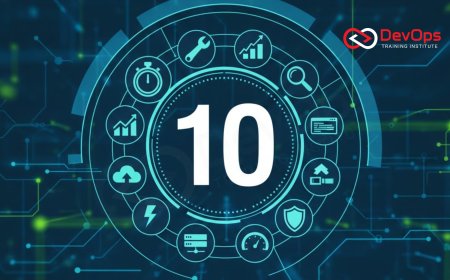
10 DevOps Tools for Network Automation
Discover the top ten DevOps tools for network automation that are currently transforming how engineering teams manage complex infrastructure in twenty twenty six. This professional guide explores essential technologies like Ansible, Terraform, and Cisco NSO, providing clear insights into how to automate configuration, monitoring, and compliance across multi vendor environments. Learn to eliminate manual errors and achieve high speed network delivery by integrating these powerful tools into your CI/CD pipelines. Whether you are a network engineer or a DevOps practitioner, this expert analysis will help you build a resilient, automated, and scalable network foundation for your modern cloud native applications today.
Introduction to Modern Network Automation
The traditional model of managing networks through manual CLI interactions is rapidly becoming obsolete as the scale of modern infrastructure grows. In twenty twenty six, network automation has shifted from being a luxury to a critical necessity for any organization aiming for high agility and reliability. By applying DevOps principles to networking—often referred to as NetOps—teams can manage their switches, routers, and firewalls with the same level of automation and version control used for application code. This shift minimizes the risk of human error, which is historically the leading cause of major network outages.
DevOps tools for network automation allow engineers to define their desired network state in code, enabling rapid deployment and consistent configuration across global data centers. This automated approach facilitates continuous synchronization between the physical hardware and the digital blueprints stored in version control systems. As we explore the top ten tools in this space, we will see how they bridge the gap between traditional networking and modern software delivery, providing a robust framework for managing complex, multi vendor environments with unprecedented speed and precision.
Ansible: The Leader in Agentless Automation
Ansible has emerged as one of the most popular tools for network automation due to its simplicity and agentless architecture. It uses human readable YAML playbooks to define configurations, making it accessible to network engineers who may not have extensive programming backgrounds. Because it does not require any special software to be installed on the network devices, it can be deployed quickly across existing infrastructure. Ansible supports a vast array of modules specifically designed for vendors like Cisco, Juniper, and Arista, allowing for seamless cultural change within the engineering department.
With Ansible, you can automate repetitive tasks such as VLAN provisioning, interface configuration, and OS upgrades across hundreds of devices simultaneously. It also excels at compliance checking, where the tool can audit the current state of the network against a predefined security baseline and automatically remediate any deviations. This ensures that your incident handling processes are proactive rather than reactive. By treating the network as a set of automated tasks, Ansible helps teams achieve a high degree of operational consistency and reduces the time required for major infrastructure changes from days to minutes.
Terraform for Network Infrastructure as Code
While Ansible is often favored for configuration management, Terraform is the go to tool for provisioning network infrastructure as code (IaC). Terraform uses a declarative approach where you describe the final desired state of your network—such as VPCs, subnets, and load balancers—and the tool handles the creation and management of those resources. This is particularly powerful for cloud native networking and hybrid cloud environments where you need to manage resources across AWS, Azure, and on premises hardware using a single, unified language and workflow.
The strength of Terraform lies in its ability to manage dependencies and track the state of your infrastructure over time. It provides a clear "plan" before any changes are applied, allowing for peer review and continuous verification of proposed network modifications. By utilizing architecture patterns that integrate Terraform, DevOps teams can spin up entire virtual networks in seconds, ensuring that the network is always ready to support new application deployments. This level of automation is essential for maintaining a fast time to market in the highly competitive digital landscape of twenty twenty six.
Cisco NSO for Multi-Vendor Orchestration
Cisco Network Services Orchestrator (NSO) is a sophisticated platform designed for high scale network automation and service orchestration. It uses a model driven approach based on the YANG data modeling language to abstract the complexities of underlying hardware. This allows administrators to manage their entire network through a single interface, regardless of the individual device vendors or protocols. NSO is particularly favored by service providers and large enterprises that need to manage thousands of devices and complex service chains like VPNs and firewalls with extreme reliability.
One of the key features of NSO is its "FastMap" engine, which automatically calculates the necessary changes to move the network from its current state to the desired state. This ensures that all changes are atomic and can be easily reversed if a failure occurs, providing a high level of safety during cluster states transitions. NSO also provides real time visibility into the network, detecting and resolving configuration drift before it leads to performance issues. It is a powerful orchestrator that enables teams to deliver complex network services with the same speed and accuracy as cloud resources, bridging the gap between physical infrastructure and digital automation.
Top 10 Network Automation Tools Comparison
| Tool Name | Primary Focus | Architecture | Best For |
|---|---|---|---|
| Ansible | Configuration Management | Agentless (SSH/API) | Multi-vendor consistency |
| Terraform | Provisioning (IaC) | Declarative State | Cloud-native networking |
| Cisco NSO | Service Orchestration | Model-driven (YANG) | Enterprise scale automation |
| NetBox | Source of Truth/IPAM | Database/API | Inventory management |
| Nornir | Python Automation | Imperative/Python | Highly custom workflows |
NetBox: The Network Source of Truth
Successful network automation requires an accurate and authoritative record of the network's current and intended state. NetBox has emerged as the leading open source platform for this purpose, serving as the "Source of Truth" for DevOps teams. It combines IP address management (IPAM) with a detailed inventory of physical devices, racks, and cables. By maintaining a central, API accessible database of all network assets, NetBox ensures that your automation scripts always have access to the correct data, preventing errors caused by outdated spreadsheets or manual documentation.
Integrating NetBox into your release strategies allows for more intelligent automation. For example, a script can query NetBox to find an available IP address before provisioning a new virtual machine or configuring a switch port. This eliminates the "fat finger" errors that often plague manual entry and ensures that your network documentation is always in sync with the actual environment. NetBox acts as the brain of the automation ecosystem, providing the essential context that other tools like Ansible and Terraform need to function effectively at scale. It is a foundational component for any team committed to professional network management.
Python Libraries: Napalm, Nornir, and PyEZ
For teams that require more fine grained control than high level tools provide, specialized Python libraries are the answer. Napalm (Network Automation and Programmability Abstraction Layer with Multivendor support) provides a unified API for interacting with different network operating systems, allowing you to fetch facts and manage configurations using a single set of Python commands. This is perfect for building custom scripts that need to support hardware from multiple vendors. Similarly, Nornir is a powerful automation framework that allows you to write your automation logic in pure Python, offering greater flexibility and performance than YAML based tools for complex, data heavy tasks.
Vendor specific libraries like Juniper's PyEZ provide even deeper integration for specific hardware platforms. PyEZ allows you to manage Junos OS devices programmatically, retrieving operational state and making configuration changes using the XML API. These libraries are often used within ChatOps techniques, where a chat bot can trigger a Python script to perform a quick diagnostic check or reset a port during an outage. By leveraging the power of Python, network engineers can build highly tailored automation solutions that perfectly fit their organization's unique requirements and existing workflows.
Automated Network Testing with Batfish
Before any network change is deployed to production, it must be thoroughly tested to ensure it doesn't cause an outage or a security breach. Batfish is an innovative tool that allows you to perform "pre flight" analysis on your network configurations. It builds a virtual model of your network's control plane and data plane, allowing you to ask questions like "Will traffic from point A to point B be allowed after this change?" or "Is there a single point of failure in this new topology?" This proactive verification is a key part of modern release strategies, catching errors before they ever impact live users.
Batfish integrates seamlessly with your CI/CD pipeline, allowing you to automatically validate every proposed network modification. If a change violates a security policy or creates a routing loop, the pipeline will fail, preventing the faulty configuration from being applied. This level of automated safety is essential for teams managing cluster states or large scale enterprise backbones. By using Batfish, you can evolve your network with the same confidence and speed as your application code, ensuring that stability and security are maintained throughout every step of the automation journey.
Core DevOps Tools for Network Pros
- Ansible: The de facto standard for general configuration management and task automation across diverse hardware vendors.
- Terraform: Ideal for provisioning virtual networking and managing cloud infrastructure through declarative code and state.
- NetBox: The authoritative source of truth for device inventory, cabling, and IP address management across the entire organization.
- Cisco NSO: A high end service orchestrator that uses YANG models for complex, multi vendor network service delivery.
- Batfish: A powerful configuration analysis tool that validates network changes in a virtual model before they are deployed.
- Napalm: A Python library that provides a cross vendor abstraction layer for fetching data and manipulating network configurations.
- Nornir: A Python based automation framework for engineers who need pure code control and high concurrency for network tasks.
- SaltStack: A high performance configuration management tool that excels at remote execution and event driven network automation.
- PyEZ: A Juniper specific Python library for managing Junos devices with deep access to the underlying XML API and state.
- Git: The essential version control system for tracking all network configuration changes and fostering collaboration within the team.
Selecting the right combination of these tools depends on your network's size, complexity, and the existing skill set of your engineering team. Most organizations start with Ansible and Git for basic automation and gradually incorporate more advanced tools like NetBox and Batfish as their maturity grows. The goal is to create a seamless, automated workflow where the network is treated as a programmable asset. By utilizing continuous verification and modern release strategies, you can build a network that is not only faster and more agile but also significantly more secure and resilient.
Conclusion on Network Automation Mastery
In conclusion, the ten DevOps tools discussed in this guide provide the technical foundation for a modern, automated network infrastructure. From the simple task of configuration management with Ansible to the complex orchestration of services with Cisco NSO, these tools empower engineers to move away from manual work and toward a future of technical excellence. By adopting a "network as code" mindset and integrating these tools into your daily workflows, you can achieve unprecedented levels of speed and reliability. The transition to automated networking is a journey that requires a commitment to learning and a willingness to embrace new ways of working.
Looking ahead, the role of AI augmented devops will continue to reshape the networking landscape, providing even more intelligent ways to manage and optimize our digital connections. Staying informed about AI augmented devops trends will ensure that your network remains competitive and secure. Ultimately, the goal is to create an invisible, self healing network that supports the needs of your business without ever being a bottleneck. By prioritizing automation today, you are building the resilient and scalable network of tomorrow. Start by identifying your most painful manual task and automate it—the rest of the journey will follow naturally.
Frequently Asked Questions
What is network automation in a DevOps context?
Network automation is the use of software to manage and configure network devices automatically, eliminating the need for manual CLI entry.
Why is Ansible popular for network automation?
Ansible is popular because it is agentless, uses simple YAML syntax, and has broad support for many different network hardware vendors.
What does "Source of Truth" mean for networks?
A Source of Truth is a central database, like NetBox, that holds the authoritative and accurate record of all network configurations and assets.
Can I use Terraform for on-premises network hardware?
Yes, many hardware vendors provide Terraform providers that allow you to manage physical switches and firewalls using the same IaC workflow as the cloud.
How does Batfish help prevent network outages?
Batfish validates proposed configuration changes in a virtual model, identifying errors like routing loops or security leaks before they reach the live network.
Is Python necessary for network engineers today?
While not strictly mandatory, Python is a highly valuable skill for creating custom automation and using libraries like Napalm, Nornir, and PyEZ effectively.
What is the difference between Ansible and Terraform?
Ansible is primarily used for configuring existing devices, while Terraform is primarily used for provisioning and managing the lifecycle of infrastructure resources.
What is NetOps?
NetOps is the application of DevOps principles—such as automation, version control, and CI/CD—to the management and operation of network infrastructure.
Do I need a service mesh for network automation?
A service mesh is used for managing internal application traffic; it is a complementary technology to the lower-level network automation tools discussed here.
How does automation improve network security?
Automation ensures that security policies are applied consistently across all devices and allows for rapid, automated remediation of any configuration drift.
Can I automate a multi-vendor network with one tool?
Yes, tools like Ansible, Terraform, and Cisco NSO are designed specifically to provide a unified interface for managing hardware from multiple vendors.
What are the benefits of agentless automation?
Agentless automation is easier to deploy as it doesn't require installing software on network devices, utilizing standard protocols like SSH and NETCONF instead.
What role does Git play in network automation?
Git acts as the version control system for all network configuration code, providing an audit trail, collaboration features, and a rollback mechanism.
How do I start with network automation if I am a beginner?
Start by learning basic Python and Ansible, then identify a simple task like gathering facts from a router to automate as your first project.
What is the future of network automation?
The future involves deeper integration with AI for predictive analysis, self-healing networks, and even more seamless cross-cloud and on-premises orchestration and management.
What's Your Reaction?
 Like
0
Like
0
 Dislike
0
Dislike
0
 Love
0
Love
0
 Funny
0
Funny
0
 Angry
0
Angry
0
 Sad
0
Sad
0
 Wow
0
Wow
0

![100+ Azure DevOps Interview Questions and Answers [Updated 2025]](https://www.devopstraininginstitute.com/blog/uploads/images/202509/image_140x98_68c40aa9a3834.jpg)





![Future Scope of DevOps Careers in Pune [Updated 2025]](https://www.devopstraininginstitute.com/blog/uploads/images/202510/image_140x98_68e3a84652312.jpg)