










![Kong Interview Preparation Guide [2025]](https://www.devopstraininginstitute.com/blog/uploads/images/202509/image_430x256_68dbb95326997.jpg)







12 API Deployment Tools for DevOps Teams
Master the top twelve API deployment tools that are currently empowering modern DevOps teams to ship code with unprecedented speed and reliability in twenty twenty six. This comprehensive guide covers essential platforms for API management, continuous integration, and automated infrastructure provisioning, including industry leaders like GitHub Actions, Jenkins, and Azure API Management. Learn how to optimize your API lifecycle, enforce robust security policies, and ensure high availability across multi cloud environments. Whether you are building microservices or enterprise gateways, these expert insights will help you eliminate manual bottlenecks and create a seamless, high performance delivery pipeline for your digital services today.
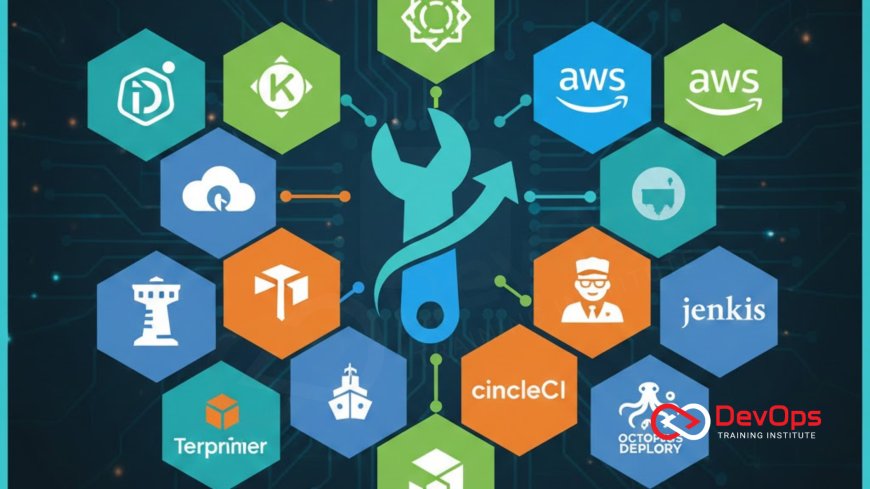
Introduction to API-First DevOps Workflows
In the modern technical landscape, APIs are the glue that holds complex distributed systems together. For DevOps teams, deploying these APIs is no longer a manual task but a sophisticated automated process that requires a specialized set of tools. An API-first approach ensures that your services are designed for interoperability and scalability from the very beginning. By utilizing the right deployment tools, teams can achieve continuous synchronization between their source code and their production gateways, reducing the time to market and ensuring a consistent experience for developers and end users alike.
The transition to automated API deployment is a core part of the larger cultural change toward a more agile and responsive engineering organization. These tools do more than just move code; they handle versioning, security enforcement, and real time monitoring. In twenty twenty six, the complexity of managing thousands of endpoints across different environments makes these platforms indispensable. This guide explores twelve of the most effective tools currently available, providing you with a roadmap to building a resilient and high speed API delivery pipeline that can handle the demands of any modern digital business or microservices ecosystem.
Leading API Management and Gateway Tools
API management platforms are essential for teams that need to secure, publish, and observe their APIs at scale. Azure API Management is a top choice for enterprise teams, providing a centralized platform that integrates seamlessly with the broader Microsoft ecosystem. It offers a robust API gateway to control traffic and enforce security policies like rate limiting and authentication. Similarly, DigitalAPI has emerged as a powerful alternative for teams looking for an affordable, high performance solution that supports multiple API standards including GraphQL and OpenAPI, ensuring flexibility without vendor lock-in.
These platforms act as a protective layer for your backend services, providing a single pane of glass for monitoring and analytics. They allow DevOps teams to manage cluster states across hybrid and multi-cloud environments effectively. By utilizing cloud architecture patterns that center on these management tools, you can ensure that your APIs are always available and secure. These tools also feature developer portals that simplify onboarding and documentation, making it easier for internal and external developers to consume your services and contribute to the growth of your digital platform's ecosystem and overall value.
Automating the API Lifecycle with CI/CD
Continuous Integration and Continuous Delivery are the heart of modern API deployment. Tools like GitHub Actions and GitLab CI/CD allow teams to automate the entire lifecycle of an API, from the initial code commit to the final deployment in production. GitHub Actions, in particular, has become incredibly popular due to its native integration with the repository, allowing developers to define complex workflows using simple YAML files. These tools run automated tests and security scans on every pull request, ensuring that only high quality and secure code reaches your API gateway or production environment.
Jenkins remains a staple for many organizations that require a highly customizable and extensible automation server. With its vast library of plugins, Jenkins can be transformed into a dedicated hub for API deployments, managing everything from container builds to incident handling alerts. By automating these repetitive tasks, DevOps teams can focus on strategic improvements rather than manual maintenance. These CI/CD platforms ensure that your release strategies are predictable and repeatable, which is critical for maintaining system stability and achieving a high frequency of updates in a competitive market.
Infrastructure as Code for API Gateways
Deploying an API often requires setting up the underlying infrastructure, such as load balancers, virtual machines, and network security groups. Terraform by HashiCorp is the industry standard for managing this infrastructure as code, allowing you to define your API's environment in a declarative blueprint. This ensures that your staging and production environments are identical, effectively eliminating the "it worked on my machine" problem. Using Terraform, you can manage hundreds of cloud resources across AWS, Azure, and Google Cloud with almost no human interaction, leading to much faster and safer deployments.
Similarly, AWS CloudFormation provides a powerful way to model and set up Amazon Web Services resources using templates. These IaC tools are vital for maintaining continuous synchronization between your infrastructure and your API requirements. By versioning your infrastructure alongside your code, you create an auditable and reproducible history of your entire technical stack. This approach is essential for large scale microservices architectures where manual configuration is simply not feasible. It empowers teams to treat their infrastructure with the same rigor and automated testing as their software, leading to a much more resilient and scalable API delivery model.
Comparison of Top API Deployment Tools
| Tool Name | Category | Primary Focus | Best Feature |
|---|---|---|---|
| Azure API Mgmt | API Management | Security & Governance | Native Azure Sync |
| GitHub Actions | CI/CD | Workflow Automation | Marketplace Actions |
| Terraform | IaC | Infra Provisioning | Multi-cloud Support |
| Postman | Testing | API Validation | Mock Servers |
| DigitalAPI | API Management | Scalability & Ease | Unlimited API Calls |
Containerization and Orchestration for APIs
Containerization has revolutionized how APIs are packaged and deployed, ensuring that an application runs consistently regardless of the host environment. Docker is the leading tool in this space, allowing developers to bundle their API code with all its dependencies into a lightweight, portable container. This isolation prevents library conflicts and makes it easy to move APIs between development and production. When combined with containerd for efficient execution, Docker provides the technical foundation for modern high performance API architectures.
For managing these containers at scale, Kubernetes is the industry standard orchestration platform. It automates the deployment, scaling, and management of containerized APIs across a cluster of nodes. Kubernetes ensures high availability through features like self healing and horizontal pod autoscaling, which are essential for APIs experiencing variable traffic. By using GitOps to manage your Kubernetes manifests, you can ensure that your live cluster always matches your desired configuration. This combination of Docker and Kubernetes allows DevOps teams to manage thousands of API instances with minimal manual effort, ensuring a stable and resilient digital infrastructure.
API Testing and Validation with Postman
Deploying an API is only half the battle; ensuring that it functions correctly and securely is just as important. Postman has become an essential tool for DevOps teams to test, manage, and document their APIs throughout the development lifecycle. With Postman, developers can send various HTTP requests and verify the responses, ensuring that the API logic is sound. Its collaboration features allow teams to share collections of tests and environments, making it easy to maintain continuous synchronization between development and QA efforts in a busy enterprise environment.
Postman also features mock servers that allow you to test API responses before the backend is even fully built, which significantly speeds up the frontend development process. Furthermore, it supports automated monitoring and testing, allowing you to catch regressions or performance issues early in the pipeline. Integrating these continuous verification steps into your CI/CD process ensures that every deployment is validated against your functional and performance requirements. This proactive approach to quality ensures that your API remains reliable and provides a high level of satisfaction for your users and downstream developers.
Best Practices for API Deployment Success
- Use Semantic Versioning: Always version your APIs so that updates don't break existing consumer integrations unexpectedly.
- Implement Rate Limiting: Protect your backend services from being overwhelmed by traffic spikes or malicious attacks using gateway policies.
- Automate Documentation: Use tools like Swagger or OpenAPI to generate real time documentation that is always in sync with your code.
- Enforce Security Policies: Utilize admission controllers to ensure that all API containers meet your organization's security and compliance standards.
- Scan for Secrets: Integrate secret scanning tools into your deployment pipeline to prevent API keys from being leaked in public repositories.
- Monitor API Health: Use real time dashboards and alerting to track latency and error rates, enabling rapid incident handling when issues occur.
- Adopt Canary Releases: Use ChatOps techniques to manage a gradual rollout of your APIs, minimizing the impact of potential bugs on your users.
Achieving success in API deployment requires a disciplined approach that prioritizes automation, security, and visibility. By following these best practices, you can build a delivery process that is as fast as it is safe. It is also important to foster cultural change within your team that values continuous learning and improvement. As you become more proficient with these tools, you can explore AI augmented devops capabilities that provide even more intelligent and proactive ways to manage your API lifecycle. The ultimate goal is to create a seamless experience for your developers, allowing them to focus on building value rather than fighting with the deployment process every day.
Conclusion: Building a Resilient API Infrastructure
In conclusion, the twelve API deployment tools discussed in this guide provide a robust foundation for any DevOps team looking to master the modern software delivery lifecycle. From the security of Azure API Management to the automation of GitHub Actions and the infrastructure control of Terraform, these platforms empower teams to operate with greater speed and accuracy. By embracing these tools and a security-first mindset, you can build an API infrastructure that is not only scalable and performant but also incredibly resilient to change and failure in a dynamic cloud world.
As you look toward the future, the integration of AI augmented devops will continue to play a larger role in how we design and deploy our digital services. Staying informed about who drives cultural change and technical innovation will help you maintain a competitive advantage. The ability to deploy APIs safely and quickly is more than just a technical skill; it is a fundamental business capability that enables you to respond to customer needs and capture new market opportunities with confidence. Start by implementing the tools that address your most immediate bottlenecks and build your way toward a world class API delivery ecosystem today.
Frequently Asked Questions
What is an API deployment tool?
An API deployment tool is a software platform that automates the process of building, testing, securing, and releasing APIs into a production environment.
Why is Azure API Management popular for enterprises?
It provides a centralized platform for security, monitoring, and governance that integrates deeply with Microsoft's cloud services and identity management tools.
How does Terraform help in API deployments?
Terraform allows you to manage the underlying cloud infrastructure of your APIs as code, ensuring consistency and repeatability across different environments.
Can I use GitHub Actions for non-GitHub repositories?
While optimized for GitHub, GitHub Actions can be used for other repositories through self-hosted runners or external integrations and specific configurations.
What is the benefit of using Docker for APIs?
Docker ensures that your API runs in an identical environment from development to production, eliminating many common deployment errors and library conflicts.
How does Postman assist in the DevOps pipeline?
Postman automates the testing and validation of APIs, ensuring they meet functional and performance standards before and after they are deployed.
What is an API gateway and why do I need one?
An API gateway acts as a single entry point for your APIs, providing essential features like authentication, rate limiting, and traffic routing.
Is Jenkins still relevant for modern DevOps teams?
Yes, Jenkins remains a powerful and highly customizable automation server that can handle complex deployment scenarios that some newer tools might miss.
What is DigitalAPI and how does it differ from others?
DigitalAPI is an enterprise-ready management platform that offers unlimited API calls and built-in tools for testing, analytics, and monetization at scale.
How does GitOps improve API management?
GitOps uses Git as the source of truth for your API configurations, enabling automated synchronization and a clear audit trail of all changes.
What is semantic versioning in an API context?
It is a versioning scheme that communicates the nature of changes (major, minor, patch), helping consumers manage their dependencies safely and reliably.
Can I automate API documentation?
Yes, tools like Swagger can automatically generate interactive documentation based on your code, keeping it consistently accurate for all your users.
What are Mock Servers in Postman?
Mock Servers simulate API responses, allowing developers to test their frontend or integrations before the actual backend service is fully developed.
How do admission controllers enhance API security?
They enforce organizational policies on every API container, preventing insecure or non-compliant workloads from being deployed into your production cluster.
What is the first tool a DevOps team should adopt for APIs?
Teams should start with a solid CI/CD tool like GitHub Actions or GitLab to automate their testing and basic deployment workflows immediately.
What's Your Reaction?
 Like
0
Like
0
 Dislike
0
Dislike
0
 Love
0
Love
0
 Funny
0
Funny
0
 Angry
0
Angry
0
 Sad
0
Sad
0
 Wow
0
Wow
0


![100+ Azure DevOps Interview Questions and Answers [Updated 2025]](https://www.devopstraininginstitute.com/blog/uploads/images/202509/image_140x98_68c40aa9a3834.jpg)






![Future Scope of DevOps Careers in Pune [Updated 2025]](https://www.devopstraininginstitute.com/blog/uploads/images/202510/image_140x98_68e3a84652312.jpg)