



![Kong Interview Preparation Guide [2025]](https://www.devopstraininginstitute.com/blog/uploads/images/202509/image_430x256_68dbb95326997.jpg)





Top 20 CI/CD Failures Observed in Production
Discover the most critical CI/CD failures frequently observed in production environments and learn how to prevent them from disrupting your software delivery. This comprehensive guide explores twenty major pitfalls in continuous integration and continuous deployment, ranging from configuration drift and security vulnerabilities to resource exhaustion and deployment missteps. Gain valuable insights into building more resilient, automated pipelines that ensure consistent performance, improve system reliability, and protect your organization from costly downtime in today's fast paced cloud native landscape.
Introduction to Pipeline Vulnerabilities
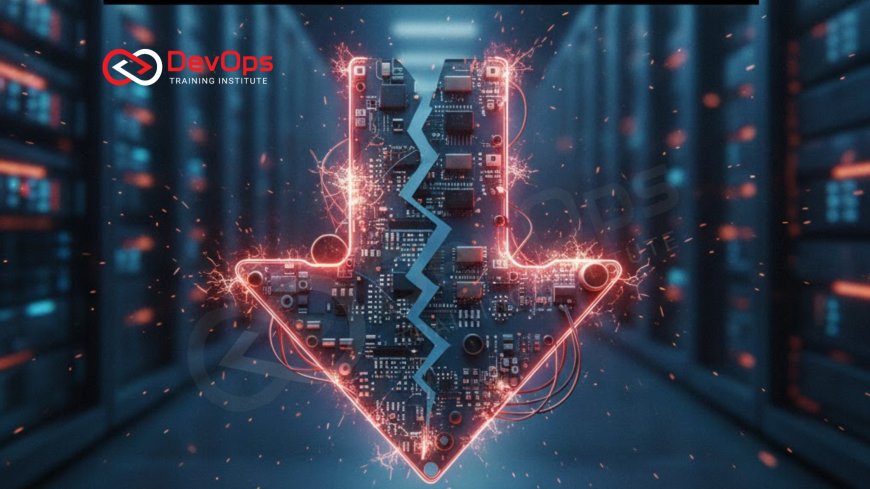
The transition to automated software delivery has fundamentally changed the speed at which companies can release new features. However, as pipelines become more complex, the number of potential failure points increases significantly. A single error in a script or a misconfigured environment variable can trigger a chain reaction that brings down an entire production system. Understanding these failures is the first step toward building a robust and dependable delivery mechanism for your software products.
In this detailed exploration, we will analyze the top twenty CI/CD failures that have been observed in real world production settings. These range from simple human errors to sophisticated architectural flaws that only reveal themselves under high load. By examining these pitfalls, engineering teams can implement better guardrails and monitoring strategies. The goal is to move beyond fragile automation toward a state of operational excellence where pipelines are as reliable as the applications they deliver to the end users every day.
Environmental Discrepancies and Configuration Drift
One of the most frequent causes of production failure is the difference between development, staging, and production environments. When a build passes all tests in a lower environment but fails in production, it is often due to subtle discrepancies in operating system versions, library dependencies, or network configurations. This issue is commonly referred to as configuration drift, where environments that were once identical slowly diverge over time due to manual updates or uncoordinated changes.
To combat this, professional teams rely on the concept of infrastructure as code to ensure every environment is provisioned from the same source of truth. By automating the creation of environments, you eliminate the possibility of a human forgetting a minor setting. This consistency is vital for maintaining a predictable delivery process. Without it, your pipeline becomes a game of chance, where every deployment carries a high risk of failure because the underlying infrastructure does not match what was verified during the testing phase.
Inadequate Automated Testing Coverage
Automated pipelines are only as good as the tests they run. A major failure observed in production occurs when code is deployed because the pipeline reported success, only for users to find critical bugs immediately. This usually happens when the testing suite is too narrow, focusing only on happy path scenarios while ignoring edge cases, error handling, and performance limits. When a pipeline lacks deep validation, it essentially becomes a fast track for bugs to reach your customers.
Integrating a strategy of testing early and often is the best way to prevent this. By moving quality checks to the beginning of the development cycle, you catch errors before they become expensive to fix. This approach requires a mix of unit, integration, and end to end tests that simulate real user behavior. When tests are thorough and representative of the production environment, the pipeline can act as a true gateway that ensures only the highest quality code is allowed to proceed to the final release stage.
Secrets Management and Security Breaches
Security is often the weakest link in automated pipelines. A common and catastrophic failure is the accidental exposure of API keys, passwords, or encryption certificates within the CI/CD scripts or build logs. If these secrets are leaked, malicious actors can gain access to your cloud infrastructure, leading to data theft or total system destruction. Many production outages are not caused by bugs, but by security incidents that originated from poorly protected credentials in the automation layer.
Modern teams address this by ensuring that security is built into every step of the process. This involves using dedicated secrets management tools that inject credentials into the pipeline at runtime rather than storing them in code. Automated scanners should also be used to check for sensitive data in every commit. By prioritizing security from the start, you protect your organization from the devastating financial and reputational damage that follows a production breach caused by a simple pipeline oversight.
Table: Impact Analysis of Common CI/CD Failures
| Failure Category | Primary Cause | Business Impact | Prevention Strategy |
|---|---|---|---|
| Configuration Drift | Manual environment changes. | Unexpected production crashes. | Infrastructure as Code. |
| Secret Leaks | Hardcoded credentials in scripts. | Data breach and system compromise. | Secret Management Vaults. |
| Resource Exhaustion | Unoptimized build artifacts. | Slow deployments and node failure. | Automated Resource Monitoring. |
| Dependency Hell | Unpinned library versions. | Broken builds and library conflicts. | Lockfiles and Private Registries. |
| Unchecked Rollbacks | Lack of automated revert logic. | Extended downtime after bad update. | Automated Health-Check Triggers. |
Resource Exhaustion and Scalability Issues
Pipelines themselves require significant resources to run. A common failure observed in production environments is the exhaustion of disk space, memory, or CPU on the build agents or within the container registry. When a pipeline fails because it cannot store a new artifact or because a build step runs out of memory, it blocks all other deployments. This can be especially critical during an incident when you need to deploy a fast fix but your automation infrastructure is currently unresponsive due to resource limits.
Effective engineering of the pipeline infrastructure is necessary to ensure it can scale with the team's needs. This involves setting up automated cleanup scripts for old build artifacts and monitoring the health of the CI/CD nodes. Just as you monitor your production application, you must monitor your delivery tools. By ensuring your pipeline has the resources it needs to breathe, you prevent it from becoming a bottleneck that prevents critical updates from reaching production when they are most needed by the business.
Flaky Tests and Pipeline Fatigue
Flaky tests are tests that fail inconsistently without any changes to the code. They are a silent killer of pipeline productivity. When a team gets used to seeing a red build and simply clicking restart until it turns green, they develop pipeline fatigue. This is a dangerous state because eventually, a real failure will be ignored as just another flake. This leads to broken code being deployed to production because the team stopped trusting the signals coming from their automated testing suite.
Removing flakiness requires a disciplined approach to identifying and fixing unstable tests. It often involves improving test isolation and ensuring that external dependencies are properly mocked. When every failure is taken seriously, the pipeline regains its value as a trusted gatekeeper. This cultural shift ensures that the automated system remains a help rather than a hindrance, allowing developers to move with confidence knowing that a successful build truly means the software is ready for the production users to consume without issue.
Incomplete Rollback and Recovery Logic
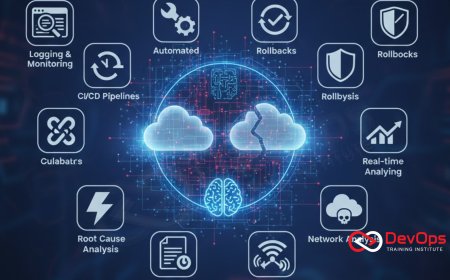
Even with the best testing, some failures will only happen in production. A major CI/CD failure is having a sophisticated deployment script but no automated way to revert the changes if things go wrong. If a deployment fails halfway through, it can leave the system in an inconsistent state where some components are updated and others are not. Without an automated rollback strategy, the engineering team must manually intervene to restore service, which significantly increases the mean time to recovery.
Using advanced strategies like deployment patterns that support instant switching can solve this. For example, maintaining two identical environments allows you to switch back to the old version immediately if the new one fails. Additionally, implementing flags allows you to disable problematic features without a full redeploy. These mechanisms provide a safety net that protects the user experience while giving the engineering team the time they need to diagnose the root cause of the failure in a controlled environment.
Monitoring and Observability Blind Spots
A pipeline might successfully deploy an application, but that doesn't mean the application is actually working. A common failure is the lack of post-deployment verification. If your pipeline finishes its job and reports success while the application is throwing errors in the background, you have a major observability gap. Modern pipelines must be integrated with monitoring tools to verify that the system is healthy after every change. Without this, you are flying blind, relying on user complaints to tell you when a deployment has failed.
Understanding the gap in monitoring tools helps teams build better feedback loops. By automatically checking logs and metrics immediately after a rollout, the pipeline can detect issues and trigger an alert or a rollback before the problem affects a large number of users. This automated verification is what separates high performing organizations from those that struggle with frequent outages. It ensures that the responsibility of the CI/CD system extends beyond the build phase and into the actual health of the live production environment.
Dependency Vulnerabilities and Supply Chain Attacks
Modern applications rely on thousands of third party libraries. A critical CI/CD failure is the lack of control over these dependencies. If your pipeline pulls in a library that has a known vulnerability or has been compromised by a malicious actor, you are effectively injecting that risk directly into your production environment. Supply chain attacks are becoming more common, and automated pipelines are often the target because they have the power to distribute code to thousands of servers in an instant.
To prevent this, pipelines should use lockfiles to ensure that the exact same version of every dependency is used in every build. Additionally, automated vulnerability scanners should be integrated to block any build that includes insecure libraries. By taking control of your software supply chain, you ensure that the automation that makes your delivery fast also makes it safe. This proactive approach to dependency management is a fundamental part of maintaining a secure and reliable production environment in an increasingly complex and interconnected digital world.
- Build Artifact Bloat: Failing to optimize the size of your Docker images or binaries can lead to slow deployments and storage issues.
- Concurrent Build Conflicts: Multiple builds running at the same time can interfere with shared resources like database schemas.
- Lack of Pipeline Versioning: Changes to the pipeline itself can cause unexpected failures if they are not tracked and tested.
- Ignoring Cloud Spend: Unoptimized pipelines can run up huge cloud bills by leaving expensive build agents running or storing unnecessary data.
By focusing on cloud cost management, teams can ensure their automation remains sustainable. Furthermore, using resilience testing techniques like deliberately breaking parts of the pipeline can help identify hidden weaknesses. This holistic view of the CI/CD process ensures that every failure is seen as an opportunity for improvement, leading to a more stable and efficient delivery machine that supports the business's long term goals and objectives.
Conclusion
Continuous Integration and Continuous Deployment have revolutionized the way we build software, but they are not without their risks. The top twenty failures we have discussed illustrate that automation is a double edged sword; it can accelerate success or accelerate disaster. From the silent threat of configuration drift to the catastrophic impact of secret leaks and security breaches, each failure point represents a challenge that modern engineering teams must overcome. By implementing robust secrets management, prioritizing testing early in the cycle, and ensuring that observability covers the entire deployment process, organizations can build pipelines that are truly resilient. The key is to treat your delivery pipeline with the same care and discipline as your production code. By constantly monitoring, testing, and refining your automated processes, you create a foundation of reliability that allows your business to innovate with confidence. High velocity delivery should never come at the cost of stability, and by learning from these production failures, you can ensure that your CI/CD system remains a powerful asset that drives your organization forward in a competitive digital landscape.
Frequently Asked Questions
What is the most common CI/CD failure in production?
Configuration drift between environments is often the most common cause of production failures in automated pipelines today.
How can I prevent secrets from leaking in my pipeline?
Use dedicated secrets management tools and automated scanners to ensure credentials are never stored in code or logs.
What are flaky tests?
Flaky tests are automated tests that fail inconsistently without any code changes, usually due to environment or timing issues.
Why is Infrastructure as Code important for CI/CD?
It ensures that all environments are identical and can be provisioned automatically, which eliminates errors caused by manual configuration.
What is the benefit of a canary release?
A canary release allows you to test new software on a small group of users before rolling it out globally.
How does FinOps relate to CI/CD?
FinOps helps teams manage and optimize the cloud costs associated with running build agents and storing pipeline artifacts efficiently.
Can a CI/CD pipeline improve security?
Yes, by integrating automated security scans into the pipeline, you can catch vulnerabilities early before they reach the production environment.
What is a blue-green deployment?
It is a deployment strategy that maintains two identical environments to allow for zero-downtime updates and instant rollbacks.
How do I fix pipeline fatigue?
Address flaky tests immediately and ensure that every build failure is investigated so the team trusts the pipeline signals.
What is a supply chain attack in DevOps?
It occurs when a third-party dependency or tool used in your pipeline is compromised to inject malicious code.
Should I monitor my build agents?
Yes, monitoring build agents for resource exhaustion prevents pipeline blocks and ensures consistent deployment speed for the whole team.
What are feature flags?
Feature flags are toggles that allow you to turn features on or off without redeploying code, enabling safer production testing.
How does shift-left testing help?
It moves quality checks earlier in the process, finding bugs when they are cheaper and easier for developers to fix.
What is a rollback in CI/CD?
A rollback is the automated or manual process of reverting a system to a previous healthy state after a failed deployment.
Why is observability different from monitoring?
Monitoring tells you if something is wrong, while observability gives you the context to understand why it is wrong.
What's Your Reaction?
 Like
0
Like
0
 Dislike
0
Dislike
0
 Love
0
Love
0
 Funny
0
Funny
0
 Angry
0
Angry
0
 Sad
0
Sad
0
 Wow
0
Wow
0


![100+ Azure DevOps Interview Questions and Answers [Updated 2025]](https://www.devopstraininginstitute.com/blog/uploads/images/202509/image_140x98_68c40aa9a3834.jpg)






![Future Scope of DevOps Careers in Pune [Updated 2025]](https://www.devopstraininginstitute.com/blog/uploads/images/202510/image_140x98_68e3a84652312.jpg)