



![Kong Interview Preparation Guide [2025]](https://www.devopstraininginstitute.com/blog/uploads/images/202509/image_430x256_68dbb95326997.jpg)





10 Automated Testing Stages in DevOps Pipelines
Master the 10 essential automated testing stages that define a resilient DevOps pipeline, from local developer checks and unit testing to post-deployment validation and security gates. This comprehensive guide details how to integrate SAST, performance, contract, and end-to-end testing into your CI/CD workflow, ensuring continuous quality and rapid feedback. Learn how to implement security and quality gates early, accelerating release cadence while maintaining high reliability, making quality an inseparable part of your software delivery process for cloud-native applications.
Introduction
In a high-velocity DevOps environment, the software delivery pipeline (CI/CD) is the engine that drives business value. For this engine to run fast and reliably, Continuous Testing must be integrated into every stage. Automated testing is no longer a separate phase at the end of development; it is a series of strategic quality gates applied continuously from the moment a developer commits code until the application is running safely in production. This "shift-left" approach ensures that defects, performance bottlenecks, and security vulnerabilities are detected immediately, when they are cheapest and fastest to fix. Relying on manual testing or late-stage quality assurance inevitably creates bottlenecks, compromises speed, and increases the risk of production incidents.
The goal is to establish a pipeline where quality is baked into the process, not merely inspected out at the end. This requires understanding the various types of automated tests and strategically placing them where they provide the most value with the least overhead. The entire process transforms testing from a time-consuming bottleneck into a vital accelerator that provides rapid, actionable feedback to developers. A well-designed Continuous Testing strategy covers functionality, integration, performance, and security across the full spectrum of the application stack, ensuring full confidence in every deployment that moves through the pipeline.
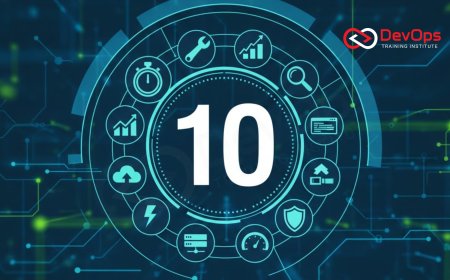
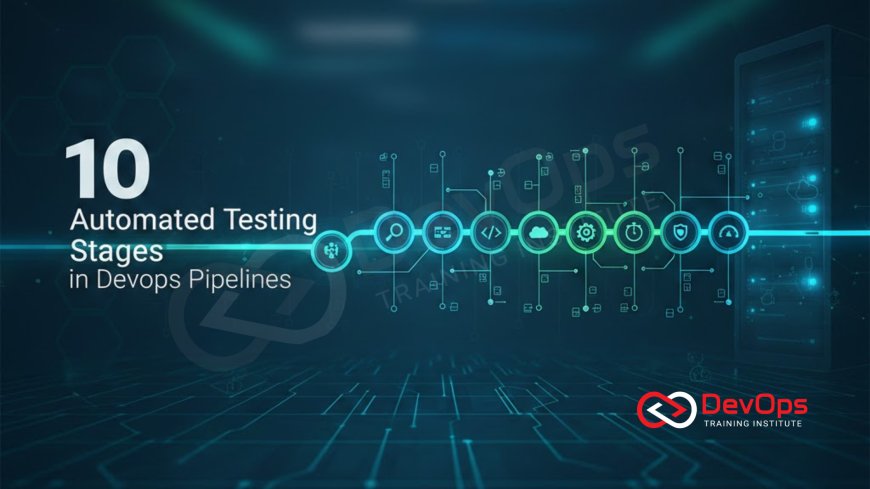
This comprehensive guide details the 10 essential automated testing stages that must be integrated into a resilient DevOps pipeline. These stages represent a layered defense strategy, beginning with local developer checks and culminating in real-time validation of the live production environment. By implementing these practices, you can ensure a consistent, reliable flow of high-quality software, enabling your organization to maintain a competitive edge and a rapid release cadence.
Stage 1: Local Developer Checks (Pre-Commit)
Testing begins before the code even leaves the developer's machine. This is the ultimate "shift-left" stage. Automated pre-commit hooks ensure basic hygiene is maintained, catching trivial errors before they ever enter the version control system or consume CI runner time. This saves time for the entire team and reduces unnecessary pipeline executions.
Tests Included: Static Code Formatting (linters), basic syntax checks, secret detection, and simple unit tests for modified files.
Goal: Enforce code standards and prevent trivial bugs from entering the repository.
Stage 2: Unit Testing
Unit testing is the foundation of automated quality assurance. It involves testing the smallest, isolated components of the application (functions, methods, classes) to verify that they work as intended. Unit tests are fast, should have no external dependencies (databases, networks), and are run immediately after the code is compiled during the initial CI build.
Tests Included: Functional logic validation, assertion checks, boundary condition tests, and mocking dependencies.
Goal: Validate the correctness of core application logic and provide the fastest feedback on regression issues.
Stage 3: Static Application Security Testing (SAST)
Integrated early in the pipeline, SAST scans the application's source code without executing it. It looks for known security vulnerabilities, coding flaws (e.g., SQL injection, XSS), and adherence to security standards. This is a critical security gate that operates in parallel with the unit tests.
Tests Included: Vulnerability checks against common patterns, data flow analysis for tainted inputs, and security rule violations.
Goal: Catch security flaws and code quality issues at the build stage, proactively enforcing DevSecOps practices and avoiding costly late-stage remediation. This proactive measure aligns with the goals of continuous threat modeling.
Stage 4: Dependency/Software Composition Analysis (SCA)
Modern applications rely heavily on third-party, open-source libraries. SCA checks the application's dependencies (Node modules, Maven packages, Python packages) against public vulnerability databases (CVEs). It identifies known security flaws and license compliance issues within external code.
Tests Included: Vulnerability scanning of all external libraries, license compliance checks.
Goal: Prevent the inclusion of components with known weaknesses, minimizing the attack surface inherited from the supply chain.
Stage 5: Component/Integration Testing
Once individual components are validated, integration tests verify that different parts of the application (e.g., two microservices, a service and its database, an API and a cache) work correctly when communicating with each other. These tests are typically run in a disposable, production-like environment (often using Docker Compose or temporary Kubernetes namespaces).
Tests Included: Database connectivity, API calls between services, message queue interactions, and service-level data flow integrity.
Goal: Validate the service contract and data integrity across internal system boundaries.
Stage 6: Contract Testing
Contract testing is vital for microservices. It ensures that the communication contract between a consumer service and a provider service (e.g., API requests and responses) remains valid, even when the services are deployed and tested independently. This significantly reduces the need for slow, brittle end-to-end (E2E) tests.
Tests Included: Consumer-driven contract verification (e.g., Pact framework), ensuring API stability.
Goal: Decouple service testing, ensuring independent teams can make changes without breaking consuming services, directly supporting agility and independent deployment, particularly when managing traffic via an API Gateway.
Stage 7: Performance and Load Testing
Performance tests measure the application's responsiveness, stability, and scalability under various load conditions. These are executed against a fully integrated staging or pre-production environment to simulate real-world user traffic. This is a crucial gate to ensure new features haven't introduced latency or resource bottlenecks.
Tests Included: Load tests (expected peak traffic), stress tests (breaking point), soak tests (memory leaks over time), and latency benchmarks.
Goal: Identify performance regressions and capacity bottlenecks before they impact end-users in production. This proactive testing is essential for capacity planning and ensuring continuous service quality.
Stage 8: Dynamic Application Security Testing (DAST)
Unlike SAST, DAST tests the application while it is running in the staging environment. It actively probes the application from the outside, simulating an attacker's actions to find vulnerabilities such as misconfigurations, authentication flaws, and injection vectors. This provides a black-box view of the application's security posture under real-world conditions.
Tests Included: Fuzz testing, external network scanning, vulnerability surface area checks, and authentication bypass attempts.
Goal: Find runtime and configuration flaws that SAST might miss, providing a final security audit before deployment to production. DAST ensures external security measures, like firewall management, are effective when the application is live.
Stage 9: Pre-Production Security and Compliance Check
This final stage validates the security of the infrastructure that will host the application. It's often run against the Infrastructure as Code (IaC) templates and the final container image before pushing to the production registry.
Tests Included: IaC policy enforcement (e.g., checking Terraform/Kubernetes manifests for open ports or insecure defaults via OPA), final container image vulnerability scan, and verification of runtime security context (non-root user, SELinux labels). This ensures the application and its environment are secure.
Goal: Enforce organizational and regulatory compliance policies on the deployment artifact and its target environment, ensuring a safe deployment.
Stage 10: Post-Deployment Validation (Smoke Testing)
After the application is deployed to production (or a small Canary environment), an automated smoke test or health check is run immediately. This ensures that the application has started correctly, is reachable, and the most critical functionality is operational. This is the last safety check before full traffic is routed.
Tests Included: Simple API health checks, core user flow simulation (login/checkout), and initial metric validation to ensure the application is emitting correct telemetry data to the observability pillars.
Goal: Verify successful deployment and operational readiness in the live environment. This is often followed by continuous real-user monitoring (RUM) and synthetic transaction monitoring as ongoing operational tests.
Conclusion
Continuous Testing is the engine of reliability in DevOps. By implementing these 10 automated testing stages, organizations move far beyond simple end-of-cycle quality assurance. They create a layered defense system that rapidly provides feedback on functionality, integration, performance, and security, catching issues as early as Stage 1 (local checks) or Stage 3 (SAST), before they become expensive problems in Stage 10 (production).
The strategic placement of these tests—Unit tests for speed, Integration tests for contract stability, Performance tests for scalability, and Security scans for vulnerability detection—ensures that every aspect of the application is validated continuously. The adoption of advanced techniques like contract testing and post-deployment smoke testing provides the necessary confidence to maintain a high-frequency release cadence and accelerate deployments with minimal risk.
Mastering these automated testing stages is essential for operational excellence. It transforms testing from a development bottleneck into a core accelerator, guaranteeing that the code delivered is not just functional, but reliable, secure, and ready to meet the demands of modern cloud-native environments. By fully automating quality assurance, you commit to continuous improvement, making quality an intrinsic characteristic of your software delivery process and ensuring that all components, including the host OS, adhere to standards verified by the RHEL 10 post-installation checklist, and continuous runtime validation.
Frequently Asked Questions
What is the "shift-left" principle in the context of these stages?
Shift-left means moving testing (especially security and quality checks) to the earliest possible stages of the pipeline (Stages 1-4) to find and fix issues quickly and cheaply.
Why are unit tests run before security testing (SAST)?
Unit tests are the fastest, cheapest tests. They verify functional correctness and should run first to ensure there's a working build to perform more complex analysis like SAST on.
What is the difference between SAST and DAST?
SAST (Stage 3) scans source code without execution. DAST (Stage 8) tests the application while it is running in a staging environment, actively probing for runtime flaws.
How does contract testing help in microservices architectures?
Contract testing (Stage 6) ensures that services adhere to their communication contracts, allowing independent development and testing without requiring slow, full end-to-end integration environments.
What is the role of the observability pillars in the testing stages?
The pillars (metrics, logs, traces) are used in Stage 7 (Performance) and Stage 10 (Post-Deployment) to monitor and validate the application's behavior and health in real-time, providing deep diagnostic context.
What is the purpose of the post-deployment smoke test (Stage 10)?
The smoke test verifies that the newly deployed application has started successfully, is reachable, and the most critical core functions are operational in the live environment, serving as the final safety check.
How do API Gateways simplify deployment in relation to testing?
API Gateways provide a single, consistent endpoint for external testing (like DAST or E2E tests) and simplify the routing necessary for advanced deployment strategies (Canary/Blue-Green) managed by the pipeline.
Why must the CI/CD pipeline include a check for RHEL 10 security enhancements?
The pipeline must validate that the underlying host OS (the node running the container) is provisioned securely, ensuring that the infrastructure foundation is not the weakest link in the security chain.
What is the importance of firewall management in Stage 8 (DAST)?
Effective firewall management is tested in Stage 8 to ensure that only intended ports and services are exposed externally, preventing external attack surfaces from being unnecessarily visible during the live security scan.
How is the RHEL 10 post-installation checklist relevant to automated testing?
The checklist ensures that the standardized testing environment (VMs/Nodes) used in Stages 5, 7, and 8 is consistently configured and hardened, guaranteeing reliable and repeatable test results.
How do security checks in Stage 9 enforce SSH keys security?
The security checks verify that the IaC templates defining the target environment do not provision unsecured access and that SSH keys or access credentials for remote connections are properly secured and isolated within the build environment, not exposed in configuration.
Why is performance testing (Stage 7) considered a continuous practice in DevOps?
It is run continuously to ensure that small, incremental code changes do not cumulatively introduce performance regressions or memory leaks, proactively maintaining the application's scalability and responsiveness.
What is the difference between a vulnerability scan (Stage 5) and security analysis (Stage 3)?
Stage 3 (SAST) is code analysis for flaws in custom code. Stage 5 (SCA) is dependency analysis, scanning external, third-party libraries for known vulnerabilities (CVEs).
What is the best practice for running integration tests (Stage 5) quickly?
Use temporary, dedicated environments (e.g., Docker Compose/ephemeral Kubernetes namespaces) that are created immediately before the test run and destroyed immediately afterward, ensuring a clean state and fast execution.
How does automated testing enable the rapid release cadence?
Automated testing provides high confidence that code changes are safe and reliable, eliminating the need for slow, manual gates and allowing the pipeline to deploy validated code frequently and predictably, which is the core goal of DevOps.
What's Your Reaction?
 Like
0
Like
0
 Dislike
0
Dislike
0
 Love
0
Love
0
 Funny
0
Funny
0
 Angry
0
Angry
0
 Sad
0
Sad
0
 Wow
0
Wow
0

![100+ Azure DevOps Interview Questions and Answers [Updated 2025]](https://www.devopstraininginstitute.com/blog/uploads/images/202509/image_140x98_68c40aa9a3834.jpg)






![Future Scope of DevOps Careers in Pune [Updated 2025]](https://www.devopstraininginstitute.com/blog/uploads/images/202510/image_140x98_68e3a84652312.jpg)