



















![Kong Interview Preparation Guide [2025]](https://www.devopstraininginstitute.com/blog/uploads/images/202509/image_430x256_68dbb95326997.jpg)











10 Cloud-Native Security Mistakes to Avoid
Ensure your organization stays protected by learning about the ten most critical cloud-native security mistakes engineering teams often make in twenty twenty six. This beginner friendly guide explores the dangers of misconfigured storage, overprivileged identities, and the growing risks of shadow APIs and unpatched container runtimes. Discover practical, automated fixes to harden your infrastructure and maintain a robust defense against modern, AI driven threats in a distributed ecosystem. By understanding these common pitfalls today, you can build a more resilient and secure technical foundation that prioritizes zero trust principles and continuous verification across all your cloud services and delivery pipelines for long term success.
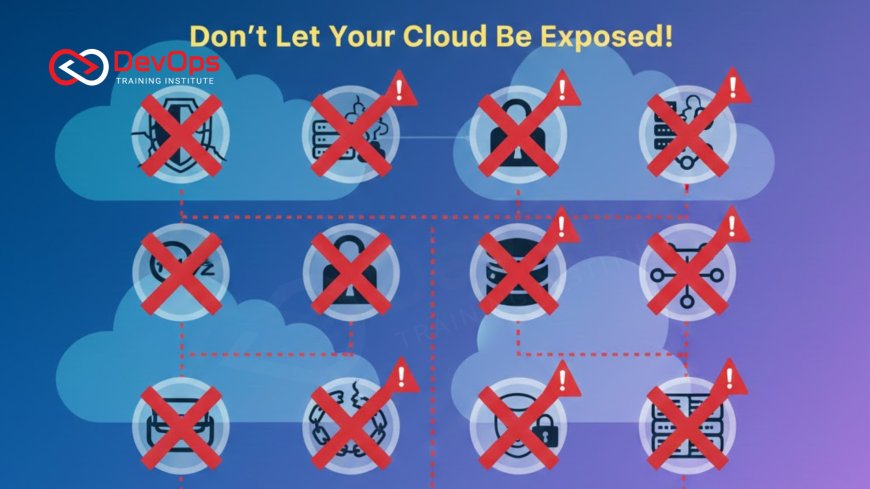
Introduction to Modern Cloud Security Risks
In the rapidly evolving world of twenty twenty six, cloud native security has become more than just a checkbox; it is a critical pillar of business continuity. As organizations move away from traditional perimeters toward distributed, containerized architectures, the attack surface has expanded significantly. Mistakes that were once minor inconveniences now have the potential to cause massive data breaches or complete system failures in a matter of minutes. This shift requires a new mindset that integrates security into every stage of the development lifecycle, ensuring that protection is as dynamic and scalable as the cloud itself.
The complexity of managing multi cloud environments often leads to oversight, where small configuration errors can remain undetected for long periods. These mistakes are frequently exploited by automated bots and AI augmented devops threats that scan the internet for vulnerabilities around the clock. Avoiding these common pitfalls is essential for any engineering team that wants to maintain the trust of their users and the integrity of their data. In this guide, we will break down the ten most dangerous security mistakes and provide actionable fixes to help you stay ahead of attackers in today's demanding technical landscape.
Misconfigured Storage and Open Public Buckets
Perhaps the most frequent and preventable mistake is leaving cloud storage buckets, like AWS S3 or Azure Blob Storage, open to the public internet without proper authentication. This error often occurs when developers are testing new features and forget to revert permissions before moving to production. In twenty twenty six, attackers use sophisticated automation to discover these open buckets within seconds of them going live. A single open bucket can leak millions of sensitive records, leading to severe legal penalties, financial loss, and long term damage to your organization's reputation and user confidence.
The fix for this is two fold: implementing strict default policies and using automated monitoring tools. You should enable "Block Public Access" at the account level to ensure that no new buckets can be made public by accident. Additionally, using admission controllers or Cloud Security Posture Management tools can help you continuously audit your storage settings. These tools provide real time alerts and can even auto-remediate misconfigured permissions, ensuring that your data remains private and secure. By prioritizing these automated safeguards, you eliminate the human error factor that accounts for the majority of cloud data exposures today.
The Danger of Overprivileged IAM Roles
In a cloud native environment, Identity and Access Management (IAM) is the new perimeter. A common mistake is granting broad, administrative permissions to users or service accounts that only need access to a single resource. This violates the principle of least privilege and increases the "blast radius" of a potential compromise; if an attacker gains access to an overprivileged account, they can move laterally through your entire infrastructure. This is particularly dangerous for automated accounts used in continuous synchronization workflows, as they often have persistent access to critical production environments and sensitive data repositories.
To address this, teams must implement granular, role based access control (RBAC) and regularly audit their IAM policies. Every role should be defined with the absolute minimum set of permissions required for its task. Tools for Cloud Infrastructure Entitlement Management (CIEM) can help you identify unused permissions and suggest more restrictive alternatives. Furthermore, utilizing temporary, just in time credentials instead of long lived keys reduces the window of opportunity for attackers. This disciplined approach to identity management is a cornerstone of a successful cultural change toward a zero trust security model that protects your business from both internal and external threats effectively.
Neglecting Container and Runtime Security
Many teams focus solely on securing their application code while ignoring the underlying container images and runtimes. Using unverified or outdated base images can introduce hundreds of known vulnerabilities into your production environment. If a container is compromised at runtime, an attacker might be able to escape to the host machine or access other containers in the same cluster. This mistake is especially critical when managing cluster states in large scale Kubernetes deployments where a single vulnerable image can be replicated across hundreds of pods, creating a widespread security risk for the entire organization and its users.
Fixing this requires a "shift left" approach where container security is integrated into your CI CD pipeline. Use image scanning tools to identify vulnerabilities and malware in your images before they are ever pushed to a registry. Additionally, you should ensure you are using a secure and minimal runtime like containerd to reduce the potential attack surface. Implementing runtime security monitoring can help you detect suspicious behavior, such as a container attempting to modify sensitive system files or establish unauthorized network connections. By hardening both the build and runtime phases, you create a multi layered defense that protects your workloads from a variety of advanced attack vectors.
Summary of Cloud-Native Security Mistakes & Solutions
| Security Mistake | Primary Risk | Automated Fix | Priority Level |
|---|---|---|---|
| Public Storage Buckets | Large-scale data theft | CSPM Auto-remediation | Critical |
| Excessive IAM Privileges | Lateral movement | CIEM Right-sizing | High |
| Hardcoded Secrets | Account takeover | Pre-commit secret scanning | Critical |
| Shadow APIs | Unprotected endpoints | AI Endpoint discovery | High |
| Unpatched Runtimes | Exploit of known bugs | Automated patching pipelines | Medium |
Ignoring Insecure APIs and Shadow Endpoints
APIs are the digital handshakes of the cloud native world, but they are also a rapidly growing attack surface. A common mistake is deploying "Shadow APIs" — endpoints created by developers for testing or internal use that are never documented or brought under the organization's security governance. These unprotected endpoints often lack authentication and rate limiting, making them easy targets for attackers to exfiltrate data or perform unauthorized actions. In fact, insecure APIs are predicted to be involved in the vast majority of cloud data breaches in the coming years as AI augmented devops threats become more specialized in endpoint fuzzing.
To mitigate this risk, you must establish a mandatory API inventory and use automated discovery tools to find hidden endpoints across your infrastructure. All APIs must be protected with strong authentication (like OAuth2) and have strict input validation to prevent common attacks like SQL injection. Implementing an API gateway allows you to centralize security policies and gain deep visibility into your traffic patterns. By treating your APIs as a first class security concern and integrating ChatOps techniques for real time alerting, you can detect and block malicious activity before it can cause significant damage to your systems or compromise your sensitive data.
Hardcoded Secrets and Inadequate Management
Despite years of warnings, hardcoding API keys, database passwords, and other credentials into configuration files or source code remains a major pitfall. When these secrets are committed to a repository, they become permanent and are easily discovered by automated bots. Even if you use environment variables, failing to rotate these secrets regularly or using weak encryption can lead to account takeover and data loss. This is especially dangerous when these secrets provide access to your cloud architecture patterns or deployment pipelines, as it gives attackers a direct path into the heart of your production infrastructure.
The solution is to use a dedicated secret management vault, such as AWS Secrets Manager, HashiCorp Vault, or Azure Key Vault. These tools allow you to store secrets securely and inject them into your applications at runtime. You should also implement secret scanning tools that run during the pre commit phase to block any secrets from ever reaching your code repository. Automated rotation of secrets further limits the impact of a potential leak. By centralizing and automating your secret management, you create a more secure and audit ready environment that follows modern best practices for GitOps synchronization and cloud native delivery.
Cloud-Native Security Best Practices
- Shift Left: Integrate security scanning and policy checks into the very beginning of your development process to catch issues early and often.
- Zero Trust: Assume that no network or user is trustworthy by default and verify every access request regardless of its origin or destination.
- Immutable Infrastructure: Instead of patching running servers, replace them with fresh, pre-configured images to ensure a consistent and secure state.
- Network Segmentation: Use VPCs and network policies to isolate critical workloads and prevent an attacker from moving laterally through your cluster.
- Continuous Compliance: Use automated tools to monitor your infrastructure against standards like GDPR, HIPAA, and SOC 2 in real time.
- Vulnerability Scanning: Regularly scan your containers, dependencies, and architecture patterns for known security flaws and unpatched software.
- Incident Response Drills: Regularly simulate security breaches to test your team's readiness and refine your incident handling playbooks.
Following these best practices will help you build a security posture that is both proactive and resilient. It is important to remember that security is an ongoing process of learning and adaptation. As your infrastructure grows, so does the complexity of your security requirements. By utilizing continuous verification, you can ensure that your security controls are always functioning as intended and that no new regressions are introduced during deployments. This holistic approach ensures that your cloud native environment remains a secure place for innovation and growth for years to come in an increasingly digital and connected world.
Conclusion: Hardening Your Cloud-Native Defense
In conclusion, avoiding these ten cloud native security mistakes is essential for protecting your organization in the modern digital landscape. From securing your storage and identities to managing your APIs and container runtimes, every layer of your infrastructure requires careful attention and automation. The transition to a cloud native architecture offers incredible benefits for speed and scalability, but it also demands a higher level of security maturity. By prioritizing zero trust principles and automated governance, you can build a technical foundation that is not only fast but also incredibly resilient to the threats of twenty twenty six and beyond.
As you move forward, consider how AI augmented devops and AI augmented devops trends will continue to reshape the security landscape. Integrating release strategies that include automated security gates will help you maintain high standards without slowing down development. Ultimately, the goal of cloud native security is to enable your developers to ship software with confidence, knowing that the platform provides a secure and reliable paved road to production. By focusing on these core strategies today, you are positioning your team for long term success in an era where security and agility must go hand in hand.
Frequently Asked Questions
What is the most common cloud security mistake?
The most common mistake is misconfiguring cloud storage buckets, such as S3, and leaving them open to the public internet without authentication.
Why is the principle of least privilege important in the cloud?
It limits an attacker's ability to move laterally through your system if an account or service is compromised by providing only necessary access.
How do I prevent secrets from being leaked in my code?
Use pre-commit hooks and automated secret scanning tools to catch credentials before they are committed to your version control system or repository.
What are shadow APIs and why are they dangerous?
Shadow APIs are undocumented and often unprotected endpoints that provide a hidden entry point for attackers to exfiltrate data or bypass security controls.
Can I automate cloud security compliance?
Yes, tools for Cloud Security Posture Management (CSPM) can continuously monitor your environment and ensure it meets various regulatory standards and safety policies.
How does container security differ from VM security?
Containers share the host kernel and are more ephemeral, requiring specific focus on image scanning, runtime protection, and minimal container runtimes like containerd.
What is Zero Trust in a cloud-native context?
Zero Trust means never assuming trust based on network location and verifying every identity and request continuously across all of your distributed services.
How often should I scan my container images for vulnerabilities?
You should scan images during every build in your CI/CD pipeline and regularly scan images that are already running in production.
What role does automation play in cloud security?
Automation allows for real-time monitoring, instant alerting, and even auto-remediation of security issues, which is essential for managing security at cloud scale.
Are default cloud security settings safe to use?
Often no; defaults are designed for ease of use and may be too permissive for a secure production environment. Always fine-tune your settings manually.
What is the "blast radius" in a security breach?
The blast radius refers to the extent of damage or data exposure that can occur if a specific role or system is compromised.
How can I secure my multi-cloud environment?
Use cloud-agnostic security tools and centralized identity management to ensure consistent security policies are applied across all of your different cloud providers.
What is a Cloud Security Posture Management (CSPM) tool?
CSPM tools automatically discover and fix misconfigurations and compliance risks across your entire cloud infrastructure in real-time to maintain a secure state.
Is manual security auditing still necessary in 2026?
While automation is critical, manual penetration testing and expert reviews are still necessary to find complex logic flaws that automated tools might miss.
What should I do if I find a security misconfiguration?
Follow your incident handling playbook to fix the issue, audit for any potential data exposure, and then automate a check to prevent it.
What's Your Reaction?
 Like
0
Like
0
 Dislike
0
Dislike
0
 Love
0
Love
0
 Funny
0
Funny
0
 Angry
0
Angry
0
 Sad
0
Sad
0
 Wow
0
Wow
0




![100+ Azure DevOps Interview Questions and Answers [Updated 2025]](https://www.devopstraininginstitute.com/blog/uploads/images/202509/image_140x98_68c40aa9a3834.jpg)






![Future Scope of DevOps Careers in Pune [Updated 2025]](https://www.devopstraininginstitute.com/blog/uploads/images/202510/image_140x98_68e3a84652312.jpg)