











![Kong Interview Preparation Guide [2025]](https://www.devopstraininginstitute.com/blog/uploads/images/202509/image_430x256_68dbb95326997.jpg)





10 DevOps Lessons Companies Learned the Hard Way
Explore ten critical DevOps lessons that major companies learned the hard way through costly outages and failed digital transformations. This comprehensive guide details real world architectural mistakes, security oversights, and cultural barriers that hindered engineering productivity. Learn how to avoid common pitfalls in automation, incident handling, and cloud management to build a more resilient and scalable organization. By understanding these painful experiences, your team can implement better strategies for continuous delivery and system reliability, ensuring you stay ahead of the technical curve while maintaining peak performance in today’s demanding and highly competitive global software market.

Introduction to Hard-Won DevOps Wisdom
The journey toward a mature DevOps organization is rarely a smooth path. For many companies, the most valuable insights did not come from textbooks or conferences but from the smoke of production outages and the frustration of failed releases. As we look toward the technical landscape of twenty twenty six, it is clear that the cost of architectural mistakes has only increased. Companies have discovered that simply buying the latest tools does not guarantee success; instead, it often uncovers deeper issues within their internal processes and communication structures. These lessons are the foundation of modern engineering excellence.
Learning the hard way often involves significant financial loss and damage to brand reputation. However, these moments of failure provide a unique opportunity for cultural change and structural improvement. By analyzing where others went wrong, organizations can skip the painful trial and error phase and move directly toward building robust, self healing systems. This blog explores ten fundamental truths that enterprise leaders and engineering teams have realized through years of managing complex cloud environments. These are the lessons that separate high performing teams from those constantly struggling to keep the lights on in a demanding digital world.
The Illusion of Tool-Driven Transformation
One of the most common mistakes companies make is assuming that implementing a specific tool like Kubernetes or Jenkins will automatically solve their operational problems. Many have learned the hard way that tools are only as effective as the processes they support. When an organization layers complex automation on top of a broken manual workflow, it often results in "failing faster" rather than improving efficiency. This oversight leads to massive technical debt and a workforce that is overwhelmed by the very technology intended to simplify their daily tasks and technical responsibilities.
Successful teams realized that DevOps is primarily a human and process challenge, not just a technical one. Before choosing a tool, it is essential to understand the underlying who drives cultural change within the organization to ensure alignment across departments. Without a shared vision and a commitment to collaboration, even the most expensive software will fail to deliver its promised value. True transformation begins with a shift in mindset, where developers and operators work toward a common goal of delivering value to the end user with high quality and speed.
The Danger of Automating Bad Processes
Automation is the heart of DevOps, but it is also a double edged sword. Companies have faced catastrophic failures by automating complex, poorly understood manual procedures without first simplifying them. When a flawed process is automated, it removes the human "sanity check" that might have prevented a minor error from escalating into a massive system outage. This lesson was learned by several financial institutions that saw automated scripts execute thousands of incorrect transactions in seconds, leading to hours of manual reconciliation and severe regulatory scrutiny across their global operations.
The fix for this pitfall is to strictly follow the principle of "simplify before you automate." Teams must map out their entire delivery pipeline and identify bottlenecks or unnecessary steps before writing a single line of automation code. By utilizing incident handling data to identify frequent points of failure, engineers can build smarter, more resilient scripts. It is also vital to incorporate continuous verification to ensure that automated actions are producing the expected outcomes in real time. This proactive approach ensures that automation serves as a reliable accelerator rather than a source of hidden risk for the business.
Underestimating the Complexity of Microservices
The move from monolithic architectures to microservices was sold as a way to increase agility, but many companies found it introduced a whole new world of networking and data consistency problems. Managing a few large applications is vastly different from managing hundreds of small, interconnected services. Without a robust observability strategy, identifying the root cause of a failure in a microservices environment becomes a "needle in a haystack" problem. Organizations learned that they needed advanced ChatOps techniques to maintain visibility across their distributed systems.
To handle this complexity, companies had to invest heavily in service meshes and centralized logging. They also realized that microservices require a high degree of organizational maturity, as each service needs its own deployment pipeline and monitoring setup. This shift often forces a change in how teams are structured, moving toward "two pizza teams" that own the entire lifecycle of a service. Without these structural changes, the overhead of managing the network often outweighs the benefits of independent scaling. It is a classic example of how architecture patterns must be supported by the right team dynamics to be successful.
Key DevOps Lessons and Business Impact
| Lesson Learned | The "Hard Way" Outcome | The Professional Fix | Long-term Benefit |
|---|---|---|---|
| Culture over Tools | Expensive Shelfware | Shared KPIs and goals | Sustainable Growth |
| Security is Day Zero | Public Data Leaks | DevSecOps Integration | Brand Trust |
| State Matters | Data Inconsistency | Database DevOps | Reliable UX |
| Monitoring != Observability | Slow Root Cause Analysis | Tracing and Telemetry | Lower MTTR |
| No "Silver Bullet" | Failed Transformation | Incremental Progress | Adaptability |
The High Cost of Ignoring Security Early On
For years, security was treated as a "gate" at the very end of the development cycle, but modern DevOps teams have learned that this approach is no longer viable. Waiting until a product is finished to check for vulnerabilities often leads to massive delays or, worse, significant security breaches. Several high profile leaks occurred because developers accidentally hardcoded credentials into their public repositories. This painful lesson led to the rise of DevSecOps, where security is integrated into every stage of the pipeline using secret scanning tools and automated compliance checks.
Shifting security to the left means empowering developers with the tools and knowledge to write secure code from the start. It involves automating the scanning of container images and utilizing admission controllers to ensure that only compliant workloads are deployed to production. Organizations that ignored this lesson found themselves spending millions on remediation and legal fees. Today, a security first mindset is a non negotiable part of the DevOps journey, ensuring that speed never comes at the cost of safety or the protection of sensitive customer data in the cloud.
Database Management is the Final Frontier
While companies were busy automating their application code deployments, they often left the database behind, leading to a massive bottleneck in the delivery process. Manual database migrations are slow, error prone, and often cause the very downtime that DevOps aims to prevent. Companies learned the hard way that a failure to synchronize database changes with application code results in "version mismatch" errors that can corrupt data. This realization led to the adoption of Liquidbase and Flyway to bring the database into the automated CI CD pipeline alongside the rest of the technical stack.
Managing the "state" of an application is inherently more difficult than managing stateless code. To solve this, teams had to implement better cluster states management and ensure that every database change is versioned and auditable. The lesson here is that you cannot have a fully automated pipeline if your database remains a manual silo. By treating database schema as code, organizations can achieve true continuous delivery and reduce the stress of major releases. It is a vital component of a modern time to market strategy that prioritizes reliability and data integrity for every user interaction.
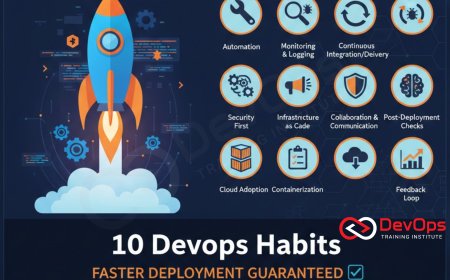
Essential Habits of Successful DevOps Teams
- Blameless Post-Mortems: Focusing on the "what" and "how" instead of the "who" when a failure occurs to foster a culture of learning and continuous improvement.
- Small, Frequent Releases: Reducing the blast radius of changes by shipping smaller chunks of code more often, which makes troubleshooting significantly easier.
- Infrastructure as Code: Ensuring that all environments are reproducible and versioned to eliminate the dreaded "it worked on my machine" problem.
- Proactive Monitoring: Setting up alerts that catch potential issues before they impact the end user, rather than waiting for a customer complaint.
- Continuous Verification: Utilizing feedback loops to confirm that the system is behaving as expected in real time during and after every single deployment.
- Documentation as Code: Keeping technical documentation in the same repository as the code to ensure it stays up to date and accessible to the entire team.
- Empowered Developers: Giving developers the tools and authority to manage their own production environments, leading to higher accountability and faster resolution.
Adopting these habits is not an overnight process but a journey of continuous refinement. Companies that have successfully navigated the "hard way" now prioritize these practices as the bedrock of their operations. They have learned that containerd and other modern runtimes are just tools, and their real strength lies in how their people use those tools to solve business problems. By focusing on these core habits, your team can build a resilient engineering culture that is capable of adapting to any challenge in the twenty twenty six technical landscape. It is about building a system where people and technology work in perfect harmony to deliver exceptional results.
Conclusion: Turning Failures into Foundations
In conclusion, the ten DevOps lessons companies learned the hard way serve as a powerful roadmap for any organization looking to modernize its technical operations. From the importance of culture over tools to the necessity of database automation and proactive security, these insights are born from real world struggles. The transition to a DevOps model is a journey of constant learning, where every failure is an opportunity to improve. By embracing these lessons today, you can build a technical foundation that is not only faster and more efficient but also significantly more resilient and secure for the long term.
As we look toward the future, the rise of AI augmented devops will likely introduce new lessons and challenges for us to navigate. Staying informed about AI augmented devops trends will ensure you remain competitive and prepared for the next wave of innovation. Ultimately, the most successful companies are those that are not afraid to fail, but are quick to learn and adapt. By prioritizing reliability, security, and a healthy engineering culture, you are setting your organization up for success in an ever changing digital world where speed and stability are the primary currencies of progress and business growth.
Frequently Asked Questions
What is the biggest lesson companies learn when adopting DevOps?
The biggest lesson is that culture and communication are more important than any specific tool or technical stack in achieving long term success.
Why is "blameless culture" important for DevOps?
It encourages team members to speak openly about failures, allowing the organization to identify the root cause and prevent the issue from happening again.
How does automating the database improve the deployment process?
It removes the manual bottleneck, ensuring that database changes are always in sync with application code and reducing the risk of data corruption.
What is the danger of "siloed" development and operations teams?
Silos lead to poor communication, slower release cycles, and a "throw it over the wall" mentality that results in higher failure rates and more bugs.
Can DevOps be successful without a complete cultural shift?
While you may see some technical gains, a lack of cultural shift usually results in limited progress and a return to old, inefficient ways of working.
What role does observability play in modern DevOps?
Observability allows teams to understand the internal state of their complex systems, making it easier to troubleshoot and resolve issues quickly and accurately.
How do small releases help in reducing deployment failures?
Smaller releases have a smaller blast radius, making it easier to identify the exact change that caused a problem and allowing for faster rollbacks.
What is technical debt and why should DevOps teams care?
Technical debt is the cost of choosing an easy solution now instead of a better one; it eventually slows down innovation and increases maintenance costs.
How does security fit into the modern DevOps pipeline?
Security is integrated at every stage (DevSecOps) through automated scanning and policy enforcement, rather than being a final check at the end.
Is Kubernetes necessary for every DevOps implementation?
No, while powerful, Kubernetes adds significant complexity and should only be used if your application truly requires its advanced orchestration and scaling features.
What is the value of continuous verification?
It provides real time feedback on system health, ensuring that deployments are actually delivering the desired performance and security outcomes as expected.
How can companies avoid automating bad processes?
They should first map and simplify their manual workflows, identifying and removing inefficiencies before attempting to write any automation code for the task.
Why is documentation often a failure point in DevOps?
Manual documentation quickly becomes outdated; treating documentation as code ensures it stays synchronized with the actual state of the software and infrastructure.
What does "fail fast" mean in an engineering context?
It means identifying and reporting errors as early as possible in the lifecycle, which saves time and prevents larger issues from reaching production.
How can a company measure the success of its DevOps journey?
Success can be measured by metrics such as deployment frequency, lead time for changes, mean time to recovery, and the overall change failure rate.
What's Your Reaction?
 Like
0
Like
0
 Dislike
0
Dislike
0
 Love
0
Love
0
 Funny
0
Funny
0
 Angry
0
Angry
0
 Sad
0
Sad
0
 Wow
0
Wow
0



![100+ Azure DevOps Interview Questions and Answers [Updated 2025]](https://www.devopstraininginstitute.com/blog/uploads/images/202509/image_140x98_68c40aa9a3834.jpg)






![Future Scope of DevOps Careers in Pune [Updated 2025]](https://www.devopstraininginstitute.com/blog/uploads/images/202510/image_140x98_68e3a84652312.jpg)