














![Kong Interview Preparation Guide [2025]](https://www.devopstraininginstitute.com/blog/uploads/images/202509/image_430x256_68dbb95326997.jpg)







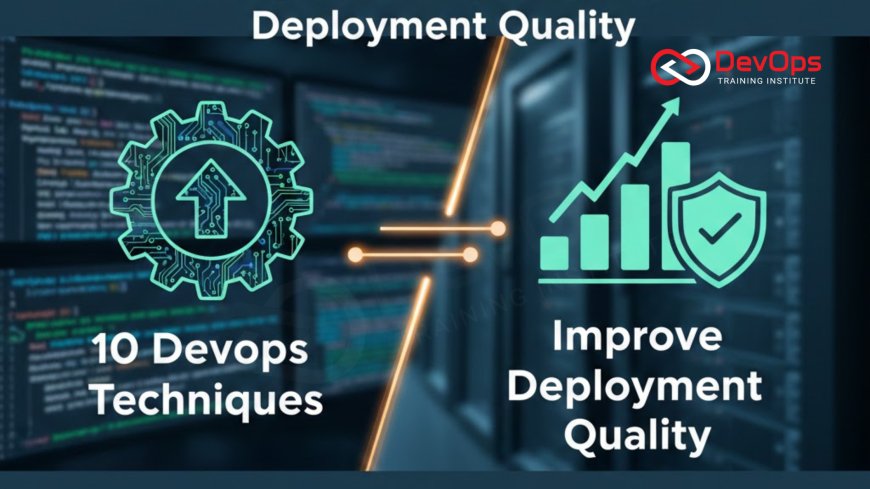
10 DevOps Techniques to Improve Deployment Quality
In the high-stakes software landscape of 2026, deployment quality has become the ultimate differentiator for successful engineering teams. This comprehensive guide explores ten advanced DevOps techniques designed to eliminate production errors and ensure seamless user experiences. From the precision of AI-augmented feedback loops and GitOps-driven cluster synchronization to the resilience of continuous verification and shadow deployments, we provide actionable insights for modernizing your delivery pipeline. Learn how to transform your technical culture and leverage cutting-edge automation to achieve zero-downtime releases, reduce change failure rates, and maintain a secure, compliant infrastructure that supports rapid global scaling in today's competitive digital economy.
Technique One: Embracing AI-Augmented Feedback Loops
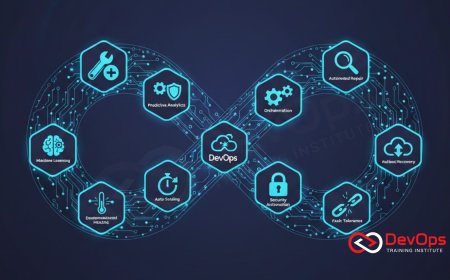
As we navigate through 2026, the sheer volume of telemetry data generated during a deployment can easily overwhelm human operators. AI-augmented feedback loops leverage machine learning models to analyze logs, metrics, and traces in real-time, identifying subtle anomalies that traditional threshold-based alerts might miss. This technique allows teams to move from reactive troubleshooting to predictive prevention, catching potential quality issues before they escalate into full-scale outages. By integrating AI augmented devops capabilities directly into the pipeline, organizations can achieve a higher level of precision in their quality gates.
The core value of this approach lies in its ability to learn from historical failure patterns and suggest proactive optimizations. Instead of just knowing that a build failed, the AI can point to specific code changes or environmental factors that contributed to the instability. This reduces the cognitive load on engineers and speeds up the resolution process. Implementing these intelligent loops is a vital step for any team looking to scale their operations without compromising on the rigorous quality standards required for mission-critical enterprise applications in the modern cloud era.
Technique Two: GitOps and Continuous Synchronization
GitOps has evolved into a mandatory standard for ensuring deployment quality by treating Git as the single source of truth for both application and infrastructure states. This technique utilizes automated operators to maintain continuous synchronization between the declared state in your repository and the actual state of your live clusters. Whenever a change is merged, the operator detects the drift and automatically reconciles the environment. This eliminates the risk of human error associated with manual kubectl commands and ensures that every deployment is repeatable, auditable, and perfectly consistent across all regions.
Beyond simple automation, GitOps provides an inherent safety mechanism through version control. If a new deployment introduces a bug, rolling back is as simple as reverting the commit in Git. The operator will instantly detect the change and return the cluster to its last known healthy state. This declarative approach to management simplifies the complexity of cluster states and allows developers to use familiar workflows for infrastructure changes. It is a powerful way to bridge the gap between development and operations while maintaining a high bar for technical excellence and system reliability.
Technique Three: Advanced Continuous Verification
Continuous verification takes the concept of testing beyond the build phase and into the runtime environment. This technique involves constantly querying the live system to ensure it is behaving according to its defined service level objectives even after a successful rollout. By utilizing continuous verification, teams can detect "silent" failures or performance regressions that only manifest under real-world traffic patterns. This adds an essential layer of protection that traditional unit and integration tests cannot provide, significantly improving the long-term quality of the software.
This proactive monitoring strategy often includes automated health checks and performance benchmarks that run as part of the post-deployment phase. If the system fails to meet these criteria, the pipeline can trigger an automated rollback or alert the on-call team through ChatOps techniques. This ensures that quality is not just a gate to pass through but a continuous state to be maintained. For organizations managing complex microservices, this technique is critical for identifying inter-service dependencies and latent errors that could impact the overall user experience and system availability.
Technique Four: Progressive Delivery with Canary Releases
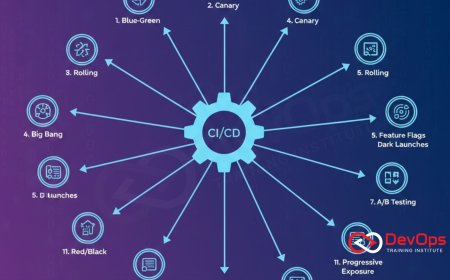
Progressive delivery is a sophisticated rollout strategy that reduces the risk of deployment failures by exposing new features to a small subset of users first. The canary release technique allows you to monitor the performance of a new version in a production environment with minimal impact. If the "canary" version shows any signs of instability, the rollout is paused or reversed before it affects the entire user base. This technique is essential for maintaining deployment quality in high-traffic applications where a total outage would have significant financial and reputational consequences for the business.
Implementing canary releases effectively requires deep observability and fine-grained traffic control, often provided by a service mesh or an intelligent Ingress controller. You can start by sending just 1% of traffic to the new version and gradually increase the weight as confidence grows. This data-driven approach ensures that every release is validated by real users and real data before being fully committed. It is a cornerstone of modern release strategies that prioritize safety, allowing teams to ship faster and more frequently while maintaining an exceptionally low change failure rate.
Comparison of High-Quality Deployment Techniques
| Technique | Primary Goal | Quality Impact | Implementation Effort |
|---|---|---|---|
| GitOps Sync | State Consistency | High | Medium |
| Shift-Left Security | Vulnerability Reduction | Extreme | High |
| Shadow Deployment | Real-world Validation | High | High |
| Automated Rollback | Rapid Recovery | Very High | Medium |
| Chaos Engineering | System Resilience | Medium | High |
Technique Five: Shadow Deployments for Performance Testing
Shadow deployment is an advanced technique where a new version of an application is deployed alongside the production version and receives a copy of live traffic, but the results are not returned to the users. This allows you to test how the new version handles real-world loads and complex edge cases without any risk of downtime or data corruption. It is the ultimate form of performance testing, providing insights that are impossible to replicate in a staging environment. By comparing the output of the "shadow" version with the live version, you can ensure total accuracy before the actual switch occurs.
This technique is particularly useful for major architectural changes, such as moving to a new database or refactoring core business logic. It ensures that your architecture patterns are robust enough to handle the scale of production. While it requires more resources, the reduction in deployment risk is substantial. It allows teams to be bold with their innovations, knowing that they have a safe playground to validate their changes against live data. Shadow deployments represent a significant cultural change in how high-stakes software is validated in the industry today.
Technique Six: Shift-Left Security and DevSecOps
Deployment quality is inextricably linked to security, and the "shift-left" movement emphasizes integrating security checks at the very beginning of the development lifecycle. By using automated tools to scan code and dependencies for vulnerabilities during the commit phase, teams can catch and fix issues long before they reach production. This reduces the risk of a security-related deployment failure and ensures that every release is hardened by default. Implementing admission controllers within your clusters can further enforce these security standards automatically.
A true DevSecOps approach involves more than just scanning; it requires a shared responsibility for security across the entire team. This includes utilizing secret scanning tools to prevent credential leakage and ensuring that infrastructure configurations are compliant with organizational policies. By automating these checks, you remove the bottleneck of manual security reviews and allow for faster, more secure deployments. This technique builds trust with your users and ensures that your deployment process is a source of strength rather than a potential liability for the organization's digital assets.
Technique Seven: Chaos Engineering for Resilience
Chaos engineering is the disciplined practice of injecting controlled failures into a system to understand how it behaves under stress. By deliberately breaking things in a safe environment, teams can identify hidden weaknesses and improve the overall incident handling capabilities of their infrastructure. This technique ensures that your deployment quality is not just a result of good luck but is built into the architecture of the system itself. It helps engineers design for failure, leading to more resilient and stable production environments that can withstand unexpected disruptions without manual intervention.
Performing chaos experiments on a regular basis builds "muscle memory" for the operations team, allowing them to react faster and more effectively when real incidents occur. It also encourages the development of self-healing mechanisms, such as automated service restarts and circuit breakers. When integrated into the CI/CD pipeline, chaos testing acts as a final validation of a system's robustness. This technique is essential for any organization managing cluster states in a highly dynamic and distributed cloud environment where the only constant is change and the risk of localized hardware or network failures.
Essential Tools for Deployment Quality
- Prometheus & Grafana: These are vital for deep observability, providing the real-time metrics needed to validate deployment health and system performance.
- ArgoCD & Flux: Leading tools for implementing GitOps and ensuring that your continuous synchronization is automated and reliable across all environments.
- Snyk & Aqua Security: Essential for shifting security left and automating the scanning of container images and dependencies for known vulnerabilities and risks.
- Argo Rollouts: A powerful controller that enables advanced deployment strategies like canary and blue-green with automated analysis and rollback capabilities.
- Gremlin: A specialized platform for chaos engineering that helps teams run controlled experiments to improve system resilience and incident response times.
- Spacelift: An infrastructure as code management tool that helps enforce policies and prevent configuration drift across your various cloud providers and clusters.
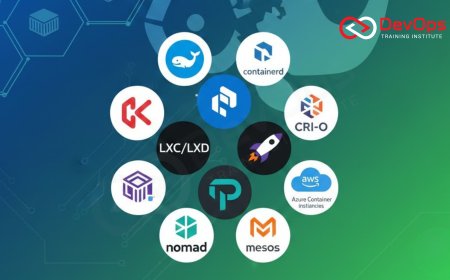
- Containerd: Choosing an efficient runtime like containerd can improve pod startup times and overall cluster performance during high-frequency rollout cycles.
Selecting the right combination of these tools is critical for building a high-quality delivery pipeline. It is not just about the features they offer, but how well they integrate into your existing workflows and technical culture. As you adopt these tools, focus on creating a unified experience for your developers, where the infrastructure handles the heavy lifting of quality and security checks. This allows your human talent to focus on innovation and solving complex business problems while the automated toolchain ensures that every release meets the highest standards of technical excellence and user satisfaction.
Technique Eight: Automated Rollback and Self-Healing
The ability to recover quickly from a failed deployment is just as important as the deployment itself. Automated rollback techniques use monitoring data to detect when a new version is failing and instantly revert the system to the last known healthy state without human intervention. This minimizes the duration of any outage and protects the user experience during a crisis. By automating the incident handling process, you ensure that your MTTR (Mean Time to Recovery) is as short as possible, which is a key metric for evaluating the overall quality of your DevOps practices.
Self-healing takes this a step further by allowing the system to automatically resolve common issues, such as restarting a crashed container or scaling up resources during a traffic spike. This reduces the pressure on on-call engineers and ensures that the system remains available even when small errors occur. These techniques are particularly effective when combined with AI augmented devops, which can identify the root cause of a failure and initiate the appropriate remediation action. It turns your infrastructure into a resilient, autonomous entity that can maintain its own quality and stability in a busy production environment.
Conclusion: Building a Culture of Quality
In conclusion, improving deployment quality in 2026 requires a multi-faceted approach that combines advanced technical techniques with a strong DevOps culture. From the precision of AI-augmented feedback loops and GitOps synchronization to the resilience provided by chaos engineering and automated rollbacks, these ten techniques offer a roadmap for achieving engineering excellence. The key is to prioritize automation, observability, and security at every stage of the software delivery lifecycle. By doing so, you create a technical foundation that supports rapid innovation while ensuring a stable and secure experience for your users.
As the industry continues to evolve, the integration of who drives cultural change will remain a central theme in successful DevOps adoption. Technology alone is not enough; it must be supported by a team that values transparency, collaboration, and continuous improvement. By embracing these ten techniques today, you are positioning your organization for long-term success in an increasingly complex and competitive digital world. Quality is not a destination but a continuous journey of learning and refinement. Start by implementing the techniques that address your biggest bottlenecks and build your way toward a world-class deployment pipeline.
Frequently Asked Questions
What is the main goal of using AI in DevOps for deployment quality?
The main goal is to use machine learning to analyze telemetry data and detect anomalies early, preventing failures before they impact users.
How does GitOps improve the reliability of cluster deployments?
GitOps ensures that the live cluster state always matches the version-controlled configuration in Git, eliminating manual errors and configuration drift issues.
What is the difference between continuous testing and continuous verification?
Continuous testing happens during the build process, while continuous verification monitors the system after deployment to ensure it meets performance goals.
Why is a canary release safer than a traditional rolling update?
A canary release exposes a new version to a small group first, allowing for validation before it affects the entire user base.
What is a shadow deployment and when should I use it?
A shadow deployment mirrors live traffic to a new version for testing without affecting users; use it for risky architectural changes.
How do admission controllers enhance the quality of a deployment?
They intercept requests to the API server and reject any configurations that do not meet your security, compliance, or quality standards.
What is the benefit of chaos engineering for a DevOps team?
It helps identify hidden system weaknesses by injecting controlled failures, leading to more resilient and stable production environments and infrastructure.
How can automated rollbacks help in incident handling?
They instantly revert a failed deployment to a previous stable version, significantly reducing the downtime and impact on the end users.
What is "shift-left" security in a DevOps pipeline?
It means integrating security scanning and policy enforcement as early as possible in the development process to catch issues quickly.
Does containerization impact the speed of a deployment?
Yes, containers are lightweight and start quickly, which allows for faster rollouts and more efficient resource utilization in the cloud environment.
What are the most important metrics for deployment quality?
Key metrics include deployment frequency, lead time for changes, change failure rate, and the mean time to recovery after an incident.
How does ChatOps facilitate collaboration during a deployment?
ChatOps brings deployment alerts and actions into shared chat channels, ensuring everyone has real-time visibility and can coordinate their efforts effectively.
What is configuration drift and how can it be avoided?
Drift occurs when manual changes cause the cluster to deviate from its code; it is avoided by using GitOps and IaC.
Why are health checks critical for automated deployments?
Health checks allow the orchestrator to know if a pod is healthy and ready to serve traffic before continuing a rollout.
Can small teams implement advanced rollout strategies?
Yes, many modern tools provide built-in support for canary and blue-green releases, making them accessible even to smaller engineering organizations.
What's Your Reaction?
 Like
0
Like
0
 Dislike
0
Dislike
0
 Love
0
Love
0
 Funny
0
Funny
0
 Angry
0
Angry
0
 Sad
0
Sad
0
 Wow
0
Wow
0




![100+ Azure DevOps Interview Questions and Answers [Updated 2025]](https://www.devopstraininginstitute.com/blog/uploads/images/202509/image_140x98_68c40aa9a3834.jpg)






![Future Scope of DevOps Careers in Pune [Updated 2025]](https://www.devopstraininginstitute.com/blog/uploads/images/202510/image_140x98_68e3a84652312.jpg)