























![Kong Interview Preparation Guide [2025]](https://www.devopstraininginstitute.com/blog/uploads/images/202509/image_430x256_68dbb95326997.jpg)
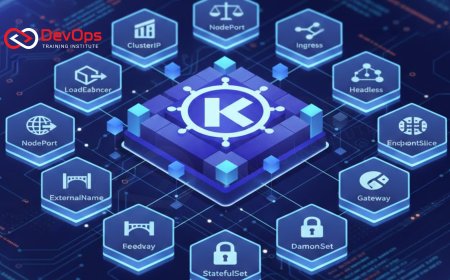











10 Kubernetes Node Maintenance Tips
Ensure seamless cluster operations with ten essential Kubernetes node maintenance tips designed for modern DevOps teams in twenty twenty six. This guide covers critical procedures like cordoning and draining nodes, implementing pod disruption budgets, and managing stateful workloads to achieve zero downtime. Learn how to handle kernel updates, security patches, and hardware replacements while maintaining high availability and consistent performance across your production environment. Discover the best practices for automated node lifecycle management and cluster stability to keep your engineering workflows smooth and predictable in the ever-evolving cloud-native landscape today.

Introduction to Reliable Node Maintenance
In the world of container orchestration, Kubernetes nodes are the physical or virtual workhorses that run your applications. However, like any other infrastructure component, these nodes require regular maintenance to apply security patches, update kernels, or upgrade the underlying Kubernetes version itself. Node maintenance is a delicate balance between keeping the infrastructure healthy and ensuring that the applications running on top remain available to users. Without a structured approach, even a simple reboot can lead to cascading failures and unexpected downtime for your critical services.
Mastering node maintenance involves moving beyond manual intervention toward a set of automated, repeatable patterns. In twenty twenty six, high-performing engineering teams treat nodes as replaceable units rather than static servers, leveraging the native capabilities of Kubernetes to move workloads seamlessly. By following professional maintenance tips, you can transform risky operations into routine tasks. This guide outlines the ten most effective strategies to manage your nodes with confidence, ensuring that your continuous synchronization between infrastructure updates and application uptime remains unbroken during every maintenance window.
Cordon and Drain for Safe Pod Eviction
The most fundamental rule of node maintenance is to never touch a node while it is still actively hosting pods. The process begins with cordoning the node, which marks it as unschedulable. This simple action tells the Kubernetes scheduler to stop placing new pods on that specific node while allowing existing ones to continue running. It is the first step in creating a safe boundary for your work, ensuring that no new traffic or workloads interfere with your maintenance plans. Cordoning is a critical signal for the cluster that a node is entering a state of cultural change and will soon be offline.
Once cordoned, the node must be drained. Draining is the process of gracefully evicting all running pods so they can be rescheduled onto other healthy nodes in the cluster. Unlike a sudden shutdown, draining respects the termination grace periods of your containers, allowing them to finish processing active requests and shut down cleanly. Using the --ignore-daemonsets flag is often necessary, as DaemonSet pods are designed to run on every node and usually handle system-level tasks like logging or monitoring. By following this sequence, you ensure that your cluster states remain stable even as individual pieces of hardware are taken out of service.
Utilizing Pod Disruption Budgets (PDBs)
To achieve true zero-downtime maintenance, you must protect your applications from too many simultaneous evictions. Pod Disruption Budgets (PDBs) allow you to define the minimum number of replicas that must remain operational at all times for a given service. When you attempt to drain a node, the Kubernetes API checks your PDBs; if evicting a pod would violate the budget, the drain operation will pause or fail. This prevents a situation where maintenance on multiple nodes accidentally takes down all instances of a critical microservice, which is a common pitfall in large-scale environments.
Setting up PDBs is a vital part of your incident handling strategy. For a service with four replicas, a PDB might specify that at least three must be available. This gives the cluster the flexibility to move one pod at a time during maintenance without impacting user traffic. As you scale your infrastructure, these budgets act as a contract between application developers and infrastructure engineers, ensuring that maintenance can proceed safely. Combining PDBs with architecture patterns that emphasize high availability is the best way to maintain a resilient and professional cloud environment in twenty twenty six.
Handling Stateful Applications with Care
Maintenance on nodes running stateful applications, such as databases or message queues, requires additional precautions. Unlike stateless pods, stateful workloads often depend on persistent volumes and stable network identities. When a node is drained, you must ensure that the underlying storage can be successfully detached from the old node and reattached to the new one. This transition can sometimes take longer than expected, leading to timeouts or data corruption if not monitored closely. It is essential to verify that your storage provider supports rapid reattachment before starting maintenance on these critical nodes.
For applications managed by a StatefulSet, maintenance should be performed one node at a time to allow the cluster to maintain quorum. You should also verify the health of the application's data replication before proceeding to the next node. For example, if you are maintaining a three-node database cluster, wait for the first node to be fully back in service and synchronized before draining the second. This disciplined approach ensures that your continuous synchronization of data remains intact. By following these specialized release strategies for stateful nodes, you minimize the risk of data loss and ensure that your most sensitive workloads remain robust during infrastructure updates.
Summary of Node Maintenance Best Practices
| Maintenance Step | Action Taken | Primary Goal | Tool/Command |
|---|---|---|---|
| Cordon | Mark node unschedulable | Stop new pod placement | kubectl cordon |
| Drain | Evict existing pods | Safe pod rescheduling | kubectl drain |
| PDB Check | Verify availability budget | Prevent service outages | kubectl get pdb |
| Maintenance | Patching/Rebooting | Update system components | System Specific |
| Uncordon | Mark node schedulable | Restore pod capacity | kubectl uncordon |
Automation and Health Checks Post-Maintenance
After the physical or virtual maintenance is complete, the process of bringing the node back into the cluster must be handled with the same care as taking it out. Once the node is rebooted and the Kubelet service is verified to be running, you use the uncordon command to allow the scheduler to start placing pods on it again. However, simply uncordoning is not enough. You should monitor the node's health for several minutes to ensure that it doesn't enter a "NotReady" state due to lingering issues with the network or the containerd runtime. Automated health checks should verify pod-to-pod connectivity and disk I/O performance before you consider the maintenance task finished.
Modern DevOps teams often use AI augmented devops tools to automate this entire lifecycle. These tools can automatically identify nodes that require patching, trigger the cordon and drain sequence, perform the update, and verify health before returning the node to the pool. This reduces the risk of human error and ensures that maintenance is performed consistently across the entire cluster. By integrating continuous verification into your post-maintenance workflow, you can be certain that your infrastructure is always in a known good state. This level of automation is essential for managing large, complex clusters where manual maintenance would be impossible.
Staggering Maintenance and Redundancy
One of the most effective tips for node maintenance is to stagger your schedule across different failure domains or availability zones. If you take down multiple nodes in the same zone at once, you risk a total zone outage if the remaining nodes in that zone fail. By spreading maintenance windows over several days or weeks, you ensure that the cluster always has redundant capacity elsewhere. This strategy is a key part of who drives cultural change toward a more resilient architecture. It encourages a mindset where infrastructure is always partially in maintenance, making the system naturally more robust to individual failures.
Furthermore, you should always maintain a buffer of spare capacity in your cluster to handle the temporary loss of nodes during maintenance. If your cluster is running at 90% capacity, draining even a single node might leave the remaining pods with nowhere to go, causing a "Pending" state and service disruption. Monitoring your resource utilization through AI augmented devops can help you predict how much overhead you need during maintenance cycles. Ensuring that your containerd instances have enough breathing room on other nodes is a professional standard that differentiates high-performing teams from those who constantly fight fires during maintenance windows.
Top 10 Kubernetes Node Maintenance Tips
- Always Backup Before Starting: Ensure that etcd and any critical stateful data are backed up before you perform any destructive maintenance on the nodes.
- Use Maintenance Taints: If your maintenance takes a long time, use specific taints to prevent pods from being scheduled even if someone accidentally uncordons the node.
- Monitor Termination Grace Periods: Adjust the terminationGracePeriodSeconds for your pods to give them enough time to shut down cleanly during a drain.
- Schedule During Off-Peak Hours: Use historical traffic data from your ChatOps techniques to find the best window for maintenance when user impact is lowest.
- Verify CNI Plugin Health: Post-maintenance, check that your network plugin (Calico, Cilium, etc.) is correctly managing traffic on the updated node.
- Validate Security Patches: Use automated scanning tools to confirm that the security fixes you applied are actually present and effective on the node.
- Check Kernel Compatibility: If updating the host kernel, verify that it is fully compatible with your current version of Kubernetes and the containerd runtime.
- Implement Rollback Procedures: Have a clear, documented plan to revert the node to its previous state if the maintenance or update fails to work.
- Coordinate with Application Teams: Ensure that the teams owning the workloads are aware of the maintenance window and can monitor their services in real-time.
- Automate Post-Maintenance Testing: Run a small suite of "smoke tests" on a node once it is back in service to confirm that it is correctly routing traffic.
By following these ten tips, you can transform node maintenance from a source of stress into a competitive advantage. A well-maintained cluster is a stable cluster, and stability is the foundation of innovation. As you become more comfortable with these procedures, you can look for more release strategies that allow you to replace nodes entirely rather than patching them in place. This "immutable infrastructure" approach is the pinnacle of modern DevOps, ensuring that every node in your cluster is identical, secure, and running the most recent validated configuration.
Conclusion: Achieving Maintenance Excellence
In conclusion, Kubernetes node maintenance is a critical discipline that ensures the long-term health and security of your containerized infrastructure. By mastering the core commands like cordon and drain, protecting workloads with Pod Disruption Budgets, and staggering updates across different zones, you can maintain high availability even during major system upgrades. The key is to treat maintenance as a structured, automated process rather than an ad-hoc event. As your organization grows, these practices will provide the stability needed to scale your operations without compromising on service quality or security.
Looking ahead, the role of AI augmented devops will continue to simplify node management by predicting failures and automating the remediation process. Staying informed about continuous verification will help you maintain a state of permanent readiness in your cluster. Ultimately, the goal of node maintenance is to provide a reliable "paved road" for your applications. By following these ten tips today, you are building a professional, resilient, and future-proof Kubernetes operation that can handle any challenge in the twenty twenty six digital landscape. Excellence in maintenance is the hallmark of a truly mature DevOps team.
Frequently Asked Questions
What is the difference between cordoning and draining a node?
Cordoning marks a node as unschedulable to stop new pods, while draining actually removes the existing pods to move them elsewhere.
Why does the drain command often need the --ignore-daemonsets flag?
DaemonSet pods run on every node by design; the drain command requires this flag to acknowledge that these specific pods won't be moved.
How do Pod Disruption Budgets protect my applications?
PDBs ensure that a minimum number of replicas remain running, preventing the cluster from draining a node if it would cause an outage.
Can I reboot a Kubernetes node without draining it first?
While possible, it is very risky and can cause service interruptions, data loss, and long recovery times as the cluster reacts to the sudden failure.
What happens to my data if a node is drained?
Stateless pod data is lost, but stateful pods with persistent volumes will have their storage detached and reattached to a new node automatically.
How long does a typical node drain take?
It depends on the number of pods and their termination grace periods, but a typical drain completes within one to five minutes.
Should I perform maintenance on control plane nodes differently?
Yes, control plane maintenance requires extra care to ensure etcd quorum is maintained; always upgrade masters one at a time sequentially.
How can I automate node patching in twenty twenty six?
Use tools like Kured (Kubernetes Reboot Daemon) or managed cloud features like GKE/EKS auto-upgrades to handle patching and reboots automatically.
What is a maintenance taint and how is it used?
A taint is a property applied to a node that repels pods; maintenance taints ensure no pods are scheduled while work is being performed.
What should I do if a node drain gets stuck?
Check if a PDB is being violated or if a pod has a very long termination grace period; you may need to manually intervene in rare cases.
Is it better to patch nodes or replace them entirely?
In modern cloud DevOps, replacing nodes with fresh, pre-patched images (immutable infrastructure) is generally preferred over patching them in place.
How does a service mesh help during node maintenance?
A service mesh provides better observability and can handle retries and circuit breaking if traffic is briefly interrupted during a pod migration.
Can I use ChatOps to trigger node maintenance?
Yes, many teams use bots in Slack or Teams to trigger maintenance workflows and provide real-time status updates to the rest of the team.
What is the terminationGracePeriodSeconds setting?
It is the amount of time Kubernetes waits for a pod to shut down cleanly after receiving a SIGTERM signal before forcibly killing it.
How do I know if a node is ready to handle traffic again?
Check the node status with kubectl get nodes; it should be "Ready" and no longer have the "SchedulingDisabled" status once uncordoned.
What's Your Reaction?
 Like
0
Like
0
 Dislike
0
Dislike
0
 Love
0
Love
0
 Funny
0
Funny
0
 Angry
0
Angry
0
 Sad
0
Sad
0
 Wow
0
Wow
0




![100+ Azure DevOps Interview Questions and Answers [Updated 2025]](https://www.devopstraininginstitute.com/blog/uploads/images/202509/image_140x98_68c40aa9a3834.jpg)






![Future Scope of DevOps Careers in Pune [Updated 2025]](https://www.devopstraininginstitute.com/blog/uploads/images/202510/image_140x98_68e3a84652312.jpg)