

![Kong Interview Preparation Guide [2025]](https://www.devopstraininginstitute.com/blog/uploads/images/202509/image_430x256_68dbb95326997.jpg)

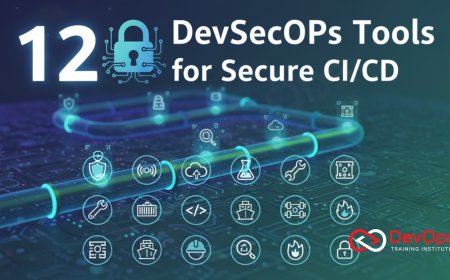
12 Key Components of a DevSecOps Architecture
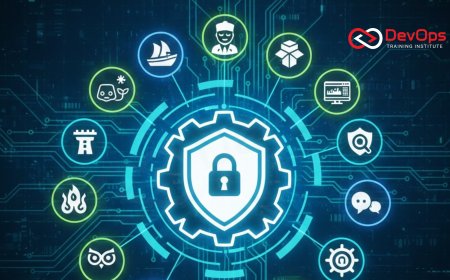
Explore the 12 essential components required to build a robust DevSecOps architecture that integrates security seamlessly into every stage of the CI/CD pipeline. This guide covers vital elements, including automated static analysis, centralized secrets management, continuous monitoring via observability pillars, and policy-as-code enforcement for infrastructure. Learn how these components work together to ensure proactive security, continuous compliance, and rapid incident response, enabling high-velocity software delivery without compromising on enterprise-level trust and reliability in cloud-native environments.
Introduction
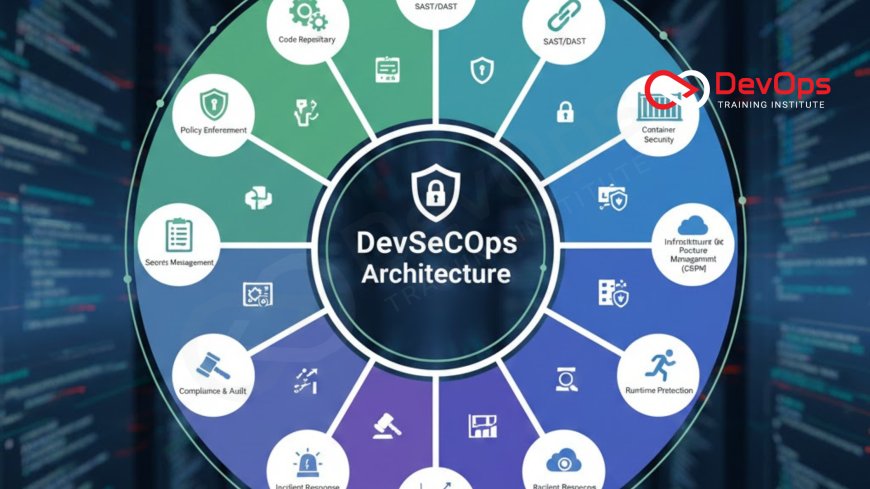
DevSecOps is the evolution of the DevOps methodology, advocating for the integration of security practices and tools into every phase of the Continuous Integration and Continuous Delivery (CI/CD) pipeline. It is the cultural and technical realization of the "shift left" principle, where security is a shared responsibility, automated, and treated as a first-class citizen of the software delivery lifecycle. A well-designed DevSecOps architecture ensures that velocity and security are not competing priorities but synergistic elements of a high-performing engineering organization.
Building this architecture requires more than just adding a single security scan to your pipeline. It demands a holistic, layered approach that includes tooling and processes at the code, build, deployment, and runtime stages. The goal is to establish automated guardrails that prevent known vulnerabilities from progressing while providing deep visibility and rapid response capabilities for zero-day threats in production. Without these integrated components, the accelerated pace of modern deployment becomes a critical security liability, making the pipeline the easiest target for attackers.
This guide breaks down the 12 key components essential for establishing a mature and resilient DevSecOps architecture. We will cover the tools, processes, and integrations necessary to automate security validations, secure sensitive data, and maintain continuous compliance from code commit to cloud runtime. Mastering the integration of these components allows organizations to confidently manage risks and accelerate their delivery cycles, transforming security from a bottleneck into an enabler of speed and reliability.
Phase 1: Code and Build Security (Shift Left)
This phase focuses on embedding security into the development and integration stages, catching vulnerabilities and policy violations right at the source. The components here are designed to give developers immediate, actionable feedback, empowering them to fix flaws before they become part of the main codebase, thereby dramatically reducing the cost of remediation.
1. Static Application Security Testing (SAST) Tools
SAST tools analyze proprietary source code without executing it, identifying common security vulnerabilities, misconfigurations, and coding flaws (e.g., SQL injection, insecure cryptography). These checks should run automatically on every pull request (PR) or code commit. Integration with the SCM system is crucial to provide inline feedback directly in the developer's workflow, ensuring immediate remediation.
2. Software Composition Analysis (SCA) Tools
SCA tools automatically identify and inventory all third-party, open-source libraries and dependencies used by the application. They scan these components against public vulnerability databases (CVEs) and license compliance lists. An effective SCA tool blocks the build or PR if a critical, known vulnerability or non-compliant license is detected, securing the software supply chain from external risks.
3. Secrets Detection and Management Integration
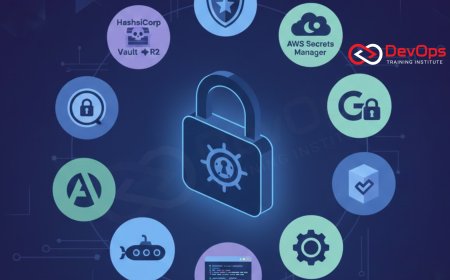
This component involves two parts: first, using specialized tools (like Gitleaks or similar scanners) to prevent sensitive data (API keys, tokens) from being committed to the repository; and second, integrating the CI pipeline with a centralized secrets vault (e.g., HashiCorp Vault). Secrets must never be stored in plain text configuration files, but rather injected securely at runtime. This practice, often coupled with encryption at rest, is foundational for a secure environment.
4. IDE Plugins and Developer Training
The earliest security gate is the developer's mind. Provide developers with security scanning plugins for their Integrated Development Environments (IDEs) that offer real-time feedback on vulnerabilities and coding flaws as they type. This is reinforced by mandatory, context-specific security training that educates developers on secure coding practices and the importance of continuous threat modeling.
Phase 2: CI/CD and Configuration Hardening
This phase secures the process of translating code into an executable artifact and ensures that the infrastructure where the code will run is secure by design. It's about maintaining the integrity of the artifact and applying security controls at the infrastructure layer using code, eliminating the risk of human error or configuration drift in critical systems like host operating systems.
5. CI/CD Security Gates and Artifact Signing
The CI/CD platform (e.g., Jenkins, GitLab, Azure Pipelines) must be configured to enforce mandatory security gates. These gates should halt the pipeline if SAST/SCA or vulnerability scans fail. Additionally, all resulting artifacts (container images, binaries) must be digitally signed (e.g., using Cosign or Notary) before being pushed to a registry. This ensures artifact integrity and prevents tampering throughout the deployment process.
6. Infrastructure as Code (IaC) Security Scanners
IaC tools (Terraform, CloudFormation, Ansible) define the runtime environment. IaC scanners (e.g., Checkov, Terrascan) automatically validate these configuration files for security misconfigurations (e.g., open ports, over-privileged IAM roles) before provisioning. This shifts security left for the infrastructure itself, providing a crucial check against accidental provisioning of insecure cloud resources.
7. Policy-as-Code (PaC) Engine
A PaC engine, often implemented using Open Policy Agent (OPA), allows the organization to codify specific governance and compliance rules (e.g., "all S3 buckets must be encrypted," "only RHEL-hardened containers are allowed"). This engine is integrated into the CI/CD pipeline and the container orchestrator (e.g., Kubernetes admission controller) to enforce these rules at runtime and deployment time, ensuring hardening best practices are non-negotiable.
8. Secure Host and OS Configuration Management
The underlying infrastructure (VMs, cloud worker nodes) must adhere to strict security baselines. Configuration management tools (Ansible, Chef) or specialized cloud tools are used to automate OS hardening, which involves disabling unnecessary services, configuring logging, and applying security modules like SELinux at the host level. The pipeline must verify that the base OS (e.g., RHEL) is secured before deploying any application, ensuring that the foundation is sound.
Phase 3: Deployment and Runtime Defense
The final phase focuses on defending the live application, ensuring that security controls adapt dynamically to the runtime environment and provide the visibility needed for rapid incident response. These components monitor the application's behavior and the integrity of the runtime environment continuously.
9. Dynamic Application Security Testing (DAST)
DAST tools test the running application (typically in a staging environment) by simulating external attacks, identifying vulnerabilities like cross-site scripting (XSS) or broken authentication that static analysis might miss. DAST provides coverage for configuration errors, runtime flaws, and complex user flows, acting as a final, automated pre-production security check against live application behavior. This complements SAST by analyzing the system from an external, black-box perspective.
10. Runtime Security and Container Isolation
This component includes technologies that provide behavioral monitoring and intrusion prevention for running containers and processes. Runtime tools detect malicious activity (e.g., unauthorized file access, unexpected process execution, container breakouts) and automatically enforce security policies, isolating or terminating compromised workloads. This provides a crucial defense layer that protects against zero-day and unknown threats, ensuring container isolation is maintained.
11. Centralized Observability (Metrics, Logs, Traces)
Security visibility relies heavily on observability. The architecture must integrate security events with the three pillars of observability: metrics, logs, and traces. Centralized log management is essential for auditing and forensic analysis, while metrics (e.g., failed logins, policy violations) can trigger alerts. The ability to correlate these signals is vital for incident response, ensuring that the security team can instantly understand the impact and spread of a threat. This continuous monitoring is paramount.
12. Security Information and Event Management (SIEM)
The SIEM platform is the security team's central nervous system. It aggregates and analyzes security data from all sources—CI/CD tools, host logs, cloud metadata, firewalls, and application logs. Using advanced correlation, the SIEM identifies patterns indicative of a breach or attack. This enables real-time threat detection and provides comprehensive, auditable log management for incident response and regulatory compliance, ensuring all security events are reviewed and acted upon effectively.
Conclusion
A mature DevSecOps architecture is a powerful system of automated checks and balances, designed not to impede delivery but to ensure that speed and resilience are delivered together. The 12 components detailed—spanning code analysis, configuration hardening, runtime defense, and continuous monitoring—provide the necessary depth and breadth to secure the modern software supply chain. By integrating SAST, SCA, and secrets management into the developer workflow, teams shift left, empowering developers as the first line of defense. By enforcing PaC, artifact signing, and robust host security, teams maintain integrity and compliance across environments.
The integration of security requires a continuous feedback loop. Metrics from runtime security and the SIEM must inform the threat modeling process, leading to updated policy-as-code rules, which are then enforced by the CI/CD gates. This circular, automated process ensures that the organization adapts rapidly to new vulnerabilities and minimizes the risk exposure of its cloud-native applications. Embracing this holistic architecture transforms security into a core, competitive advantage, enabling the high-velocity, reliable delivery that modern markets demand.
Ultimately, the success of DevSecOps lies in centralizing control and visibility. The centralized secrets management, combined with API Gateways for secure traffic ingress and comprehensive log management, creates a security control plane that is both automated and auditable. By systematically implementing these 12 components, organizations can confidently accelerate their software delivery, knowing that security is not a reactive bottleneck but an intrinsic, proactive part of their operational excellence strategy.
Frequently Asked Questions
What is the primary role of a SAST tool in DevSecOps?
SAST analyzes source code for security vulnerabilities and coding flaws without execution, providing early feedback to developers in the pull request phase.
How does SELinux contribute to container isolation in a DevSecOps architecture?
SELinux provides Mandatory Access Control (MAC) at the host OS level, restricting the actions and resources available to any process, including those running inside a compromised container.
Why is log management centralization critical for incident response?
Centralized log management aggregates security and application logs from all distributed components, providing a single, auditable source of truth for forensic analysis and rapid threat correlation.
What is the difference between SAST and DAST?
SAST (Static) analyzes non-running source code, while DAST (Dynamic) simulates external attacks against the running application (e.g., in a staging environment) to find runtime flaws.
How does policy-as-code (PaC) protect infrastructure?
PaC codifies security and compliance rules, automatically validating IaC files (e.g., Terraform) or runtime manifests against these rules before they are provisioned or deployed, preventing insecure configurations.
What is the purpose of digitally signing artifacts in CI/CD?
Digital signatures ensure artifact integrity and origin verification, preventing tampering and unauthorized deployments by verifying the artifact's signature against a trusted key before it runs in production.
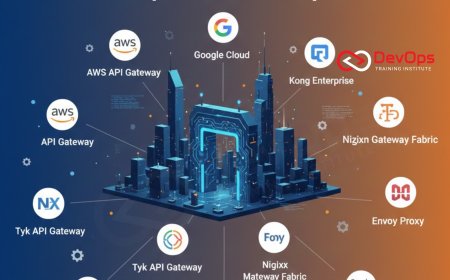
How do API Gateways fit into DevSecOps security?
API Gateways centralize critical security functions like authentication, authorization, and rate limiting at the ingress point, simplifying security enforcement for individual microservices and protecting internal traffic.
What is the role of continuous threat modeling in a mature architecture?
It's an iterative process of identifying threats and vulnerabilities that informs and updates security policy-as-code rules, ensuring automated security checks remain relevant against emerging attack vectors.
Why is least privilege essential for CI/CD build agents?
It limits the blast radius of a potential compromise; if an agent is breached, its restricted permissions prevent attackers from pivoting easily to production infrastructure or sensitive data.
How does observability help the security team?
Observability provides metrics (for alerting), logs (for forensics), and traces (for incident scope), giving security teams the necessary context for fast, data-driven threat detection and incident response.
What security benefit is gained from automating RHEL 10 hardening?
Automated RHEL 10 hardening ensures that the host operating system has a minimal attack surface and strong security controls (like configured firewalld and audit logging) applied consistently before any container workload is scheduled.
What is the primary function of a SIEM system in DevSecOps?
A SIEM aggregates and analyzes security data from all components (logs, network traffic, alerts) to identify complex threat patterns, enabling real-time detection and comprehensive incident management and auditing.
What is the role of secrets management in CI/CD?
Secrets management securely injects credentials into the pipeline agent's memory at runtime, preventing hardcoded secrets in source code, configuration files, or build logs, which is a major security risk.
Why is SSH keys security relevant to CI/CD?
Secure management of SSH keys security is vital for automating access to VMs or bare metal hosts for deployment and configuration management, ensuring that this sensitive access mechanism is tightly controlled and audited.
How does IaC security contribute to regulatory compliance?
By codifying security policies and automatically validating against them, IaC security provides an auditable, verifiable record that infrastructure is provisioned and maintained according to regulatory mandates, simplifying compliance efforts.
What's Your Reaction?
 Like
0
Like
0
 Dislike
0
Dislike
0
 Love
0
Love
0
 Funny
0
Funny
0
 Angry
0
Angry
0
 Sad
0
Sad
0
 Wow
0
Wow
0

![100+ Azure DevOps Interview Questions and Answers [Updated 2025]](https://www.devopstraininginstitute.com/blog/uploads/images/202509/image_140x98_68c40aa9a3834.jpg)



![Future Scope of DevOps Careers in Pune [Updated 2025]](https://www.devopstraininginstitute.com/blog/uploads/images/202510/image_140x98_68e3a84652312.jpg)