











![Kong Interview Preparation Guide [2025]](https://www.devopstraininginstitute.com/blog/uploads/images/202509/image_430x256_68dbb95326997.jpg)







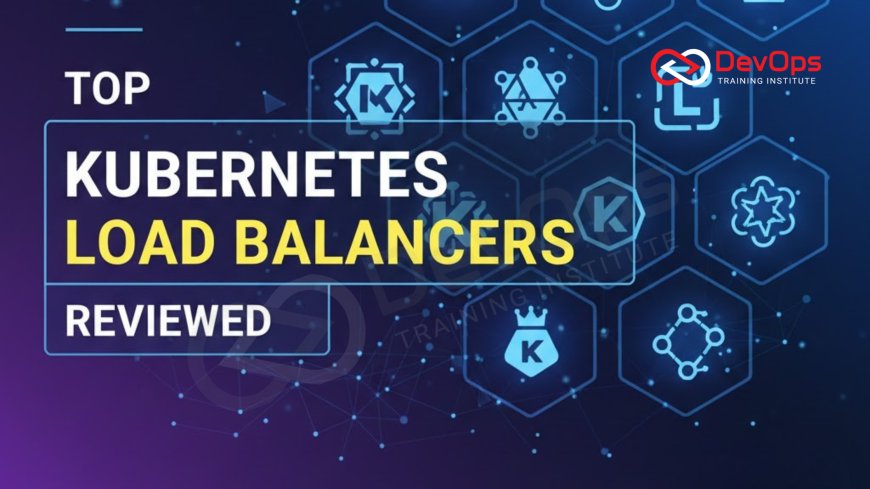
Top 15 Kubernetes Load Balancers Reviewed
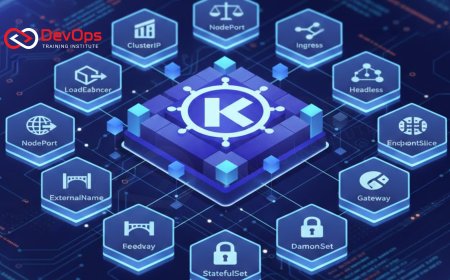
Explore our comprehensive review of the top 15 Kubernetes load balancers for 2025, covering essential cloud native and open source solutions. This guide compares leading ingress controllers, service meshes, and hardware options like NGINX, HAProxy, Istio, and AWS ELB. Learn how to optimize traffic orchestration, improve application reliability, and ensure seamless scalability for your containerized microservices while following modern infrastructure as code best practices for production ready clusters.
Introduction to Kubernetes Traffic Orchestration
Managing traffic in a containerized world is vastly different from traditional hardware environments. In Kubernetes, applications are dynamic, with pods spinning up and down constantly. A robust load balancer is the bridge between external users and these internal services, ensuring that every request finds a healthy destination. Without proper orchestration, even the most powerful application can fail under the pressure of unpredictable traffic spikes or infrastructure shifts.
In this guide, we review the top 15 solutions that have defined the industry in 2025. These range from cloud-integrated giants to flexible open-source controllers that provide deep visibility into your network. Choosing the right tool depends on your specific cloud architecture and whether you prioritize ease of use or granular control. As we dive into these reviews, we will look at how each balancer handles security, performance, and the complex routing requirements of modern microservices.
Evolution of Ingress and Gateway APIs
The way we expose services has evolved from simple NodePorts to sophisticated Gateway APIs. In the early days, the Ingress resource was the standard for managing HTTP traffic, but it often required custom annotations for advanced features. Today, the Gateway API has become the preferred choice for many, offering a more expressive and extensible way to manage north-south traffic. This shift allows for a clearer separation of duties between infrastructure providers and application developers.
Load balancers in 2025 are no longer just traffic cops; they are intelligent layers that provide TLS termination, rate limiting, and sophisticated routing. By understanding how does gitops maintain continuous synchronization, teams can ensure their networking rules are always in sync with their code. This automation reduces the risk of manual configuration errors, which are a leading cause of downtime. Whether you use a classic Ingress controller or a modern Gateway implementation, the goal remains the same: reliable, secure, and fast delivery of your services to the end user.
Cloud-Native Managed Load Balancers
For organizations running on AWS, Azure, or Google Cloud, managed load balancers are the default choice for production environments. These services, such as the AWS Elastic Load Balancer (ELB) or Azure Standard Load Balancer, offer high availability across multiple zones without requiring the user to manage the underlying servers. They integrate deeply with the cloud's native security groups and identity services, providing a "fire and forget" experience for most standard workloads.
These cloud-native balancers are highly scalable, capable of handling millions of connections per second. However, they can sometimes be more expensive than open-source alternatives if not managed carefully. Understanding the financial impact is a key part of the decision process. By following who drives cultural change within your organization, you can determine if a managed service fits your team's skill set and budget requirements while still providing the level of reliability your users expect.
Open Source Ingress Controllers and Service Meshes
Open-source solutions like NGINX Ingress, HAProxy, and Traefik offer unparalleled flexibility and have a massive community of users. These tools are often preferred for multi-cloud or on-premise deployments where cloud-specific balancers are not available. They provide advanced features like custom Lua scripting, complex rewrite rules, and deep integration with monitoring stacks. For many, the choice of an open-source balancer is a choice for long-term portability and control over the network stack.
Service meshes like Istio and Linkerd take this a step further by managing traffic not just at the edge, but between services within the cluster. This "east-west" traffic management includes features like automatic mutual TLS encryption and fine-grained circuit breaking. When deciding when is it better to use containerd, engineers often consider how their chosen mesh will interact with the container runtime. These tools provide the deep observability needed to troubleshoot complex microservice failures and are essential for large-scale, high-reliability systems.
Table: Top 15 Kubernetes Load Balancers Comparison
| Load Balancer | Type | Best Feature | Ideal Use Case |
|---|---|---|---|
| NGINX Ingress | Ingress Controller | Ubiquity and speed | General web traffic and high throughput. |
| HAProxy | Ingress Controller | Reliability and stats | Enterprise-grade stability requirements. |
| Istio Ingress | Service Mesh | Zero-trust networking | Complex microservice security and routing. |
| AWS ELB/ALB | Cloud Managed | Native AWS integration | EKS and pure AWS cloud environments. |
| Traefik | Ingress Controller | Auto-discovery | Fast-moving, dynamic environments. |
| Google Cloud LB | Cloud Managed | Global Anycast IP | Global applications with low latency needs. |
| MetalLB | Bare Metal | L2/BGP support | On-premise Kubernetes clusters. |
| Azure Load Balancer | Cloud Managed | L4 high performance | AKS clusters requiring low latency TCP/UDP. |
| Kong Ingress | API Gateway | Extensive plugin library | API-first architectures and authentication. |
| Emissary-Ingress | API Gateway | Envoy-based performance | Cloud-native apps requiring advanced routing. |
| Cilium | eBPF-based | High performance eBPF | Security-focused, large scale clusters. |
| Citrix ADC | Enterprise/Hybrid | Advanced app security | Hybrid cloud with legacy Citrix footprint. |
| F5 BIG-IP | Hardware/Software | L4-L7 deep control | Regulated industries and heavy compliance. |
| Linkerd | Service Mesh | Ultra-lightweight | Teams needing mesh benefits with low overhead. |
| Contour | Ingress Controller | Multi-team isolation | Multi-tenant enterprise Kubernetes. |
Advanced Routing and Release Strategies
Modern load balancers are key to achieving a fast time to market. Features like traffic splitting allow teams to implement advanced release strategies such as canary or blue-green deployments. By sending only 5% of users to a new version, engineers can verify stability before a full rollout. This reduction in risk is essential for organizations that value high velocity without sacrificing the quality of the user experience.
Beyond simple traffic splitting, some balancers offer automated rollback features. If the error rate increases on the new version, the balancer can automatically redirect all traffic back to the stable version. This level of continuous verification provides a safety net for developers, allowing them to release code with confidence. By automating the validation of every deployment, teams can close the feedback loop faster and identify potential issues before they become major outages.
Security Enforcement at the Edge
The load balancer is the first line of defense for any Kubernetes cluster. It is where security policies are often enforced through WAF (Web Application Firewall) integration, rate limiting, and TLS termination. Modern balancers also play a crucial role in preventing data leaks. By integrating with secret scanning tools, they can ensure that sensitive information is never accidentally exposed in logs or headers.
Furthermore, in highly regulated industries, knowing where do kubernetes admission controllers enforce policies is vital. The load balancer often works in tandem with these controllers to ensure that only compliant traffic reaches the pods. This multi-layered approach to security ensures that even if one layer is bypassed, the others remain in place to protect your critical data. In 2025, zero-trust networking is no longer an option but a requirement, and your load balancer is the primary tool for achieving it.
AIOps and Emerging Networking Trends
As we look toward the future, artificial intelligence is becoming more integrated into the networking stack. AI-augmented toolchains can analyze traffic patterns in real-time to predict and mitigate DDoS attacks or suggest optimizations for resource allocation. Understanding what are the emerging trends in this space is essential for any engineer looking to stay at the cutting edge. These intelligent systems can automatically adjust the load balancing algorithms to ensure optimal performance as traffic fluctuates.
Another rising trend is the use of ChatOps for incident handling. By integrating your load balancer alerts with communication platforms like Slack or Teams, engineers can resolve issues directly from their chat interface. This approach, known as why are chatops techniques gaining traction, allows for faster collaboration and reduced mean time to resolution. As the complexity of our systems grows, these intelligent and collaborative tools will be the key to maintaining operational excellence in a fast-paced digital world.
- Dynamic Scaling: Load balancers that automatically adjust to traffic spikes.
- Integrated Security: Built-in WAF and DDoS protection at the entry point.
- Granular Observability: Detailed metrics and tracing for every request.
- Cloud Interoperability: Tools that work seamlessly across AWS, Azure, and On-Premise.
Conclusion
In conclusion, the Kubernetes load balancer landscape in 2025 offers a diverse array of solutions tailored to every possible engineering need. From the ubiquity of NGINX to the zero-trust power of Istio and the seamless experience of cloud-native managed services, there is no shortage of tools to help you manage your traffic effectively. The key to success lies in choosing a balancer that aligns with your specific cloud architecture and team expertise. By prioritizing security, observability, and advanced release strategies, you can build a resilient infrastructure that supports both high velocity and superior reliability. Furthermore, as AI and ChatOps continue to mature, the ability to automate traffic orchestration and incident response will become a defining factor in technical success. Whether you are running a small startup or a global enterprise, the right load balancer is the foundation upon which your modern applications will thrive. Stay curious, keep testing new configurations, and always prioritize the user experience as you build the next generation of digital services.
Frequently Asked Questions
What is a Kubernetes Load Balancer?
It is a component that distributes incoming network traffic across multiple healthy pods to ensure application availability and high performance.
What is the difference between an Ingress and a Load Balancer?
An Ingress is a set of rules for routing HTTP traffic, while a Load Balancer provides the external IP to reach the cluster.
Which is the most popular Kubernetes Ingress controller?
NGINX Ingress remains the most widely used due to its speed, extensive documentation, and massive open-source community support.
How does Istio differ from NGINX?
Istio is a full service mesh managing both edge and internal traffic with advanced security features, while NGINX focuses primarily on edge routing.
Can I use a Load Balancer on bare metal?
Yes, tools like MetalLB provide a way to simulate a cloud load balancer experience on on-premise hardware using standard networking protocols.
What is a Gateway API in Kubernetes?
The Gateway API is a modern, expressive set of networking resources that is designed to eventually replace the traditional Ingress API.
Does using a service mesh increase latency?
Yes, adding a service mesh introduces a small amount of overhead due to the sidecar proxies, but it provides massive security and observability benefits.
Why use a managed cloud load balancer?
Managed balancers like AWS ALB offer high availability and seamless integration with other cloud services without requiring manual server management by you.
What is TLS termination at the edge?
It is the process of decrypting HTTPS traffic at the load balancer so the internal cluster traffic can move more quickly without overhead.
How does a load balancer handle pod failure?
It uses health checks to detect unhealthy pods and automatically stops sending traffic to them until they are restored to a healthy state.
What is the 'blast radius' in networking?
It refers to the extent of a system that is affected when a specific component, like a load balancer, fails or is compromised.
Can I have multiple Ingress controllers in one cluster?
Yes, you can run multiple controllers simultaneously and use IngressClasses to specify which controller should handle which specific Ingress resource rules.
What is ChatOps for Load Balancers?
It involves using chat platforms to receive alerts and execute commands for your load balancer, improving team collaboration during critical system incidents.
How does eBPF improve load balancing?
Tools like Cilium use eBPF to bypass the traditional Linux networking stack, offering significantly higher performance and more granular security controls at scale.
What are the costs of cloud load balancers?
Cloud providers usually charge an hourly fee plus a data transfer fee, which can add up significantly for high-traffic applications and microservices.
What's Your Reaction?
 Like
0
Like
0
 Dislike
0
Dislike
0
 Love
0
Love
0
 Funny
0
Funny
0
 Angry
0
Angry
0
 Sad
0
Sad
0
 Wow
0
Wow
0


![100+ Azure DevOps Interview Questions and Answers [Updated 2025]](https://www.devopstraininginstitute.com/blog/uploads/images/202509/image_140x98_68c40aa9a3834.jpg)






![Future Scope of DevOps Careers in Pune [Updated 2025]](https://www.devopstraininginstitute.com/blog/uploads/images/202510/image_140x98_68e3a84652312.jpg)