



![Kong Interview Preparation Guide [2025]](https://www.devopstraininginstitute.com/blog/uploads/images/202509/image_430x256_68dbb95326997.jpg)



12 Kubernetes Tools to Simplify Cluster Management
Master the complexity of container orchestration with this essential list of 12 Kubernetes tools designed to simplify cluster lifecycle management, security, monitoring, and deployment. We explore key utilities for every DevOps task, from cluster bootstrapping with Kubeadm and configuration management via Helm to advanced GitOps deployment using ArgoCD and terminal debugging with K9s. Learn how open-source giants like Prometheus and Grafana provide deep observability, while security tools like Trivy and Kube-bench ensure compliance with industry standards. These tools are indispensable for managing the dynamic nature of Kubernetes environments, offering automated solutions for tasks ranging from efficient application packaging to securing privileged access with SSH keys and auditing user management policies across multi-node clusters. Leverage this toolkit to streamline operations and maximize the resilience of your cloud-native deployments.
Introduction
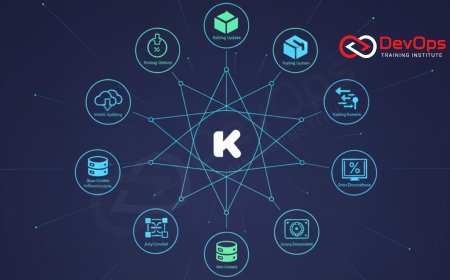
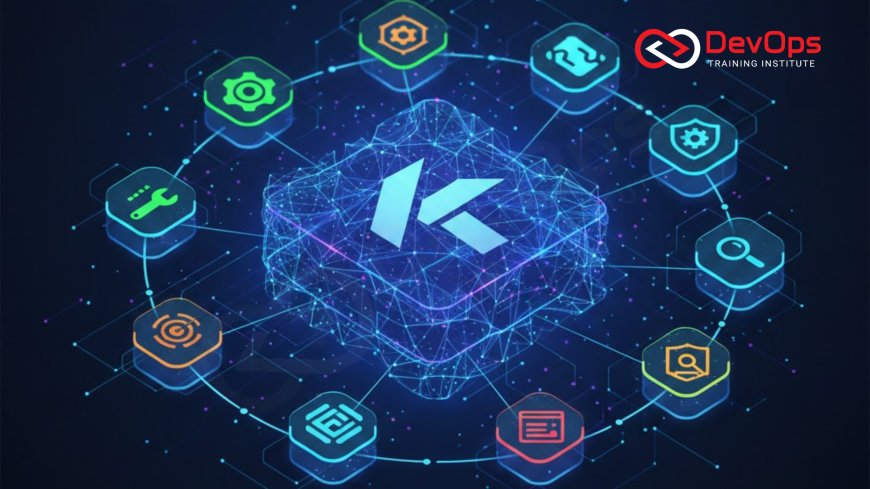
Kubernetes is the powerful, declarative engine that drives modern container orchestration, but its flexibility comes with significant operational complexity. Managing the full lifecycle of a Kubernetes cluster—from initial provisioning and configuration to ongoing maintenance, security, and monitoring—requires a robust and specialized toolchain. The native `kubectl` command-line tool is essential but often insufficient for daily tasks, requiring engineers to execute numerous specialized commands just to get basic information or perform simple debugging. This collection of 12 tools steps in to simplify, automate, and extend Kubernetes functionality, making it manageable for operational teams of any size. These tools cover four key areas: Lifecycle Management (setup, provisioning, backup), Deployment & Configuration (packaging, GitOps), Observability & Debugging (monitoring, real-time metrics), and Security & Compliance (vulnerability scanning, auditing). Adopting this toolkit allows DevOps teams to move beyond struggling with raw infrastructure configuration and focus on delivering business value faster and more reliably. [Image of Kubernetes architecture diagram]
1. Kubeadm: Bootstrapping the Core Cluster
Kubeadm is the official Kubernetes tool designed to provide a quick and simple way to bootstrap a minimum viable, certified cluster. While not a complete provisioning solution, it handles the crucial steps of setting up the control plane and joining worker nodes.
- Control Plane Initialization: Kubeadm simplifies the complex process of setting up the control plane components (etcd, API Server, Scheduler, Controller Manager) and generating the necessary security certificates.
- Cluster Joining: It generates easy-to-use join commands for worker nodes, ensuring they securely join the cluster via a discovery token and bootstrap their components (Kubelet, proxy).
- Official Standard: As an official tool maintained by the Kubernetes project, Kubeadm guarantees compliance with the latest best practices and standards, providing a reliable foundation for any cluster.
- Minimal Dependencies: Kubeadm requires only Docker/Containerd and networking pre-configuration on the host OS, maintaining a low overhead necessary for bootstrapping.
- High Availability Setup: It supports setting up highly available control planes by running multiple master nodes, which is crucial for production resilience and preventing single points of failure.
- Configuration as Code: All Kubeadm configuration is driven by YAML files, allowing the cluster setup parameters to be version-controlled and treated as Infrastructure as Code (IaC).
2. Helm: The Kubernetes Package Manager
Helm, often dubbed the "Package Manager for Kubernetes," addresses the complexity of deploying and managing applications that consist of multiple Kubernetes resources (Deployments, Services, ConfigMaps, Secrets, etc.). Instead of managing dozens of raw YAML files, Helm bundles them into a single, versioned unit called a Chart. This standardization dramatically simplifies the installation, upgrading, and rollback of even the most complex applications. A key feature of Helm is templating. Helm Charts use Go templating, allowing users to define variable placeholders in the YAML manifests. These variables are supplied at deployment time, enabling the same Chart to be used across different environments (dev, staging, production) simply by providing different configuration values, ensuring consistency while maintaining flexibility. This capability is essential for managing the sheer volume of YAML often required for a microservices application, turning complex, repetitive file management into a streamlined, automated process that saves countless hours of configuration work and reduces the risk of manual manifest errors.
3. K9s: Terminal UI for Cluster Navigation
K9s is a terminal-based user interface (TUI) that significantly simplifies cluster interaction, moving beyond the repetitive execution of complex `kubectl` commands to provide real-time cluster visibility and interaction.
- Real-Time Dashboard: K9s provides a dynamic, live view of cluster resources, including Pods, Deployments, Services, and Namespaces, refreshing continuously to show the current state.
- Simplified Debugging: It allows operators to easily navigate between related resources, view container logs, shell directly into a running container, and describe resource status—all with simple keyboard shortcuts.
- Efficiency: K9s drastically cuts down the cognitive load and execution time associated with performing routine management and debugging tasks, turning multi-command sequences into single keystrokes.
- Resource Management: It provides quick access to delete, scale, or restart resources, making cluster maintenance and recovery swift during incidents.
- Visibility into Logs: K9s aggregates and streams container logs, allowing operators to quickly filter and search the high volume of output, which is crucial for initial diagnosis before needing to dive into centralized log management systems.
- Customization: Users can define their own custom commands and aliases, tailoring the interface to their specific operational workflows and common cluster tasks.
4. Prometheus and Grafana: The Observability Standard
Prometheus and Grafana form the de facto open-source monitoring stack essential for any production-grade Kubernetes cluster. Kubernetes is dynamic, and applications scale quickly, generating massive amounts of metrics that must be correlated and analyzed in real-time. Prometheus acts as the time-series database, automatically discovering services and scraping metrics exposed by components like the Kube-state-metrics and Node Exporters. This provides deep visibility into the cluster's internal operations, from the number of pending Pods to the utilization of individual worker nodes. Grafana then serves as the visualization layer, connecting to Prometheus to create intuitive, highly customizable dashboards that transform raw data into actionable operational insights. This stack allows DevOps teams to move beyond simple "is the server up?" checks to sophisticated monitoring of resource utilization, latency percentiles, and application-specific business metrics. The ability to visualize these metrics and set automated alerts (via Prometheus Alertmanager) based on anomalous behavior is critical for maintaining high availability and reducing the Mean Time to Detection (MTTD) during an incident.
5. ArgoCD: Declarative GitOps Deployment
ArgoCD simplifies Continuous Delivery (CD) by implementing the GitOps methodology, using Git as the single source of truth for the application state. It actively monitors a Git repository containing the application manifests (YAML, Helm, Kustomize).
Automated Synchronization
ArgoCD continuously compares the desired state defined in Git against the live state of the cluster. If it detects drift, it automatically and declaratively synchronizes the cluster to match the Git repository, enforcing consistency.
This eliminates the need for manual `kubectl apply` commands in the CI pipeline. Deployment becomes as simple as merging a Pull Request, streamlining the CD process and making releases safer and faster.
Self-Service and Governance
It provides a powerful web UI for visualizing synchronization status, health, and history, which is essential for auditing and troubleshooting. This self-service portal allows developers to manage their applications without requiring direct cluster access.
ArgoCD supports advanced deployment strategies like Blue/Green and Canary releases out-of-the-box, giving teams granular control over risk during releases and enhancing overall system resilience.
6. Velero: Backup and Disaster Recovery
Velero is an essential tool for protecting stateful applications and ensuring cluster recoverability. It provides robust backup, restore, and migration capabilities for Kubernetes resources and persistent volumes.
- Cluster State Backup: Velero captures the state of the entire Kubernetes cluster, including all namespaces, deployments, and service definitions, backing them up to cloud storage (S3, Azure Blob, GCS).
- Persistent Volume Backup: It integrates with cloud provider APIs to snapshot persistent volumes or uses Restic to perform file-level backups, protecting the crucial application data necessary for recovery.
- Disaster Recovery: Velero allows the entire cluster state, including application and data, to be restored onto a new or existing cluster in the event of catastrophic failure or accidental deletion.
- Application Migration: It facilitates migration by enabling application resources and persistent data to be moved seamlessly between different clusters or cloud providers.
- Customizable Hooks: Users can define pre and post-hooks (scripts) within the backup process, allowing actions like quiescing a database or verifying the snapshot integrity, ensuring application consistency during the backup process.
- Data Consistency: By ensuring consistency between resource definitions and the underlying data, Velero addresses a major challenge for stateful applications running on K8s, where dedicated file system management is abstracted away.
7. Trivy: Image and Configuration Vulnerability Scanner
Trivy is a simple, comprehensive, and fast open-source security scanner essential for implementing DevSecOps principles in a Kubernetes environment. Trivy provides wide coverage, scanning for vulnerabilities in three critical areas. First, it scans container images (both OS packages and application dependencies) for known Common Vulnerabilities and Exposures (CVEs) before they are deployed. This "shift-left" approach prevents insecure images from ever reaching the cluster. Second, it scans Kubernetes manifests and Helm Charts for common configuration weaknesses and security anti-patterns (e.g., running containers as root, lack of resource limits). Third, it can scan cloud infrastructure (Terraform/CloudFormation) for misconfigurations. Its ease of use is a major advantage for startups: it runs as a single binary and integrates seamlessly into CI/CD pipelines (like GitLab or Jenkins), automatically failing the build if a critical vulnerability is detected. By ensuring images are hardened and configurations adhere to security best practices, Trivy significantly reduces the cluster's attack surface and strengthens overall security posture with minimal effort.
8. Istio: The Comprehensive Service Mesh
Istio is a robust service mesh that adds essential capabilities—traffic management, security, and observability—on top of the Kubernetes network, simplifying communication between microservices.
- Traffic Control: Istio allows fine-grained control over traffic flow, enabling complex deployment strategies like Canary Releases and A/B Testing by directing precise percentages of user traffic to specific service versions.
- Security: It provides automatic mutual TLS (mTLS) encryption between services, securing all service-to-service communication by default without requiring application code changes.
- Observability: Istio generates detailed metrics, logs, and traces for all network communication, providing deep insight into service dependency graphs and call latency.
- Policy Enforcement: It enforces network policies and rate limits at the service level, enhancing resilience and security beyond the capabilities of native Kubernetes Network Policies.
- Resilience Patterns: It simplifies the implementation of resilience patterns like circuit breakers and automatic retries/timeouts across the service graph, reducing the chance of cascading failures.
- Gateway Management: Istio's Ingress and Egress gateways simplify external access, securing the perimeter and managing external traffic flow.
9. Kube-bench: Security Compliance Auditing
Kube-bench is an essential open-source tool that checks whether a Kubernetes cluster meets the security recommendations defined in the CIS (Center for Internet Security) Benchmarks. Running Kube-bench should be a mandatory step after cluster setup and periodically thereafter.
Automated Compliance Check
It runs a series of automated checks against the configuration of the master and worker nodes, verifying settings for the etcd, API Server, Kubelet, and worker node host OS.
The detailed output highlights specific failures and provides clear remediation instructions, effectively automating a manual compliance audit and ensuring adherence to the organizational post-installation checklist standards.
Vulnerability Identification
Kube-bench helps identify critical security misconfigurations early on, such as enabling anonymous access to the API server or running components with overly permissive permissions, strengthening the overall cluster security posture.
While Kube-bench focuses on the host/cluster configuration, companion tools like Kube-hunter can be used to perform active penetration testing against the deployed cluster to find runtime vulnerabilities.
10. Kubectx and Kubens: CLI Efficiency Tools
Kubectx and Kubens are simple yet essential tools that streamline the daily workflow of engineers interacting with multiple Kubernetes clusters and namespaces, solving a common source of error and frustration.
- Context Switching: Kubectx allows users to quickly switch between different cluster contexts (e.g., dev-cluster to prod-cluster) using fuzzy searching and simple commands, eliminating the need to type long `kubectl config use-context` commands.
- Namespace Switching: Kubens provides the same efficiency for switching namespaces within the current context (e.g., from `default` to `staging`), preventing commands from being accidentally executed in the wrong environment.
- Reduced Error Rate: These tools significantly reduce the risk of deploying resources or commands to the wrong cluster or namespace, a common operational error in multi-tenant or multi-cluster environments.
- Efficiency Booster: They are highly valuable for teams managing many environments and greatly accelerate the speed at which engineers can perform investigations or deployments.
- CLI Extension: They act as powerful wrappers for native `kubectl` functionality, demonstrating how simple shell tools can enhance core Kubernetes operations and streamline routine basic commands.
- Easy Installation: Both are simple shell scripts or compiled binaries, requiring minimal effort to install and integrate into any engineer's toolkit.
11. Kustomize: Configuration Customization and Patching
Kustomize is a configuration management tool that specializes in customizing Kubernetes manifests without relying on templates. Unlike Helm, which uses Go templating, Kustomize uses a declarative approach by applying overlays (patches) to base YAML files. This allows teams to define a single, clean base manifest and then create environment-specific variations (e.g., adding different replica counts or specialized resource limits) via small, non-destructive patch files. This mechanism avoids the complexity of conditional logic within YAML, resulting in configuration files that are cleaner, more readable, and easier to debug. Kustomize is often favored in GitOps workflows because its output is standard Kubernetes YAML, which ArgoCD or Flux can easily consume. Its native integration into `kubectl` (as `kubectl apply -k`) makes it a highly accessible and powerful tool for managing the configuration sprawl that often results from managing dozens of microservices across multiple environments. By providing a clean way to define customization, Kustomize accelerates deployment speed and improves the reliability of configuration changes.
12. Kubespray: Production-Ready Cluster Provisioning
Kubespray is an open-source project that uses Ansible playbooks to provision and configure production-grade Kubernetes clusters across various platforms, including bare metal, cloud VMs, and on-premises environments.
- Production Ready: Kubespray installs a highly available, robust cluster using the official Kubeadm tool, but wraps it in the extensive configuration management power of Ansible, providing enterprise-level setup.
- Flexibility: It supports a wide array of Linux distributions and infrastructure providers, offering flexibility to organizations that operate in hybrid or multi-cloud environments.
- Day 2 Operations: Kubespray isn't just for initial setup; it provides playbooks for essential Day 2 operations, including cluster upgrades, scaling, and adding/removing nodes seamlessly.
- Configuration Control: Users have granular control over cluster components, networking plugins (CNI), and security settings, all defined declaratively in Ansible variables.
- Security Focus: It automates critical security tasks, such as configuring host firewalls and managing cluster-wide certificate rotation, leveraging best practices for securing the underlying infrastructure.
- Secure Access: Kubespray automates the distribution of necessary client certificates and configures secure access, ensuring compliance while simplifying the management of secure credentials and SSH keys for cluster access.
- High Availability: It supports complex HA setups, including setting up stacked etcd configurations and load balancing for the control plane.
Kubernetes Management Toolkit Summary
| # | Tool | Primary Function | Simplifies For DevOps |
|---|---|---|---|
| 1 | Kubeadm | Cluster Bootstrap (Official) | Initial Setup and Control Plane HA |
| 2 | Helm | Application Package Management | Installation and Upgrades of Complex Apps |
| 3 | K9s | Terminal UI and Debugging | Real-Time Visibility and Log Access |
| 5 | ArgoCD | GitOps Continuous Delivery | Enforcing Declarative State from Git |
| 6 | Velero | Backup and Disaster Recovery (DR) | Protecting Stateful Applications and Cluster State |
| 8 | Istio | Service Mesh (Traffic/Security) | Advanced Routing (Canary) and mTLS |
| 10 | Kubectx / Kubens | CLI Efficiency | Fast, Error-Free Context/Namespace Switching |
| 12 | Kubespray | Production Cluster Provisioning | Automated HA Setup on Any Infrastructure |
Conclusion
The complexity of managing a highly distributed and dynamic environment like Kubernetes is significantly mitigated by leveraging the right open-source tools. This toolkit is crucial for managing the entire cluster lifecycle, from the foundational setup orchestrated by Kubespray or Kubeadm to the continuous deployment driven by ArgoCD and the indispensable observability provided by Prometheus and Grafana. These 12 tools provide essential layers of automation, security, and visibility, allowing DevOps teams to spend less time troubleshooting infrastructure and more time deploying features. By adopting these standards, organizations can ensure their Kubernetes investment delivers its full potential: massive scalability, high resilience, and rapid delivery velocity, all while maintaining strict security and configuration management standards across every node and every application within the cluster.
Frequently Asked Questions
Is Helm necessary, or can I manage my YAML files manually?
While you can manage YAML manually for very small applications, Helm is necessary for complexity and reusability. It simplifies the installation, upgrading, and rollback of applications composed of dozens of interconnected manifests by bundling them into a single Chart. Helm's templating also allows the same application definition to be used across multiple environments by simply changing configuration values, dramatically reducing configuration sprawl.
How does ArgoCD guarantee the cluster state remains correct?
ArgoCD works by continuous reconciliation. It runs as a controller that periodically compares the live cluster state against the desired state defined in Git. If it finds any difference (drift), it automatically applies the necessary changes to the cluster to restore the Git state, providing a robust, self-healing mechanism for your deployed applications.
How do I use Kubectx and Kubens to manage basic commands efficiently?
Kubectx and Kubens simplify your command-line workflow by allowing you to switch contexts and namespaces instantly without typing long commands. This speeds up your ability to execute basic commands like `kubectl get pods` in the correct environment, reducing friction and minimizing the risk of accidentally running commands in the wrong cluster (e.g., deploying staging manifests to production).
What is the difference between Kubeadm and Kubespray?
Kubeadm is the official tool for bootstrapping the core components of a single, minimum-viable cluster. Kubespray is an Ansible-based solution that uses Kubeadm internally but provides a wrapper for provisioning production-ready, HA clusters across various cloud and bare-metal environments, handling networking, security, and maintenance tasks.
How does Velero handle file system management for persistent data?
Velero handles persistent data by integrating with the cloud provider's API to take snapshots of persistent volumes (PVs) when backing up the cluster. For environments where API snapshotting isn't possible (e.g., bare metal or local storage), Velero uses Restic to perform file-level backups of the persistent data, ensuring data integrity regardless of the underlying file system management setup.
Does Trivy only scan container images?
No, Trivy is a versatile scanner. While it excels at scanning container images for OS and library vulnerabilities, it also scans Infrastructure as Code (IaC) files (like Kubernetes YAML, Helm charts, and Terraform code) for common security misconfigurations, enforcing security standards across the entire application and infrastructure stack.
How does Istio enhance security beyond native Kubernetes?
Istio enhances security primarily by providing automatic mutual TLS (mTLS) encryption for all service-to-service communication. It also enforces advanced authorization policies and can integrate with external systems to manage secure access, extending the capabilities of native Network Policies by managing Layer 7 security.
How can Kube-bench ensure the cluster is compliant with the post-installation checklist?
The post-installation checklist often includes security hardening requirements. Kube-bench automates the auditing of these requirements by running tests based on the industry-standard CIS Kubernetes Benchmark. The output provides a clear pass/fail report on configuration settings, validating the cluster's adherence to required security policies and hardening steps.
How does the Prometheus/Grafana stack simplify debugging?
The stack simplifies debugging by providing deep observability. Grafana allows engineers to correlate application latency, resource usage, and error rates visually on a single dashboard. This rapid correlation helps pinpoint the source of a problem much faster than analyzing individual host metrics or logs manually.
How is user management and RBAC simplified with these tools?
While Kubernetes handles native RBAC, tools like Istio and ArgoCD simplify its enforcement. They ensure that deployment access is controlled through Git (ArgoCD) and traffic/policy access is controlled via a unified service mesh (Istio), creating layered access control that simplifies user management auditing and policy maintenance.
What role does Kustomize play in a pipeline that already uses Helm?
Kustomize complements Helm. Helm handles the initial templating and packaging of an application, while Kustomize can be used to apply environment-specific patches or customizations (e.g., injecting secrets, modifying resource requests) to the Helm-rendered output, simplifying the final stage configuration for GitOps workflows.
How do SSH keys relate to tools like Kubespray?
SSH keys are essential for tools like Kubespray and Kubeadm, as they use Ansible and SSH to securely connect to and configure the remote bare-metal or cloud VMs that form the cluster nodes. Automation tools load these keys securely from a secrets manager to ensure agentless configuration without requiring passwords, maintaining a strict security standard.
Why is log management still needed if Prometheus is installed?
Prometheus collects metrics (numbers over time) for alerting and visualization. Log management (ELK/Loki) is needed for collecting logs (unstructured text data) which provide the detailed stack traces, context, and error messages necessary for deep root cause analysis that metrics alone cannot provide. They are complementary pillars of observability.
What advantage does the TUI (K9s) offer over native `kubectl`?
The TUI offers an interactive, real-time view and streamlines common tasks. Instead of typing repeated `kubectl get pod -w`, `kubectl logs`, and `kubectl describe` commands, K9s presents all this information dynamically on a single screen and allows instantaneous navigation via keyboard shortcuts, drastically increasing operator speed during debugging.
How are host firewalls managed in a K8s cluster?
While Kubernetes Network Policies manage Pod-to-Pod communication, the host OS still needs protection. This is managed by provisioning tools like Kubespray, which automate the configuration of host firewalls (e.g., using Firewalld commands) to ensure that only necessary ports (Kubelet, API Server) are exposed to the control plane, securing the node itself.
What's Your Reaction?
 Like
0
Like
0
 Dislike
0
Dislike
0
 Love
0
Love
0
 Funny
0
Funny
0
 Angry
0
Angry
0
 Sad
0
Sad
0
 Wow
0
Wow
0

![100+ Azure DevOps Interview Questions and Answers [Updated 2025]](https://www.devopstraininginstitute.com/blog/uploads/images/202509/image_140x98_68c40aa9a3834.jpg)






![Future Scope of DevOps Careers in Pune [Updated 2025]](https://www.devopstraininginstitute.com/blog/uploads/images/202510/image_140x98_68e3a84652312.jpg)