







![Kong Interview Preparation Guide [2025]](https://www.devopstraininginstitute.com/blog/uploads/images/202509/image_430x256_68dbb95326997.jpg)





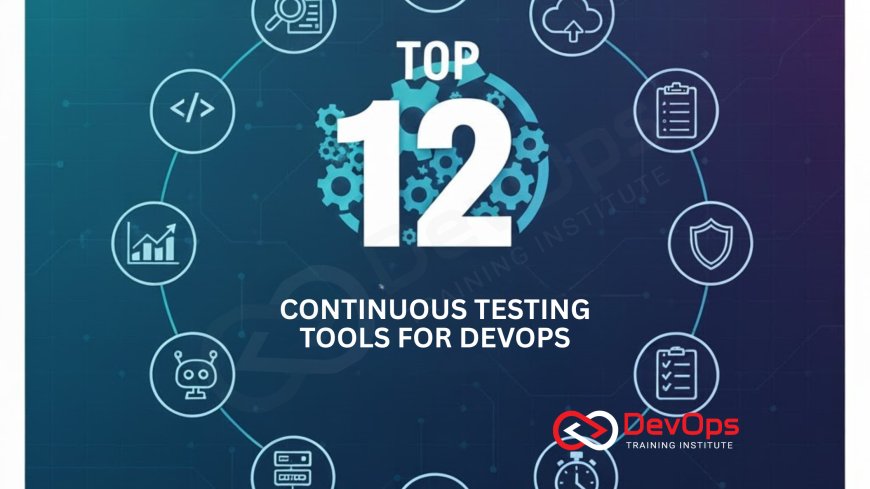
Top 12 Continuous Testing Tools for DevOps
Discover the top 12 continuous testing tools essential for accelerating your DevOps pipeline and ensuring high-quality software delivery. This comprehensive guide covers a range of categories, from powerful test automation frameworks like Selenium and Playwright to API testing solutions, performance testing tools, and AI-driven testing platforms. Learn how these tools enable early defect detection, streamline feedback loops, and integrate seamlessly into your CI/CD workflows, helping teams achieve faster release cycles, enhanced reliability, and superior user experiences in modern, high-velocity environments.
Introduction
In the fast-paced world of DevOps, where speed and agility are paramount, Continuous Testing has emerged as a critical practice. It's no longer sufficient to relegate testing to the final stages of the software development lifecycle; instead, quality assurance must be an ongoing, integrated process that starts from the very beginning of development and continues throughout the entire CI/CD pipeline. Continuous Testing ensures that every code change, no matter how small, is immediately validated against a comprehensive suite of tests, providing rapid feedback to development teams and enabling early defect detection. This "shift-left" approach is fundamental to achieving faster release cycles, reducing the cost of bugs, and delivering high-quality software consistently.
The goal of Continuous Testing is to make testing an integral, automated part of every stage—from development and integration to deployment and operations. This requires a robust set of tools that can perform various types of tests efficiently and reliably, integrating seamlessly with version control systems, build servers, and deployment pipelines. Without the right tools, Continuous Testing can become an overwhelming manual burden, defeating the very purpose of DevOps. The sheer volume of code changes and the complexity of modern distributed systems demand automation and intelligent testing strategies to keep pace and maintain quality.
This blog post will explore the 12 most impactful and widely used Continuous Testing tools that every DevOps professional, QA engineer, or development team should be familiar with. We’ll cover tools across different testing categories, including functional UI automation, API testing, performance testing, static code analysis, and even AI-driven smart testing. By understanding and strategically implementing these tools, organizations can transform their quality assurance practices, accelerate their DevOps initiatives, and confidently deliver superior software experiences to their users. Let's dive into the essential arsenal for modern Continuous Testing.
1. Selenium: Web UI Automation King
Selenium is arguably the most famous and widely adopted open-source framework for automating web browsers. It provides a powerful suite of tools (Selenium WebDriver, Selenium IDE, Selenium Grid) that allow developers and QA engineers to write robust, browser-based regression automation suites and tests. For Continuous Testing in DevOps, Selenium is indispensable because it enables:
- Cross-Browser Testing: Supports all major browsers (Chrome, Firefox, Safari, Edge), ensuring web applications perform consistently across different user environments.
- Language Flexibility: Test scripts can be written in popular programming languages like Java, Python, C#, JavaScript, and Ruby.
- Integration with CI/CD: Seamlessly integrates with CI/CD pipelines (e.g., Jenkins, GitLab CI) to run automated UI tests with every code commit, providing immediate feedback on functional regressions.
- Scalability with Selenium Grid: Allows parallel execution of tests across multiple machines and browsers, significantly speeding up the testing process.
Despite its learning curve, Selenium's flexibility and extensive community support make it a foundational tool for automating functional UI tests in a Continuous Testing pipeline. It ensures that the user interface of web applications remains stable and bug-free across frequent releases, which is critical for maintaining a positive user experience and preventing regressions in a dynamic DevOps environment. Its versatility in handling complex web interactions makes it a first choice for many teams, enabling robust end-to-end test coverage.
2. Playwright: Modern Web Automation from Microsoft
Developed by Microsoft, Playwright is a relatively new but rapidly gaining traction open-source framework for reliable end-to-end testing across modern web browsers. It addresses some of the challenges and limitations of older frameworks, offering a more stable and feature-rich experience for Continuous Testing:
- All-in-One Automation: Supports Chromium, Firefox, and WebKit (Safari's engine) with a single API, eliminating the need for separate drivers or configurations.
- Auto-Waiting & Resilience: Automatically waits for elements to be ready before interacting, making tests more stable and less flaky.
- Parallelization & Speed: Designed for fast, reliable parallel execution, significantly speeding up test suites in CI/CD pipelines.
- Rich Features: Includes capabilities like auto-recording tests, screenshot and video capturing, network interception, and full browser context isolation.
- Language Support: Supports TypeScript, JavaScript, Python, .NET, and Java.
Playwright is an excellent choice for teams building modern web applications, offering a more robust and less flaky alternative to traditional Selenium-based approaches. Its focus on reliability and developer experience makes it highly effective for integrating UI automation into Continuous Testing workflows, ensuring rapid feedback and high-quality web releases. Its API is generally considered easier to use than Selenium's, particularly for new projects, providing a streamlined way to achieve comprehensive test coverage with confidence.
3. Cypress: Developer-Friendly E2E Testing
Cypress is a JavaScript-based end-to-end testing framework specifically designed for the modern web. It differentiates itself by running tests directly in the browser, providing a unique interactive experience that makes writing, running, and debugging tests exceptionally developer-friendly. Its architecture and features make it highly effective for Continuous Testing in JavaScript-heavy ecosystems:
- Fast & Reliable: Tests run quickly and consistently, largely due to its in-browser execution, minimizing flakiness often seen in other frameworks.
- Interactive Debugging: Provides real-time reloads, automatic screenshot capture on failure, and time-travel debugging capabilities, speeding up the identification and fixing of issues.
- Automatic Waiting: Automatically waits for commands and assertions before moving on, reducing the need for explicit waits and improving test stability.
- Simplified Setup: Easy to install and configure, especially for JavaScript developers, with minimal dependencies.
For teams focused on web applications and operating within a JavaScript/TypeScript ecosystem, Cypress offers an intuitive and powerful solution for integrating end-to-end functional testing into their Continuous Testing strategy. Its developer-centric approach and emphasis on test reliability make it a strong tool for ensuring high-quality web releases with rapid feedback loops, making it particularly popular among front-end development teams. It helps ensure that new features and bug fixes don't introduce regressions.
4. JUnit / NUnit / Jest: Unit Testing Frameworks
Unit testing is the first line of defense in Continuous Testing, validating the smallest components of an application in isolation. These frameworks are fundamental for any DevOps pipeline:
- JUnit (Java): The standard unit testing framework for Java applications. It provides annotations for test methods, assertions, and test runners, enabling developers to write automated unit tests for every new feature or bug fix.
- NUnit (.NET): The most popular unit testing framework for .NET applications. Similar to JUnit, it offers attributes for test methods, setup/teardown, and assertions, ensuring that individual code units function correctly.
- Jest (JavaScript/TypeScript): A delightful JavaScript testing framework developed by Facebook, widely used for React, Angular, and Vue applications. It includes assertion libraries, mocking, and parallel test execution, making it fast and easy to write robust unit and integration tests.
These frameworks are essential because they provide immediate feedback to developers, catching defects at the earliest possible stage, where they are least expensive to fix. Integrating these unit tests into CI pipelines ensures that every code commit is validated for functional correctness before it proceeds further, forming the bedrock of a robust Continuous Testing strategy. They are typically executed in seconds, providing instant feedback on code quality and correctness.
5. Postman: API Testing & Development
As microservices and APIs become central to modern architectures, API testing is a critical component of Continuous Testing. Postman is a popular platform for API development and testing that streamlines this process. While it started as a Chrome extension, it has evolved into a comprehensive desktop application that excels at:
- API Request Execution: Allows users to easily send HTTP requests (GET, POST, PUT, DELETE, etc.) and inspect responses, making it ideal for exploratory API testing.
- Automated Test Suites: Users can create collections of API requests and add JavaScript-based test scripts to validate responses (e.g., status codes, data integrity, response times).
- Collection Runner: Enables automated execution of entire collections of API tests, which can be integrated into CI/CD pipelines (via Newman, its command-line companion).
- Mock Servers & Monitoring: Offers capabilities to set up mock servers for independent development and monitor API performance and uptime in production.
Postman's ease of use and powerful features make it an invaluable tool for ensuring the reliability, performance, and security of APIs in a Continuous Testing environment. By automating API tests, teams can validate the core logic of their microservices without needing a full UI, providing fast and efficient feedback loops in their DevOps pipeline, which is especially important for headless applications or backend services. Its ability to create comprehensive test suites helps ensure that all API endpoints function as expected under various conditions.
6. JMeter: Performance and Load Testing
Performance and load testing are crucial for ensuring that applications can handle expected (and unexpected) user loads without degradation. Apache JMeter is a powerful open-source tool designed for load testing functional behavior and measuring performance. It's a key component of Continuous Testing because it allows teams to:
- Load Simulation: Simulate heavy loads on a server, group of servers, network, or object to test its strength or analyze overall performance under different load types.
- Multi-Protocol Support: Supports a wide variety of application types and protocols, including web (HTTP/S), SOAP/REST web services, FTP, databases (JDBC), LDAP, and more, making it versatile for microservices.
- CI/CD Integration: JMeter tests can be executed from the command line, enabling seamless integration into CI/CD pipelines to automatically run performance tests with every significant code change or before major releases.
- Extensible: Highly extensible with plugins, allowing for custom samplers, listeners, and analysis capabilities.
By integrating JMeter into the DevOps pipeline, teams can continuously monitor the performance of their applications, detect performance bottlenecks early, and ensure that new features do not introduce regressions in responsiveness or scalability. This proactive approach to performance testing is essential for maintaining a high-quality user experience under varying load conditions, making it an indispensable tool for applications that need to perform reliably at scale. JMeter helps prevent performance-related incidents by catching issues before they impact users.
7. LoadRunner / NeoLoad: Enterprise Performance Testing
While JMeter is excellent for many scenarios, enterprise-level performance testing often requires more advanced features, support, and specialized capabilities. Micro Focus LoadRunner and NeoLoad (by Tricentis) are commercial tools that provide comprehensive solutions for large-scale, complex performance testing, making them vital for robust Continuous Testing in enterprise DevOps:
- Advanced Scripting: Offer highly sophisticated scripting capabilities for complex scenarios, including various protocols, rich internet applications (RIAs), and mobile apps.
- Distributed Load Generation: Capable of generating massive loads from geographically distributed locations, accurately simulating real-world user traffic patterns.
- Deep Analytics & Reporting: Provide extensive monitoring, analysis, and reporting tools with built-in integrations to APM (Application Performance Monitoring) solutions, offering deep insights into system behavior under load.
- CI/CD & Integrations: Designed for integration into CI/CD pipelines, allowing automated performance testing at scale, and often include strong enterprise support and training.
These tools are typically chosen by large organizations with mission-critical applications where the cost of performance issues is extremely high. They offer robust features for managing complex test scenarios, analyzing results, and integrating with other enterprise tools, ensuring that even the most demanding applications meet stringent performance requirements as part of a continuous quality strategy. They are crucial for ensuring that large-scale systems can handle peak loads and maintain optimal responsiveness.
8. SonarQube: Static Code Analysis & Quality Gates
Before code even runs, its quality, security, and maintainability can be assessed. SonarQube is an open-source platform for Continuous Code Quality that performs static code analysis. It acts as a critical quality gate in the DevOps pipeline by:
- Bug & Vulnerability Detection: Automatically detects bugs, code smells, and security vulnerabilities in over 27 programming languages, including Java, C#, JavaScript, Python, and more.
- Code Quality Metrics: Provides a comprehensive dashboard with metrics on code complexity, duplication, test coverage, and maintainability, giving developers instant feedback on their code's health.
- Quality Gates: Allows organizations to define "Quality Gates" with specific thresholds (e.g., 0 critical bugs, 90% test coverage). If a new code commit fails these gates, the CI/CD pipeline can be automatically halted, preventing low-quality or insecure code from progressing to production.
- Integration with IDEs & CI/CD: Integrates with popular IDEs for real-time feedback and with CI/CD tools for automated scanning on every commit or pull request.
SonarQube is indispensable for "shifting left" on quality and security. By continuously analyzing code for potential issues, it helps enforce coding standards, improve code quality, and detect security flaws early, significantly reducing technical debt and the risk of production defects. It ensures that only code meeting predefined quality standards makes it further down the pipeline, making it a cornerstone of a proactive Continuous Testing strategy, and helps teams maintain hardening best practices at the application level.
9. Katalon Studio: All-in-One Test Automation
Katalon Studio is a comprehensive, low-code test automation solution that combines the best of Selenium and Appium (for mobile) with a user-friendly interface. It's designed to provide an all-in-one platform for web, API, mobile, and desktop application testing, making it a versatile tool for Continuous Testing in diverse environments:
- Multi-Platform Testing: Supports Web UI (powered by Selenium), API (powered by Apache HttpClient), mobile (powered by Appium), and desktop application testing, all from a single tool.
- Scriptless & Scripting Modes: Offers both a low-code "record-and-playback" mode for non-technical users and a full scripting mode (Groovy/Java) for advanced automation engineers.
- Built-in Integrations: Integrates seamlessly with popular CI/CD tools (Jenkins, GitLab CI, Azure DevOps), test management systems (Jira, TestLink), and reporting tools.
- AI-Powered Testing: Includes AI-powered features for self-healing tests (automatically updating locators for UI elements) and smart execution, reducing test maintenance overhead.
Katalon Studio is an excellent choice for teams looking for a powerful yet accessible test automation solution that can cover multiple application types within their Continuous Testing strategy. Its blend of scriptless and scripting capabilities, coupled with built-in integrations and AI features, helps accelerate test creation, improve test reliability, and simplify test maintenance, ensuring comprehensive quality assurance across the entire DevOps pipeline. This makes it particularly effective for teams with mixed skill sets or those needing rapid test development.
10. Testim: AI-Driven Test Automation
Testim is an AI-powered test automation platform that aims to make UI testing faster, more stable, and easier to maintain. It leverages machine learning to create, execute, and maintain end-to-end tests, making it a leading choice for modern Continuous Testing efforts, especially for dynamic web applications:
- AI-Powered Stability: Uses AI to learn the structure of your application and automatically adapt test locators, making tests highly resilient to UI changes and significantly reducing flakiness.
- Fast Test Authoring: Offers a combination of record-and-playback with codeless, low-code, and full-code (JavaScript) options, enabling rapid test creation and customization.
- Parallel Execution: Optimized for fast parallel execution across multiple browsers, environments, and devices, speeding up feedback in CI/CD pipelines.
- Root Cause Analysis: Provides rich diagnostics, including screenshots, videos, and detailed logs, to quickly identify the root cause of failures.
Testim is ideal for organizations struggling with flaky UI tests and high maintenance costs. Its AI-driven approach significantly improves the stability and reliability of automated tests, ensuring that Continuous Testing provides accurate and timely feedback. By reducing the effort required for test maintenance, Testim allows teams to focus more on building new features and less on fixing broken tests, making it a powerful asset in high-velocity DevOps environments where quick and reliable feedback is paramount. This enables teams to scale their test automation efforts without proportional increases in maintenance overhead, ensuring quality at speed.
11. Dynatrace / AppDynamics: APM for Proactive Testing
While not traditional "testing tools," Application Performance Monitoring (APM) solutions like Dynatrace and AppDynamics are vital for proactive Continuous Testing in DevOps. They provide deep, real-time insights into application performance and user experience in production and pre-production environments. They complement traditional testing by:
- Real-User Monitoring (RUM): Tracks actual user experience, performance, and behavior, allowing teams to validate performance and functionality from an end-user perspective.
- Synthetic Monitoring: Automatically simulates user interactions to continuously test application availability and performance from various geographic locations.
- Root Cause Analysis: Uses AI and machine learning to automatically pinpoint the root cause of performance issues and anomalies across complex microservices architectures.
- Performance Baselines & Anomaly Detection: Establishes performance baselines and automatically alerts on deviations, identifying performance regressions caused by new deployments even before they become critical.
Integrating APM into your DevOps pipeline extends Continuous Testing into the runtime environment. It helps validate the performance impact of new features, detects issues that might slip past traditional tests, and provides critical feedback for optimizing applications. APM tools ensure that every deployment doesn't just work functionally but also performs optimally, making them indispensable for maintaining high-quality user experiences in dynamic, production-like scenarios. This comprehensive view helps teams understand the true impact of their deployments on system health and user satisfaction. It also helps in understanding the release cadence of high velocity environments.
12. Pact: Consumer-Driven Contract Testing
In a microservices architecture, services communicate with each other via contracts (APIs). Pact is an open-source tool for Consumer-Driven Contract (CDC) testing, which is a crucial form of Continuous Testing for distributed systems. It helps prevent integration issues between services by ensuring that each service adheres to its agreed-upon API contract, even as services evolve independently:
- Prevents Integration Bugs: Ensures that changes made by a provider service do not break consumer services, and vice-versa, without requiring full end-to-end integration tests.
- Decoupled Testing: Allows consumer and provider services to be tested independently against a shared contract, speeding up feedback and enabling parallel development.
- Generates Contracts: The consumer defines its expectations of the provider's API, and Pact generates a "pact file" (contract). The provider then verifies this pact file against its own implementation.
- CI/CD Integration: Pact verification can be easily integrated into CI/CD pipelines, ensuring that contracts are continuously validated with every code change in both consumer and provider services.
Pact is a game-changer for microservices Continuous Testing, significantly reducing the need for slow, brittle, and expensive end-to-end integration tests. By validating API contracts early and continuously, it fosters trust between independent service teams and accelerates the overall development and deployment process. It's a key tool for building resilient, loosely coupled microservices architectures that can evolve independently without fear of breaking critical integrations, making it an advanced but invaluable component of a comprehensive Continuous Testing strategy.
Conclusion
Continuous Testing is no longer an optional add-on but a fundamental necessity for successful DevOps adoption. The 12 tools highlighted in this guide—from robust UI automation frameworks like Selenium and Playwright to API testing powerhouses like Postman, performance tools like JMeter, code quality gates like SonarQube, and cutting-edge AI-driven solutions like Testim—collectively form a formidable arsenal for ensuring quality throughout the software delivery pipeline. Each tool plays a unique role in catching defects early, accelerating feedback loops, and ensuring that every code change contributes to a stable, high-performing, and secure application. By strategically integrating these tools, organizations can transform their testing practices and achieve truly high-velocity, high-quality releases.
The key to effective Continuous Testing lies in automation, integration, and a "shift-left" mindset. By automating various testing types (unit, integration, API, UI, performance, security) and integrating them seamlessly into your CI/CD workflows, you create a continuous feedback loop that empowers developers to fix issues faster and build confidence in their code. Tools like Pact further enhance this by preventing integration nightmares in complex microservices environments, ensuring independent teams can still deliver harmoniously. The overarching goal is to bake quality into every stage of development, making it an inherent characteristic of the software rather than an afterthought.
Ultimately, investing in these Continuous Testing tools is an investment in the long-term success of your DevOps initiatives. They enable faster time-to-market, reduce operational risks, lower the cost of defects, and enhance customer satisfaction. As technology continues to evolve, the tools and practices of Continuous Testing will too. By staying informed and continuously adapting your testing strategy with the best available tools, your team can confidently navigate the complexities of modern software development, delivering exceptional products at speed and at scale, making quality an intrinsic part of your agile delivery process.
Frequently Asked Questions
What is "Continuous Testing" in DevOps?
Continuous Testing is the process of executing automated tests at every stage of the software delivery pipeline to get immediate feedback on the quality and potential risks of a code change.
Why is Continuous Testing crucial for DevOps success?
It accelerates feedback, enables early defect detection (reducing costs), ensures high-quality releases, and allows for faster, more confident deployments, which are all pillars of DevOps.
What types of testing are covered by Continuous Testing?
It covers unit, integration, API, UI, performance, security, and contract testing, among others, integrating them throughout the CI/CD pipeline.
How does Selenium fit into a Continuous Testing pipeline?
Selenium automates web UI functional and regression tests, which are executed in the CI/CD pipeline to ensure the user interface remains stable with every new release.
What is the advantage of Playwright over Selenium for web automation?
Playwright offers more stable tests due to auto-waiting, faster execution, an all-in-one API for multiple browsers, and rich features like network interception, reducing flakiness.
Why are unit testing frameworks (JUnit, Jest) the first line of defense?
They validate the smallest units of code in isolation, providing the fastest feedback to developers and catching defects at the earliest, cheapest stage.
How does Postman contribute to Continuous Testing?
Postman enables automated API testing. Its collections can be run via CLI (Newman) in CI/CD pipelines to validate microservice functionality and performance without a UI.
What is the purpose of JMeter in a DevOps pipeline?
JMeter performs automated performance and load testing, simulating user traffic to identify bottlenecks and ensure applications can handle expected loads, integrated into CI/CD.
How does SonarQube enforce "Quality Gates" in Continuous Testing?
SonarQube continuously analyzes code for bugs, vulnerabilities, and code smells. If defined quality gates (thresholds) are not met, it can automatically fail the build in the CI/CD pipeline.
What is AI-driven testing (e.g., Testim) and its main benefit?
AI-driven testing uses machine learning to create and maintain tests, offering benefits like self-healing locators that make UI tests more stable and less prone to breaking due to UI changes, significantly reducing maintenance.
Why are APM tools (Dynatrace, AppDynamics) important for Continuous Testing?
APM tools extend testing into runtime, providing real-time insights into application performance, user experience, and root cause analysis in production, catching performance regressions that traditional tests might miss.
What problem does Pact (Consumer-Driven Contract Testing) solve for microservices?
Pact prevents integration failures between independent microservices by ensuring they adhere to agreed-upon API contracts, allowing services to be developed and tested in isolation without breaking each other, crucial for understanding how API Gateways simplify deployment and interactions.
How can I ensure my tests are run efficiently in a CI/CD pipeline?
Utilize parallel test execution capabilities of tools, optimize test suites for speed, and integrate with powerful CI/CD runners to distribute the workload across multiple agents, ensuring quick feedback and efficient resource use. Efficient release cadence is key for speed.
What is "Shift-Left Testing"?
Shift-Left Testing means moving testing activities earlier in the software development lifecycle, involving developers and QAs in testing from the initial design phase, rather than waiting until the end.
Are there any open-source alternatives for enterprise performance testing tools?
Yes, Apache JMeter is a strong open-source alternative for performance and load testing, capable of handling many enterprise scenarios, especially when complemented with custom scripting and plugins for specific needs. It's often used with robust server monitoring to identify bottlenecks, similar to how RHEL 10 log management is used for system analysis.
What's Your Reaction?
 Like
0
Like
0
 Dislike
0
Dislike
0
 Love
0
Love
0
 Funny
0
Funny
0
 Angry
0
Angry
0
 Sad
0
Sad
0
 Wow
0
Wow
0


![100+ Azure DevOps Interview Questions and Answers [Updated 2025]](https://www.devopstraininginstitute.com/blog/uploads/images/202509/image_140x98_68c40aa9a3834.jpg)






![Future Scope of DevOps Careers in Pune [Updated 2025]](https://www.devopstraininginstitute.com/blog/uploads/images/202510/image_140x98_68e3a84652312.jpg)