


























![Kong Interview Preparation Guide [2025]](https://www.devopstraininginstitute.com/blog/uploads/images/202509/image_430x256_68dbb95326997.jpg)









Top 20 API Gateways for Cloud-Native Applications
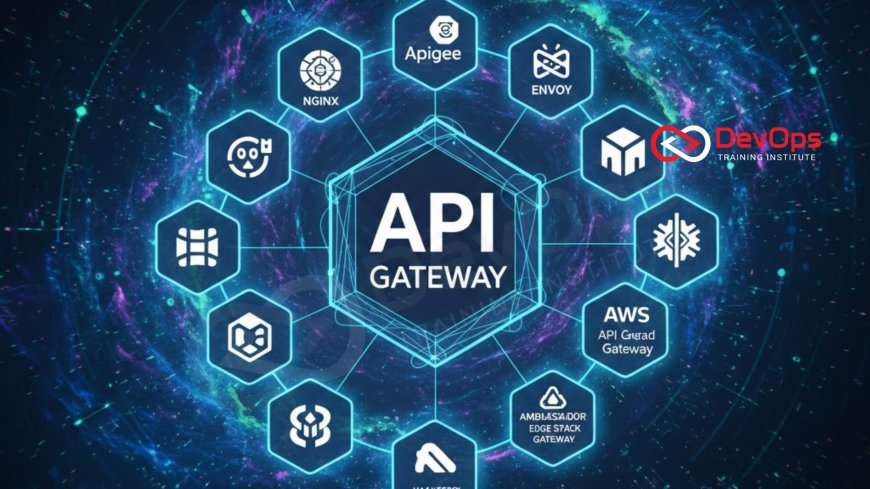
Discover the definitive guide to the top 20 API gateways specifically designed for modern cloud-native applications. This comprehensive article explores how these essential tools manage traffic, enforce security, and improve application performance across distributed systems. Learn about the unique features, benefits, and technical capabilities of leading gateways like Kong, Apigee, and Ambassador to help you choose the right solution for your microservices architecture and enhance your overall system reliability and developer productivity in today's digital landscape.
Introduction to Modern API Management
In the world of modern software development, applications are no longer built as single, massive blocks of code. Instead, we use microservices, which are smaller, independent pieces of software that talk to each other to perform complex tasks. This shift has created a need for a central point of control that manages all the incoming requests from users and directs them to the correct service. This central hub is known as an API gateway. It acts as a digital front door, ensuring that every request is authorized, safe, and efficiently handled.
Choosing the right API gateway is a critical decision for any team building cloud-native applications. A good gateway does more than just route traffic; it provides essential features like security, rate limiting to prevent system overloads, and detailed logging for better visibility into how the application is behaving. As we explore the top twenty options available today, we will look at how they simplify the complexity of distributed systems and allow developers to focus on building features rather than worrying about the underlying plumbing of the network.
The Essential Role of Gateways in Cloud-Native Design
Cloud-native applications are designed to be resilient, scalable, and frequently updated. Without an API gateway, managing a large number of microservices would be a nightmare for any operations team. The gateway provides a unified entry point, which means users only need to know one address to interact with a complex ecosystem of services. This abstraction is vital for maintaining a clean architecture and allowing teams to change backend services without impacting the end-user experience or the client applications.
Furthermore, gateways play a major role in enforcing security policies across all services. Instead of building authentication and authorization into every single microservice, the gateway can handle these tasks centrally. This is a core part of how devsecops integrates security into every stage of the process. By handling cross-cutting concerns at the edge of the system, gateways improve the overall security posture and reduce the amount of boilerplate code that developers need to write and maintain, leading to a much more efficient development cycle.
Key Features to Look for in a Gateway Solution
When evaluating different API gateway solutions, there are several key features that professionals consider essential. First and foremost is performance; the gateway should introduce minimal latency to the requests it handles. It should also offer robust traffic management capabilities, such as load balancing and circuit breaking, which help prevent a single failing service from bringing down the entire system. These features are critical for maintaining high availability and a smooth user experience even during peak traffic periods.
Another important aspect is how well the gateway integrates with your existing tools and workflows. For teams focusing on platform engineering, having a gateway that can be managed as code and integrated into automated pipelines is a huge advantage. You should also look for advanced observability features, such as real-time metrics and distributed tracing. These tools are indispensable for understanding system behavior and quickly troubleshooting issues when they arise in complex, high-scale production environments where manual debugging is simply not feasible.
Strategic Benefits of Using an API Gateway
Implementing an API gateway offers significant strategic benefits beyond just technical routing. It allows organizations to monetize their APIs by providing built-in features for usage tracking and billing. It also enables teams to implement versioning strategies, allowing them to release new versions of a service while still supporting older versions for existing clients. This flexibility is essential for large organizations that need to balance innovation with the stability of their public-facing interfaces.
Gateways also facilitate better resource management and cost control. By providing visibility into which APIs are being used most frequently and which ones are underutilized, teams can make data-driven decisions about where to invest their engineering efforts. This aligns perfectly with finops practices where the goal is to optimize cloud spend. By managing traffic efficiently and reducing the load on backend services through caching at the gateway level, organizations can achieve better performance with fewer resources, leading to significant long-term savings.
Table: Top 20 API Gateways Overview
| API Gateway Name | Primary Deployment | Key Feature | Best Use Case |
|---|---|---|---|
| Kong Gateway | Open Source / Cloud | High Performance Plugin Architecture | Enterprise Microservices |
| Apigee (Google Cloud) | Managed Cloud | Advanced API Monetization | Full API Lifecycle Management |
| AWS API Gateway | Managed Cloud (AWS) | Native Lambda Integration | Serverless Applications |
| Tyk | Open Source / Cloud | Self-Healing Architecture | Large Scale Enterprise APIs |
| Ambassador (Emissary) | Kubernetes Native | Envoy Proxy Based | Kubernetes Environments |
| Azure API Management | Managed Cloud (Azure) | Visual Designer & Developer Portal | Microsoft Ecosystem Users |
| Nginx | Self-Hosted | Lightweight Load Balancing | High-Traffic Web Services |
| Gloo Edge | Kubernetes / Hybrid | Next-Gen Envoy Control Plane | Hybrid Cloud Architectures |
| Traefik | Container Native | Auto-Configuration | Dynamic Containerized Apps |
| KrakenD | Open Source | Stateless Aggregation | Ultra-Fast API Backend |
| Gravitee.io | Open Source / Cloud | Powerful Policy Engine | Open Source API Management |
| 3scale (Red Hat) | Hybrid / On-Prem | Separated Traffic and Management | Internal and Partner APIs |
| WSO2 API Manager | Open Source / Hybrid | Comprehensive Analytics | Full Stack API Solutions |
| MuleSoft Anypoint | SaaS / Hybrid | Integration-Led Connectivity | Large Enterprise Integration |
| IBM API Connect | SaaS / Hybrid | High Security & Compliance | Regulated Industries |
| Software AG webMethods | Hybrid | B2B Integration | Supply Chain & Logistics |
| Akana | SaaS | API Security and Threat Defense | Financial Services |
| Kusk | Kubernetes | OpenAPI Definition Driven | Documentation First Teams |
| Ocelot | Self-Hosted (.NET) | Lightweight .NET Gateway | .NET Core Microservices |
| Istio Ingress Gateway | Service Mesh Native | Fine-Grained Traffic Control | Service Mesh Architectures |
Advanced Security and Traffic Patterns
Modern API gateways are at the forefront of protecting your digital assets from sophisticated threats. Beyond basic API keys, many gateways now offer advanced security features like OAuth2 support, OpenID Connect integration, and even Web Application Firewall (WAF) capabilities. This allows teams to implement a zero-trust security model where every request is treated as potentially untrusted until verified at the edge. This proactive approach is essential for preventing data breaches and maintaining regulatory compliance in an increasingly hostile online environment.
Managing traffic patterns is another area where advanced gateways excel. They allow teams to perform canary releases, where a small percentage of traffic is directed to a new version of a service to verify its stability before a full rollout. They also support blue-green deployment, providing a seamless way to switch traffic between different versions of your application with zero downtime. These sophisticated traffic control mechanisms are vital for maintaining service reliability and ensuring that new features can be released with high confidence and minimal risk to the end-user experience.
Observability, Monitoring, and Debugging
In a cloud-native world, being able to see what is happening inside your system is just as important as the code itself. API gateways generate a wealth of data that can be used for detailed observability. By logging every request that passes through the gateway, teams can gain insights into usage patterns, error rates, and response times. This information is essential for identifying bottlenecks and understanding the health of the entire system. Without this visibility, troubleshooting a distributed system becomes an exercise in guesswork, which is unacceptable for mission-critical applications.
Furthermore, many gateways integrate directly with popular monitoring and alerting tools like Prometheus and Grafana. This allows teams to set up automated alerts that trigger when a specific service starts performing poorly or when error rates spike. By providing a unified view of the system's external performance, the gateway acts as an early warning system. This data is also invaluable for performing chaos engineering experiments, where teams intentionally introduce failures to see how the gateway and the backend services react. This helps build a more resilient system that can withstand real-world outages and unexpected traffic surges.
Integration with DevOps and Automation Workflows
For modern engineering teams, automation is not just a nice-to-have; it is a necessity. API gateways are increasingly being integrated into standard DevOps workflows. This means that the configuration of the gateway, such as routing rules and security policies, is treated as code and stored in version control systems like Git. This practice, often referred to as gitops, ensures that the state of the gateway is always consistent and can be automatically updated as part of a continuous delivery pipeline. This reduces manual errors and speeds up the deployment process.
The rise of automated testing also impacts how gateways are used. Professional teams implement a shift-left testing strategy, where security and performance tests are run early in the development cycle. Gateways facilitate this by allowing developers to mock backend services and simulate different network conditions during the testing phase. This ensures that the gateway configuration is robust and that the application can handle real-world scenarios before it ever reaches production. By automating the entire gateway lifecycle, organizations can achieve greater agility and release new features with much higher frequency and lower risk.
- Declarative Configuration: Managing gateway rules using YAML or JSON files that can be versioned and audited.
- Automated Certificate Management: Using tools like Let's Encrypt and cert-manager to automatically handle SSL/TLS certificates at the gateway level.
- Developer Portals: Providing self-service portals where developers can discover APIs, sign up for keys, and view documentation without manual intervention.
- Dynamic Routing: Automatically updating routing rules as new services are deployed or removed from a container orchestration platform like Kubernetes.
Future Trends in API Gateway Technology
As we look toward the future, the technology behind API gateways continues to evolve rapidly. We are seeing a move toward more lightweight and decentralized gateway architectures, such as sidecar proxies and service meshes. These technologies provide even finer-grained control over how individual microservices communicate with each other. We are also seeing the integration of artificial intelligence and machine learning into gateway solutions. These AI-powered gateways can automatically detect and block malicious traffic patterns, optimize routing in real-time based on network conditions, and even suggest performance improvements.
Another major trend is the expansion of gateway capabilities to the edge of the network. Edge-native gateways allow organizations to process requests closer to the user, reducing latency and improving performance for global applications. This is particularly important for mobile users and IoT devices where every millisecond counts. As the line between the data center and the edge continues to blur, the role of the API gateway will only become more central to how we build and secure the next generation of cloud-native applications. Embracing these innovations will be key for organizations that want to stay competitive in an increasingly digital world. Some teams are also using feature flags at the gateway level to control the visibility of new APIs to specific user groups.
Conclusion
In conclusion, the API gateway is a foundational component of any successful cloud-native strategy. Whether you are building a small set of microservices or a massive enterprise-grade application, choosing the right gateway can significantly impact your performance, security, and developer productivity. We have explored the top twenty gateways, ranging from lightweight open-source options to fully managed cloud services. Each solution has its own strengths and is designed for specific use cases. By understanding your unique requirements and leveraging the strategic benefits of these tools, you can build a robust and scalable architecture that meets the demands of modern users. Remember that the best gateway is the one that fits seamlessly into your existing workflows and empowers your team to deliver high-quality software with confidence. As technology continues to advance, staying informed about the latest trends in API management will ensure that your applications remain secure, performant, and ready for the future challenges of the digital landscape.
Frequently Asked Questions
What is an API gateway?
An API gateway is a central entry point that manages, routes, and secures incoming requests to various microservices in a system.
Why do I need an API gateway for microservices?
It provides a single entry point, handles cross-cutting concerns like authentication, and simplifies the client-side interaction with complex backend architectures.
What is the difference between a load balancer and an API gateway?
A load balancer distributes traffic across servers, while a gateway performs higher-level tasks like request transformation, security, and rate limiting.
Can an API gateway handle security?
Yes, gateways are designed to centrally manage authentication, authorization, and protection against common threats like DDoS attacks and SQL injection.
What is rate limiting?
Rate limiting is a feature that restricts the number of requests a user can make to an API within a certain timeframe.
How does an API gateway improve performance?
It can improve performance through caching common responses, optimizing request routing, and offloading heavy tasks from the backend microservices.
What is a developer portal?
A developer portal is a self-service website where developers can find API documentation, request access keys, and track their API usage.
Are API gateways only for cloud-native apps?
While essential for cloud-native microservices, gateways can also be used to modernize legacy monolithic applications and manage traditional web services.
What is the Envoy proxy?
Envoy is a high-performance open-source proxy used by many modern API gateways, like Ambassador and Gloo, to handle network traffic efficiently.
How do I choose between a managed and self-hosted gateway?
Managed gateways are easier to operate but may have higher costs, while self-hosted options offer more control and customization for technical teams.
What is API versioning?
API versioning is the practice of maintaining multiple versions of an API simultaneously to ensure backward compatibility for different client applications.
Can gateways handle protocol translation?
Yes, many gateways can translate between different protocols, such as converting a RESTful HTTP request into a gRPC or GraphQL call.
What is a sidecar proxy?
A sidecar proxy is a helper service that runs alongside an application container to handle its network communication, common in service meshes.
How does an API gateway support CI/CD?
Gateways support CI/CD by allowing automated configuration updates and facilitating safe deployment strategies like canary releases and blue-green deployments.
What is the benefit of a Kubernetes-native gateway?
Kubernetes-native gateways integrate deeply with the Kubernetes API, allowing for automatic service discovery and configuration using familiar tools like kubectl.
What's Your Reaction?
 Like
0
Like
0
 Dislike
0
Dislike
0
 Love
0
Love
0
 Funny
0
Funny
0
 Angry
0
Angry
0
 Sad
0
Sad
0
 Wow
0
Wow
0




![100+ Azure DevOps Interview Questions and Answers [Updated 2025]](https://www.devopstraininginstitute.com/blog/uploads/images/202509/image_140x98_68c40aa9a3834.jpg)






![Future Scope of DevOps Careers in Pune [Updated 2025]](https://www.devopstraininginstitute.com/blog/uploads/images/202510/image_140x98_68e3a84652312.jpg)