





![Kong Interview Preparation Guide [2025]](https://www.devopstraininginstitute.com/blog/uploads/images/202509/image_430x256_68dbb95326997.jpg)




10 Cloud Migration DevOps Strategies
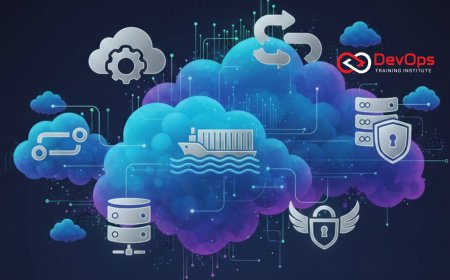
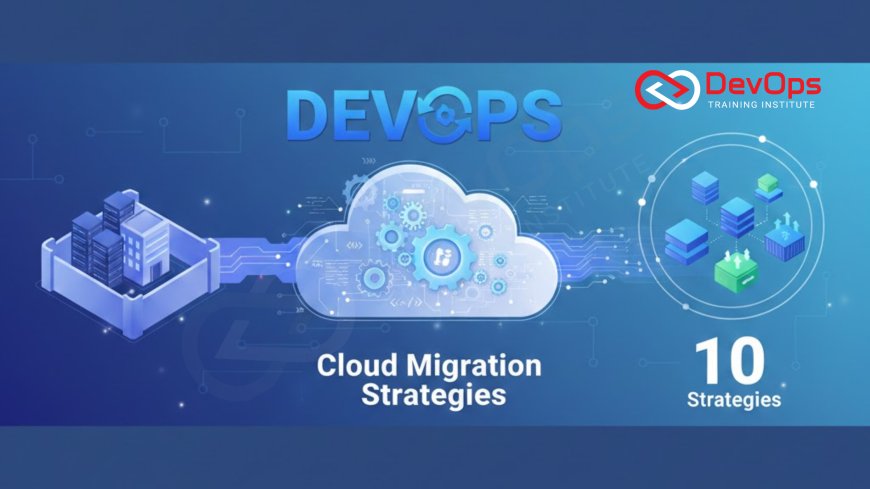
Explore 10 crucial DevOps strategies for a successful and seamless cloud migration, transitioning from traditional infrastructure to a cloud-native model. This guide covers essential techniques, including leveraging Infrastructure as Code (IaC), automating CI/CD pipelines, integrating DevSecOps for security, and implementing continuous monitoring. Learn how to minimize risk, ensure environment consistency, and accelerate the migration process using containers, GitOps, and observability to achieve a highly reliable and scalable cloud environment that supports high-velocity software delivery and cost optimization.
Introduction
The journey to the cloud is no longer optional; it is a business imperative driven by the need for agility, scalability, and cost efficiency. However, a cloud migration is a complex undertaking, often exposing hidden dependencies, configuration inconsistencies, and operational bottlenecks. Simply moving existing applications ("lifting and shifting") without fundamentally changing operational practices can lead to disappointing results, higher costs, and increased instability. This is where DevOps principles and tools become indispensable, transforming a risky, one-time project into a systematic, continuous process.
DevOps provides the necessary methodologies to manage the complexity of cloud migration. By focusing on automation, version control, continuous integration, and shared ownership, DevOps minimizes human error and ensures that the newly provisioned cloud environments are consistent, secure, and reliable. The migration strategy must leverage automation to define infrastructure as code, validate code and configurations continuously, and provide deep visibility into the performance of hybrid and cloud-native services. Moving to the cloud is ultimately a move toward a cloud-native operational model, and DevOps is the engine that drives this transformation.
This guide breaks down 10 crucial DevOps strategies that guarantee a successful, low-risk, and high-impact cloud migration. We cover strategies related to planning, automation, security, and continuous optimization, ensuring that your organization achieves the full benefits of the cloud—not just a change of hosting location. Mastering these strategies will accelerate your cloud adoption, reduce operational friction, and establish a resilient foundation for future innovation.
1. Adopt Infrastructure as Code (IaC) Early and Universally
The single most important technical strategy is to define all infrastructure—from network configurations and virtual machines to databases and serverless functions—as code using tools like Terraform or CloudFormation. IaC enforces consistency and reproducibility across all environments (development, staging, production, and cloud/on-premises). During a migration, IaC allows you to quickly provision parallel, cloud-native environments that perfectly mirror your target state, enabling thorough testing before the cutover. Migrating without adopting IaC is simply shifting a maintenance problem from one datacenter to another, perpetuating technical debt.
DevOps Impact: IaC eliminates configuration drift, makes the entire environment auditable via version control, and allows infrastructure changes to follow the same rigorous code review and CI/CD workflow as application changes. This dramatically reduces the risk of environment inconsistency, which is a leading cause of migration failure.
2. Containerize Applications for Portability (Replatforming)
For most applications, the most effective migration strategy is Replatforming using containers (Docker and Kubernetes). Containerization decouples the application from the underlying operating system and hardware, ensuring the application runs consistently whether it's on-premises or in any cloud environment. This dramatically simplifies the transition process and is essential for achieving true cloud portability, preventing vendor lock-in, and easing subsequent modernization efforts.
DevOps Impact: Containers standardize the deployment unit. This standardization simplifies CI/CD pipelines, making it trivial to deploy the same artifact across development, testing, and production in the cloud. It also enables the use of cloud-native orchestration tools like Kubernetes, which are central to cloud efficiency and scalability.
3. Implement Continuous Delivery (CD) for Migration Stages
Treat the migration itself as a series of small, automated releases rather than a single massive cutover event. Implement continuous delivery (CD) pipelines to manage the rollout of applications into the new cloud environment iteratively. This allows teams to test, validate, and stabilize smaller portions of the application or user base over time, minimizing the risk of large-scale failure.
DevOps Impact: CD enforces small batch sizes, which is a core DevOps principle for stability. This approach allows teams to use automated rollback mechanisms, limiting the blast radius of any issue and ensuring a smooth, low-risk application release automation process during the transition phase. Automating deployment ensures repeatability and speed throughout the process.
4. Integrate DevSecOps and Hardening from Day One
Security must be integrated from the start, not bolted on at the end. The migration process is the perfect time to implement a robust DevSecOps strategy. This involves automating security scanning (SAST/SCA) in the CI pipeline and ensuring that the IaC templates include necessary security controls and hardening configurations.
DevOps Impact: Automated security checks are integrated as mandatory quality gates in the pipeline, ensuring that all deployed artifacts and infrastructure configurations meet security and compliance standards. This includes ensuring host systems and containers adhere to stringent policies like RHEL 10 hardening best practices, applied via IaC, creating a secure-by-default cloud environment that prevents misconfigurations and reduces the attack surface.
5. Establish Observability as a Pre-Requisite
You cannot migrate what you cannot measure. Before, during, and after migration, robust observability is essential. Instrument all applications and infrastructure components to generate metrics, logs, and traces. This provides a deep understanding of application performance and dependencies in the source environment (for benchmarking) and ensures quick diagnosis of any performance degradation in the target cloud environment.
DevOps Impact: Observability is crucial for validating the migration success. Real-time metrics allow the team to perform live validation of performance (e.g., latency, error rates) in the cloud versus the on-premises baseline. It also enables rapid root cause analysis (RCA), leveraging all observability pillars to quickly diagnose issues during the cutover and limit the Mean Time to Resolution (MTTR).
6. Leverage GitOps for Environment Consistency
Adopt the GitOps model, making the Git repository the single source of truth for the desired state of the cloud environment. This is especially powerful for managing Kubernetes clusters. A reconciliation agent (like Argo CD or Flux CD) continuously monitors the Git repository and automatically applies changes to the cluster. Any infrastructure or application change starts with a change to the configuration in Git.
DevOps Impact: GitOps provides an auditable, transparent, and automated way to manage configuration changes in the cloud. It eliminates configuration drift by ensuring the live environment always converges to the state defined in Git. This greatly enhances security and operational confidence, particularly in a complex, multi-environment setting, simplifying the management of security controls like SSH keys security across nodes.
7. Automate Host OS Configuration and Patching
Even in cloud environments, underlying host operating systems (VMs, Kubernetes nodes) require configuration management and patching. Use tools like Ansible or Chef within the pipeline to automatically apply standardized configurations, security controls, and patches to these hosts. This ensures that the base layer of your cloud infrastructure remains compliant and secure.
DevOps Impact: Automation of host configuration, often based on a verified RHEL 10 post-installation checklist, guarantees consistency and reduces the security exposure window. The CI/CD pipeline triggers the configuration management process, ensuring that any vulnerability found in the host OS is quickly patched across the entire cloud fleet, which is vital for maintaining a strong security perimeter across all environments.
8. Prioritize Databases and Data Migration Strategies
Data is often the riskiest component of any migration. The DevOps strategy must include robust, automated processes for database schema migration and data replication. Use continuous replication tools to minimize the switchover window (downtime). Treat database schemas as code, using tools like Flyway or Liquibase, to manage schema versioning and application of changes.
DevOps Impact: Treating the database as code allows schema changes to be integrated into the CI/CD pipeline. This ensures that the application code and the database schema are always compatible during the migration, preventing application failures due to incompatible database structures. Automated schema management is a key practice for ensuring data integrity during the critical cutover phase, reducing the risks associated with manual database operations.
9. Implement Cloud FinOps for Cost Optimization
A common post-migration pitfall is uncontrolled cloud spending. Integrate FinOps practices into the CI/CD and monitoring systems. Use IaC tools to enforce cost governance (e.g., preventing overly large instance provisioning) and implement automated monitoring to track resource utilization and identify waste (e.g., idle databases or unattached volumes). This requires cultural collaboration between engineering, finance, and product teams.
DevOps Impact: Integrating cost monitoring (e.g., using Infracost) into the IaC workflow gives developers immediate visibility into the financial impact of their infrastructure changes, enabling cost optimization as a "shift-left" practice. This continuous financial governance ensures that the cloud infrastructure remains cost-effective long after the initial migration is complete, delivering on the cloud's promise of reduced operational expenditure.
10. Perform Continuous Testing and Validation
Testing cannot stop once the application is running in the cloud. The CI/CD pipeline must continuously run functional, load, and security tests against the cloud environment, both during and after the migration. Load testing (stressing the system with simulated user traffic) in the cloud environment is non-negotiable for validating performance and scalability under real-world conditions. Continuous testing ensures that the new environment performs as expected and that new code does not introduce regressions.
DevOps Impact: Continuous testing provides objective evidence that the migration was successful and that the cloud environment meets Service Level Objectives (SLOs). Automating performance validation against production-like scale in the cloud is crucial for managing the risks associated with high load and enables the organization to confidently maintain a high-velocity Continuous Delivery model without sacrificing stability, proving the application's resilience.
Conclusion
Cloud migration is a strategic opportunity to modernize not just infrastructure, but operational practices. By embracing these 10 DevOps strategies—centered on automation, immutability, continuous validation, and security integration—organizations can significantly de-risk the transition and accelerate their time-to-value in the cloud. Adopting IaC, containerization, and GitOps establishes a robust, auditable, and repeatable foundation for all future deployments, eliminating configuration drift and manual toil.
The successful migration is defined by seamless operation after the cutover. This requires proactive security integration (DevSecOps), continuous host hardening, and an obsession with observability to quickly identify and resolve issues. By treating the migration as the first stage of a continuous transformation, you ensure that your cloud environment is not just an expense, but a dynamic, resilient, and highly scalable engine that fully supports the competitive demands of modern software delivery. These DevOps strategies are the key to realizing the full promise of the cloud, making the environment reliable, cost-effective, and fully aligned with business objectives.
Frequently Asked Questions
What is the primary technical benefit of using IaC in cloud migration?
IaC eliminates configuration drift and ensures that the target cloud environment is provisioned with consistency and repeatability, matching the desired state defined in code.
Why is containerization recommended over a simple "lift and shift"?
Containerization (Replatforming) decouples the application from the underlying OS, greatly enhancing portability, simplifying CI/CD, and enabling cloud-native orchestration (Kubernetes) for better scaling and efficiency.
How does DevSecOps reduce migration risk?
DevSecOps integrates automated security scanning and policy enforcement (SAST/SCA) directly into the pipeline, preventing vulnerable code or misconfigurations from ever being deployed to the cloud environment.
What is the role of GitOps in managing the cloud environment post-migration?
GitOps makes Git the single source of truth, automating the reconciliation of the live cloud environment with the codified configuration, ensuring consistency and full auditability for every change.
How does observability help validate a migration's success?
Observability provides real-time metrics and traces that allow teams to benchmark performance before migration and validate that the cloud environment meets or exceeds the previous performance SLOs after cutover, demonstrating a successful transition with actionable data.
How should host hardening be managed in the cloud?
Host hardening (e.g., setting up security controls on the underlying VM nodes) should be automated via configuration management tools (Ansible, Chef) and verified by the CI/CD pipeline before any application deployment, aligning with RHEL 10 hardening best practices.
How can I use the principles of RHEL 10 post-installation checklist during a migration?
The principles ensure that all newly provisioned cloud VMs are automatically configured and secured with a standardized, verified base setup (e.g., networking, user management) before the application layer is installed.
Why is automated schema management important for database migration?
Automated schema management (using tools like Flyway) ensures the database structure evolves in lockstep with the application code changes, preventing compatibility errors and ensuring data integrity during the cutover window.
How does integrating FinOps into the migration save money?
It integrates cost monitoring into the IaC workflow, giving developers immediate feedback on the financial impact of their resource choices and allowing for continuous cost optimization from the design phase.
What is the benefit of treating migration as Continuous Delivery?
Treating migration as continuous delivery enables the use of small, automated batch sizes for changes, minimizing risk, enabling quick rollbacks, and accelerating the overall deployment process safely.
What's Your Reaction?
 Like
0
Like
0
 Dislike
0
Dislike
0
 Love
0
Love
0
 Funny
0
Funny
0
 Angry
0
Angry
0
 Sad
0
Sad
0
 Wow
0
Wow
0

![100+ Azure DevOps Interview Questions and Answers [Updated 2025]](https://www.devopstraininginstitute.com/blog/uploads/images/202509/image_140x98_68c40aa9a3834.jpg)






![Future Scope of DevOps Careers in Pune [Updated 2025]](https://www.devopstraininginstitute.com/blog/uploads/images/202510/image_140x98_68e3a84652312.jpg)