





![Kong Interview Preparation Guide [2025]](https://www.devopstraininginstitute.com/blog/uploads/images/202509/image_430x256_68dbb95326997.jpg)





12 Ways to Reduce Deployment Time with DevOps
Unlock the secrets to high-velocity software delivery by mastering 12 proven methods to dramatically reduce deployment time using DevOps practices. This guide covers essential techniques like implementing fully automated CI/CD pipelines, adopting Infrastructure as Code (IaC) with tools like Terraform, and embracing containerization via Kubernetes. Learn how to minimize risk through small, frequent changes, shift security left (DevSecOps), and eliminate environmental inconsistencies. Applying these methods ensures your team can deploy faster, more reliably, and with greater confidence, transforming the "time to market" from weeks or days into mere minutes for competitive advantage.
Introduction
In the rapid-fire pace of the modern digital economy, the speed at which an organization can move new code changes from a developer's keyboard into the hands of a customer is a direct measure of its agility and competitive health. Reducing deployment time is not merely a technical goal; it is a critical business strategy that directly shortens the "time to market," allows for faster feedback loops, and enables immediate response to security threats or customer demands. Deployment time, often measured by the DORA metric "Lead Time for Changes," encompasses the entire automated journey: from the moment code is committed to the point the new feature is running successfully and stably in production.
The DevOps methodology provides the necessary framework—combining cultural shifts, process refinements, and automated tools—to systematically dismantle the bottlenecks that traditionally slow down releases. These bottlenecks typically stem from manual processes, complex handoffs between teams, lengthy integration cycles, and inconsistent environments. By applying the 12 strategies detailed in this guide, engineering teams can transition from risky, infrequent "big bang" releases that take days or weeks to predictable, low-risk deployments that can be executed safely, multiple times per day, transforming the efficiency of the entire software delivery value stream.
Achieving this high velocity requires a holistic approach that views the entire ecosystem—from the operating system fundamentals of Linux servers to the high-level application architecture—as a single system designed for automated change. The deployment time saved is directly proportional to the rigor with which the principles of automation, collaboration, and continuous quality assurance are enforced throughout the continuous integration and continuous delivery (CI/CD) pipeline.
The Automation Imperative: Eliminate Manual Toil
The single greatest inhibitor of deployment speed is manual toil—any repetitive, operational task that requires human effort and decision-making. Every manual step in the deployment process is a point of delay, potential error, and inefficiency. The first fundamental step in reducing deployment time is identifying and relentlessly eliminating every manual gate and action within the CI/CD pipeline, ensuring that the process flows from code commit to deployment entirely under the control of automated systems.
Two core areas must be addressed for maximal time reduction:
- Automate Everything in the Pipeline: The build, test, and deployment phases must be fully automated using CI/CD tools (Jenkins, GitLab CI). This includes integrating unit tests, static code analysis, artifact creation (e.g., Docker images), and the final deployment command into a single, executable pipeline code. When deployment is triggered by a simple code merge, rather than a lengthy checklist, the time saved is instantaneous and massive, transforming the process from an event into a continuous function.
- Automate Infrastructure Provisioning (IaC): The provisioning of servers, networks, and databases (the environment itself) must be automated using Infrastructure as Code (IaC) tools like Terraform or CloudFormation. Manual environment setup is a perennial source of delay and inconsistency. By defining infrastructure as code, environments can be spun up, configured, and torn down in minutes, ensuring environment parity between staging and production and eliminating the hours or days traditionally spent waiting for infrastructure teams to provision resources.
The Architecture of Speed: Small, Safe Batches
The size and frequency of code changes are inversely related to deployment risk and, therefore, directly related to deployment speed. Large, complex releases that bundle months of development work are inherently risky, necessitating lengthy manual validation, extensive approval gates, and often leading to complex rollbacks. The modern strategy focuses on reducing the blast radius of any change to minimize the fear of deployment, thereby enabling a much higher deployment frequency and faster time-to-market.
Reduce Change Size (Small Batch Sizes): Encourage developers to break down large features into the smallest possible units that can be tested, merged, and deployed independently. A small change (e.g., updating one microservice) is easier to debug and faster to validate than a large one (e.g., updating the entire monolithic application). This process directly influences the Lead Time for Changes, as smaller changes move through the pipeline faster and encounter fewer integration conflicts, a key principle derived from the successful continuous delivery models adopted by high-velocity organizations.
Embrace Trunk-Based Development: Adopting a version control practice like Trunk-Based Development (TBD), where developers commit small changes to a single main branch frequently (often multiple times per day), is essential. This eliminates the long-lived, high-risk feature branches that cause massive merge conflicts—a major cause of deployment delay. TBD works by decoupling the deployment of code from the final release of the feature, utilizing feature flags (software toggles) to keep unfinished code in production environments dark until the product team chooses to expose it to users, thus safeguarding production stability.
Containerization and Consistency
Environmental differences between development, staging, and production are a prime cause of deployment failure and subsequent delay. By standardizing the environment in which the application runs, consistency is guaranteed, eliminating the time wasted troubleshooting environment-specific bugs (the infamous "it works on my machine" problem). Containerization and orchestration tools provide the necessary technology for this critical consistency mandate.
Containerize Everything with Docker: Packaging the application and all its dependencies into an immutable Docker container guarantees that the runtime environment is identical across all testing and deployment targets. The artifact generated by CI (the Docker image) contains everything needed to run, removing environment-specific runtime issues and simplifying the deployment process immensely. This immutability principle is key to deployment reliability, speeding up the time it takes to certify code as production-ready.
Orchestrate with Kubernetes: Deploying containers with an orchestrator like Kubernetes or an equivalent managed service automates the complex logistics of scaling, networking, and service discovery. Kubernetes ensures that the application is resilient, self-healing, and can be updated using low-risk strategies (like rolling updates), drastically reducing the manual orchestration required for managing large-scale deployments, freeing up the DevOps Engineer to focus on higher-value automation tasks.
Table: The 12 Ways to Reduce Deployment Time
This table summarizes the 12 most impactful technical and process changes a team can implement, categorized by their primary domain, illustrating how each practice directly reduces the deployment time metric across the entire software delivery pipeline and ensures that your releases are consistently faster and safer.
| Domain | Strategy | Time Reduction Mechanism | Key Tools/Practices |
|---|---|---|---|
| Automation | Automate All Pipeline Steps | Eliminates manual human delays and handoffs between teams. | Jenkins, GitLab CI, GitHub Actions. |
| Infrastructure | Implement Infrastructure as Code (IaC) | Provision environments instantly and consistently; removes environment configuration delays. | Terraform, CloudFormation, Ansible. |
| Change Size | Small, Frequent Code Commits | Reduces merge conflicts and integration effort; speeds up testing time. | Trunk-Based Development, Feature Flags. |
| Quality | Integrate Continuous Testing | Catches bugs early in CI (shift left), preventing costly, time-consuming fixes post-deployment. | Unit Tests, SAST, Performance Tests. |
| Risk Control | Use Advanced Deployment Strategies | Enables automated rollbacks and zero-downtime releases, eliminating the need for lengthy maintenance windows. | Canary Releases, Blue/Green Deployment, Spinnaker. |
| Security | Shift Left Security (DevSecOps) | Prevents security vulnerabilities from reaching production, avoiding emergency fixes and compliance delays. | Trivy, Checkov, HashiCorp Vault. |
Continuous Quality: The Testing and Security Gateway
A deployment can only be fast if the team is completely confident in the quality and security of the code. Delaying testing until the end of the pipeline forces slow, manual processes and creates a massive risk profile that management will inevitably try to mitigate with bureaucratic approval gates, which are antithetical to speed. The solution is to integrate continuous quality and security checks directly into the automated process, providing immediate feedback that accelerates the deployment without compromising product integrity.
Integrate Continuous Testing: Ensure that every code commit automatically triggers a fast, comprehensive suite of automated tests. This includes unit tests (to check internal code logic), integration tests (to check service interactions), and performance tests (to check behavior under load). By catching bugs early in the Continuous Integration (CI) phase, the pipeline minimizes the chance of defects reaching production, avoiding the costly, time-consuming emergency fixes that derail release schedules. The success of this strategy is based on applying engineering discipline to the quality assurance process.
Shift Left Security (DevSecOps): Embed security scanning tools into the CI pipeline immediately after code compilation. Tools like vulnerability scanners (Trivy) and static analysis tools (SonarQube) automatically check the application code and container images for known vulnerabilities. This proactive approach prevents security flaws from reaching production, avoiding the complex, high-pressure emergency patches that typically violate compliance mandates and require immediate, disruptive deployment, thereby maintaining a consistent and fast release velocity.
Risk Reduction: Advanced Deployment Strategies
The transition of software into the production environment carries the highest risk. Mitigating this risk allows organizations to shorten or eliminate the lengthy approval processes that delay releases. Advanced deployment strategies use automated mechanisms to limit the blast radius of any change, providing an instant safety net that ensures zero downtime and rapid rollback capability, building confidence in the deployment mechanism itself, transforming a fearful event into a routine, automated operation.
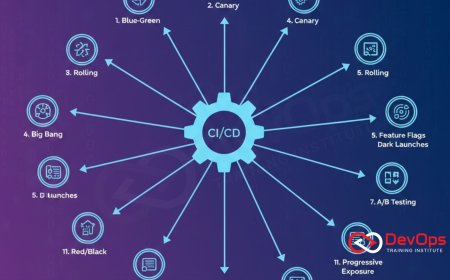
Use Advanced Deployment Strategies: Utilize techniques like **Canary Releases** (deploying the new version to a small subset of users, monitoring performance, and then gradually rolling it out) or **Blue/Green Deployment** (running the new version alongside the old and instantaneously switching traffic via a load balancer). These strategies allow engineers to test changes with real user traffic in a controlled manner. If a failure occurs, the automated process can instantly roll back to the last stable version, minimizing customer impact and eliminating the need for lengthy maintenance windows that traditionally slow down release schedules.
Implement Observability-Driven Rollbacks: Deployment must be validated by production data, not just static checks. The CI/CD pipeline should integrate with monitoring systems (Prometheus/Grafana) to define automated gates. If latency increases, error rates spike, or key business metrics drop immediately after deployment, the system must automatically trigger a rollback to the previous version. This reliance on objective data, rather than human observation or manual checks, ensures that the system is self-healing, providing a fast recovery from failure and increasing the overall resilience of the production environment.
Operational Excellence: Environment and Pipeline Optimization
Even with great tools, an inefficiently managed pipeline can still introduce delays. Optimization focuses on minimizing execution time and ensuring that every component of the delivery ecosystem—from the source code structure to the underlying virtualization technology—is geared for speed and consistency, which requires a deep understanding of the fundamentals of system administration and networking.
Optimize Pipeline Performance: Analyze pipeline metrics to identify the slowest stages (e.g., test suites, build time). Implement strategies like parallel testing (running multiple tests concurrently) and intelligent build caching (only rebuilding components that have changed) to drastically reduce overall pipeline duration, providing faster feedback to developers. Using lightweight, optimized base operating systems in containers, such as Alpine or slim Linux distributions, also speeds up image creation and distribution time, accelerating the entire process.
Enforce Environment Parity: Ensure that development, staging, and production environments are functionally and structurally identical. This is primarily achieved through IaC (using Terraform) and containerization, preventing configuration drift and environmental inconsistencies that cause last-minute bugs and force time-consuming troubleshooting. A deep understanding of how virtualization works (e.g., the difference between full and para-virtualization) can aid in optimizing performance and ensuring that cloud resources are utilized efficiently, further reducing potential deployment friction.
Conclusion
The path to reducing deployment time with DevOps is clear: automate everything, reduce change size, and validate continuously. By systematically implementing these 12 strategies—from the foundational automation of IaC and CI/CD pipelines to the sophisticated risk mitigation of Blue/Green and Canary releases—organizations transform their software delivery model. The result is a reduced "Lead Time for Changes," which directly translates into a massive competitive advantage, enabling faster feature delivery and superior market responsiveness.
Ultimately, a fast deployment is a safe deployment. The confidence gained through continuous, automated testing, security scanning, and observability-driven validation allows teams to move quickly without fear of failure. Embrace the DevOps methodology, treat your infrastructure as code, and ensure your entire pipeline is optimized for speed and resilience to achieve the true potential of continuous software delivery.
Frequently Asked Questions
What is the Lead Time for Changes metric?
It is a DORA metric that measures the time taken from when a developer commits code to when that code is running successfully in production, directly measuring delivery speed.
How does Infrastructure as Code reduce deployment time?
IaC reduces time by automating environment provisioning, ensuring consistent setup, and eliminating the manual delays associated with traditional server configuration.
What is the risk of using large batch sizes?
Large batch sizes increase deployment risk significantly, leading to lengthy manual testing, complex approval gates, and difficult, time-consuming rollbacks if an issue is found.
How does Kubernetes speed up the deployment process?
Kubernetes speeds up deployment by automating container orchestration, enabling rolling updates, and managing complex deployment strategies like Blue/Green efficiently.
What does 'Shift Left Security' mean?
Shift Left Security means integrating security scanning (DevSecOps) early into the CI phase, catching vulnerabilities in code or containers when they are easiest and cheapest to fix.
What are Feature Flags used for in Trunk-Based Development?
Feature Flags decouple code deployment from feature release, allowing code to be deployed to production in a dark state until the business decides to switch the feature on.
How do immutable builds help reduce deployment time?
Immutable builds ensure the artifact is consistent across all environments, eliminating environment-specific bugs that typically delay the final production deployment phase.
What is the goal of parallel testing in CI?
The goal is to drastically reduce the total time required for the automated test suite to run by executing multiple tests concurrently across different runners, providing faster feedback.
What is observability-driven rollback?
It is an automated rollback triggered by real-time production monitoring systems when performance metrics or error rates indicate a failure immediately after a deployment.
Why is environment parity important?
Environment parity ensures that the staging environment functions identically to production, preventing last-minute, time-consuming bugs caused by configuration drift.
How does the history of Linux relate to fast deployment?
The historical stability and command-line automation capabilities of Linux provide the reliable foundation upon which all modern cloud and container CI/CD pipelines are built.
What are Security Groups, and how do they impact deployment time?
Security Groups are cloud firewalls; defining them via IaC reduces deployment time by automating network security configuration, avoiding manual firewall rule changes that often delay releases.
What is the purpose of managing the Linux file system hierarchy in DevOps?
Understanding the Linux file system structure is vital for configuring deployment scripts and application logging to the correct directories (e.g., /var/log), ensuring stability.
How does virtualization relate to fast environments?
Understanding virtualization (like KVM or VMware) allows engineers to optimize cloud instance performance and efficiently utilize resources for disposable, fast-starting test environments.
What role does continuous testing play in reducing risk?
Continuous testing plays the role of the primary automated quality gate, catching defects early in the cycle, which reduces the overall risk of the deployed code in the live production system.
What's Your Reaction?
 Like
0
Like
0
 Dislike
0
Dislike
0
 Love
0
Love
0
 Funny
0
Funny
0
 Angry
0
Angry
0
 Sad
0
Sad
0
 Wow
0
Wow
0


![100+ Azure DevOps Interview Questions and Answers [Updated 2025]](https://www.devopstraininginstitute.com/blog/uploads/images/202509/image_140x98_68c40aa9a3834.jpg)






![Future Scope of DevOps Careers in Pune [Updated 2025]](https://www.devopstraininginstitute.com/blog/uploads/images/202510/image_140x98_68e3a84652312.jpg)