


















![Kong Interview Preparation Guide [2025]](https://www.devopstraininginstitute.com/blog/uploads/images/202509/image_430x256_68dbb95326997.jpg)










15 CI/CD Workflow Blueprints to Download
Transform your development process with fifteen high performance CI/CD workflow blueprints designed for modern engineering teams in twenty twenty six. This extensive guide provides downloadable architectural patterns for microservices, serverless applications, and DevSecOps environments to help you achieve zero-downtime deployments. Learn how to structure your pipelines using industry standards like GitHub Actions, GitLab CI, and Jenkins while optimizing for speed and security. Whether you are scaling a startup or managing a global enterprise, these proven blueprints offer a roadmap to reducing lead times, eliminating manual errors, and building a resilient technical foundation for continuous innovation and software excellence today.
Introduction to Modern CI/CD Blueprints
A CI/CD blueprint is more than just a configuration file; it is a strategic map that defines how your software travels from a developer's mind to a user's device. In the complex technical landscape of twenty twenty six, having a well defined workflow is essential for maintaining order and speed. These blueprints serve as standardized templates that encapsulate best practices for testing, security, and deployment. By adopting a proven architectural pattern, teams can avoid the common pitfalls of custom built "spaghetti" pipelines and instead focus on delivering features that provide real value to their customers.
The rise of cloud native technologies has shifted the focus from simple build scripts to sophisticated orchestration. Modern blueprints must now account for containerization, dynamic environment provisioning, and automated feedback loops. Whether you are using a trunk based development model or a feature branch strategy, these blueprints provide the necessary structure to ensure that every code change is rigorously vetted before it reaches production. This guide explores fifteen essential blueprints that you can download and adapt to your specific needs, providing a solid foundation for a scalable and high performing DevOps practice.
The Foundation of Trunk-Based CI Workflows
Trunk based development is a high velocity workflow where developers merge small, frequent updates into a single main branch. This approach minimizes the complexity of long lived feature branches and reduces the risk of massive merge conflicts. The corresponding CI blueprint focuses on rapid feedback, running a suite of fast unit tests and linting checks on every single commit. This ensures that the main branch always remains in a deployable state, which is a key requirement for organizations aiming for multiple releases per day. It is a fundamental part of the cultural change required for true continuous integration.
To support this speed, the trunk based blueprint often utilizes parallel execution and distributed caching to keep build times under five minutes. If a build fails, the entire team is notified immediately through incident handling channels, and the priority shifts to fixing the "broken build." This "stop the line" mentality ensures that technical debt doesn't accumulate and that the codebase remains healthy. By downloading and implementing this blueprint, teams can significantly improve their lead time for changes and create a more collaborative and transparent development environment that rewards small, incremental improvements over risky, large scale deployments.
Architecting Microservices Deployment Pipelines
Microservices architectures introduce the challenge of managing dozens or even hundreds of independent pipelines simultaneously. A successful microservices blueprint must support independent deployments while ensuring that all services remain compatible with one another. This often involves the use of contract testing and automated integration suites that verify service interactions without requiring a full system restart. Each service has its own lifecycle, allowing teams to ship updates to a specific component, like a payment gateway, without impacting the rest of the application ecosystem.
The blueprint for microservices also emphasizes the use of container registries and orchestration platforms like Kubernetes. When a service is updated, the pipeline builds a new image and triggers a continuous synchronization process to update the cluster state. This modular approach allows for extreme scalability and fault tolerance. By utilizing cloud architecture patterns designed for decoupling, you can build a delivery system that scales as your business grows. This blueprint is essential for any organization moving away from monolithic systems toward a more flexible and agile microservices model.
Integrating Security with DevSecOps Blueprints
Security is no longer a final hurdle at the end of the development cycle; it is a continuous thread that runs through the entire pipeline. DevSecOps blueprints integrate security checks at every stage, from static analysis of the source code to dynamic testing of the running application. This ensures that vulnerabilities are identified and remediated as early as possible, reducing the risk of a production breach. These blueprints also include automated checks for compliance with industry standards and internal safety policies, providing a clear audit trail for every release.
A key component of the DevSecOps blueprint is the use of secret scanning tools to prevent the accidental exposure of sensitive credentials. Additionally, admission controllers are used in the deployment phase to ensure that only containers that have passed all security scans are allowed to run in the cluster. By downloading this blueprint, you are building a "security by design" culture that protects both your users and your business reputation. It turns your CI/CD pipeline into a powerful shield that works alongside your developers to ensure that every release is as secure as it is functional.
15 Essential CI/CD Workflow Blueprints
| Blueprint Name | Primary Focus | Key Technology | Best For |
|---|---|---|---|
| Trunk-Based CI | Velocity & Integration | GitHub Actions | Fast-moving startups |
| DevSecOps Guard | Continuous Security | Snyk / GitLab | Regulated industries |
| Microservice Hub | Decoupled Delivery | Kubernetes / Helm | Large enterprises |
| Serverless Flow | Event-Driven Deploy | AWS Lambda / SAM | Lean app development |
| GitOps Sync | Infrastructure Accuracy | ArgoCD / Flux | K8s cluster management |
Leveraging GitOps for Infrastructure Blueprints
GitOps is a modern paradigm where the desired state of your infrastructure is defined in Git, and an automated controller ensures that the live environment always matches that state. The GitOps blueprint eliminates the need for manual terraform applies or kubectl commands, reducing the risk of human error and configuration drift. By using GitOps, your entire infrastructure becomes versioned, auditable, and easily reproducible. This is particularly valuable for managing multiple Kubernetes clusters across different cloud regions or providers.
When a change is pushed to the infrastructure repository, the GitOps controller detects the difference and performs a cluster states update to align the environment. This blueprint also supports automated rollbacks; if a new configuration causes issues, you can simply revert the commit in Git, and the controller will restore the previous stable state. This level of automation is a cornerstone of site reliability engineering and provides a safe and predictable way to manage complex cloud resources. It is the ultimate blueprint for teams that view infrastructure as a first class citizen in the software delivery process, ensuring that the environment is just as stable as the application code.
Blue-Green and Canary Release Blueprints
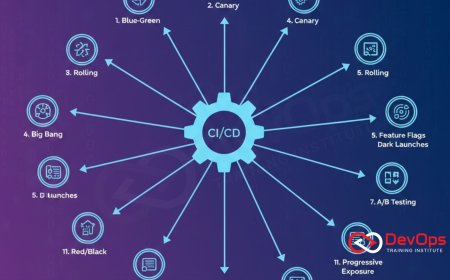
To achieve zero downtime deployments, blueprints often incorporate advanced release strategies like blue-green or canary releases. A blue-green blueprint maintains two identical production environments, allowing you to test the new version (Green) in isolation before switching traffic from the old version (Blue). This provides a safe way to perform final smoke tests and ensures that you have an instant rollback path if something goes wrong. It is an ideal strategy for mission critical applications where even a few minutes of downtime is unacceptable for the business or the end users.
The canary release blueprint takes a more gradual approach, exposing the new version to a small percentage of users first. By utilizing ChatOps techniques, teams can monitor the performance of the "canary" version in real time and receive automated alerts if error rates spike. If the new version is healthy, the traffic weight is increased until it reaches 100%. These release strategies are essential for reducing the blast radius of any potential bugs. By downloading these blueprints, you gain access to the same sophisticated deployment techniques used by the world's leading technology companies to maintain high availability and user trust.
Best Practices for Blueprint Implementation
- Version Your Pipelines: Store your CI/CD blueprints in the same repository as your code to ensure they evolve together and remain in sync.
- Use Ephemeral Environments: Utilize containerd or other container runtimes to spin up fresh testing environments for every build to avoid "dirty" state.
- Implement Gated Approvals: Use manual or automated gates for production deployments to ensure that only verified artifacts are released to users.
- Optimize Cache Usage: Speed up your workflows by intelligently caching dependencies and build artifacts across different pipeline runs.
- Monitor Pipeline Health: Treat your CI/CD pipeline as a production system and monitor its performance, success rates, and lead times.
- Automate Feedback: Use AI augmented devops tools to provide developers with instant feedback on their code quality and potential security risks.
- Verify After Deploy: Integrate continuous verification to confirm that the application is behaving correctly in production immediately after a rollout.
Successfully implementing these blueprints requires a commitment to automation and a willingness to iterate on your processes. As you gain experience, you should customize these templates to better fit your team's unique culture and technical requirements. Staying informed about AI augmented devops trends will help you stay ahead of the curve as new technologies emerge. The goal is to create a frictionless path from code to production where the tools handle the mechanical tasks, allowing your human talent to focus on innovation and solving complex business problems. A good blueprint is just the beginning; the real value lies in how you use it to drive continuous improvement.
Conclusion on CI/CD Workflow Architecture
In conclusion, the fifteen CI/CD workflow blueprints provided in this guide offer a comprehensive set of patterns for modern software delivery. From the integration speed of trunk based workflows to the security of DevSecOps and the reliability of GitOps, these blueprints represent the collective wisdom of the global engineering community. By downloading and adapting these strategies, you can build a more resilient, scalable, and efficient delivery process that supports your organization's growth. The future of software is defined by the quality of our delivery systems, and these blueprints are the keys to unlocking that potential.
As you move forward, consider how AI augmented devops will continue to reshape these workflows, making them even more intelligent and proactive. The journey toward a perfect pipeline is ongoing, and these blueprints serve as your roadmap. By prioritizing automation, security, and continuous feedback today, you are positioning your organization for long term success in an increasingly competitive digital world. Start by choosing the blueprint that addresses your most immediate challenge, implement it with care, and then build on that success to create a world class CI/CD environment that empowers your developers and delights your customers every day.
Frequently Asked Questions
What is a CI/CD workflow blueprint?
A blueprint is a standardized, reusable template that defines the sequence of automated steps for building, testing, and deploying software projects.
Why should I download a pre-made CI/CD blueprint?
Downloading a blueprint saves time, ensures you are following industry best practices, and helps you avoid common mistakes in pipeline configuration.
Can I use these blueprints with any CI/CD tool?
While many are designed for specific platforms like GitHub Actions or GitLab, the underlying architectural patterns can be adapted to almost any modern tool.
What is the difference between CI and CD in these blueprints?
CI focuses on integrating and testing code changes, while CD focuses on the automated delivery and deployment of those changes to users.
How do I implement a DevSecOps blueprint?
To implement a DevSecOps blueprint, you must integrate security scanning tools and policy checks into every stage of your existing delivery pipeline.
What role does GitOps play in these blueprints?
GitOps uses Git as the source of truth for infrastructure, allowing for automated and auditable synchronization of your cloud environments and cluster states.
Are these blueprints suitable for microservices?
Yes, many of these blueprints are specifically designed to handle the complexity and independent deployment requirements of modern microservices architectures.
How can a canary release blueprint help my team?
A canary release blueprint allows you to test new features on a small percentage of users, reducing the risk of a widespread outage.
Do I need special software to download these blueprints?
No, these blueprints are typically provided as YAML or JSON files that can be opened and edited with any standard text editor.
What is trunk-based development?
Trunk-based development is a strategy where developers merge small changes into a central main branch frequently to speed up integration and feedback.
How does continuous verification improve a blueprint?
Continuous verification provides real time data on application health after a deployment, allowing the pipeline to trigger an automated rollback if needed.
Can small teams benefit from these enterprise blueprints?
Absolutely, these blueprints provide a professional technical foundation that allows small teams to scale their engineering operations efficiently and safely.
What is the "blast radius" in a deployment?
The blast radius is the potential impact of a failure; canary and blue-green strategies are designed to keep this radius as small as possible.
How often should I update my CI/CD blueprints?
You should review and update your blueprints whenever you adopt new tools, change your release strategies, or discover a more efficient workflow.
Will AI replace the need for these blueprints?
AI will not replace them but will likely augment them by automatically optimizing configurations and predicting failures before they occur in the pipeline.
What's Your Reaction?
 Like
0
Like
0
 Dislike
0
Dislike
0
 Love
0
Love
0
 Funny
0
Funny
0
 Angry
0
Angry
0
 Sad
0
Sad
0
 Wow
0
Wow
0





![100+ Azure DevOps Interview Questions and Answers [Updated 2025]](https://www.devopstraininginstitute.com/blog/uploads/images/202509/image_140x98_68c40aa9a3834.jpg)






![Future Scope of DevOps Careers in Pune [Updated 2025]](https://www.devopstraininginstitute.com/blog/uploads/images/202510/image_140x98_68e3a84652312.jpg)