





















![Kong Interview Preparation Guide [2025]](https://www.devopstraininginstitute.com/blog/uploads/images/202509/image_430x256_68dbb95326997.jpg)









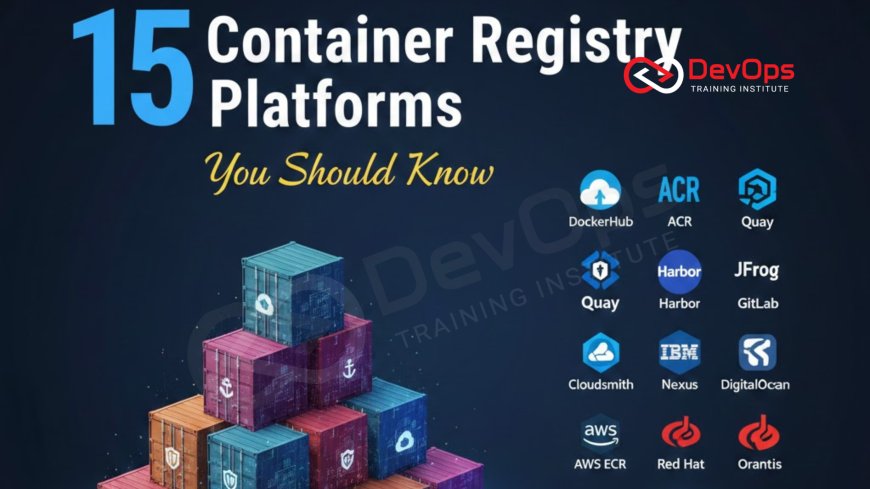
15 Container Registry Platforms You Should Know
In the modern era of cloud computing, choosing the right storage for your application images is essential for successful deployment. This detailed guide explores 15 Container Registry Platforms You Should Know, highlighting their unique features, security protocols, and integration capabilities. Whether you are a small startup or a large enterprise, understanding these platforms will help you streamline your development workflow, improve security through advanced scanning, and ensure that your containerized applications are always available and ready for scaling in a production environment.
Introduction
As organizations move toward microservices and cloud native architectures, the need for a centralized place to store and manage container images has become paramount. A container registry acts as a digital warehouse where developers can push their application builds and from which production servers can pull them. This centralized approach ensures that every environment, from development to staging and production, uses the exact same version of the software, reducing the common problem of applications working in one place but failing in another.
Selecting the right platform is not just about storage capacity; it involves evaluating security features, integration with existing tools, and the speed of delivery. Modern registries now offer built in vulnerability scanning, geographic replication, and fine grained access controls. These features are critical for maintaining a high standard of security and reliability in today's fast paced software industry. Understanding the diverse landscape of available platforms allows teams to make an informed choice that aligns with their specific technical requirements and business goals.
The Role of Registries in Modern Pipelines
In a standard development workflow, a container registry is the bridge between the build phase and the deployment phase. When a developer finishes writing code and a build server creates a container image, that image is sent to the registry. This process ensures that the software is packaged with all its necessary dependencies, making it portable and easy to run anywhere. The registry then serves as a single source of truth for the entire organization, preventing confusion over which version of a service is currently active.
Beyond simple storage, these platforms are deeply integrated into the automation process. For instance, when using modern release strategies, the registry provides the necessary images for blue green or canary deployments. It also plays a vital role in maintaining the health of the system by allowing teams to roll back to previous versions quickly if a new update causes issues. This level of control is essential for teams aiming to achieve high availability and rapid iteration in their software delivery cycles.
Security and Compliance Features
Security is a major concern when handling application images, as they often contain sensitive code and configuration details. Top tier registry platforms include automated tools that scan every uploaded image for known vulnerabilities. This proactive approach helps developers identify and fix security flaws before the code ever reaches a production server. Furthermore, many registries offer integration with secret scanning tools to ensure that no private keys or passwords are accidentally included in the image layers.
Compliance is another critical factor, especially for industries like finance or healthcare. Registries provide detailed audit logs that track who accessed or modified an image and when. This transparency is necessary for meeting regulatory requirements and for performing forensic analysis after a security incident. By implementing strict access policies, organizations can ensure that only authorized users and automated systems have permission to pull or push images, thereby reducing the attack surface of their entire infrastructure.
Integration with Orchestration Tools
For most teams, the primary consumer of a container registry is an orchestration platform like Kubernetes. The ease with which a registry connects to these clusters determines how smoothly the deployment process will run. For example, many engineers look for seamless authentication so that the cluster can pull images without manual intervention. Understanding where do kubernetes admission controllers sit in this process can help teams enforce security policies that prevent untrusted images from being deployed.
Moreover, the performance of the registry impacts the startup time of applications. If a registry is slow or located far from the cluster, pulling large images can cause significant delays during scaling events. High quality platforms offer features like global distribution or caching to bring images closer to the compute resources. This is particularly important when teams are deciding when is it better to use containerd versus other runtimes to optimize how images are pulled and managed within the node environment for maximum efficiency.
Comparison of Popular Registry Platforms
| Registry Name | Primary Provider | Key Strength | Best For |
|---|---|---|---|
| Docker Hub | Docker Inc. | Vast Public Library | Open Source Projects |
| Amazon ECR | AWS | AWS Ecosystem Integration | AWS Users |
| Google Artifact Registry | Google Cloud | Multi-artifact Support | GCP Enterprises |
| Azure Container Registry | Microsoft | Geo-replication | Global Enterprises |
| Harbor | Cloud Native Computing Foundation | Open Source Self-hosted | Private Infrastructure |
Open Source and Self Hosted Alternatives
While cloud based registries are convenient, many organizations prefer to maintain full control over their images by using open source, self hosted solutions. Tools like Harbor or the official Docker Registry allow companies to host their images on their own servers. This is often a requirement for businesses with strict data sovereignty rules or those working in air gapped environments where internet access is restricted. Self hosting provides complete sovereignty over the data and the underlying infrastructure used for storage.
Managing a self hosted registry requires more operational effort, but it offers unparalleled customization. Organizations can implement their own continuous synchronization logic to ensure that images are mirrored across different data centers. Additionally, these platforms often support advanced features like content trust and image signing, which allow teams to verify the origin and integrity of every container before it is allowed to run in a mission critical environment.
Advanced Workflow Automation
Modern registry platforms are becoming smarter, moving beyond simple storage to become active participants in the development lifecycle. They now trigger webhooks that can start deployment pipelines, notify team members of successful builds, or alert security officers about newly discovered vulnerabilities. This automation reduces the manual overhead for developers, allowing them to focus on writing code rather than managing the movement of artifacts across different stages of the pipeline.
Integration with communication tools is another growing trend in this space. For example, some teams find that chatops techniques allow them to manage registry tasks directly from their favorite messaging apps. This level of connectivity ensures that the entire team stays informed about the status of their images and deployments. By weaving the registry into the fabric of daily operations, organizations can achieve a more cohesive and responsive development environment that reacts instantly to changes.
Operational Best Practices
To get the most out of a container registry, teams should follow a set of established best practices. These habits help maintain a clean and efficient environment while minimizing costs and security risks. A well organized registry is easier to navigate and less prone to errors during critical deployment windows. Consistent naming conventions and tagging strategies are the foundation of a manageable registry system that scales with the growth of the company.
- Implement image lifecycle policies to automatically delete old or unused tags to save on storage costs.
- Use immutable tags for production releases to ensure that an image version never changes once it is deployed.
- Organize images into logical namespaces or projects based on team structure or application architecture.
- Enable automated vulnerability scanning for every push to identify security risks as early as possible.
- Set up geographic replication for global teams to reduce latency and provide high availability in case of regional outages.
Adopting these practices requires a concerted effort from the entire engineering department. It often starts with who drives cultural change within the organization, as standardizing these workflows involves cooperation across multiple teams. When everyone follows the same guidelines, the registry becomes a reliable and powerful asset that supports the goals of the business and improves the overall quality of the software produced.
Conclusion
The landscape of container registry platforms is diverse and filled with options that cater to every possible use case. From the broad ecosystem of Docker Hub to the enterprise grade features of cloud provider offerings like Amazon ECR or Azure Container Registry, there is a solution for every team. Choosing the right one requires a careful balance of cost, security, and integration needs. By understanding the strengths and weaknesses of these 15 platforms, you can build a solid foundation for your containerized applications and ensure a smooth path to production.
As technology continues to evolve, we can expect to see even more innovation in this space. Trends such as ai augmented devops will likely introduce smarter image management and predictive security features. Staying informed about these developments will help your organization remain competitive and secure in an increasingly complex digital world. Remember that the registry is more than just storage; it is a critical component of your software supply chain that deserves careful attention and strategic planning.
Frequently Asked Questions
What is a container registry?
A container registry is a specialized storage platform used to host and manage container images for software development and deployment.
Is Docker Hub free to use?
Docker Hub offers a free tier for public repositories, but private storage and advanced features require a paid subscription plan.
What is the benefit of image scanning?
Image scanning automatically identifies security vulnerabilities in your container layers, allowing you to fix bugs before they reach a live environment.
How does geographic replication work?
It copies your images to different physical locations worldwide, ensuring fast access and backup availability for teams in various regions.
What is an immutable image tag?
An immutable tag ensures that once an image is assigned a specific version name, it cannot be overwritten by a newer build.
Can I host my own registry?
Yes, open source tools like Harbor or the Docker Registry allow you to set up and manage your own storage on private servers.
What is the difference between a public and private registry?
Public registries are open to everyone for sharing images, while private registries restrict access to authorized users within a specific organization.
Which cloud registry is best for AWS?
Amazon Elastic Container Registry is the best choice for AWS users due to its deep integration with services like ECS and EKS.
What are lifecycle policies in a registry?
Lifecycle policies are automated rules that clean up old or unused images based on age or the number of versions stored.
Do registries support non container artifacts?
Many modern platforms like Google Artifact Registry or JFrog Artifactory can store various packages including Helm charts and Java libraries.
How do I secure my registry access?
Security is maintained through identity and access management systems that use roles and permissions to control who can push or pull images.
What is the role of the OCI?
The Open Container Initiative defines industry standards for container formats and runtimes to ensure compatibility across different registry and orchestration platforms.
Why is low latency important for registries?
Low latency ensures that container images are pulled quickly, which is essential for fast application scaling and quick recovery after failures.
Can I use multiple registries?
Yes, many organizations use a mix of public registries for base images and private registries for their proprietary application code and configurations.
How does GitHub Packages differ from Docker Hub?
GitHub Packages is tightly integrated with GitHub Actions, making it a convenient choice for teams who already host their code on GitHub.
What's Your Reaction?
 Like
0
Like
0
 Dislike
0
Dislike
0
 Love
0
Love
0
 Funny
0
Funny
0
 Angry
0
Angry
0
 Sad
0
Sad
0
 Wow
0
Wow
0





![100+ Azure DevOps Interview Questions and Answers [Updated 2025]](https://www.devopstraininginstitute.com/blog/uploads/images/202509/image_140x98_68c40aa9a3834.jpg)






![Future Scope of DevOps Careers in Pune [Updated 2025]](https://www.devopstraininginstitute.com/blog/uploads/images/202510/image_140x98_68e3a84652312.jpg)