

![Kong Interview Preparation Guide [2025]](https://www.devopstraininginstitute.com/blog/uploads/images/202509/image_430x256_68dbb95326997.jpg)

18 Cloud Automation Tools Used by DevOps Engineers
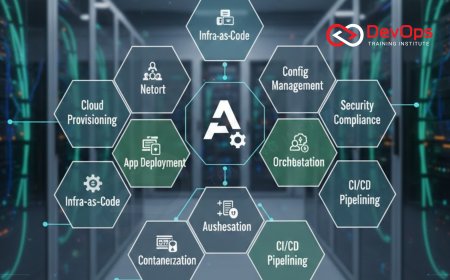
Discover the most effective eighteen cloud automation tools that are essential for modern DevOps engineers. This comprehensive guide explores how these powerful technologies streamline infrastructure management, accelerate software delivery, and enhance overall system reliability. From infrastructure as code and configuration management to continuous integration and observability, we break down each tool to help you optimize your cloud environments and reduce manual toil. Learn which solutions best fit your team's needs to drive efficiency, scale your operations, and maintain a competitive edge in today's fast-paced digital landscape.
Introduction to Cloud Automation in DevOps
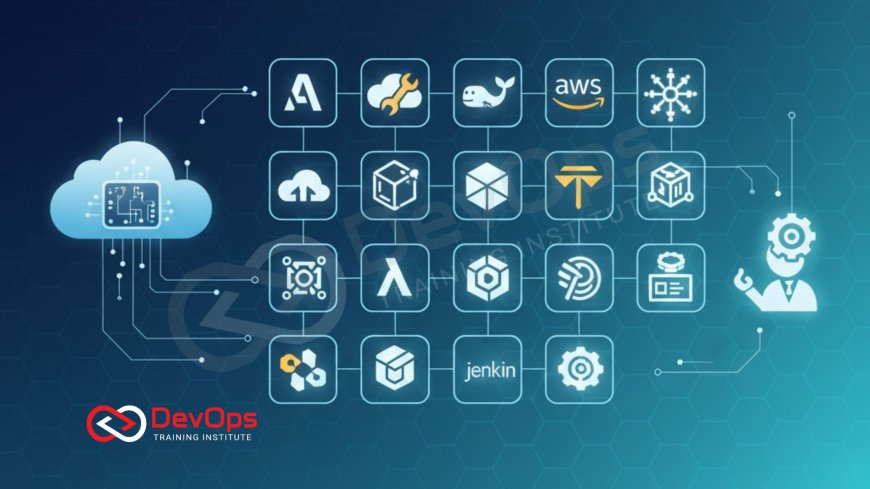
The rapid evolution of digital services has made cloud automation a non-negotiable requirement for any engineering team striving for excellence. In a traditional setup, setting up servers, configuring networks, and deploying applications were manual, time-consuming tasks prone to human error. Cloud automation replaces these fragile manual steps with reliable, repeatable code and software-driven processes. This shift allows DevOps engineers to manage complex, global infrastructures with the same precision they use for writing application code, ensuring that systems are both scalable and consistently reliable.
By leveraging automation, organizations can significantly shorten their software development life cycles and respond to market changes with incredible speed. Automation is not just about doing things faster; it is about creating a predictable environment where deployments are no longer stressful events. This introduction serves as a gateway to understanding the diverse landscape of eighteen essential tools that empower modern engineers to build, secure, and optimize their cloud presence. Whether you are managing a small startup or a massive enterprise, these tools are the building blocks of a high-performing platform engineering culture.
The Role of Infrastructure as Code (IaC)
Infrastructure as Code is a transformative practice that treats the underlying hardware and network configurations as software. Instead of clicking through a cloud provider's console to create a virtual machine, engineers write a declarative or imperative script that defines the desired state of the infrastructure. This approach brings the benefits of software development—such as version control, automated testing, and peer reviews—to the world of systems administration. It ensures that environments are perfectly identical across development, staging, and production.
The beauty of IaC lies in its ability to eliminate configuration drift, where manual changes over time cause environments to become inconsistent. By using code as the single source of truth, teams can tear down and rebuild entire data centers in minutes. This level of agility is critical for disaster recovery and for scaling applications globally on demand. As we explore the tools in this category, it becomes clear that IaC is the foundation upon which all other cloud automation practices are built, enabling a more robust and transparent way to manage digital resources. This methodology is central to gitops and modern automated workflows.
Streamlining Continuous Integration and Delivery
Continuous Integration (CI) and Continuous Delivery (CD) are the twin engines that drive modern software shipping. CI ensures that code changes are automatically tested and merged into a shared repository frequently, while CD automates the journey of that code into a production-ready state. Together, they form a pipeline that catches errors early and delivers value to users as quickly as possible. Automation tools in this space are responsible for coordinating the build, test, and deployment phases without requiring human intervention at every step.
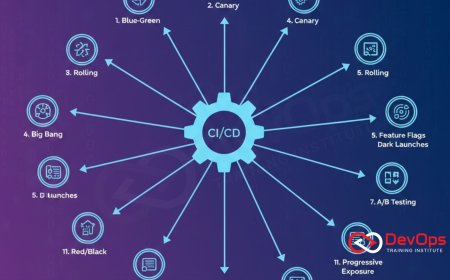
A well-oiled CI/CD pipeline is essential for maintaining high software quality and a rapid release cadence. By automating the deployment process, teams can use advanced strategies like canary releases to test new features on a small subset of users before a full rollout. This reduces the risk of major outages and allows for a more experimental and innovative development culture. The tools we will discuss in this section provide the necessary orchestration to turn a developer's "git push" into a live, functioning update for millions of people around the world.
Configuration Management and Orchestration
While IaC focuses on the initial provisioning of resources, configuration management tools are designed to manage the software and settings inside those resources. They ensure that every server has the correct patches, users, and application configurations throughout its lifecycle. Orchestration tools take this a step further by managing the relationships and workflows between different services, ensuring they work together as a cohesive system. This level of control is vital for managing microservices at scale.
Automating configuration management prevents the "snowflake server" problem, where a single machine has a unique setup that no one remembers how to reproduce. Instead, tools like Ansible or Chef enforce a desired state across thousands of nodes simultaneously. This consistency is not only a matter of performance but also of security, as it ensures that security policies are applied uniformly everywhere. Integrating these practices into the devsecops lifecycle ensures that every automated action is audited and compliant with organizational standards.
Table: 18 Cloud Automation Tools Overview
| Tool Category | Specific Tool | Primary Cloud Function | Key Benefit |
|---|---|---|---|
| Infrastructure as Code | Terraform | Multi-cloud provisioning | Cloud agnostic and highly scalable. |
| Infrastructure as Code | AWS CloudFormation | AWS native resource management | Deep integration with all AWS services. |
| Configuration Management | Ansible | Agentless server configuration | Simple YAML syntax and easy to learn. |
| Container Orchestration | Kubernetes | Managing containerized apps | Automates scaling and self-healing. |
| Containerization | Docker | Packaging applications | Ensures consistency across environments. |
| Continuous Integration | Jenkins | Automation server for pipelines | Vast plugin ecosystem for customization. |
| CI/CD Platform | GitLab CI/CD | Integrated development platform | Unified experience for SCM and pipelines. |
| CI/CD Platform | GitHub Actions | Event-driven workflow automation | Seamlessly integrated with GitHub repos. |
| Infrastructure as Code | Pulumi | Modern language-based IaC | Uses Python, Java, and TypeScript for infra. |
| Configuration Management | Puppet | Declarative state enforcement | Excellent for large-scale compliance. |
| Configuration Management | Chef | Recipe-based infrastructure management | Flexible and powerful for complex setups. |
| Monitoring & Alerting | Prometheus | Metric collection and storage | Designed for high-dimensional data. |
| Visualization | Grafana | Dashboarding for metrics | Supports multiple data sources and alerts. |
| Observability | Datadog | Full-stack monitoring and logs | Unified view of hybrid environments. |
| Log Management | Splunk | Advanced log analysis and search | Powerful for security and auditing. |
| CI/CD Service | CircleCI | Cloud-hosted automation pipeline | Fast, scalable, and easy to configure. |
| Log Management | ELK Stack | Aggregation and search of logs | Standard open-source stack for logs. |
| Infrastructure as Code | OpenTofu | Open-source fork of Terraform | Community-driven and fully open engine. |
Monitoring and Observability for Reliability
In the cloud, you cannot manage what you cannot see. Monitoring tools are the eyes and ears of DevOps engineers, providing real-time data on the health and performance of every component. Observability takes this further by allowing engineers to understand the internal state of a system based on the external outputs it generates. These tools automate the collection of logs, metrics, and traces, alerting the team before a minor issue turns into a major service outage.
Effective automation in this area involves not just gathering data but also knowing how to interpret it. Modern tools use machine learning to detect anomalies that a human might miss. Understanding observability is crucial because it helps engineers ask why something happened, rather than just knowing that it happened. This deep insight is necessary for maintaining service level objectives and for conducting post-mortems that lead to lasting improvements. It also allows for sophisticated testing methods like chaos engineering to be performed safely and measurably in production.
Managing Cloud Costs with FinOps Automation
As organizations scale their cloud footprint, the monthly bill can quickly become a significant and unmanaged expense. Cloud automation plays a critical role in financial governance by automatically identifying underutilized resources, right-sizing workloads, and ensuring that everything is being used efficiently. This specialized field is often called FinOps, and it focuses on bringing financial accountability to the variable spend model of the cloud.
Automation tools in this category can provide real-time visibility into spending and even automatically shut down non-production environments during nights and weekends to save money. By using these tools, engineering teams can make data-driven decisions that balance speed and performance with cost-efficiency. Learning how does finops help optimize cloud spend is an essential skill for modern DevOps engineers who are increasingly responsible for the financial impact of their infrastructure choices. It ensures that the company remains profitable even as its digital capabilities grow exponentially.
Advanced Deployment and Testing Techniques
The final goal of all cloud automation is the safe and frequent delivery of high-quality software. This requires advanced deployment techniques that minimize risk and impact on users. Automation tools facilitate these strategies by controlling the flow of traffic between old and new versions of an application. This allows for testing in production-like environments with real user traffic, but in a controlled and reversible manner.
- Automated Rollbacks: If an error is detected after a deployment, the system can automatically revert to the previous stable version.
- Traffic Splitting: Sending a small percentage of traffic to a new feature to monitor its performance.
- Feature Flags: Decoupling deployment from release by enabling or disabling code at runtime without redeploying.
- Automated Validation: Running performance and security tests as part of the deployment process.
Implementing feature flags allows teams to separate the technical act of deploying code from the business act of releasing it to customers. This flexibility is a hallmark of high-performing teams. Furthermore, practicing shift left testing ensures that issues are caught as early as possible in the automated pipeline. These techniques combined allow organizations to move fast without "breaking things," maintaining a high standard of quality while maintaining an aggressive release schedule. Using blue green deployment can further ensure zero-downtime releases for critical services.
Conclusion
The landscape of eighteen cloud automation tools we have explored represents the absolute cutting edge of modern software delivery. From the foundational power of infrastructure as code to the advanced orchestration of containers and the financial wisdom of FinOps, these technologies are the tools that build the future. For a DevOps engineer, mastery of these tools is not just about learning a new syntax; it is about adopting a mindset of relentless improvement and automation. By removing the manual barriers that slow down progress, teams can dedicate more time to innovation and solving complex business problems. As the cloud continues to evolve, these tools will become even more integrated, providing a seamless and automated experience from the first line of code to a global production launch. Embracing this automation is the only way to stay competitive in a digital world that never stops moving. Start by choosing the tools that best fit your immediate needs, and gradually build a comprehensive ecosystem that empowers your team to deliver excellence every single day.
Frequently Asked Questions
What is the best cloud automation tool for beginners?
Ansible is often recommended for beginners because of its human-readable YAML syntax and agentless architecture which makes it easy to set up.
How does Terraform differ from AWS CloudFormation?
Terraform is cloud-agnostic and can manage resources across multiple providers, whereas CloudFormation is designed specifically for managing resources within Amazon Web Services.
Why is monitoring important for cloud automation?
Monitoring provides the real-time data and feedback loop necessary to ensure that automated actions like scaling or self-healing are working correctly.
What is the main benefit of using Docker?
Docker packages an application and its dependencies together, ensuring that it runs identically in every environment from a local laptop to production.
Can I automate cloud cost management?
Yes, many tools can automatically identify waste, right-size resources, and shut down unused environments to significantly reduce your monthly cloud bill.
What is an agentless automation tool?
An agentless tool like Ansible does not require you to install special software on the target servers, communicating instead through standard protocols like SSH.
What are feature flags in DevOps?
Feature flags allow you to turn specific code features on or off at runtime without having to redeploy the entire application to production.
How does Jenkins help in a CI CD pipeline?
Jenkins acts as the central automation server that orchestrates the various steps of building, testing, and deploying your software updates automatically.
Is Kubernetes difficult to learn?
Kubernetes has a steep learning curve due to its complexity, but it is the industry standard for managing containerized applications at massive scale.
What is Infrastructure as Code (IaC)?
IaC is the practice of managing and provisioning your infrastructure using human-readable configuration files instead of manual interactive tools or consoles.
What does the ELK stack stand for?
The ELK stack is a group of three open-source products: Elasticsearch, Logstash, and Kibana, used for searching and visualizing log data.
How does chaos engineering improve reliability?
Chaos engineering intentionally introduces failures into a system to find hidden weaknesses and build confidence in the system's ability to withstand outages.
Can I use Python for cloud automation?
Yes, Python is a very popular language for cloud automation and tools like Pulumi allow you to define infrastructure using native Python code.
What is the difference between HPA and VPA?
HPA scales the number of instances (horizontal), while VPA increases the resources like CPU or memory of a single instance (vertical).
How do I choose the right automation tool?
You should evaluate your specific needs, your team's existing skill set, and whether you require a multi-cloud or cloud-specific solution for your project.
What's Your Reaction?
 Like
0
Like
0
 Dislike
0
Dislike
0
 Love
0
Love
0
 Funny
0
Funny
0
 Angry
0
Angry
0
 Sad
0
Sad
0
 Wow
0
Wow
0

![100+ Azure DevOps Interview Questions and Answers [Updated 2025]](https://www.devopstraininginstitute.com/blog/uploads/images/202509/image_140x98_68c40aa9a3834.jpg)




![Future Scope of DevOps Careers in Pune [Updated 2025]](https://www.devopstraininginstitute.com/blog/uploads/images/202510/image_140x98_68e3a84652312.jpg)