

![Kong Interview Preparation Guide [2025]](https://www.devopstraininginstitute.com/blog/uploads/images/202509/image_430x256_68dbb95326997.jpg)

Top 20 DevOps Tools for Kubernetes Automation
Unlock the full power of container orchestration in 2026 by mastering the top twenty DevOps tools for Kubernetes automation. This comprehensive guide covers essential technologies across CI/CD, GitOps, observability, and security, including ArgoCD, Helm, Prometheus, and Kyverno. Learn how to eliminate manual bottlenecks, prevent configuration drift, and ensure high availability for your microservices using advanced automation frameworks. Whether you are building an internal developer platform or managing a global multi-cluster environment, these proven tools will empower your engineering team to ship code faster and more securely in today's demanding and automated digital landscape.
Introduction to Kubernetes Automation Ecosystem
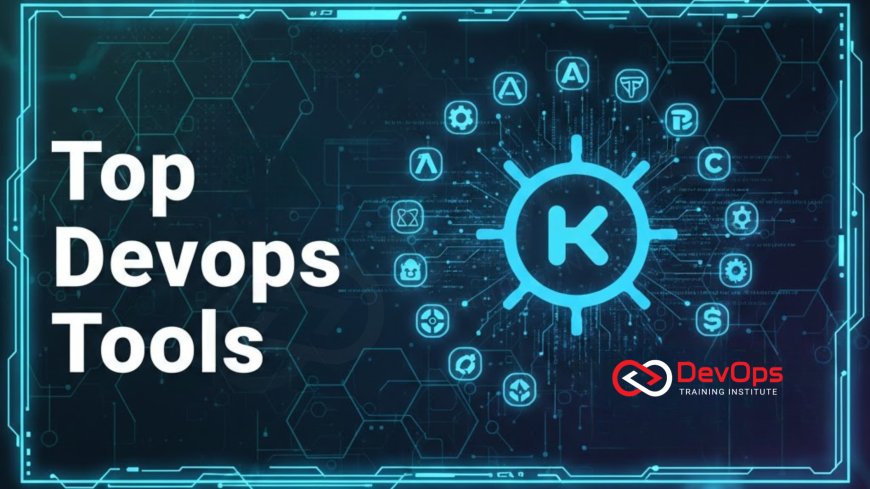
In the high-velocity engineering world of 2026, manual cluster management is a relic of the past. As Kubernetes has matured into the "operating system of the cloud," the focus has shifted from simple orchestration to sophisticated, end-to-end automation. Modern DevOps teams no longer just deploy containers; they manage complex ecosystems where infrastructure, security, and application logic are all defined as code and synchronized automatically. This shift is driven by the need for absolute consistency and the ability to scale globally without a linear increase in operational overhead.
Automation in Kubernetes is not about a single "silver bullet" tool but about building a cohesive stack where specialized instruments handle different layers of the lifecycle. From the initial provisioning of nodes to the real-time healing of failed pods, the right toolset ensures that your continuous synchronization efforts remain robust and resilient. In this guide, we explore the top twenty tools that are currently defining the state of the art in Kubernetes automation, providing you with the insights needed to build a world-class platform that can handle any workload with technical confidence and precision.
Continuous Delivery and GitOps Leaders
GitOps has become the mandatory standard for Kubernetes delivery, ensuring that your cluster states always match the declarative configuration stored in your Git repositories. ArgoCD stands at the forefront of this movement, acting as a "conductor" that monitors your Git repository and automatically reconciles any drift in your live environment. Its visual interface provides deep insights into the health of your applications across multiple clusters, making it an essential tool for incident handling and rapid recovery. By treating Git as the single source of truth, you eliminate the risks associated with manual "kubectl apply" commands.
Following closely is FluxCD, a set of continuous and progressive delivery solutions for Kubernetes that are open and extensible. Unlike some other tools, Flux is designed to be "invisible," running as a set of controllers within your cluster to ensure that your infrastructure and applications are always in sync. This automation allows for seamless GitOps workflows where even complex multi-tenant environments can be managed with ease. By utilizing these GitOps leaders, you create a transparent and auditable path from code commit to production, significantly improving the overall deployment quality and security of your organization.
Package Management and Configuration Tools
Managing raw YAML manifests for hundreds of microservices is a recipe for configuration chaos. Helm has solidified its role as the "package manager" for Kubernetes, allowing teams to bundle related resources into reusable, versioned units called charts. This abstraction simplifies the process of defining, installing, and upgrading even the most complex applications. By using Helm, you can implement consistent release strategies across your organization, ensuring that every deployment follows the same standardized patterns for metadata, resource limits, and health checks.
For teams that prefer a template-free approach, Kustomize offers a powerful way to customize Kubernetes configurations through overlays. It allows you to define a base configuration and then apply specific modifications for different environments, such as development or production, without duplicating code. This "dry" approach to configuration management is highly favored for its simplicity and direct integration with kubectl. Whether you choose Helm's templating power or Kustomize's overlay precision, these tools are vital for maintaining a clean and maintainable software delivery pipeline in a large-scale Kubernetes ecosystem.
Infrastructure as Code and Provisioning
Automating the Kubernetes cluster itself is just as important as automating the applications running on it. Terraform remains the industry standard for provisioning the underlying cloud resources—like VPCs, load balancers, and node pools—that Kubernetes requires to function. By defining your cluster infrastructure as code, you ensure that your environments are reproducible and can be rebuilt in minutes in a different region or cloud provider. This portability is a key part of choosing architecture patterns that prevent vendor lock-in.
In 2026, Crossplane is gaining massive traction by extending the Kubernetes API to manage external cloud resources. It allows you to provision an RDS database or an S3 bucket using the same YAML manifests and "kubectl" commands you use for your pods. This "control plane" approach to infrastructure management allows for a unified developer experience where every resource is managed through the same Kubernetes-native interface. By integrating Crossplane into your stack, you bridge the gap between infrastructure and application automation, creating a truly unified and self-healing cloud environment that scales effortlessly with your business needs.
Top 20 Kubernetes Automation Tools Comparison
| Tool Name | Primary Category | Key Automation Benefit | Demand |
|---|---|---|---|
| ArgoCD | GitOps / CD | Auto-sync & Drift Detection | Critical |
| Helm | Package Management | Versioned App Packaging | Very High |
| Prometheus | Monitoring | Automated Alerting | Critical |
| Kyverno | Policy-as-Code | Admission Control Enforcement | High |
| KEDA | Autoscaling | Event-driven Pod Scaling | Medium |
Observability and Performance Monitoring
You cannot automate what you cannot see, which makes observability tools a cornerstone of any stable Kubernetes environment. Prometheus and Grafana are the de facto standard duo for collecting and visualizing cluster metrics. Prometheus uses a pull-based model to scrape data from your nodes and pods, while Grafana provides the beautiful dashboards and real-time alerts needed to monitor system health. These tools allow for predictive maintenance, where AI-powered models can identify performance trends and warn the team before a service reaches its capacity or fails entirely.
For microservices debugging, Jaeger provides distributed tracing that allows you to follow a single user request through dozens of separate services. This visibility is essential for finding the root cause of high latency or intermittent errors in a complex system. By utilizing continuous verification strategies, these tools can automatically validate that a new release is meeting its performance targets in production. This deep level of observability 2.0 ensures that your automation is backed by high-quality data, allowing your team to make informed decisions and maintain peak performance across all your digital assets.
Security and Compliance Automation
Security is no longer a separate phase; it is an integrated part of the Kubernetes automation flow. Kyverno and OPA (Open Policy Agent) allow you to implement "Policy as Code," where security rules are enforced automatically at the gate. These tools act as admission controllers, rejecting any pod or resource that doesn't meet your organization's security standards—such as running as root or missing resource limits. This proactive enforcement prevents insecure configurations from ever entering your cluster, significantly reducing the risk of a production breach.
On the container side, Trivy and Falco provide real-time scanning and threat detection. Trivy scans your images and filesystems for known vulnerabilities (CVEs) during the CI/CD build phase, while Falco monitors runtime behavior to detect suspicious activity like unexpected process execution or file changes. By integrating secret scanning tools into your pipeline, you ensure that no sensitive credentials are ever hardcoded in your manifests. This layered approach to DevSecOps ensures that your Kubernetes cluster remains a secure and compliant foundation for your business growth, protecting your data and your reputation in an increasingly hostile digital landscape.
Kubernetes Automation Best Practices Checklist
- Declarative Everything: Use YAML or HCL for all infrastructure and application configurations to ensure reproducibility and version control.
- Automate Autoscaling: Use KEDA or the Horizontal Pod Autoscaler to adjust resources dynamically based on real-time user demand and events.
- Optimize Your Runtime: Ensure your underlying compute layer uses containerd for better efficiency and faster pod startup times in production.
- Version Your Artifacts: Always use unique tags for your container images and Helm charts to allow for safe rollbacks and clear audit trails.
- Monitor the Monitor: Ensure your observability stack itself is resilient and has sufficient resources to handle high-volume telemetry data.
- Enforce Least Privilege: Use RBAC (Role-Based Access Control) to limit what users and service accounts can do within the cluster environment.
- Verify with Feedback Loops: Use ChatOps techniques to bring real-time deployment and security alerts into your team's primary communication channels.
Following this checklist will help you transition from simple cluster management to a truly automated and resilient Kubernetes operation. As your team becomes more proficient with these tools, you can explore advanced AI augmented devops capabilities that predict failures and automatically tune your resources for cost and performance. The goal is to build a "self-healing" system where the tools handle the routine, allowing your human talent to focus on innovation and solving complex business problems. By prioritizing automation, security, and developer experience today, you are positioning your organization for long-term success in the ever-evolving cloud native world.
Conclusion: Building a Scalable Future
In conclusion, the twenty DevOps tools for Kubernetes automation discussed in this guide provide a robust framework for managing modern software delivery at scale. From the GitOps precision of ArgoCD to the security enforcement of Kyverno and the deep observability of Prometheus, each tool plays a vital role in your overall cluster success. By automating your infrastructure, deployments, and security, you create a technical environment that is fast, resilient, and secure. This evolution is not just about the tools you choose but about the cultural change toward a more automated and proactive engineering mindset.
As you look toward the future, the integration of AI augmented devops trends will further simplify the management of these complex systems. Staying informed about release strategies and advanced cluster synchronization will ensure you maintain your competitive edge. Ultimately, the best automation is the one that empowers your team to deliver high-quality features to users with confidence and speed. Embrace these twenty tools today to build a world-class Kubernetes platform that can handle any challenge the digital world throws your way with unprecedented efficiency and excellence.
Frequently Asked Questions
What is the primary benefit of Kubernetes automation?
Automation eliminates manual bottlenecks, ensuring that deployments and infrastructure changes are consistent, repeatable, and less prone to human error.
What is GitOps and why is ArgoCD so popular?
GitOps uses Git as the source of truth for your configuration; ArgoCD automates the synchronization between Git and your cluster, making releases predictable.
How does Helm simplify application deployment?
Helm acts as a package manager, allowing you to bundle all required Kubernetes resources into reusable and versioned "charts" for easy management and scaling.
What is the role of Prometheus in a Kubernetes cluster?
Prometheus is a monitoring tool that scrapes metrics from your cluster components, enabling real-time observability and automated alerting for system health.
Is Terraform necessary if I am using Kubernetes?
Yes, Terraform is used to provision the underlying cloud infrastructure (VPCs, Nodes) that Kubernetes needs before you can deploy any applications onto it.
What is Policy-as-Code and how does Kyverno help?
Policy-as-Code automates security rules; Kyverno enforces these rules by blocking any insecure or non-compliant pod configurations from being deployed into the cluster.
Can I automate the scaling of my Kubernetes pods?
Yes, using KEDA or the built-in Horizontal Pod Autoscaler, you can automatically scale your application replicas up or down based on CPU or events.
What is a service mesh like Istio used for?
A service mesh manages internal traffic between microservices, providing advanced features like mutual TLS, traffic shifting, and deep observability and security.
How does Crossplane differ from Terraform?
Terraform is procedural and runs externally, while Crossplane is Kubernetes-native and uses the cluster's own control plane to manage external cloud resources.
What is the "blast radius" in a Kubernetes context?
The blast radius is the potential impact of a failure; automation and isolation tools like network policies help keep this radius as small as possible.
How can I monitor the logs of multiple pods at once?
Tools like Stern or Lens allow you to simultaneously tail and filter logs from multiple pods, making it much easier to debug microservices in real-time.
What is the difference between a rolling update and a canary release?
A rolling update replaces all pods gradually; a canary release only updates a small subset first to test for issues before rolling out to everyone.
Does containerization impact the security of an application?
Yes, it provides isolation, but you must still scan images and use security policies to prevent unauthorized access or host system exploitation.
How does ChatOps improve team collaboration?
ChatOps brings real-time cluster alerts and deployment status into shared chat channels, ensuring that every engineer is aligned on the current system status.
What is the first tool I should learn for Kubernetes?
Start with "kubectl" to understand the API, then quickly move to Helm for managing application releases and Prometheus for basic system monitoring.
What's Your Reaction?
 Like
0
Like
0
 Dislike
0
Dislike
0
 Love
0
Love
0
 Funny
0
Funny
0
 Angry
0
Angry
0
 Sad
0
Sad
0
 Wow
0
Wow
0

![100+ Azure DevOps Interview Questions and Answers [Updated 2025]](https://www.devopstraininginstitute.com/blog/uploads/images/202509/image_140x98_68c40aa9a3834.jpg)




![Future Scope of DevOps Careers in Pune [Updated 2025]](https://www.devopstraininginstitute.com/blog/uploads/images/202510/image_140x98_68e3a84652312.jpg)