



![Kong Interview Preparation Guide [2025]](https://www.devopstraininginstitute.com/blog/uploads/images/202509/image_430x256_68dbb95326997.jpg)



18 DevOps Security Practices Every Team Should Adopt
As we navigate the rapidly advancing technical landscape of 2026, security has evolved from a final check into a primary driver of engineering success. This comprehensive guide outlines eighteen essential DevOps security practices designed to protect your software supply chain and cloud native infrastructure. From the adoption of zero trust networking and AI-augmented threat detection to the implementation of immutable audit trails and automated secret management, we provide a detailed roadmap for modern DevSecOps. Learn how to integrate automated security gates into your CI/CD pipelines, enforce policy as code, and foster a culture of shared responsibility. These proven techniques will empower your team to ship code faster while maintaining the highest standards of safety, compliance, and resilience in today's complex and automated digital economy.
Introduction to Modern DevSecOps in 2026
In the technical landscape of 2026, the traditional boundaries between development, operations, and security have largely dissolved. In an era where autonomous pipelines can deploy code in seconds, security must operate at the same velocity as development to be effective. This evolution, known as DevSecOps, focuses on integrating security checks and balances into every single phase of the software development lifecycle. The goal is to move from gatekeeper security to enabling security, where automated tools and cultural shifts allow engineers to build secure software by default without manual bottlenecks.
Adopting these eighteen security practices is essential for protecting your organization from the increasing complexity of modern cyber threats. With the rise of software supply chain attacks and sophisticated cloud vulnerabilities, a perimeter only defense is no longer sufficient. Instead, teams must adopt a layered defense strategy that prioritizes transparency, automation, and continuous verification. This introduction sets the stage for a deep dive into the technical and cultural shifts required to build a resilient and secure DevOps environment that can thrive in today's demanding and highly automated digital marketplace.
Implementing a Zero-Trust Security Model
Zero trust is the foundational philosophy of modern cloud security, operating on the principle of never trust, always verify. In 2026, this means that no user, service, or device is trusted by default, even if they are located within the corporate network. Every access request must be authenticated, authorized, and continuously validated. For DevOps teams, this involves implementing strict Identity and Access Management (IAM) policies and utilizing short lived, just in time credentials for all automated processes. This approach significantly limits the potential blast radius of a compromised account or service.
A key component of zero trust is micro-segmentation, where the network is divided into small, isolated zones. By using ChatOps techniques to manage these segments, teams can gain real time visibility into traffic flows and instantly block suspicious activity. This technique prevents lateral movement, ensuring that if an attacker manages to breach one microservice, they cannot easily access the rest of your cloud architecture patterns or sensitive databases. It turns the network itself into a proactive defense mechanism that supports a secure and compliant infrastructure for all your global digital applications.
Shift-Left Security: Integration Early in the SDLC
Shift-left security is the practice of moving security testing and analysis to the earliest possible stages of the development process. By integrating Static Application Security Testing (SAST) and software composition analysis directly into the developer's IDE and the initial commit phase, teams can catch vulnerabilities long before they reach a shared environment. This proactive approach is significantly more cost effective than fixing bugs in production and ensures that deployment quality is high from the very first line of code written by the engineering squad.
To make shift-left effective, security tools must be developer friendly and provide actionable feedback. Using AI-augmented devops tools can help by providing auto-remediation suggestions for common vulnerabilities like SQL injection or cross-site scripting. This reduces the burden on the security team and empowers developers to take ownership of their code's safety. When combined with continuous verification, shift-left ensures that your delivery pipeline acts as a high speed quality gate, delivering hardened and secure software to your customers with every single automated release cycle.
Hardening the CI/CD Pipeline and Build Process
The CI/CD pipeline is the heart of your delivery process, and it is also a prime target for attackers. Pipeline hardening involves securing the build environment, protecting the integrity of build artifacts, and ensuring that only authorized changes can progress toward production. This includes using ephemeral runners, which are short lived build environments that are destroyed after one use, to prevent persistent threats from lurking in your CI infrastructure. Every step of the build process should be auditable and version controlled to maintain a high bar for technical transparency.
In addition to securing the environment, you must implement artifact signing and provenance tracking. Using tools to generate a Software Bill of Materials (SBOM) for every build allows you to track exactly what is inside your software, including all third-party dependencies. By utilizing admission controllers, you can ensure that only cryptographically signed and verified images can be deployed into your production clusters. This end-to-end security for the build process protects your software supply chain from tampering and ensures that what you ship is exactly what you intended to build.
DevOps Security Practices Comparison Table
| Practice Name | Security Goal | Key Tools | Impact Level |
|---|---|---|---|
| Zero Trust | Identity Verification | Okta, HashiCorp Vault | Critical |
| SAST / DAST | Code Vulnerabilities | Snyk, SonarQube | Very High |
| IaC Scanning | Infrastructure Risks | Checkov, tfsec | High |
| Secret Detection | Credential Leaks | Gitleaks, TruffleHog | Critical |
| SBOM Generation | Supply Chain Clarity | Syft, Grype | Medium |
Automated Secret Management and Detection
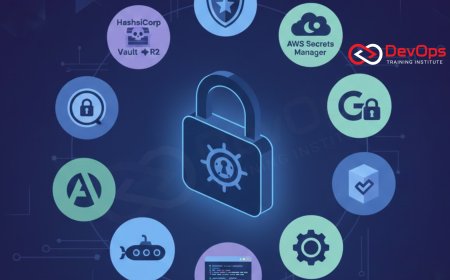
Hardcoded secrets such as API keys, database passwords, and SSH keys remain a leading cause of security breaches in 2026. Automated secret management involves moving these sensitive credentials out of your code and into a secure, centralized vault. By using specialized secret managers, you can dynamically inject credentials into your applications at runtime, ensuring they are never stored in plain text. Furthermore, you should utilize secret scanning tools to monitor your repositories in real time and block any commit that accidentally contains a sensitive token.
Automating secret rotation is another critical practice that reduces the window of opportunity for an attacker. Modern secret managers can automatically rotate passwords and keys without requiring a restart of your services, keeping your cluster states secure and up to date. This discipline ensures that even if a secret is somehow leaked, it will quickly become useless. By integrating these tools into your cultural change efforts, you educate developers on the importance of secret less code, creating a technical environment that is inherently more secure and much easier to audit for global compliance.
Infrastructure as Code (IaC) Security Scanning
In a cloud native world, your infrastructure is defined by code, which means it can be scanned for security risks just like application code. IaC scanning tools analyze your Terraform, CloudFormation, or Kubernetes manifests for misconfigurations such as open S3 buckets, overly permissive security groups, or missing encryption. By identifying these architectural bugs before they are deployed, you can prevent major security incidents and ensure that your cloud architecture patterns are always aligned with industry best practices and internal safety requirements.
Using GitOps to manage your infrastructure ensures that every change is peer reviewed and automatically scanned for vulnerabilities. This creates an immutable audit trail for your infrastructure, making it much easier to achieve and maintain compliance with regulations like GDPR or HIPAA. By enforcing these checks at the pipeline level, you eliminate the risk of manual configuration drift and ensure that every new resource created in the cloud is secure by design. It is a vital component of modern operational resilience.
Top 18 DevOps Security Practices Checklist
- Adopt DevSecOps Culture: Foster shared responsibility between dev, ops, and security teams for all software outcomes.
- Automate Vulnerability Scanning: Integrate SAST and DAST into every CI/CD pipeline for real time risk detection.
- Enforce Least Privilege: Use Role-Based Access Control (RBAC) to ensure users and services only have the access they need.
- Monitor Supply Chain: Regularly scan third-party dependencies and maintain an updated SBOM for all releases.
- Secure Container Runtimes: Use containerd or other efficient runtimes and scan images for outdated packages.
- Implement Runtime Security: Use tools like Falco or Aqua to monitor and protect running containers from anomalous activity.
- Use Policy as Code: Centralize and automate security rules using tools like OPA (Open Policy Agent) to govern all deployments.
- Regular Penetration Testing: Conduct periodic automated and manual pentests to identify hidden weaknesses in your defenses.
- Enable Observability 2.0: Use AI powered observability to detect and investigate security incidents faster across your global stack.
- Automate Backup & Recovery: Ensure your data is backed up with immutable snapshots to protect against ransomware and accidents.
- Threat Modeling: Perform threat assessments during the design phase to build security into the foundation of every project.
- Immutable Audit Trails: Log all administrative actions and configuration changes in a tamper-proof and centralized location.
- Network Micro-segmentation: Use network policies to isolate workloads and prevent lateral movement within your clusters.
- Secure API Gateways: Control and monitor all external API traffic with robust authentication and rate-limiting protocols.
- Rotate Secrets Frequently: Use automated policies to change credentials and keys on a regular schedule without downtime.
- CI/CD Pipeline Hardening: Secure your build servers and use signed artifacts to ensure the integrity of your releases.
- Continuous Verification: Regularly validate that your security controls are functioning as intended in the production environment.
- Train and Upskill Teams: Provide ongoing security awareness and secure coding training for all engineering and ops personnel.
By following this checklist, you create a technical foundation that is built for growth and resilience. It is important to remember that security is a continuous process of learning and refinement. As you adopt more of these practices, use release strategies that allow for safe and reversible changes. Staying informed about AI augmented devops trends will help you stay ahead of the curve as attackers become more sophisticated. Ultimately, the goal is to make security invisible to the developer, providing a seamless path from idea to production ready artifact.
Conclusion: Securing the Future of Digital Innovation
In conclusion, the eighteen DevOps security practices discussed in this guide represent the gold standard for engineering excellence in 2026. From the precision of zero trust models and shift-left testing to the automation of secret management and IaC scanning, these strategies provide a comprehensive roadmap for protecting your organization's digital assets. By prioritizing resilience as the new velocity, you ensure that your systems are not just fast, but capable of withstanding the technical challenges of a complex global market. Security is no longer a separate task; it is the fabric of modern, high quality software delivery.
As you move forward, remember that who drives cultural change in your team will determine the long-term success of your DevSecOps journey. Data protection and system integrity are shared responsibilities that require collaboration and transparency across all departments. By embracing these practices today, you are building a future proof technical environment that empowers your engineers to innovate with confidence and speed. The future of DevOps is secure, automated, and intelligent, and by adopting these strategies, you are leading your organization toward a safer digital future.
Frequently Asked Questions
What is the primary goal of DevSecOps in 2026?
The primary goal is to integrate security seamlessly into every stage of the software lifecycle, ensuring fast and safe delivery of features.
How does shift left improve security?
It identifies and fixes vulnerabilities early in development, which is significantly cheaper and safer than trying to address them after production release.
What is a zero trust security model?
Zero trust is a framework that requires continuous authentication and authorization for every access request, regardless of whether it is internal or external.
Why is secret management critical for DevOps?
Automated secret management prevents sensitive credentials from being leaked in code and ensures they are rotated and managed securely and centrally.
What is an SBOM and why do I need one?
A Software Bill of Materials is a list of all components in your software, helping you track and manage third-party dependency vulnerabilities effectively.
How do admission controllers help in Kubernetes?
They intercept requests to the API server and enforce security policies, such as ensuring only signed images are deployed into the cluster environment.
Can AI help in DevOps security?
Yes, AI can analyze massive telemetry data streams to detect anomalies, predict threats, and even suggest fixes for vulnerabilities in real time.
What is the difference between SAST and DAST?
SAST analyzes the source code before execution, while DAST tests the running application through external requests to find runtime security issues.
How does GitOps contribute to security audits?
GitOps provides a versioned and immutable history of all infrastructure and application changes, making it very simple to audit and track every event.
What is micro-segmentation in a cluster?
It is the practice of dividing the network into small zones to isolate workloads and prevent attackers from moving laterally through the system.
How often should I rotate my security secrets?
High-security teams use automated tools to rotate secrets frequently, sometimes daily, to minimize the window of opportunity for any potential compromised token.
What role does observability play in security?
Modern observability tools provide the deep visibility needed to detect incidents quickly and understand the root cause of a security breach or failure.
Should I use rootless containers in production?
Yes, running containers without root privileges is a major security best practice that prevents an escaped attacker from gaining full host system control.
What is policy as code in a DevOps context?
It is the practice of defining security and operational rules as code, allowing them to be automated, versioned, and applied consistently across all clusters.
What is the first step in starting a DevSecOps program?
The first step is to establish a collaborative culture where security and development teams agree on shared goals and automated quality standards.
What's Your Reaction?
 Like
0
Like
0
 Dislike
0
Dislike
0
 Love
0
Love
0
 Funny
0
Funny
0
 Angry
0
Angry
0
 Sad
0
Sad
0
 Wow
0
Wow
0

![100+ Azure DevOps Interview Questions and Answers [Updated 2025]](https://www.devopstraininginstitute.com/blog/uploads/images/202509/image_140x98_68c40aa9a3834.jpg)






![Future Scope of DevOps Careers in Pune [Updated 2025]](https://www.devopstraininginstitute.com/blog/uploads/images/202510/image_140x98_68e3a84652312.jpg)