










![Kong Interview Preparation Guide [2025]](https://www.devopstraininginstitute.com/blog/uploads/images/202509/image_430x256_68dbb95326997.jpg)






DevOps Career Roadmap After Graduation in Bangalore
Navigate your post-graduation journey into DevOps in Bangalore with this comprehensive 2025 roadmap. From foundational skills and certifications to job hunting and growth strategies, discover how institutes like DevOps Training Institute empower freshers to land high-paying roles in cloud automation, CI/CD, and more for a thriving tech career.
Introduction: Launching Your DevOps Journey in Bangalore's Tech Hub
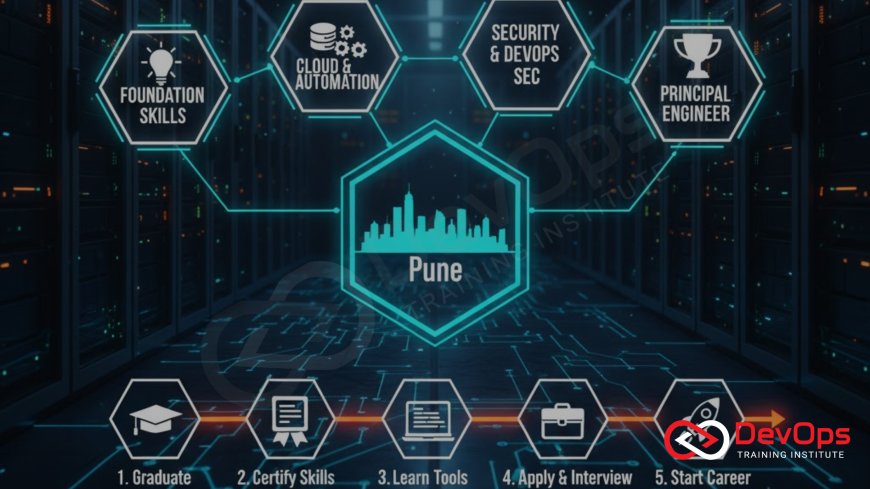
Graduating in Bangalore opens doors to a vibrant tech ecosystem where DevOps stands out as a high-demand field blending development and operations for seamless software delivery. In 2025, with over 3,000 DevOps openings in the city, freshers equipped with the right skills can secure roles at giants like Amazon and Infosys, earning 6-12 lakhs annually from day one. This roadmap guides you through building foundational knowledge, gaining practical experience, and navigating the job market. Institutes like DevOps Training Institute offer hands-on programs tailored for graduates, covering tools from Git to Kubernetes. Whether you are a computer science alum or switching from another stream, DevOps promises rapid growth, automation expertise, and work-life balance in hybrid setups. Embrace this path to become a key player in Bangalore's innovation-driven IT landscape, automating pipelines and scaling clouds while advancing toward senior roles like SRE or architect.
Step 1: Assess Your Current Skills and Set Goals
Begin by evaluating your baseline to craft a personalized plan that aligns with Bangalore's competitive job scene. As a fresh graduate, identify gaps in programming or networking through free online assessments from platforms like roadmap.sh. Set SMART goals, such as completing a certification in three months, to stay motivated amid the city's fast-paced opportunities.
- Review your degree coursework: Highlight any Linux, scripting, or database exposure from college projects
- Take self-assessments: Use tools like LinkedIn Skills Quiz or free DevOps readiness tests to pinpoint strengths in automation
- Define short-term targets: Aim for entry-level roles like Junior DevOps Engineer within six months post-graduation
- Research local demand: Analyze Naukri.com for Bangalore-specific skills like AWS and Jenkins, which appear in 70% of fresher postings
- Seek mentorship early: Join Bangalore DevOps meetups on Meetup.com to connect with alumni for guidance
- Track progress weekly: Maintain a journal of learned concepts to build confidence for interviews
- Align with career vision: Decide if you lean toward cloud ops or security-focused DevSecOps for long-term specialization
This evaluation phase ensures your efforts target high-impact areas.
With clear goals, transition smoothly into structured learning.
Step 2: Build Core Foundations in Programming and OS
- Master Linux basics: Start with commands, file systems, and shell scripting using Ubuntu; essential for 90% of DevOps tools in Bangalore firms
- Learn Python scripting: Focus on automation scripts for tasks like log parsing; free resources like Codecademy make it accessible for freshers
- Understand networking fundamentals: Grasp TCP/IP, firewalls, and DNS to handle infrastructure setups in cloud environments
- Practice version control with Git: Create repositories on GitHub, learn branching and merging for collaborative workflows
- Explore databases: Get comfortable with SQL queries and NoSQL like MongoDB for data handling in pipelines
- Build simple projects: Automate a backup script or deploy a static site to apply concepts immediately
- Integrate with local training: Enroll in Linux Training Institute modules for hands-on labs tailored to Bangalore's IT needs
These foundations form the bedrock of DevOps proficiency.
Graduates often overlook OS depth, but it differentiates candidates in interviews.
Step 3: Dive into DevOps Tools and Automation
Transition to core DevOps practices by learning tools that automate and streamline workflows, a must for Bangalore's agile startups and MNCs. Begin with CI/CD pipelines using Jenkins, then advance to containerization with Docker for efficient app packaging. This phase, spanning 2-3 months, equips you to handle real-world deployments, reducing manual errors by up to 80% as per industry standards. Explore continuous testing strategies to embed quality early in your pipelines.
- Set up Jenkins: Configure pipelines for automated builds and tests on open-source projects
- Containerize apps with Docker: Build images, manage volumes, and push to registries like Docker Hub
- Orchestrate with Kubernetes: Deploy clusters on Minikube, scale pods, and handle services for microservices
- Implement IaC using Terraform: Provision AWS resources declaratively for reproducible environments
- Automate configuration via Ansible: Write playbooks for server setup across multiple nodes
- Monitor with Prometheus and Grafana: Set alerts for metrics in a sample app deployment
- Practice GitOps: Use ArgoCD for declarative deployments, aligning with Bangalore's Git-heavy teams
Hands-on practice solidifies these tools for portfolio building.
Focus on integration to simulate production scenarios.
Step 4: Enroll in Specialized Training and Certifications
| Certification | Focus Area | Institute Recommendation | Cost (INR) |
|---|---|---|---|
| AWS Certified DevOps Engineer | Cloud Automation | DevOps Training Institute | 15,000-25,000 |
| Certified Kubernetes Administrator (CKA) | Orchestration | WebAsha Technologies | 20,000-30,000 |
| HashiCorp Certified: Terraform Associate | IaC | Python Training Institute | 10,000-18,000 |
Certifications validate skills and boost resumes for Bangalore recruiters. Know when to use StatefulSets for data persistence.
Choose programs with placement support for faster entry.
Step 5: Gain Hands-On Experience Through Projects and Internships
- Build a CI/CD pipeline: Integrate GitHub Actions with Docker for a web app deployment
- Deploy a full-stack app: Use Kubernetes on AWS EKS, including scaling and load balancing
- Automate infrastructure: Create Terraform scripts for multi-tier architecture in GCP
- Set up monitoring dashboard: Implement ELK stack for log analysis in a simulated e-commerce site
- Contribute to open-source: Fix issues in DevOps repos on GitHub to gain collaborative experience
- Secure a summer internship: Target startups via Internshala for 2-3 months of real-world exposure
- Document everything: Create a portfolio site showcasing code, diagrams, and outcomes
Projects demonstrate practical abilities beyond theory. Use branch protection rules in team projects.
Internships in Bangalore provide networking and references.
Step 6: Network and Prepare for Job Applications
Leverage Bangalore's tech community to transition from learner to professional. Attend events like DevOps Days India for insights and connections, while tailoring your LinkedIn profile with keywords from local job descriptions. This networking phase amplifies visibility among recruiters scouting fresh talent. Optimize applications by learning policy as code for compliance-driven roles.
- Optimize LinkedIn: Add endorsements for Linux and AWS, connect with 50+ Bangalore DevOps pros weekly
- Join local groups: Participate in Bangalore DevOps Meetup for workshops and peer discussions
- Attend job fairs: Target NASSCOM events in Koramangala for direct MNC interactions
- Prepare resume: Quantify projects, e.g., "Reduced deployment time by 50% using Jenkins"
- Practice interviews: Use Pramp for mock sessions on system design and behavioral questions
- Apply strategically: Focus on 20 tailored applications weekly via Naukri and Indeed
- Follow up: Send thank-you notes post-interviews to stand out in competitive pools
Consistent outreach builds a robust opportunity pipeline.
Track applications to refine your approach over time.
Step 7: Land Your First DevOps Role and Plan Growth
Secure entry-level positions like Associate DevOps Engineer at firms offering 6-10 lakhs, focusing on contributions to team pipelines. Once in, seek mentorship for quick ramp-up, aiming for mid-level roles within 18-24 months through continuous learning. Enhance reliability by monitoring latency in microservices.
- Negotiate offers: Highlight certifications for 10-15% higher starting pay
- Onboard effectively: Shadow seniors and document processes for faster integration
- Seek feedback: Monthly reviews to identify growth areas like advanced Kubernetes
- Pursue promotions: Lead small projects to demonstrate leadership potential
- Upskill ongoing: Enroll in Ethical Hacking Training Institute for DevSecOps edges
- Explore lateral moves: Switch to fintech for specialized cloud roles after a year
- Build financial goals: Save for further certs while enjoying Bangalore's tech perks
First roles lay groundwork for accelerated advancement.
Stay adaptable to emerging trends like AI Ops.
Conclusion: Your Roadmap to DevOps Success Starts Now
Embarking on a DevOps career post-graduation in Bangalore equips you with future-proof skills in a market projected to grow 25% annually. From foundational Linux mastery at Linux Training Institute to advanced certifications via DevOps Training Institute, this roadmap transforms freshers into versatile engineers. With hands-on projects, networking, and persistent applications, you will navigate challenges and seize opportunities at top firms. Commit to consistent learning, leverage WebAsha Technologies for practical training, and watch your career evolve from junior roles to influential positions in automation and cloud innovation. Bangalore's ecosystem awaits your contributions; step forward with confidence and automate your success in 2025. Understand GitOps approval workflows for enterprise readiness.
Frequently Asked Questions
What is the starting salary for fresh DevOps graduates in Bangalore?
Around 6-10 lakhs per annum, with bonuses for certified candidates from top institutes.
How long does it take to get job-ready in DevOps after graduation?
4-6 months of dedicated training and projects, accelerated by programs at DevOps Training Institute.
Are certifications necessary for entry-level DevOps roles?
Highly recommended; AWS and CKA boost hireability by 40% in Bangalore's market.
Can non-CS graduates pursue DevOps?
Yes, with foundational courses in Python and Linux from Python Training Institute.
What are the best institutes for DevOps in Bangalore?
DevOps Training Institute and WebAsha Technologies for hands-on, placement-focused training.
How important are projects in a DevOps resume?
Crucial; showcase 3-5 GitHub repos with CI/CD and Kubernetes deployments.
Is remote work possible for fresh DevOps engineers?
Hybrid models common, with 40% roles offering full remote in Bangalore startups.
What skills gap should freshers focus on?
Cloud platforms like AWS and automation tools like Terraform for immediate impact.
Does DevOps suit women graduates?
Absolutely; inclusive hiring at Google and Accenture with strong support networks.
How to handle interview rejections?
Analyze feedback, refine projects, and reapply; persistence pays in competitive Bangalore.
Can I combine DevOps with cybersecurity?
Yes, via Cyber Security Training Institute for lucrative DevSecOps paths.
What about ethical hacking in DevOps?
Ethical Hacking Training Institute modules enhance secure pipeline skills for freshers.
Is Bangalore the best city for DevOps freshers?
Yes, due to 3,000+ jobs and ecosystem support unmatched by other hubs.
What tools to learn first?
Git, Docker, Jenkins; build progressively with institute-guided labs.
Future trends for DevOps graduates?
AI-driven ops and multi-cloud; stay updated via continuous training.
What's Your Reaction?
 Like
0
Like
0
 Dislike
0
Dislike
0
 Love
0
Love
0
 Funny
0
Funny
0
 Angry
0
Angry
0
 Sad
0
Sad
0
 Wow
0
Wow
0


![100+ Azure DevOps Interview Questions and Answers [Updated 2025]](https://www.devopstraininginstitute.com/blog/uploads/images/202509/image_140x98_68c40aa9a3834.jpg)





![Future Scope of DevOps Careers in Pune [Updated 2025]](https://www.devopstraininginstitute.com/blog/uploads/images/202510/image_140x98_68e3a84652312.jpg)