

![Kong Interview Preparation Guide [2025]](https://www.devopstraininginstitute.com/blog/uploads/images/202509/image_430x256_68dbb95326997.jpg)

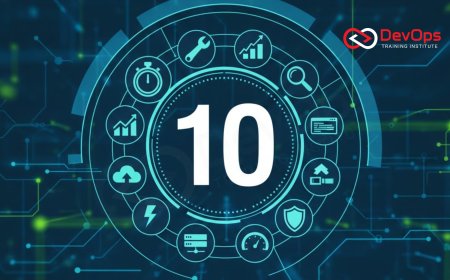
Top 10 DevOps Automation Scripts to Learn
Master the top 10 essential automation scripts that define the modern DevOps Engineer role, transforming manual tasks into repeatable, resilient code. This comprehensive guide covers critical automation across the entire delivery lifecycle, including Infrastructure as Code (IaC) wrappers, advanced deployment orchestration for Canary/Blue-Green releases, dynamic secrets injection, and cloud resource cleanup scripts for FinOps. Learning these scripts, often written in Python or Bash, will dramatically boost your automation and efficiency, making you indispensable for building high-velocity CI/CD pipelines and managing scalable, secure production systems on any major cloud platform today.
Introduction
The core ethos of DevOps is automation: eliminating manual toil and using code to manage, provision, and deploy systems with speed, consistency, and reliability. For an aspiring or practicing DevOps Engineer, proficiency with automation scripts is not a specialization but a fundamental necessity. These scripts, often written in Python, Bash, or Go, serve as the crucial glue that binds together complex tools like Terraform, Kubernetes, and Jenkins, bridging the gaps between APIs and automating tasks that would be impossible to manage manually at cloud scale. Mastering this scripting layer is what truly separates a system user from an engineer capable of designing and sustaining highly scalable and resilient production environments across any modern cloud provider.
The complexity of modern applications—involving microservices, continuous security scanning, and multi-cloud strategies—demands robust, well-tested automation for every routine task. From the initial provisioning of infrastructure to the final zero-downtime deployment, automation scripts handle critical functions that guarantee consistency, enforce security policies, and ensure compliance. This guide outlines the top 10 most valuable and frequently implemented automation scripts that every DevOps Engineer should learn, master, and integrate into their portfolio. These scripts provide immediate, tangible value by reducing human error, accelerating the deployment cycle, and freeing up engineering time for high-value work, ensuring that continuous delivery is fast and safe.
The true power of these scripts lies in their ability to interact with external APIs—whether they are cloud provider APIs, third-party monitoring tools, or internal services—to perform orchestrating actions that span multiple systems. For example, a single script can provision an entire testing environment via Terraform, deploy the application using Kubernetes manifests, and then configure the necessary monitoring alerts, all in a single, repeatable, and version-controlled process. Understanding how to structure these multi-step workflows efficiently is the hallmark of a senior DevOps Engineer who excels at achieving high levels of automation and efficiency.
Infrastructure and Environment Scripts
Managing cloud infrastructure requires scripts that go beyond simply calling a single Terraform command; they must handle state management, pre-checks, variable injection, and dynamic cleanup. These scripts are crucial for managing costs and ensuring environment consistency, bridging the gap between a developer's local environment and a production cloud environment, ensuring that IaC provisioning is safe, audited, and repeatable across diverse teams and projects. They transform raw configuration files into a self-service resource provisioning system.
1. IaC Provisioning Orchestration Script (Terraform Wrapper): This script (often Python or Bash) wraps core Terraform commands (`init`, `plan`, `apply`) to automate environment setup. It typically handles retrieving environment-specific secrets from a vault, dynamically selecting the correct `.tfvars` file, enforcing state locking checks, and generating custom output logs. This wrapper script ensures that every team member follows a standardized, secure process for provisioning infrastructure, regardless of their familiarity with the underlying IaC tool, greatly mitigating the risk of accidental production changes. A strong wrapper script is the primary way to enforce governance when managing cloud resources.
2. Cloud Cost Monitoring and Resource Cleanup Script: Often written in Python using cloud SDKs (boto3 for AWS, Azure SDK), this script is essential for FinOps practices. It scans the cloud environment for orphaned or unused resources (e.g., untagged storage volumes, idle compute instances, old load balancers) that are consuming budget but providing no value. Upon detection, it flags these resources for review and automatically terminates them after a predefined grace period. This script saves significant money and ensures that engineers adhere to resource lifecycle policies, managing the massive cost complexity inherent in today's multi-cloud landscape.
Deployment and Pipeline Scripts
These scripts are the heart of Continuous Delivery, automating the low-risk rollout of new application versions and the secure injection of runtime credentials. They ensure that the deployment process is seamless, fast, and secure, removing the potential for human error during critical production updates, which is the primary goal of the CI/CD pipeline. The complexity of these scripts often involves interacting with load balancer APIs, container orchestrators, and secrets management systems simultaneously to orchestrate a zero-downtime update.
3. Blue/Green or Canary Deployment Orchestration Script: A Python script that automates the complex steps of an advanced deployment strategy. For a Blue/Green release, the script deploys a new version (Green) alongside the old (Blue), runs post-deployment health checks, and then automates the load balancer or DNS switch to the Green environment. For a Canary release, it gradually shifts a small percentage of traffic (e.g., 5%) to the new version, monitors key performance indicators (KPIs), and only proceeds with a full rollout if the new version proves stable, guaranteeing high reliability and minimizing customer impact during updates.
4. Dynamic Credentials and Secrets Injection Script: This critical security script ensures that applications receive temporary, non-static credentials at deployment time, enforcing the principle of least privilege. The script (often running within the CI/CD environment or a Kubernetes initialization container) interacts with a centralized secrets manager like HashiCorp Vault or AWS Secrets Manager to retrieve a short-lived token and inject it as an environment variable or configuration file, eliminating the catastrophic risk associated with hardcoding credentials into code or configuration files. This practice is vital for modern DevSecOps compliance.
5. Automated Git Tagging and Release Versioning Script: A fundamental script that runs after a successful build and test phase. It automatically bumps the semantic version of the application or module (e.g., from v1.2.0 to v1.2.1), tags the successful commit in Git with the new version, and generates release notes. This automation ensures strict version control discipline, provides an auditable history of deployed versions, and seamlessly integrates the application code lifecycle with the deployment pipeline, ensuring that every artifact is uniquely identifiable and traceable back to its source code commit.
System and Health Check Scripts
Proactive monitoring and system health checks are the cornerstones of Site Reliability Engineering (SRE). These scripts run continuously or on a schedule to assess the health of the application and infrastructure components, providing immediate, granular feedback that often precedes alerts from traditional monitoring systems. They ensure resilience and provide the necessary data for proactive maintenance and incident management, reducing the mean time to detect (MTTD) issues.
6. System Health Check and Alerting Script: A dedicated Bash or Python script that runs locally on critical VMs or containers to check component-specific health, such as disk space utilization, file descriptor limits, or custom application API endpoints. If a check fails or approaches a critical threshold, the script sends an immediate notification or triggers an automated remediation action via an alerting API (like Prometheus Alertmanager or Datadog). This script acts as an internal, high-frequency watchdog, providing granular insights that traditional cloud monitoring might miss.
7. Log Aggregation and Filtering Script: While tools like Fluentd and Logstash handle primary log transport, specific Python or Bash scripts are often used for pre-processing logs locally. This involves filtering out noisy, irrelevant debug messages, restructuring unstructured log data into JSON format for easier ingestion, or masking sensitive personal identifiable information (PII) before transmission to the centralized logging system. This ensures that the downstream observability tools receive clean, standardized, and security-compliant data, making log analysis much more efficient.
8. Automated Backup and Snapshot Management Script: This critical script, often written using cloud provider SDKs (e.g., AWS boto3), automates the entire disaster recovery process. It periodically triggers automated snapshots of critical databases (RDS, MongoDB) and virtual machine volumes, manages retention policies (e.g., keeping daily snapshots for 7 days, monthly for 3 months), and cleans up old snapshots according to FinOps and compliance rules. This automation ensures data durability and provides a fast recovery point objective (RPO) in the event of data loss or regional failure, forming a non-negotiable part of any enterprise disaster recovery plan.
Container and Security Scripts
The complexity of container ecosystems and the need for continuous security enforcement require specialized scripts that integrate scanning tools directly into the CI/CD workflow and automate governance within the orchestrated environment. These scripts embody the DevSecOps philosophy, ensuring that security is a continuous, automated attribute of the pipeline, not a manual checkpoint at the end of the release process.
9. Docker Image Vulnerability Scanning Gate Script: A mandatory Bash script executed during the CI phase (after the Docker image is built but before it is pushed to the registry). It runs a vulnerability scanner like Trivy or Clair against the newly built image layers, checking for known CVEs (Common Vulnerabilities and Exposures) in dependencies. If the script detects any high-severity vulnerability, it fails the build immediately and reports the security findings, effectively creating an automated security gate that prevents non-compliant or risky images from ever reaching the live environment.
10. Kubernetes Cluster Drift Detection and Reconciliation Script: This Python script is foundational to the GitOps model. It runs periodically to compare the live state of the Kubernetes cluster (as reported by the K8s API) against the desired state defined in the Git repository. If "drift" is detected—meaning a live resource has been manually or accidentally modified outside of the approved Git workflow—the script either alerts the SRE team or automatically attempts to reconcile the live cluster state back to the definition in Git, ensuring configuration consistency and maintaining the integrity of the declarative system.
Table: Top 5 Essential DevOps Automation Scripts
The scripts below represent the highest-value automation tasks that directly contribute to continuous delivery, operational stability, and risk mitigation. Mastering these particular scripts demonstrates an ability to manage and orchestrate complex systems and is a key differentiator for any aspiring DevOps Engineer in the job market.
| # | Automation Script | Primary Language | Tools Integrated | Primary Goal |
|---|---|---|---|---|
| 1 | IaC Provisioning Orchestration | Python / Bash | Terraform, Vault, Cloud SDKs | Enforce security and standardization during infrastructure setup. |
| 2 | Blue/Green Deployment Orchestration | Python / Go | Kubernetes, Load Balancer APIs (e.g., ALB/NGINX) | Achieve zero-downtime releases with automated traffic routing and rollback logic. |
| 3 | Cloud Cost Monitoring/Cleanup | Python (boto3/Azure SDK) | Cloud Provider Billing/Resource APIs | Automatically identify and remove idle, costly resources, driving FinOps efficiency. |
| 4 | Secrets Injection Script | Python / Shell | HashiCorp Vault, Kubernetes/CI Environment | Securely pass short-lived credentials to applications at runtime, eliminating hardcoding risk. |
| 5 | Image Vulnerability Scanning Gate | Bash / Python | Trivy/Clair Scanner, CI Tooling (Jenkins/GitLab) | Enforce an automated security policy gate that prevents vulnerable container images from deployment. |
Scripting Environment Setup: Tools and Practices
Learning the theory of automation is only half the battle; building and maintaining a sustainable scripting environment is key to long-term efficiency. The following tools and practices are essential for managing, testing, and debugging your automation code, ensuring that your scripts remain reliable and reproducible across different operating systems and cloud regions. These principles ensure that your automation code itself is treated as a critical production asset, subject to rigorous engineering standards and continuous improvement.
- Choosing the Right Language: While Bash is essential for simple system interaction and glue code, Python is the preferred language for complex, multi-step automation due to its cleaner syntax, robust error handling, and superior integration with cloud provider SDKs and third-party APIs.
- Testing and Idempotency: Automation scripts should be written with idempotency in mind, meaning executing the script multiple times yields the same result without unintended side effects. Furthermore, scripts must be tested using unit tests (for Python functions) or integration tests (using tools like Bats or Terratest) to ensure reliability before they are merged into the production pipeline.
- Secrets Management Integration: Never store sensitive data directly in the script itself. All credentials, API keys, and environment variables must be dynamically retrieved at runtime from a secure vault (like HashiCorp Vault), ensuring that the script adheres to the highest standard of security by using encrypted storage and short-lived tokens for access.
- Code Documentation and Version Control: All automation scripts must be stored in Git and follow standard version control practices. They should be accompanied by clear documentation explaining their purpose, required inputs, potential outputs, and error handling procedures. This ensures maintainability and allows other team members to understand, modify, and troubleshoot the code without specialized knowledge.
Beyond Scripts: Adopting an Engineering Mindset
While mastering the 10 scripts is a major technical achievement, the most highly paid and effective DevOps Engineers adopt an overall engineering mindset that views operational challenges as solvable code problems. They move beyond basic task automation to design scalable, self-healing systems, focusing on the big picture of reliability and architecture. They champion the core principles of continuous feedback, shared ownership, and the application of SRE principles to manage system health proactively.
This mindset shift involves treating infrastructure management not just as a collection of configuration files, but as a holistic software engineering problem, where every component is tested, versioned, and monitored. For example, when deploying to new cloud platforms, a senior engineer prioritizes using cloud-agnostic tools like Terraform and Kubernetes over cloud-specific native tools, ensuring application portability and reducing vendor lock-in risk. This strategic choice allows the business to scale and shift its infrastructure footprint based purely on business needs, rather than being constrained by technical debt or specialized tools.
Furthermore, the modern engineer is deeply embedded in the continuous security lifecycle, understanding that DevSecOps is a cultural mandate, not a software requirement. They actively integrate security practices, ensuring that the automation scripts they write include mandatory security checks and logging. By fostering this collaborative and security-aware approach, the DevOps Engineer becomes an invaluable asset, driving not just technical efficiency but also the cultural change necessary for the entire organization to succeed at scale in a rapidly evolving, threat-filled digital landscape.
Strategic Automation for FinOps and Governance
The strategic value of automation extends directly to financial control and enterprise governance. In large organizations, uncontrolled cloud consumption can quickly erode profitability, making FinOps automation a high-priority skill set. The scripts mentioned earlier, particularly those focused on resource tagging, cleanup, and usage reporting, are directly responsible for ensuring cost efficiency and accurate financial reporting, moving DevOps from a purely technical function to a strategic business partner.
For governance, automation scripts are crucial for enforcing internal policies. For instance, a script can use Terraform outputs and cloud APIs to verify that all deployed instances have mandatory tags for ownership and cost center attribution. If the resources are non-compliant, the script can automatically remediate the issue or quarantine the resource, ensuring that the organization maintains compliance and accurate accounting. This level of automated governance prevents configuration drift and ensures that security and financial policies are applied uniformly and without fail across all environments, regardless of the deployment tool used.
Conclusion
The journey to becoming a highly effective and compensated DevOps Engineer is fundamentally a journey into automation. By learning and mastering these 10 essential automation scripts—from the necessary wrappers for Terraform and secrets injection mechanisms to the advanced orchestration of Blue/Green deployments and GitOps reconciliation—you build a resilient portfolio of practical, high-value skills. These scripts are the crucial building blocks that allow you to orchestrate complex cloud infrastructure, achieve zero-downtime deployments, and maintain continuous security and compliance, solving real-world production challenges.
Ultimately, the most important lesson is that every manual, repeatable task is an opportunity for a Python or Bash script. Embracing this philosophy, treating your automation code with the same rigor as application code, and continually seeking out new opportunities for automation and efficiency will position you as a strategic leader in any engineering team. Start building these scripts today, commit them to your GitHub portfolio, and demonstrate your capacity to design, build, and maintain the automated systems that define the future of software delivery.
Frequently Asked Questions
What is the best language for DevOps automation scripts?
Python is generally the best due to its robust libraries and ease of integrating with cloud APIs, while Bash is used for simpler glue code and system interaction tasks.
How does IaC Provisioning Orchestration reduce risk?
It reduces risk by enforcing standardization, securely injecting environment variables, and automating checks for state locking before infrastructure changes are applied.
What is the core purpose of a Blue/Green deployment script?
Its core purpose is to achieve zero-downtime releases by switching traffic instantly between a stable environment (Blue) and a new, pre-tested environment (Green).
What is FinOps automation?
FinOps automation uses scripts to monitor cloud resource utilization, identify idle or unused components, and automatically clean them up to reduce unnecessary cloud spending.
Why are Secrets Injection scripts necessary for security?
They are necessary for security because they eliminate hardcoded credentials, providing applications with short-lived, encrypted access tokens at runtime, adhering to least privilege.
How does a vulnerability scanning gate work?
It works by executing a tool like Trivy in the CI pipeline after the Docker image is built; if a high-severity vulnerability is found, the script automatically fails the build.
What is the difference between Log Aggregation and Filtering?
Aggregation is collecting logs centrally (Fluentd); filtering is preprocessing the logs to remove noise or mask PII before sending them to the central system for analysis.
What does "Drift Detection" mean in the GitOps model?
Drift detection means a script or tool compares the live cluster configuration against the desired state defined in the Git repository and alerts if they do not match.
Why should automation scripts be idempotent?
Scripts should be idempotent so that running them multiple times under the same conditions produces the exact same result without causing errors or unintended state changes.
What is the role of a Backup and Snapshot Management Script?
Its role is to automatically trigger, manage retention policies, and clean up old snapshots of critical databases and volumes, ensuring a fast recovery point objective (RPO).
What is the primary tool integrated by IaC orchestration scripts?
The primary tool integrated is Terraform, as the wrapper script manages its state and variable injection for consistent provisioning.
How do health check scripts differ from external monitoring tools?
Health check scripts run internally and locally on the host at high frequency, providing component-specific checks that can proactively trigger alerts before external monitoring tools detect an issue.
What is the main output of the Automated Git Tagging script?
The main output is a semantic version tag (e.g., v1.0.1) placed on the successful commit in Git, providing a traceable, auditable release marker for the artifact.
What is the purpose of masking PII in logs?
Masking PII (Personally Identifiable Information) in logs is a security and compliance requirement to protect user data before it is transmitted to the centralized logging system for analysis.
What is the ultimate goal of adopting the GitOps mindset?
The ultimate goal of adopting the GitOps mindset is to achieve fully declarative, auditable, and automated application and infrastructure deployment by using Git as the single source of truth.
What's Your Reaction?
 Like
0
Like
0
 Dislike
0
Dislike
0
 Love
0
Love
0
 Funny
0
Funny
0
 Angry
0
Angry
0
 Sad
0
Sad
0
 Wow
0
Wow
0

![100+ Azure DevOps Interview Questions and Answers [Updated 2025]](https://www.devopstraininginstitute.com/blog/uploads/images/202509/image_140x98_68c40aa9a3834.jpg)




![Future Scope of DevOps Careers in Pune [Updated 2025]](https://www.devopstraininginstitute.com/blog/uploads/images/202510/image_140x98_68e3a84652312.jpg)