

![Kong Interview Preparation Guide [2025]](https://www.devopstraininginstitute.com/blog/uploads/images/202509/image_430x256_68dbb95326997.jpg)

10 Best DevOps Tools for Startups in 2025
Navigate the complexity of infrastructure and deployment with the 10 best, most scalable, and cost-effective DevOps tools essential for startups in 2025. This curated list prioritizes solutions offering low operational overhead and rapid time-to-market, from all-in-one platforms like GitLab to essential Infrastructure as Code (IaC) with Terraform and lightweight Configuration Management using Ansible. Learn how to build a resilient, secure, and observable stack using open-source powerhouses like Prometheus and Grafana, while ensuring enterprise-grade security with Vault for secrets and Snyk for vulnerability scanning. These tools facilitate everything from coding the simplest basic commands for scripting to managing complex container orchestration and file system management, allowing lean startup teams to achieve automation maturity quickly without compromising on future scalability or incurring prohibitive licensing costs as they grow.
Introduction
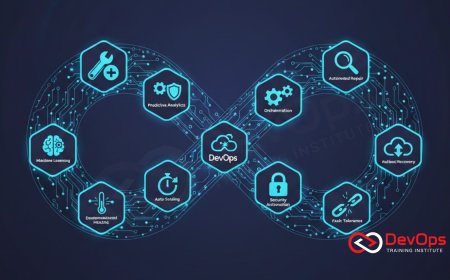
For a startup, choosing the right DevOps toolchain is a critical decision that dictates future scalability, operational efficiency, and, most importantly, cost structure. The ideal toolset for a lean team must adhere to three core principles: it must be cost-effective (preferably open-source or free-tier generous), it must be easy to set up (low operational overhead), and it must be scalable enough to handle exponential growth without forcing a complete rewrite. In the fast-evolving landscape of 2025, the trend favors platforms that integrate multiple functions to simplify the toolchain and open-source tools that offer enterprise features without the steep licensing fees associated with legacy solutions. The following 10 tools represent the best balance of these factors, providing startups with the technical foundation to manage everything from CI/CD to observability and security using minimal resources. This careful selection allows founding engineers to focus their precious time on building the product, not managing complex, disparate tools. [Image illustrating the DevOps toolchain lifecycle]
1. GitLab: The All-in-One DevOps Platform
GitLab is the ultimate solution for startups seeking to consolidate their entire DevOps toolchain into a single, unified application. By combining Git repository hosting, robust CI/CD pipelines, container registry, project management, and monitoring, GitLab eliminates the friction and maintenance overhead associated with integrating multiple separate tools (like GitHub, Jenkins, and Jira).
- Unified Workflow: All stages of development, from code review to deployment, happen within a single interface, dramatically simplifying onboarding and reducing context switching for developers.
- Built-in CI/CD: GitLab CI is defined using simple YAML files stored in the repository, making pipelines easy to version, review, and maintain without needing separate CI server management.
- Cost Efficiency: The community (open-source) and free tier offerings are highly functional, supporting unlimited private repositories and generous CI/CD minutes, making it incredibly cost-effective for growing teams.
- Security Integration: Includes built-in security features like SAST (Static Application Security Testing) and dependency scanning directly in the pipeline, adhering to DevSecOps principles without extra tool integration.
- Scalable Access Control: GitLab provides centralized control over repositories and environments, simplifying the process of defining roles and permissions. This centralized management is vital for maintaining compliance as the team scales and formalizing user management policies across the organization.
- GitOps Ready: It natively supports GitOps workflows, where infrastructure and application state are defined in Git and automatically synchronized with the production environment, reducing operational risk.
- Container Registry: Includes a free, integrated container registry, eliminating the need to provision and manage a separate Docker registry service.
2. Terraform: Essential Infrastructure as Code (IaC)
Terraform, developed by HashiCorp, is the undisputed industry standard for Infrastructure as Code (IaC). For a startup that needs to maintain agility while scaling across cloud environments, Terraform provides the necessary foundation of automation and consistency. It uses the declarative HashiCorp Configuration Language (HCL) to define infrastructure—servers, networks, databases, and more—making environments version-controlled, repeatable, and auditable. This eliminates the catastrophic risk associated with manual, click-based infrastructure changes. Instead of relying on manual steps, the entire infrastructure stack is codified, allowing teams to tear down and rebuild entire environments (dev, staging, production) quickly and identically, which is vital for testing and disaster recovery scenarios. The ability to use the same tooling across all major cloud providers (AWS, Azure, GCP) prevents vendor lock-in and provides future flexibility, an essential consideration for a startup whose cloud strategy may evolve rapidly. Investing in Terraform early guarantees that the infrastructure grows sustainably and securely from day one, transforming server setup from an unpredictable manual task into a consistent, automated process that saves substantial operational time and resources over the long term.
3. Ansible: Simple, Agentless Configuration Management
While Infrastructure as Code (Terraform) handles provisioning (creating the server), Configuration Management (CM) handles configuration (installing software and setting up users). Ansible is the CM tool of choice for startups due to its simplicity, agentless nature, and reliance on existing SSH keys infrastructure.
- Agentless Design: Ansible communicates over standard SSH protocols, meaning no proprietary agents need to be installed, maintained, or secured on target servers, drastically reducing operational overhead and making setup extremely fast.
- YAML Simplicity: Playbooks are written in human-readable YAML, making the learning curve shallow. Teams can quickly codify routine tasks, from updating packages to deploying application code.
- Idempotence: Ansible mandates idempotence, ensuring that running the same script multiple times yields the same result without making unintended changes, guaranteeing configuration consistency and reliability.
- Low Cost: As a completely open-source solution, Ansible has zero licensing costs and runs efficiently on minimal resources, aligning perfectly with startup cost structures.
- Security Automation: It can be used to automate crucial security hardening tasks, ensuring every new server deployment meets the security standards defined in the post-installation checklist without manual intervention.
- Integration with IaC: Ansible integrates seamlessly with Terraform; Terraform provisions the server, and Ansible automatically executes the initial configuration playbook immediately afterward.
- Simple Scripting: Its straightforward declarative syntax is much more approachable than complex shell scripts, helping teams transform common operational basic commands into robust, reusable automation playbooks.
4. Docker: The Universal Containerization Standard
Docker is the prerequisite for all modern cloud-native development and is an absolute necessity for any startup aiming for scalability. Docker solves the classic problem of "it works on my machine" by packaging the application and all its dependencies into a single, portable, consistent unit called a container. This guarantees that the code runs identically from the developer's laptop to the production environment, eliminating environment drift and vastly simplifying testing and deployment. For startups, Docker accelerates the developer onboarding process and allows teams to adopt modern architectural patterns like microservices from the beginning. Furthermore, Docker images form the standardized unit of deployment for all major orchestration systems (Kubernetes, ECS, etc.), future-proofing the application architecture against changes in the underlying infrastructure. By leveraging Docker's multi-stage build capabilities, startups can keep their container images small and secure, maximizing deployment speed and minimizing vulnerability exposure. Without Docker, managing application dependencies across multiple environments becomes a costly, time-consuming manual effort that severely hinders scaling and agility. The application container thus becomes the single source of truth for all runtime requirements.
5. Managed Kubernetes: The Scalability Engine
Kubernetes (K8s) is the industry standard for container orchestration, essential for managing microservices and large-scale deployments. Startups should leverage Managed K8s Services (like AWS EKS, GCP GKE, or Azure AKS) to gain its power without the operational headache of managing the complex control plane.
Zero Control Plane Overhead
Managed K8s offloads patching, scaling, and high-availability management of the control plane to the cloud provider. This dramatically reduces the burden on small startup operations teams, allowing them to focus solely on application deployment and health.
This operational simplicity means the startup gets immediate access to massive scale, high resilience, and the vast K8s ecosystem without having to hire specialized Kubernetes administration staff immediately, optimizing early-stage budget allocation.
Decoupled Scaling and Resilience
K8s provides unparalleled resilience through self-healing, automatic load balancing, and rolling updates. Its decoupled scaling ensures resources are utilized efficiently, only adding compute power where specific services require it.
By defining precise resource requests and limits in K8s YAML, startups can manage storage and capacity needs effectively. This declarative control even extends to persistent storage and file system management for stateful applications, ensuring data integrity across scaling events.
6. Prometheus and Grafana: Open-Source Observability Stack
Observability is non-negotiable for modern distributed systems, and the combination of Prometheus and Grafana provides a robust, enterprise-grade solution without the high recurring costs of proprietary platforms.
- Metrics Collection (Prometheus): Prometheus efficiently scrapes numerical time-series metrics from applications and infrastructure, acting as the centralized data store for all system performance data.
- Visualization (Grafana): Grafana connects to Prometheus and provides highly customizable dashboards, allowing teams to visualize everything from CPU usage and latency to application-specific business metrics in real-time.
- Cost-Effectiveness: Both are powerful open-source projects, meaning the only cost is the infrastructure required to run the stack itself, providing massive savings compared to license-based monitoring solutions.
- Alerting: Prometheus includes Alertmanager, which centralizes alert handling, routing critical notifications to the right team via PagerDuty, Slack, or email, minimizing Mean Time to Recovery (MTTR).
- Community Support: The massive community provides thousands of pre-built dashboards (Grafana Templates) and exporters (Prometheus Exporters), accelerating setup and reducing the effort needed for custom instrumentation.
- Log Integration: Grafana can integrate seamlessly with a centralized logging system (like Loki or the ELK stack), allowing operators to jump directly from a metrics anomaly on a dashboard to the related log events, which is crucial for root cause analysis.
- Log Management Visibility: This stack facilitates adherence to advanced log management practices, ensuring structured logs are used to generate actionable metrics and visualized efficiently, turning raw data into operational wisdom.
7. HashiCorp Vault: Centralized Secrets Management
Security is paramount, and startups must avoid storing secrets (API keys, database passwords) in code or configuration files. Vault provides a single, centralized system for securely storing, accessing, and dynamically generating secrets and encryption keys.
Compliance and Automation
Using Vault ensures the startup adheres to strict security compliance requirements from day one. It facilitates automation by providing short-lived, dynamic secrets, drastically limiting the window of exposure if a secret is compromised.
Its API-driven access model allows applications and CI/CD pipelines (like GitLab) to retrieve necessary credentials securely during deployment, eliminating the need for hardcoded static secrets in configuration files.
Zero-Trust Security Model
Vault’s authentication methods enable a strong zero-trust model, ensuring that only authenticated applications and servers can access the secrets they absolutely need. This access is based on identity, not network location.
For startups using a single cloud, leveraging the native cloud Secrets Manager (AWS Secrets Manager, Azure Key Vault) is a simpler, managed alternative. However, Vault provides the most flexible, future-proof solution for multi-cloud or on-premises expansion.
8. Snyk: Developer-Focused DevSecOps
Security must be integrated into the development process (Shift Left). Snyk is a developer-focused platform that provides vulnerability scanning for code, dependencies, containers, and infrastructure as code files.
- Early Detection: Snyk integrates directly into the developer's IDE (Visual Studio Code, IntelliJ), providing real-time feedback on vulnerabilities as they code, making fixes cheap and immediate.
- Dependency Scanning: It automatically scans the open-source libraries used in the application, identifying known vulnerabilities (CVEs) and often suggesting the exact version update needed to fix the flaw.
- Container Image Analysis: Snyk scans Docker images, identifying operating system vulnerabilities and recommending smaller, hardened base images to reduce the attack surface.
- IaC Security: Snyk can scan Terraform and Kubernetes YAML files for configuration weaknesses (e.g., publicly exposed ports, unencrypted volumes), ensuring secure infrastructure is deployed by design.
- CI/CD Gate: It integrates into the GitLab pipeline to automatically fail the build if a newly introduced vulnerability exceeds the defined severity threshold, enforcing security policies as code.
- Affordable Tier: Snyk offers highly accessible free tiers for developers and small teams, making enterprise-level security scanning financially viable for startups from the outset.
- Vulnerability Monitoring: Snyk continuously monitors deployed applications, alerting teams if a new vulnerability is discovered in an older dependency already running in production.
9. Cloud Provider CLI/SDK: The Automation Foundation
The Cloud Provider Command Line Interface (CLI) and Software Development Kits (SDKs)—such as the AWS CLI/Boto3, Azure CLI, or gcloud CLI—are the foundational tools for direct automation and scripting. While IaC tools like Terraform manage the overall state, the CLIs and SDKs are indispensable for executing specialized, immediate, or procedural tasks that fall outside the declarative lifecycle. For a startup, mastering the CLI means the difference between spending hours on manual console work and creating a simple shell script that automates a complex, repetitive task. This includes automating tasks like querying resource status, triggering serverless functions, managing IAM policies, or executing complex operational clean-up routines. Knowledge of the native CLI/SDK allows engineers to quickly create utility scripts, test connectivity, and perform deep debugging when infrastructure automation fails. These CLIs often support executing simple
10. Consul/etcd: Service Discovery and Mesh Foundation
As a startup's architecture evolves into microservices, the services must be able to find and communicate with each other reliably. Service Discovery tools like HashiCorp Consul or the Kubernetes-native etcd are essential for this distributed networking.
Service Discovery: Consul maintains a dynamic registry of all running services and their locations, allowing services to find each other by name rather than hardcoded IP addresses, which is crucial in dynamic, containerized environments.Health Checking: Consul provides built-in health checking, ensuring the service registry only routes traffic to healthy instances, improving overall system resilience and reliability.Networking Resilience: Tools like Consul, or the service mesh built on top of it, automatically provide features like intelligent load balancing, traffic routing, and circuit breakers between services, reducing network-related errors.Centralized Key-Value Store: Beyond discovery, Consul and etcd act as highly available, distributed key-value stores. This is used for storing shared configuration flags or feature toggles that services need to access at runtime.Security: Consul and its related ecosystem (like Consul Connect) provide a foundation for managing service-to-service communication security, including automatic mutual TLS (mTLS) encryption, ensuring network traffic is protected within the cluster.- Host Hardening Context: While high-level service mesh tools handle communication, they must still respect the base host networking rules. Understanding how these tools operate within host-level security established by rules similar to Firewalld commands is vital for troubleshooting connectivity issues.
- Seamless K8s Integration: In a managed Kubernetes cluster, etcd is typically used as the core data store, while tools like Consul are easily integrated as specialized service meshes or external configuration stores.
Startup DevOps Toolchain Summary
| # | Tool / Platform | Primary DevOps Pillar | Cost / Overhead Rationale |
|---|---|---|---|
| 1 | GitLab | All-in-One CI/CD & SCM | Unified platform, high free tier value, low integration overhead. |
| 2 | Terraform | Infrastructure as Code (IaC) | Open-source standard, ensures auditability and prevents drift. |
| 3 | Ansible | Configuration Management | Agentless and simple, minimal overhead for host configuration. |
| 5 | Managed Kubernetes (EKS/GKE) | Container Orchestration (CaaS) | Offloads control plane management, ensures massive scalability. |
| 6 | Prometheus & Grafana | Observability & Monitoring | Powerful open-source stack with zero licensing fees. |
| 7 | HashiCorp Vault / Cloud SM | Secrets Management | Essential security early on, prevents breaches from hardcoded secrets. |
| 8 | Snyk (or equivalent) | DevSecOps | Free/affordable developer tiers, shifts security left (early detection). |
Conclusion
The challenge for every startup is achieving maximum agility and scalability with minimal resources. The curated list of 10 tools—anchored by the unified workflow of GitLab, the declarative power of Terraform, and the open-source strength of Prometheus/Grafana—provides the optimal solution. These tools are selected because their costs are low (often zero) in the early stages, and their operational overhead is minimized by leveraging managed services and agentless designs. By adopting this toolchain, a lean engineering team can implement full CI/CD, maintain infrastructure as code, secure secrets with Vault, and achieve deep observability, all while ensuring adherence to future compliance requirements. Ultimately, this approach frees valuable engineering time from infrastructure maintenance, allowing the startup to prioritize product development and rapid iteration, which are the true drivers of early-stage success. Investing in this foundational stack is investing in sustainable, scalable growth without incurring unnecessary technical debt or high operational costs.
Frequently Asked Questions
Why should a startup choose GitLab over a combination of GitHub and Jenkins?
GitLab is preferred for startups due to reduced overhead and simplified integration. By combining SCM, CI/CD, and registry in one platform, GitLab eliminates the friction, maintenance, and complex authentication issues that arise from integrating separate tools like Jenkins and GitHub, making the deployment process faster and easier to manage for small teams.
Is Kubernetes too complex for a startup to adopt initially?
Vanilla Kubernetes is often too complex. However, startups should adopt Managed Kubernetes Services (like EKS or GKE). These services handle the operational complexity of the control plane, allowing the startup to use the standardized deployment and scaling power of K8s without needing a large, specialized operations team, providing instant scalability.
How does Ansible help with SSH keys security?
Ansible relies on existing SSH keys for authentication, which are already managed and secured by the operations team. Furthermore, Ansible playbooks integrate easily with secrets managers (like Vault) to securely retrieve non-SSH credentials required for deployment, ensuring that all access methods are codified and secure, never relying on static passwords in scripts.
Why is file system management relevant when using containers?
While containers use ephemeral storage, stateful applications (like databases or persistent caches) still require persistent volumes. Managed Kubernetes simplifies this, but the underlying persistent storage must still be provisioned and managed correctly, often involving codifying file system management parameters (like volume size, type, and mounting options) in the Infrastructure as Code (Terraform).
What is the benefit of using Snyk directly in the developer's IDE?
Using Snyk in the IDE (Shift Left) allows the developer to find and fix vulnerabilities in their code or dependencies before the code is committed. This makes the fix extremely cheap and fast, preventing the vulnerability from ever entering the CI/CD pipeline, which is the core principle of effective DevSecOps.
How can Grafana help a startup improve log management?
Grafana, when paired with a logging back-end like Loki or Elasticsearch, allows teams to visualize log data. This means an operator can move seamlessly from seeing a metrics spike (Prometheus) to viewing the exact log management event that caused it, dramatically accelerating root cause analysis (RCA) and providing immediate, visual context to troubleshooting efforts.
Why is basic commands knowledge still crucial in a Terraform/Ansible environment?
While automation handles routine tasks, knowledge of basic commands is essential for debugging and writing effective automation scripts. Engineers need to understand the underlying Linux commands that Ansible executes and use native CLIs to verify resource status or perform initial debugging during an incident, providing the fundamental skill base for troubleshooting.
What is the key advantage of Ansible's agentless approach?
The key advantage is reduced overhead. Since no software agent needs to be installed, maintained, patched, or secured on the target servers, the infrastructure setup is simplified, and there are fewer moving parts that can potentially fail or introduce security vulnerabilities, saving significant operational time.
Does this toolchain support multi-cloud strategies?
Yes, this toolchain supports multi-cloud strategies. Terraform is explicitly multi-cloud, Docker images are universal, and the managed Kubernetes services (EKS, GKE, AKS) allow for consistency across environments, making workloads highly portable and mitigating the risk of vendor lock-in as the company grows.
How does the post-installation checklist get automated with these tools?
The post-installation checklist is codified into an Ansible playbook or a configuration step within the Terraform deployment. This ensures that every VM or node is hardened, has the correct security agents, and adheres to compliance standards automatically upon creation, turning a manual audit into an enforced, reliable automation step.
How do these tools help in reducing cloud costs for a startup?
Tools like Terraform (codifying cleanup via `destroy`), Prometheus (identifying underutilized resources), and Managed Kubernetes (decoupled scaling and bin-packing) work together to minimize resource waste, ensuring the startup only pays for the compute power they actively need and use.
What role does Consul play in service security?
Consul, often used for service discovery, also provides a foundation for service-to-service security. It can be integrated with security tools to automatically manage mutual TLS (mTLS) encryption between microservices, ensuring that all network traffic within the cluster is encrypted and authenticated.
How does Vault prevent secrets sprawl?
Vault prevents secrets sprawl by acting as the single source of truth for all secrets. Instead of secrets being replicated across multiple application configuration files, CI/CD variables, and development environments, all components are forced to query Vault via API for temporary, short-lived access, centralizing control and minimizing the exposure footprint.
What is the importance of having a separate tool for log management in this stack?
While Prometheus handles metrics, logs provide the essential context and detail needed for debugging. Having a dedicated log management tool (like Loki/ELK) ensures that massive volumes of unstructured log data are indexed and searchable, allowing operators to trace the path of a request or find the exact error message that caused a service failure.
How are host firewalls managed when using Terraform for IaC?
Terraform manages the cloud network firewalls (Security Groups/VPC rules). However, host-level firewalls are managed by the Configuration Management tool (Ansible). Ansible playbooks contain the logic to apply and verify the necessary Firewalld commands on the Linux operating system, ensuring security is enforced at both the network edge and the host level.
What's Your Reaction?
 Like
0
Like
0
 Dislike
0
Dislike
0
 Love
0
Love
0
 Funny
0
Funny
0
 Angry
0
Angry
0
 Sad
0
Sad
0
 Wow
0
Wow
0

![100+ Azure DevOps Interview Questions and Answers [Updated 2025]](https://www.devopstraininginstitute.com/blog/uploads/images/202509/image_140x98_68c40aa9a3834.jpg)




![Future Scope of DevOps Careers in Pune [Updated 2025]](https://www.devopstraininginstitute.com/blog/uploads/images/202510/image_140x98_68e3a84652312.jpg)