


![Kong Interview Preparation Guide [2025]](https://www.devopstraininginstitute.com/blog/uploads/images/202509/image_430x256_68dbb95326997.jpg)


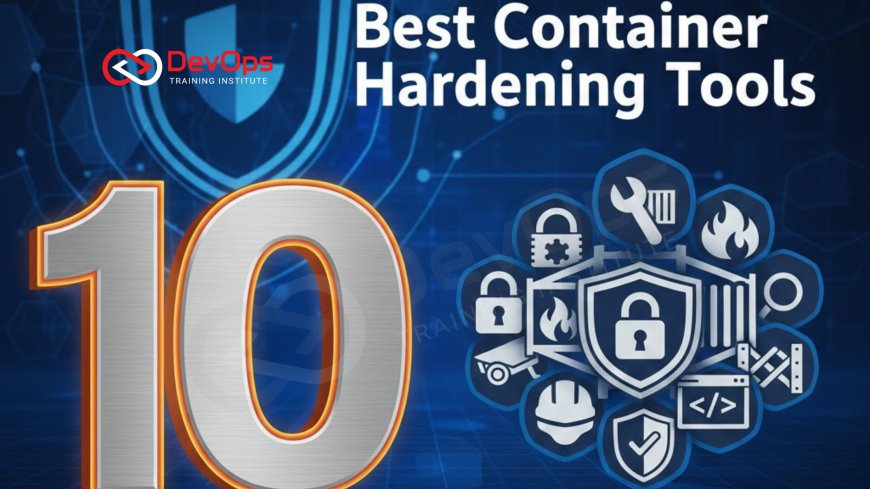
10 Best Container Hardening Tools
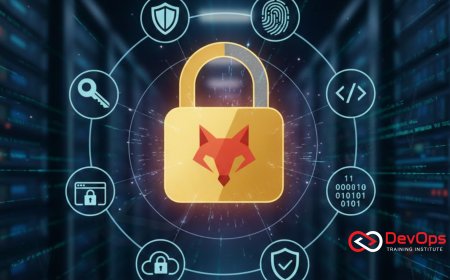
Secure your containerized applications with our expert guide to the 10 best container hardening tools in 2025. This article provides a professional yet beginner-friendly overview of top solutions for image scanning, runtime protection, and configuration auditing. Learn how to strengthen your security posture, automate vulnerability management, and achieve operational excellence in complex cloud-native environments by selecting the right hardening tools for your modern DevOps and SRE teams today.
Introduction to Container Hardening
As we move further into 2025, containers have become the undeniable backbone of modern software architecture. They allow developers to package applications and dependencies into neat, portable units that run consistently across any environment. However, the same flexibility that makes containers popular also introduces unique security risks. Container hardening is the proactive process of securing these environments by reducing their attack surface, patching vulnerabilities, and enforcing strict configuration policies across the entire lifecycle.
For engineering teams, hardening is no longer just a checkbox; it is a vital part of maintaining system reliability and user trust. Without proper hardening, a single vulnerable container can become a gateway for attackers to move laterally across a cluster or access sensitive cloud data. This guide explores the ten best tools available this year to help you automate this critical process. By integrating these solutions into your workflow, you can ensure that your containers are not only fast and scalable but also robust against the ever-evolving landscape of cyber threats.
Why Container Hardening Matters in 2025
The complexity of distributed systems continues to grow, making manual security audits nearly impossible. In 2025, attackers are more sophisticated, using automated scripts to scan for misconfigured Kubernetes clusters or outdated base images. Hardening is essential because it addresses security at multiple levels: the container image, the runtime environment, and the orchestration layer. By applying hardening principles, you ensure that even if one part of the system is compromised, the impact is contained and the risk to the broader organization is minimized.
Moreover, regulatory compliance has become stricter, with standards like SOC 2 and GDPR requiring clear evidence of security controls. Hardening tools provide the necessary auditing and reporting features to prove that your infrastructure meets these high standards. Beyond compliance, a hardened environment significantly reduces "toil" for operations teams by preventing predictable security incidents. This allows your team to focus on innovation and high-value project work, rather than constant firefighting or emergency patching of preventable vulnerabilities in production.
Static Image Scanning and Vulnerability Management
The first step in any hardening strategy is ensuring that the images you build are secure from the start. Static image scanning tools analyze your container layers, looking for known vulnerabilities in OS packages and application dependencies. This process happens long before the container is ever deployed. By identifying a high-severity flaw during the build phase, you can fix it immediately by updating the base image or patching a library, which is much safer and cheaper than dealing with it in a live environment.
Integrating these scanners into your CI/CD pipeline is a cornerstone of a successful DevSecOps strategy. It ensures that security checks are automated and consistent. Professional tools today do more than just list bugs; they provide remediation advice, helping developers choose the most secure base images or identifying specific lines in a Dockerfile that introduce risk. This developer-first approach to hardening makes security a shared responsibility, empowering everyone to contribute to a more resilient software delivery lifecycle.
Runtime Protection and Behavioral Analysis
Hardening does not stop once a container is running. Runtime protection tools monitor the behavior of live containers to detect anomalies that might indicate a breach or unauthorized activity. For example, if a web server container suddenly tries to execute a shell script or access a sensitive system file, the runtime tool can alert the team or even kill the container automatically. This real-time visibility is crucial because it catches "zero-day" threats that static scanners might miss.
Advanced runtime tools leverage eBPF technology to observe system calls with minimal performance overhead. This provides deep observability into container activity without slowing down the application. By building a baseline of "normal" behavior, these tools can identify suspicious patterns instantly. This proactive defense mechanism is a vital layer of hardening, ensuring that your production environment is not just a static target but a dynamic, self-defending ecosystem that can react to threats as they emerge in real time.
Table: Top 10 Container Hardening Tools Comparison
| Tool Name | Primary Focus | Best Feature | Type |
|---|---|---|---|
| Trivy | Vulnerability Scanning | Comprehensive scans for images and IaC. | Open Source |
| Falco | Runtime Security | Real-time behavioral monitoring and alerts. | Open Source |
| Aqua Security | Full Lifecycle Security | Integrated platform for build and runtime. | Enterprise |
| Sysdig Secure | Observability and Security | Deep forensics and Kubernetes visibility. | Enterprise |
| Snyk Container | Developer Security | Smart remediation and base image advice. | SaaS / Enterprise |
| Prisma Cloud | Cloud-Native Security | Multi-cloud governance and policy control. | Enterprise |
| Kube-bench | Configuration Auditing | Automated CIS benchmark checks for K8s. | Open Source |
| Wiz | Risk Prioritization | Agentless scanning with deep graph analysis. | Enterprise |
| Dockle | Image Linting | Detects Dockerfile best practice violations. | Open Source |
| Grype | Fast Vulnerability Scan | Lightweight scanner focused on accuracy. | Open Source |
Configuration Auditing and Compliance
Even a perfectly patched container can be insecure if it is misconfigured. Hardening involves ensuring that containers run with the least privilege necessary. Configuration auditing tools scan your deployment manifests—like Kubernetes YAML files or Helm charts—to find risks such as running containers as root, mount host paths, or overly permissive network policies. These tools compare your setup against industry standards like the CIS Benchmarks to ensure your infrastructure is correctly locked down.
Automating these audits is a key part of GitOps, where the desired state of your environment is always stored in a version control system. By auditing the code before it is applied to the cluster, you prevent configuration drift and maintain a high level of security posture. This systematic approach to hardening ensures that every deployment is consistent and compliant, reducing the chance of human error and making it easier for large organizations to pass security audits without manual, time-consuming effort.
The Role of Platform Engineering in Security
Modern hardening is no longer just the job of a separate security team. Instead, it is increasingly becoming a core responsibility of those working in platform engineering. Their goal is to build a "golden path" for developers—a set of pre-hardened tools and templates that make it easy for software engineers to be secure by default. By providing a platform that includes integrated hardening tools, the engineering team can move faster without sacrificing safety.
A well-designed platform includes automated image scanning, pre-configured network policies, and runtime alerts as a standard service. This reduces the cognitive load on developers, allowing them to focus on writing code while the platform takes care of the complex hardening tasks. This collaborative approach ensures that hardening is built into the foundation of the technology stack, creating a scalable and resilient environment that can support hundreds of microservices with consistent security controls and operational excellence.
Resilience Through Chaos and Hardening
Hardening and resilience go hand in hand. A hardened system is inherently more resilient because it is better protected against failures and attacks. However, to truly know how your system behaves under stress, you must test it proactively. This is where chaos engineering comes into play. By deliberately injecting faults or failures into a hardened environment, you can verify that your security controls and recovery mechanisms work as expected.
- Identify if a killed security agent causes a container to stop or continue running unprotected.
- Test if your runtime alerts trigger correctly when a simulated "attack" script is executed.
- Verify that network policies correctly prevent lateral movement during a localized failure.
- Ensure that automated rollbacks trigger if a new, insecure configuration is accidentally deployed.
By combining hardening tools with chaos experiments, you can move from theoretical security to verified resilience. This gives your team the confidence that the system can handle not just typical traffic but also malicious activity or infrastructure failures. This Disciplined approach to reliability ensures that your applications remain available and secure for users, even in the face of unexpected disruptions, making your overall infrastructure a rock-solid foundation for business growth.
Conclusion
Container hardening is a continuous journey, not a one-time destination. As we have seen, the best tools in 2025 range from lightweight open-source scanners to comprehensive enterprise platforms that cover the entire lifecycle. By implementing static image scanning, you prevent vulnerabilities from entering your pipeline. Through runtime protection, you gain the visibility to react to threats as they happen. Configuration auditing ensures that your environment remains compliant and follows the principle of least privilege. Furthermore, by integrating these tools into a broader platform engineering strategy and testing them with chaos experiments, you build an infrastructure that is both secure and resilient. Each of the ten tools discussed plays a specific role in this ecosystem, allowing you to tailor your hardening strategy to your team's specific needs and scale. Embracing these professional hardening practices is essential for any organization looking to thrive in a cloud-native world. By making security a built-in feature of your delivery process, you protect your company, your data, and your customers, ensuring long-term success in the digital age. The adoption of shift-left testing for security is the ultimate way to achieve this at speed.
Frequently Asked Questions
What is container hardening?
Container hardening is the process of securing container images, runtimes, and orchestration layers to reduce vulnerabilities and attack surfaces effectively.
Which tool is best for open-source container scanning?
Trivy is widely considered the best open-source tool for scanning images, file systems, and infrastructure as code for vulnerabilities today.
How does Falco protect containers at runtime?
Falco uses system call monitoring to detect suspicious container behavior in real-time and alerts teams to potential security breaches or anomalies.
What is the benefit of Snyk Container?
Snyk is a developer-friendly tool that provides automated remediation advice and helps developers choose more secure base images for their builds.
Why is Kube-bench used for Kubernetes?
Kube-bench automatically checks your Kubernetes cluster configuration against the CIS Benchmarks to ensure it follows industry-standard security best practices.
Can I automate hardening in CI/CD?
Yes, most hardening tools offer CLI versions and plugins that allow you to integrate security scans directly into your automated delivery pipelines.
What is a container firewall?
A container firewall is a security layer that monitors and controls network traffic between containers to prevent lateral movement by attackers.
Is hardening required for SOC 2 compliance?
Yes, hardening containers and proving you have vulnerability management and access controls in place is a critical part of achieving SOC 2 certification.
What is the difference between Grype and Trivy?
Grype focuses specifically on fast and accurate vulnerability scanning for images, while Trivy offers broader coverage for IaC and cloud configurations.
How do feature flags help with security?
While not a primary security tool, feature flags allow you to toggle new features off instantly if a security issue is discovered after deployment.
Does container hardening affect performance?
Most modern tools use efficient technologies like eBPF to monitor systems with negligible impact on the performance of the running applications.
What are CIS Benchmarks?
CIS Benchmarks are globally recognized best practices for securing IT systems and data, including specific guidelines for Docker and Kubernetes environments.
What is an SBOM?
A Software Bill of Materials is a comprehensive list of all components and dependencies used in a container image, essential for security auditing.
Can I use these tools with any cloud provider?
Yes, the tools discussed are cloud-agnostic and work across AWS, Azure, Google Cloud, and private data centers that run containerized workloads.
What is "shift-left" security?
Shift-left security moves security testing and hardening to the early stages of development, allowing teams to find and fix issues faster.
What's Your Reaction?
 Like
0
Like
0
 Dislike
0
Dislike
0
 Love
0
Love
0
 Funny
0
Funny
0
 Angry
0
Angry
0
 Sad
0
Sad
0
 Wow
0
Wow
0

![100+ Azure DevOps Interview Questions and Answers [Updated 2025]](https://www.devopstraininginstitute.com/blog/uploads/images/202509/image_140x98_68c40aa9a3834.jpg)





![Future Scope of DevOps Careers in Pune [Updated 2025]](https://www.devopstraininginstitute.com/blog/uploads/images/202510/image_140x98_68e3a84652312.jpg)