


![Kong Interview Preparation Guide [2025]](https://www.devopstraininginstitute.com/blog/uploads/images/202509/image_430x256_68dbb95326997.jpg)



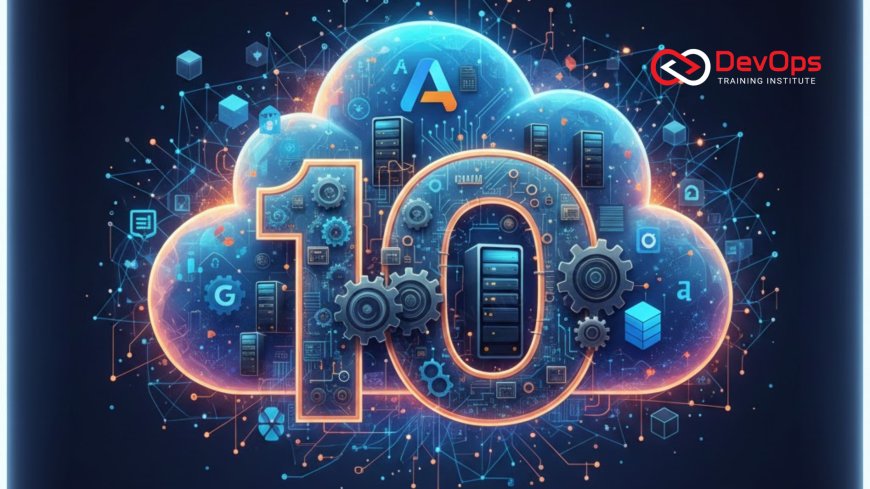
10 Cloud DevOps Design Patterns for Scalability
Discover how the world's most successful technical organizations are reshaping software delivery with ten groundbreaking cloud DevOps innovations inspired by Big Tech. This comprehensive guide explores advanced concepts like chaos engineering, internal developer platforms, and AI-driven autonomous pipelines that were pioneered by giants like Netflix, Amazon, and Google. Learn how to adopt these high-scale strategies to improve your team's agility, enhance system resilience, and reduce operational complexity in twenty twenty six. Whether you are a startup or an enterprise, these proven methodologies will help you transform your technical culture and stay ahead of the curve in the rapidly evolving digital landscape today.
Introduction to Big Tech Inspired Innovations
The modern DevOps movement owes much of its rapid evolution to the engineering challenges faced by Big Tech companies. As organizations like Amazon, Netflix, and Google scaled to millions of users, they encountered unique obstacles that traditional software development methods could not solve. To overcome these hurdles, they invented new ways of managing infrastructure and shipping code that have now become industry standards. These innovations are not just for giant corporations; they provide a blueprint for any team looking to achieve massive scalability and high availability in a cloud native world.
Today, we see a widespread adoption of these high scale practices across every sector of the economy. By studying how tech giants automate their workflows and handle failures, smaller engineering teams can avoid common pitfalls and build more resilient systems. These innovations often start as internal tools—like Netflix's Chaos Monkey or Google's Kubernetes—before being open sourced to the global community. In this post, we will dive into ten of the most impactful cloud architecture patterns that were born in the heart of Big Tech and are now powering the next generation of modern DevOps teams.
Chaos Engineering and the Simian Army
Netflix revolutionized the concept of system resilience with the introduction of chaos engineering. Instead of waiting for a hardware failure or a network glitch to happen in production, they created a suite of tools known as the Simian Army to intentionally inject failures into their environment. This forced their engineers to design services that were naturally fault tolerant and could recover automatically without human intervention. By "breaking things on purpose," Netflix ensured that their streaming service remained available even when the underlying cloud architecture patterns faced localized outages or regional issues.
Adopting chaos engineering requires a major cultural change within an organization, moving from a fear of failure to a proactive search for weaknesses. Modern DevOps teams now use chaos experiments to test their incident handling procedures and verify that their automated alerts are functioning correctly. This practice helps identify "hidden dependencies" that only appear during a crisis, allowing teams to fix them during normal working hours. It is the ultimate test of a system's robustness and has become an essential skill for senior site reliability engineers who manage complex, distributed microservices at a global scale.
The Rise of Platform Engineering and Golden Paths
As Big Tech companies grew to thousands of developers, they realized that asking every engineer to be a Kubernetes expert was inefficient. To solve this, they pioneered platform engineering—the practice of building Internal Developer Platforms (IDPs) that provide a "paved road" or "golden path" for software delivery. These platforms abstract away the complexity of the underlying infrastructure, allowing developers to provision environments and deploy code with just a few clicks. This innovation focuses on improving the developer experience and reducing the cognitive load on product teams, which is vital for maintaining continuous synchronization at scale.
Platform engineering turns infrastructure into a product that is managed by a dedicated platform team. This team provides reusable templates and standardized tooling that follow the organization's security and compliance best practices. By utilizing who drives cultural change strategies, companies can ensure that their technical standards are met without slowing down the pace of innovation. In twenty twenty six, IDPs are becoming a cornerstone for any enterprise that wants to scale its engineering output while keeping its operational noise to a minimum and its deployment quality consistently high.
Site Reliability Engineering (SRE) and Error Budgets
Google is widely credited with defining the modern role of Site Reliability Engineering. One of their most impactful contributions to the DevOps world is the concept of the "Error Budget." Instead of aiming for 100 percent uptime—which is practically impossible and prohibitively expensive—SRE teams define Service Level Objectives (SLOs) that allow for a small amount of failure. This budget creates a formal agreement between developers and operations: as long as the budget is healthy, teams can continue to release new features rapidly. If the budget is exhausted, the focus shifts entirely to stability and reliability improvements.
This data driven approach to reliability removes the tension between shipping fast and staying stable. It encourages engineers to automate their incident handling tasks and focus on reducing "toil"—the repetitive, manual work that does not add long term value to the system. By using AI augmented devops tools to monitor these budgets in real time, organizations can make objective decisions about when to slow down and when to accelerate. SRE practices have transformed how we think about system health, moving away from simple monitoring toward a more holistic and proactive management of the entire software lifecycle in the cloud.
Big Tech DevOps Innovations Comparison
| Innovation | Pioneer Company | Primary Goal | Core Technology |
|---|---|---|---|
| Chaos Engineering | Netflix | Resilience Testing | Simian Army / Chaos Mesh |
| SRE Practices | Reliability Scaling | SLIs / SLOs / Error Budgets | |
| Continuous Deployment | Amazon | Rapid Innovation | AWS CodePipeline |
| Container Orchestration | Workload Automation | Kubernetes (Borg) | |
| Microservices | Amazon / Netflix | Decoupled Growth | REST APIs / gRPC |
GitOps and Declarative Infrastructure Management
GitOps is a relatively new paradigm that was inspired by the need for more consistent and auditable infrastructure management in Big Tech clusters. It uses Git as the "single source of truth" for both application code and infrastructure definitions. When a developer wants to change the state of a cluster, they simply push a commit to a Git repository. An automated controller then detects the change and synchronizes the live environment to match the state defined in Git. This innovation ensures that your cluster states are always versioned, reproducible, and easy to roll back if an error occurs.
By adopting how does gitops maintain continuous synchronization, teams can achieve a higher level of security and compliance. Since all changes must pass through a pull request and peer review process, unauthorized or accidental changes are much less likely to reach production. This declarative approach also makes it easier to manage cluster states across multiple cloud regions or hybrid environments. GitOps is quickly becoming the standard for managing containerd based workloads in Kubernetes, providing a robust and transparent way to handle the complexity of modern cloud infrastructure at scale.
AIOps: Predictive Analytics for Incident Management
As systems become more complex, the volume of logs and metrics can be overwhelming for human engineers to process during a crisis. Big Tech companies are increasingly turning to Artificial Intelligence for IT Operations (AIOps) to help manage this data deluge. AIOps uses machine learning to analyze historical patterns, detect anomalies in real time, and even predict potential failures before they impact the user. This innovation allows DevOps teams to move from a reactive stance to a proactive one, identifying root causes in seconds rather than hours of manual log searching.
In twenty twenty six, what are the emerging trends in ai augmented devops toolchains is a major area of investment for forward thinking enterprises. These tools can automatically tune scaling policies, optimize cloud spending, and even suggest fixes for common code errors. By integrating AIOps into their release strategies, companies can achieve a level of operational efficiency that was previously only possible for tech giants with massive engineering departments. This democratization of AI in the DevOps world is leveling the playing field, allowing smaller teams to maintain high availability systems with much less manual effort and higher precision.
Best Practices for Adopting High-Scale Innovations
- Start Small with Chaos: Don't try to break your entire production environment on day one; start with small, controlled experiments in a staging area to build confidence.
- Standardize with Golden Paths: Use where do kubernetes admission controllers enforce security policies to automate the enforcement of technical standards across your internal platform.
- Embrace the Error Budget: Shift your focus from total uptime to a sustainable balance of speed and stability through clearly defined SLOs and error budgets.
- Shift Left on Security: Integrate how do secret scanning tools prevent credential leakage into your CI CD pipelines to catch security issues as early as possible.
- Decouple with Microservices: Use release strategies that allow individual services to be updated and scaled independently to avoid the "monolith bottleneck."
- Automate Everything: If a task is performed more than once, it should be scripted or automated through an IDP to reduce toil and human error.
- Invest in Continuous Verification: Utilize what is the role of continuous verification to ensure that every change to your system actually delivers the intended value and performance.
Following these best practices will help you successfully navigate the complex transition to high scale DevOps operations. It is important to remember that these innovations are as much about people and culture as they are about tools and technology. Successful release strategies require a shared vision and a commitment to continuous learning across the entire organization. By taking a thoughtful and incremental approach to adopting Big Tech inspired designs, you can build a technical foundation that is both flexible enough to handle today's challenges and robust enough to support tomorrow's growth in an increasingly competitive market.
Conclusion: The Future of Cloud DevOps
In conclusion, the innovations born in Big Tech have provided a powerful set of tools and methodologies that are now accessible to every engineering team. From the resilience of chaos engineering to the efficiency of platform engineering and the intelligence of AIOps, these strategies are fundamentally changing how we build and operate software in the cloud. By adopting these high scale practices, you can improve your team's productivity, enhance your system's reliability, and ultimately deliver more value to your users. The journey toward a more automated and resilient future is a continuous one, requiring a deep commitment to innovation and engineering excellence.
As we look toward the future, the integration of AI augmented devops and continuous verification will remain the primary drivers of technical growth. Embracing why are chatops techniques gaining traction will further enhance collaboration and transparency across your teams. By staying curious and open to new ideas, you can ensure that your organization remains competitive in a world where technical agility is the ultimate business advantage. Start by identifying the Big Tech innovation that addresses your biggest current bottleneck and take the first step toward a more scalable and successful cloud DevOps journey today.
Frequently Asked Questions
What is Chaos Engineering and why did Netflix invent it?
Chaos Engineering is the practice of intentionally inducing failures to test system resilience, invented by Netflix to ensure high availability in the cloud.
How does an Error Budget improve the development process?
It provides a quantitative way to balance the need for fast innovation with the requirement for system stability and user reliability.
What is Platform Engineering compared to traditional DevOps?
Platform Engineering focuses on building internal tools and "golden paths" to improve developer self-service and reduce cognitive load during software delivery.
Why is GitOps becoming popular for Kubernetes management?
GitOps provides a versioned, auditable, and automated way to manage cluster states by using Git as the single source of truth for configuration.
What role does AI play in modern DevOps (AIOps)?
AI helps by analyzing massive amounts of data to detect anomalies, predict failures, and automate the resolution of common technical incidents in real time.
Can small companies benefit from Big Tech DevOps innovations?
Yes, these practices are designed for scalability and resilience, which are critical for any company looking to grow and stay reliable in the cloud.
What are Service Level Objectives (SLOs) in SRE?
SLOs are specific, measurable goals for the performance and availability of a service that help teams manage their reliability and error budgets.
What is a "Golden Path" in software engineering?
A Golden Path is a standardized, supported way to build and deploy applications that simplifies the process for developers and ensures organizational compliance.
How do microservices support high-scale innovation?
By breaking a monolith into smaller pieces, teams can develop, test, and deploy features faster without impacting the rest of the entire application.
What is Toil in the context of SRE?
Toil is manual, repetitive, and automatable work that does not have long-term value and should be eliminated to improve engineering efficiency and focus.
Does DevOps require a complete cultural change?
Yes, successful DevOps adoption relies on a culture of shared responsibility, transparency, and continuous learning between the development and operations teams.
What is the benefit of "shifting left" on security?
It identifies and fixes security vulnerabilities earlier in the development lifecycle, which is much cheaper and safer than fixing them in production.
What is an Internal Developer Platform (IDP)?
An IDP is a set of tools and services that allow developers to self-manage their infrastructure needs within the organization's approved security standards.
How does continuous verification differ from traditional testing?
Continuous verification monitors the system in real time after deployment to ensure it continues to behave as expected under actual production traffic.
What is the first step to adopting Big Tech DevOps?
Identify your biggest operational bottleneck and look for a proven Big Tech pattern, such as SRE or GitOps, that can automate its resolution.
What's Your Reaction?
 Like
0
Like
0
 Dislike
0
Dislike
0
 Love
0
Love
0
 Funny
0
Funny
0
 Angry
0
Angry
0
 Sad
0
Sad
0
 Wow
0
Wow
0


![100+ Azure DevOps Interview Questions and Answers [Updated 2025]](https://www.devopstraininginstitute.com/blog/uploads/images/202509/image_140x98_68c40aa9a3834.jpg)






![Future Scope of DevOps Careers in Pune [Updated 2025]](https://www.devopstraininginstitute.com/blog/uploads/images/202510/image_140x98_68e3a84652312.jpg)