



![Kong Interview Preparation Guide [2025]](https://www.devopstraininginstitute.com/blog/uploads/images/202509/image_430x256_68dbb95326997.jpg)


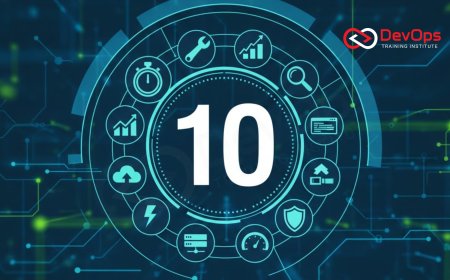
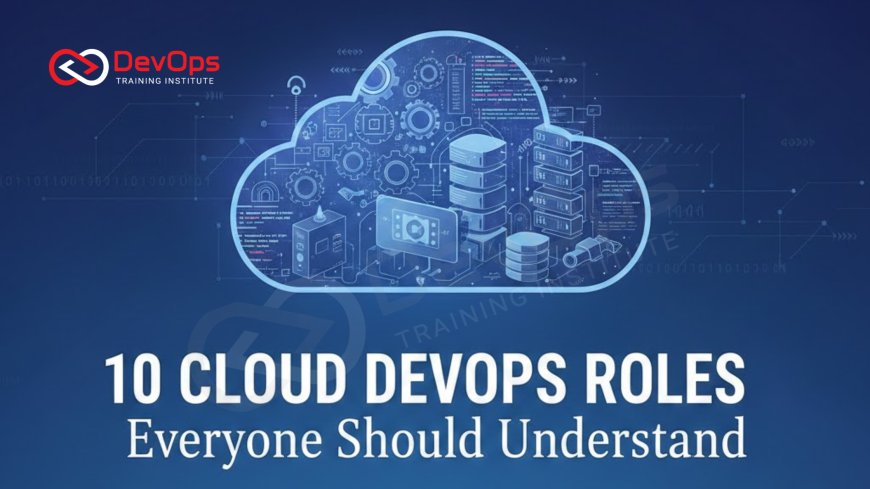
10 Cloud DevOps Roles Everyone Should Understand
Discover the essential professional landscape of modern technology with our detailed guide to ten cloud DevOps roles everyone should understand. This comprehensive article explores the unique responsibilities, required skills, and collaborative efforts of experts like Site Reliability Engineers, Security Architects, and Release Managers. Learn how these specialized positions work together to build resilient infrastructure, optimize cloud costs, and accelerate software delivery in today’s complex digital ecosystem while fostering a culture of continuous improvement and operational excellence for your organization.
Introduction to the Modern DevOps Ecosystem
The rapid shift toward cloud native technologies has fundamentally changed how organizations build and deliver software. Gone are the days when a single administrator could manage an entire data center. Today, the complexity of distributed systems and the need for constant updates have given birth to a diverse range of specialized roles. These positions collectively form the backbone of the DevOps movement, which focuses on breaking down the traditional silos between development and operations teams to achieve faster and more reliable releases.
Understanding these roles is vital for anyone working in technology, from business leaders to aspiring engineers. Each role brings a specific set of skills and perspectives that are necessary to maintain the health of a digital product. As we explore these ten essential cloud DevOps positions, you will see how they interact to create a seamless delivery pipeline. This introduction serves as a starting point for recognizing the human element behind the automation and the strategic importance of having a well structured team in the competitive landscape of modern software engineering.
The Visionary Cloud Architect
At the top of the strategic pyramid is the Cloud Architect. This person is responsible for designing the high level structure of the entire cloud environment. They make critical decisions about which cloud providers to use, how the network should be laid out, and which managed services will provide the best balance of performance and cost. A Cloud Architect must possess a deep understanding of the business goals and translate them into a technical blueprint that is scalable, secure, and resilient against potential failures.
This role requires a unique blend of technical mastery and communication skills. They often work closely with stakeholders to ensure that the chosen architecture supports the long term roadmap of the company. In 2025, a modern architect also focuses heavily on ensuring that the design supports infrastructure automation so that the environment can be recreated or scaled with minimal manual effort. Their work provides the foundation upon which all other DevOps professionals build their specific components, making them the primary designers of the digital workspace.
The Site Reliability Engineer (SRE)
The Site Reliability Engineer is perhaps the most famous role in the modern operations world. Originally defined by Google, this position treats operations as an engineering problem. SREs are tasked with ensuring that applications are available and performant at all times. They use software engineering principles to manage infrastructure, meaning they write code to automate the recovery of services and to monitor system health. Their goal is to find the perfect balance between the speed of releasing new features and the stability of the live application.
A key part of their day involves analyzing system behavior to identify potential bottlenecks. Many SREs utilize chaos engineering experiments to proactively test how their systems handle unexpected failures. By deliberately breaking parts of the system in a controlled environment, they can verify that their automated recovery scripts work correctly. This proactive approach to reliability helps organizations maintain high uptime even during traffic spikes or hardware outages, ensuring a consistent and positive experience for every user who interacts with the service.
The Security Architect and DevSecOps Specialist
Security is no longer a separate phase that happens at the end of a project. The Security Architect, often working within a DevSecOps framework, ensures that security is integrated into every step of the development cycle. They design the systems that automatically scan code for vulnerabilities, manage identity and access controls, and protect data both in transit and at rest. Their mission is to build a "secure by design" environment where developers can move quickly without accidentally creating security holes.
This role is critical for maintaining trust with customers and meeting strict regulatory requirements. They implement tools that provide real time feedback to developers about the safety of their code. By understanding how security integrates into the pipeline, these professionals prevent data breaches and reduce the cost of fixing vulnerabilities. They act as the guardians of the digital perimeter, constantly evolving their strategies to counter new and sophisticated cyber threats while enabling the rest of the team to innovate with confidence.
Table: Core Cloud DevOps Roles and Responsibilities
| Job Title | Primary Focus | Essential Skills | Key Outcome |
|---|---|---|---|
| Cloud Architect | Infrastructure Design | Networking, Strategy, Cloud Providers | Scalable and cost-effective cloud blueprint. |
| SRE | System Reliability | Coding, Monitoring, Incident Response | High availability and self-healing systems. |
| Platform Engineer | Developer Experience | Kubernetes, CI/CD, Tooling | Internal self-service platform for devs. |
| Release Manager | Deployment Coordination | Project Management, Risk Assessment | Smooth and predictable software rollouts. |
| FinOps Analyst | Cloud Cost Management | Data Analysis, Finance, Cloud Billing | Optimized cloud spend and budget adherence. |
The Platform Engineer and the Internal Developer Portal
Platform Engineers are the people who build the "home" for developers. Their primary goal is to reduce the cognitive load on software engineers by providing them with a self service platform. Instead of a developer needing to know the deep technical details of how a Kubernetes cluster works, the Platform Engineer builds tools that allow the developer to deploy their application with a single click. This role is essential for organizations that want to scale their engineering department without sacrificing speed or quality.
By defining the "golden path" for software delivery, they ensure that every team follows the same standards for logging, monitoring, and security. Understanding the role of platform engineering helps teams move away from manual ticket systems. They create an environment where the infrastructure is invisible, allowing developers to focus entirely on writing business logic. This internal focus on the developer experience leads to higher productivity, fewer configuration errors, and a more resilient overall architecture for the entire company.
The Automation Engineer and CI/CD Specialist
Automation Engineers are the specialists who build the "assembly line" of software development. They focus on creating and maintaining the Continuous Integration and Continuous Deployment (CI/CD) pipelines. These pipelines are automated sequences of steps that build, test, and deploy the code every time a developer makes a change. By automating these repetitive tasks, they ensure that the software is always in a releasable state and that any bugs are caught early in the process before they reach production.
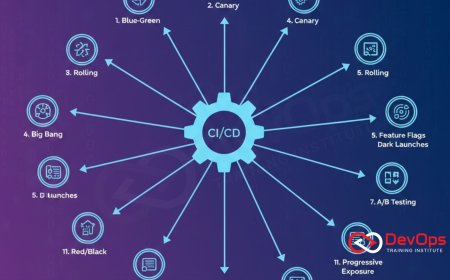
These specialists often implement advanced strategies to reduce the risk of new releases. For example, they might set up a canary release where a small portion of traffic is sent to the new version of the code to see how it performs. If the metrics look good, the automation then rolls out the update to everyone else. This level of precision is only possible through high quality automation scripts that handle the complex logic of shifting traffic and monitoring health signals during the critical deployment window, making the whole process much safer.
The FinOps Analyst and Cloud Economist
Cloud infrastructure is incredibly powerful, but it can also be incredibly expensive if not managed correctly. The FinOps Analyst is a relatively new role that focuses on the financial health of the cloud environment. They analyze billing data to find wasteful resources, identify opportunities for cost savings, and work with engineering teams to set realistic budgets. Their goal is to ensure that the organization gets the most value out of every dollar spent on cloud resources, bridging the gap between engineering and finance.
This role uses specialized tools to provide real time visibility into spending patterns. By understanding how FinOps helps optimize spending, organizations can scale their operations sustainably. They encourage a culture of financial accountability where engineers are aware of the cost of their architectural choices. This data driven approach to cloud economics prevents the "sticker shock" of a massive monthly bill and ensures that the technical growth of the company is matched by a responsible and predictable financial strategy that supports long term business health.
The Quality Assurance (QA) and Performance Specialist
In a cloud DevOps world, Quality Assurance has shifted away from manual bug hunting toward automated verification. Performance specialists and QA engineers design the test suites that run automatically within the pipeline. They focus on functional correctness, but also on how the system behaves under heavy load. Their work ensures that a new feature doesn't just work, but that it works fast and doesn't crash the system when thousands of users try to use it at the same time.
- Automated Testing: Writing scripts that verify code logic during every build cycle.
- Performance Benchmarking: Ensuring that response times stay within acceptable limits under stress.
- Shift-Left Strategies: Moving testing earlier in the process to catch bugs when they are cheapest to fix.
- Chaos Testing Support: Helping SREs design experiments that verify the resilience of the application logic.
Many organizations now embrace shift left testing as a core principle. This means that testing starts as soon as the first line of code is written, rather than waiting for a completed product. By catching performance issues and logic errors early, these specialists prevent "technical debt" from building up. Their work provides the data needed to make informed "go or no-go" decisions during a release, ensuring that only the highest quality software ever makes it into the hands of the end users.
The Observability and Monitoring Engineer
While SREs use monitoring data, some organizations have dedicated specialists who build and maintain the observability stack. These engineers ensure that the system is emitting the right "signals" so that any issue can be diagnosed quickly. They manage complex logging platforms, metrics databases, and distributed tracing tools. Their goal is to provide a clear and real time view of the system's internal state, allowing the team to answer the question: "Why is this happening?" instead of just "What is happening?"
There is an important distinction to make between observability versus monitoring that these specialists handle. Monitoring is about knowing when a threshold is crossed, while observability is about having enough context to debug a problem that has never happened before. By providing deep visibility into every microservice and database query, they reduce the "mean time to recovery" during an incident. Their work turns the "black box" of a complex cloud application into a transparent system that can be optimized and secured with surgical precision.
The Release Manager and Deployment Coordinator
Even in a highly automated world, the timing and risk of a release often require human oversight. The Release Manager coordinates between the business side and the technical side to ensure that updates are deployed smoothly. They look at the "big picture" of all the changes happening across different teams to prevent conflicts. For example, they might stop a major update from happening during a holiday sales peak or a critical business event to minimize the risk of a disruption.
They often utilize sophisticated tools to manage the user experience during a rollout. By using feature flags, they can turn a new feature on for internal testers first, then for five percent of users, and finally for everyone. This gradual release provides a safety net that protects the brand's reputation. The Release Manager acts as the final gatekeeper, ensuring that every deployment is not just technically successful, but also aligned with the broader operational goals and risk tolerance of the organization as a whole.
Conclusion
The transition to a cloud DevOps model is as much about people and roles as it is about tools and technology. We have explored ten distinct roles that range from high level architects to granular cost analysts, each playing a critical part in the software delivery lifecycle. While a smaller company might have one person wearing multiple hats, larger enterprises benefit from the specialized expertise that these distinct positions provide. By understanding how these roles interact, from the SRE's focus on reliability to the FinOps analyst's focus on spending, you can better appreciate the complex orchestration required to run a modern digital business. As technology continues to evolve, we will likely see even more specialized roles emerge, such as AI operations experts or edge computing specialists. However, the core principles of collaboration, automation, and continuous improvement will remain the guiding stars for every member of the DevOps team. Embracing this professional diversity allows organizations to build more resilient, secure, and cost effective systems that can adapt to any challenge the digital world throws their way.
Frequently Asked Questions
What is a Cloud Architect?
A Cloud Architect designs the high level cloud infrastructure strategy and blueprints for an organization's digital environment.
What does an SRE do on a daily basis?
An SRE writes code to automate operations, monitors system health, and responds to incidents to maintain high service reliability.
How does Platform Engineering help developers?
Platform Engineering provides internal self-service tools that allow developers to deploy and manage applications without needing deep infrastructure knowledge.
What is the role of a FinOps Analyst?
A FinOps Analyst manages and optimizes cloud spending by analyzing billing data and identifying cost saving opportunities for engineering teams.
Why is Security Architect important in DevOps?
They ensure security checks are automated and integrated into every stage of the pipeline to prevent vulnerabilities from reaching production.
What is a CI/CD Specialist?
They build and maintain the automated pipelines that compile, test, and deploy software code continuously and reliably.
What is the difference between Monitoring and Observability?
Monitoring tracks known failure thresholds while observability provides the deep data context needed to debug unknown and complex system issues.
How does a Release Manager reduce deployment risk?
They coordinate the timing of releases and use gradual rollout strategies like feature flags to minimize the impact of failures.
What is Chaos Engineering?
It is the practice of deliberately injecting failures into a system to test and improve its automated recovery and resilience mechanisms.
How do feature flags work in deployments?
They allow code to be deployed but hidden, enabling teams to turn features on or off for specific users without a full redeploy.
What is a canary release?
A canary release involves rolling out a new update to a small group of users first to verify stability before a full rollout.
What is Shift-Left Testing?
It is the practice of moving testing to the earliest stages of the development cycle to catch bugs faster and cheaper.
Do I need all ten roles for a small team?
No, small teams often combine these roles, but as an organization grows, specialized roles become necessary to handle the increased complexity.
What skills are needed for a Cloud Architect?
They need deep knowledge of cloud platforms, networking, security, and the ability to align technical designs with business strategy.
Is coding required for all DevOps roles?
While coding is essential for SREs and Automation Engineers, roles like Release Manager or FinOps Analyst focus more on strategy and data.
What's Your Reaction?
 Like
0
Like
0
 Dislike
0
Dislike
0
 Love
0
Love
0
 Funny
0
Funny
0
 Angry
0
Angry
0
 Sad
0
Sad
0
 Wow
0
Wow
0


![100+ Azure DevOps Interview Questions and Answers [Updated 2025]](https://www.devopstraininginstitute.com/blog/uploads/images/202509/image_140x98_68c40aa9a3834.jpg)





![Future Scope of DevOps Careers in Pune [Updated 2025]](https://www.devopstraininginstitute.com/blog/uploads/images/202510/image_140x98_68e3a84652312.jpg)