







![Kong Interview Preparation Guide [2025]](https://www.devopstraininginstitute.com/blog/uploads/images/202509/image_430x256_68dbb95326997.jpg)






12 Best Practices for Cloud Native Security
In twenty twenty six, securing your cloud infrastructure requires a sophisticated blend of proactive automation and deep architectural resilience. This professional guide outlines the twelve most critical best practices for cloud native security, ranging from zero trust identity management and shift left methodologies to advanced container hardening and continuous verification. Learn how to navigate the complex threat landscape of the future by implementing robust security protocols that protect your data, applications, and microservices across hybrid and multi cloud environments. Stay ahead of evolving cyber threats and ensure your organization remains compliant and resilient by mastering these essential strategies designed for the modern, high speed engineering landscape of today.
Introduction to the Cloud Native Security Paradigm
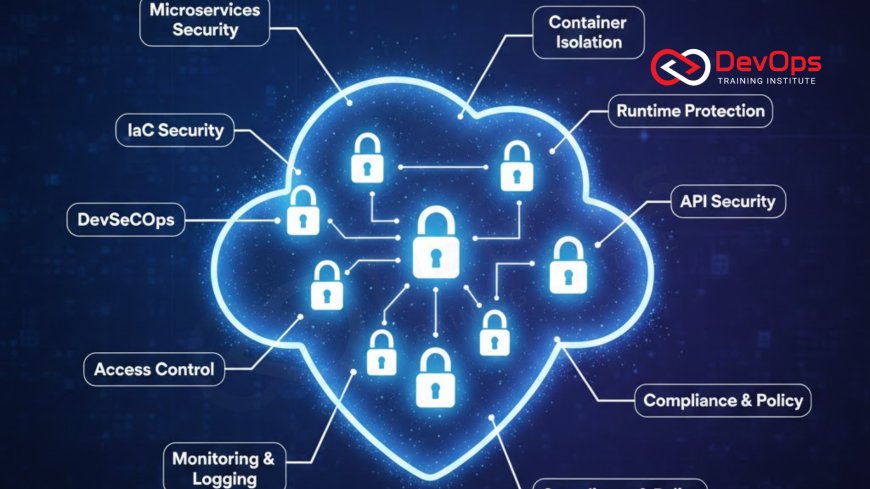
The transition to cloud native architectures has fundamentally altered the security landscape, moving away from static perimeters toward dynamic and highly distributed environments. In twenty twenty six, security is no longer a localized function but an integrated component of the entire software lifecycle. This evolution is driven by the need for speed and scalability, where manual security interventions are replaced by automated guardrails. Understanding the cloud native security paradigm means recognizing that every container, API, and microservice is a potential entry point that requires its own layer of protection and verification.
Modern engineering teams must embrace a "security first" mindset that starts at the initial design phase. This involves moving beyond traditional firewalls and adopting a holistic strategy that covers the four Cs of cloud native security: Cloud, Clusters, Containers, and Code. By addressing security at each of these layers, organizations can build a resilient infrastructure that can withstand sophisticated attacks while maintaining the agility needed to innovate. This guide explores the twelve essential practices that will define success in the coming years, ensuring your technical foundation is as secure as it is scalable.
Implementing the Zero Trust Identity Model
At the heart of modern cloud native security is the Zero Trust model, which operates under the principle of "never trust, always verify." In twenty twenty six, identity has become the new perimeter. Every user, device, and service account must be explicitly authenticated and authorized before gaining access to any resource, regardless of whether the request originates from inside or outside the network. This eliminates the risk of lateral movement by attackers who might have compromised a single low priority account. It is a critical component of continuous synchronization between security policy and operational reality.
Implementing Zero Trust requires a robust identity and access management system that supports multi factor authentication and fine grained permissions. Organizations should adopt Just in Time and Just Enough Access protocols to ensure that accounts only hold the privileges they need for the duration of a specific task. By using identity based micro-segmentation, you can isolate sensitive workloads and prevent a single breach from cascading into a major system wide failure. This approach ensures that your cultural change toward cloud native adoption is grounded in a foundation of absolute trust verification and accountability.
Advancing with Shift Left Security Methodologies
Shift left security is the practice of integrating security testing and validation into the earliest stages of the development process. Instead of waiting until the final deployment phase to look for vulnerabilities, teams use automated tools to scan source code, dependencies, and infrastructure as code templates during every commit. This proactive approach allows developers to fix security issues when they are easiest and cheapest to resolve, significantly reducing the security debt of the organization. It is an essential strategy for maintaining a high velocity release strategies without compromising on safety.
By using Static Application Security Testing and Software Composition Analysis tools, you can identify risky coding patterns and unpatched libraries before they ever reach a production environment. Shifting left also involves empowering developers with the knowledge and tools they need to make secure decisions independently. This reduces the burden on centralized security teams and fosters a shared responsibility model across the entire engineering department. When security becomes a natural part of the "inner loop" of development, the resulting software is inherently more stable and resistant to the ever evolving threat landscape of twenty twenty six.
Hardening Container and Kubernetes Environments
As the dominant platforms for container orchestration, Kubernetes and its underlying runtimes must be secured with extreme precision. Hardening your container environment involves using minimal and trusted base images to reduce the available attack surface. You should avoid running containers as root whenever possible and use security profiles like AppArmor or seccomp to restrict what a container can do on the host system. This level of isolation is vital for preventing "container escape" attacks that could compromise the entire underlying containerd instance or the host operating system.
Within the Kubernetes cluster, you should utilize admission controllers to enforce strict security policies on all incoming workloads. These controllers can block any container that doesn't meet your organization's compliance standards, such as those missing resource limits or proper security labels. Furthermore, implementing network policies to restrict communication between pods ensures that only authorized services can talk to each other. This micro-segmentation at the cluster level is a powerful defense against internal threats and misconfigurations that often lead to data exposure in large, complex distributed systems.
Comparison of Cloud Native Security Tools
| Tool Category | Primary Function | Key Benefit | Target Layer |
|---|---|---|---|
| CSPM | Configuration Scanning | Prevents cloud drift | Cloud Infrastructure |
| CWPP | Workload Protection | Secures containers/VMs | Runtime Environment |
| SCA | Dependency Analysis | Identifies vulnerable libs | Application Code |
| SAST | Static Code Analysis | Finds insecure code | Development Pipeline |
| DLP | Data Loss Prevention | Protects sensitive data | Data Storage/Transit |
Securing the Software Supply Chain
The software supply chain has emerged as a high value target for attackers, who seek to inject malicious code into trusted packages and registries. Securing this chain requires a rigorous process of image signing and verification to ensure that every container you deploy is exactly what your developers intended it to be. Using tools like Sigstore or Notary allows you to cryptographically sign your images at the build stage and verify those signatures before deployment. This prevents tampered or unauthorized images from ever entering your production environment, providing a strong defense against incident handling scenarios involving supply chain compromise.
In addition to image signing, you should maintain a Software Bill of Materials (SBOM) for every application you build. An SBOM is a comprehensive inventory of all the components and dependencies used in your software, which is invaluable for quickly identifying the impact of a newly discovered vulnerability. By integrating secret scanning tools into your supply chain, you can also ensure that no credentials or API keys are accidentally leaked through your container images or public repositories. This multi layered approach to supply chain security is a fundamental requirement for any organization that prioritizes technical integrity and user trust.
Continuous Observability and Runtime Protection
Even with the best preventive controls, some threats will only manifest during runtime. Continuous observability and runtime protection are essential for detecting and mitigating these active attacks in real time. Tools like Falco or Sysdig monitor container activity for suspicious behavior, such as unusual file system access, unexpected network connections, or unauthorized process execution. By integrating these alerts into your ChatOps techniques, your on call engineers can receive immediate notifications through their primary communication channels, allowing for rapid response and containment of potential breaches.
Runtime protection extends beyond simple monitoring to include automated enforcement of security policies. If a container begins to exhibit malicious behavior, these tools can automatically isolate the workload or terminate the compromised pod to prevent further damage. This "assume breach" mentality is a core part of modern architecture patterns, where you focus as much on detection and response as you do on prevention. By maintaining high visibility into your running workloads, you can gain the insights needed to continuously refine your security posture and stay one step ahead of the adversaries who target cloud native infrastructure.
Top 10 Practices for Cloud Native Security
- Encrypt Everything: Always use strong encryption for data at rest and in transit using TLS 1.3 and AES 256 standards.
- Automate Compliance: Use automated tools to continuously monitor your environment against industry standards like SOC 2, HIPAA, or GDPR.
- Minimize Privileges: Follow the principle of least privilege for every user, service, and container in your technical ecosystem.
- Secure the API: Implement robust authentication, rate limiting, and vulnerability scanning for all your internal and external facing APIs.
- Rotate Secrets Regularly: Use a centralized secrets manager to automatically rotate credentials and API keys to minimize the impact of any single leak.
- Conduct Regular Drills: Perform frequent incident response tabletop exercises to ensure your team is ready to act during a real world crisis.
- Leverage Threat Intelligence: Integrate real time threat feeds into your monitoring systems to proactively identify and block known malicious actors.
- Implement Infrastructure as Code Scanning: Use GitOps to version and scan your infrastructure templates for security misconfigurations before they are applied.
- Utilize Admission Controllers: Enforce cluster level security policies using admission controllers to keep insecure or non compliant workloads out of production.
- Enable Continuous Verification: Use continuous verification to ensure that your security controls are always functioning as expected and meeting your performance targets.
Achieving excellence in cloud native security requires a balanced approach that combines technical tools with organizational discipline. It is important to remember that security is an ongoing journey rather than a one time destination. As your infrastructure evolves and new threats emerge, you must be prepared to adjust your strategies and adopt new technologies. By staying focused on automation, visibility, and the principle of least privilege, you can build a cloud native environment that is both highly productive and deeply secure. This balance is the hallmark of any successful modern engineering organization that aims to lead the way in twenty twenty six and beyond.
Conclusion on Future-Proof Cloud Security
In conclusion, the twelve best practices for cloud native security provide a comprehensive roadmap for protecting your organization in the digital age. From the foundation of Zero Trust and shift left methodologies to the active defense of runtime protection and supply chain security, these strategies address the unique challenges of modern distributed systems. By automating your security workflows and fostering a culture of shared responsibility, you can reduce the risk of downtime and data breaches while accelerating your software delivery. The future of the cloud is inherently collaborative, and by prioritizing security today, you are ensuring the long term success and resilience of your technical investments.
Looking ahead, the role of AI augmented devops will likely transform how we detect and respond to security incidents. Integrating AI augmented devops trends into your security strategy will help you manage the massive scale and complexity of twenty twenty six infrastructure. By embracing these twelve practices, you are building a platform that can not only handle the demands of today but is also ready for the challenges of tomorrow. The ability to maintain high security standards without slowing down development is the ultimate goal, and with these tools and principles, you are well on your way to achieving it. Start small, focus on the fundamentals, and build your way toward a more secure cloud native future.
Frequently Asked Questions
What is the primary goal of cloud native security?
The primary goal is to provide deep protection for distributed, ephemeral, and dynamic workloads through automated and integrated security controls.
Why is identity considered the new perimeter in the cloud?
Because resources are distributed and can be accessed from anywhere, verifying the identity of the user or service is the most effective way to control access.
How does shift left security benefit developers?
It provides early feedback on security issues, allowing developers to fix them during coding when they are easiest to resolve and understand.
What is an SBOM and why do I need one?
An SBOM is a list of all components in your software; it is essential for tracking vulnerabilities in your third party dependencies quickly.
Can I use traditional firewalls for cloud native security?
Traditional firewalls are often insufficient for the dynamic nature of containerized environments and should be supplemented with identity based micro-segmentation.
What is the "assume breach" mentality?
It is the practice of designing systems with the expectation that some components will be compromised, focusing on detection, isolation, and rapid response.
How do admission controllers improve cluster stability?
They prevent misconfigured or insecure containers from being deployed, ensuring that only workloads that meet your security standards can run.
What role does encryption play in cloud native environments?
Encryption protects sensitive data from being read by unauthorized parties even if the underlying storage or network is compromised.
Is Zero Trust just for large enterprises?
No, Zero Trust principles are beneficial for organizations of all sizes as they reduce the overall risk of data breaches and lateral movement.
How often should I conduct security audits of my cloud?
You should aim for continuous automated auditing supplemented by deep manual reviews or penetration testing at least once or twice a year.
What is the risk of using "latest" tags for container images?
The "latest" tag can pull in unexpected changes or vulnerabilities automatically, so you should always pin your images to a specific version.
Does DevOps automation increase security risk?
When done correctly, automation reduces risk by eliminating human error and ensuring that security checks are applied consistently every time.
How does ChatOps assist in incident response?
ChatOps provides real time visibility and collaboration, allowing teams to coordinate their response to security alerts directly in their primary chat tools.
What is the blast radius in a security context?
The blast radius refers to the potential extent of damage or data exposure that can occur if a specific resource is compromised.
How can AI improve cloud native security in 2026?
AI can analyze massive amounts of data to detect subtle patterns of malicious behavior that traditional signature based systems would likely miss.
What's Your Reaction?
 Like
0
Like
0
 Dislike
0
Dislike
0
 Love
0
Love
0
 Funny
0
Funny
0
 Angry
0
Angry
0
 Sad
0
Sad
0
 Wow
0
Wow
0

![100+ Azure DevOps Interview Questions and Answers [Updated 2025]](https://www.devopstraininginstitute.com/blog/uploads/images/202509/image_140x98_68c40aa9a3834.jpg)






![Future Scope of DevOps Careers in Pune [Updated 2025]](https://www.devopstraininginstitute.com/blog/uploads/images/202510/image_140x98_68e3a84652312.jpg)