






![Kong Interview Preparation Guide [2025]](https://www.devopstraininginstitute.com/blog/uploads/images/202509/image_430x256_68dbb95326997.jpg)






10 Best Practices to Adopt Cloud-Native DevOps
Discover the most effective 10 Best Practices to Adopt Cloud-Native DevOps and transform your software delivery process today. This comprehensive guide explores essential strategies for containerization, microservices architecture, and automated infrastructure management to enhance scalability and reliability. Learn how to integrate security, optimize cloud costs, and leverage advanced observability to build a resilient and high-performing engineering culture that thrives in modern cloud environments and meets evolving business demands with speed and precision.

Introduction to Cloud-Native DevOps
In the current technological landscape, moving to the cloud is no longer enough to stay competitive. Organizations must embrace a cloud-native mindset, which involves designing applications and processes specifically to take advantage of the cloud’s unique capabilities like elasticity and distributed computing. Cloud-native DevOps is the intersection of these architectural principles and the collaborative culture of DevOps, creating a powerful framework for delivering software that is both fast and incredibly resilient.
Adopting these practices requires a shift in how teams think about infrastructure, deployment, and security. Instead of managing fixed servers, teams handle dynamic sets of containers that can scale up or down in seconds. This transformation allows businesses to respond to user needs with unprecedented agility. In this article, we will explore ten fundamental best practices that will help your team transition from traditional methods to a fully optimized cloud-native approach, ensuring long-term success and operational excellence in 2025 and beyond.
Embracing Containerization and Microservices
The foundation of any cloud-native strategy is the use of containers to package applications. Containers ensure that software runs the same way regardless of whether it is on a developer's laptop or a production server in a data center. By breaking down large, monolithic applications into smaller, independent microservices, teams can update specific parts of their system without affecting the whole. This modularity is essential for maintaining high velocity and reducing the complexity of large-scale software systems.
When you adopt microservices, you empower small teams to own their entire service lifecycle. This independence reduces the need for massive coordination meetings and allows for much faster experimentation. Each service can be written in the language best suited for its task and scaled independently based on its specific load requirements. This architectural choice is a primary driver for platform engineering, as it requires a standardized way to manage hundreds of different services across a global infrastructure without increasing manual work for the operations team.
Implementing Infrastructure as Code (IaC)
In a cloud-native world, managing servers through a manual dashboard is a recipe for disaster. Infrastructure as Code is the practice of defining your entire environment—networks, databases, and clusters—using machine-readable definition files. This ensures that your infrastructure is versioned, repeatable, and transparent. If a region goes down, you can simply run your code to recreate the entire environment in a new location in minutes, providing a level of disaster recovery that was previously impossible.
By treating infrastructure like software, you can apply the same quality controls you use for your application code. This includes peer reviews of changes and automated testing before a deployment happens. Many high-performing teams are now moving toward gitops to manage these configurations. By using a Git repository as the single source of truth, you can ensure that your live cloud environment always matches the state defined in your code, eliminating the risks associated with manual "hotfixes" that cause environments to drift apart over time.
Prioritizing Security through DevSecOps
Security must be integrated into every step of the development process rather than being a final check at the very end. This proactive approach is known as DevSecOps. In a cloud-native environment, security moves at the speed of code. Automated tools can scan container images for vulnerabilities, check configuration files for open ports, and verify that encryption is enabled for all data. This ensures that security becomes a facilitator of speed rather than a bottleneck that slows down releases.
Learning how does devsecops integrate security is critical for protecting user data and maintaining regulatory compliance. By automating these checks, you catch potential threats early in the lifecycle when they are easiest to fix. This shift-smart mentality builds trust between security and engineering teams, as developers receive immediate feedback on the safety of their code. It also ensures that every deployment meets the highest security standards automatically, protecting the organization from costly breaches and downtime in a world of increasing cyber threats.
Table: Cloud-Native DevOps Best Practices Summary
| Best Practice | Core Objective | Key Technology | Business Value |
|---|---|---|---|
| Containerization | Portability and consistency. | Docker, Kubernetes | Faster onboarding and deployments. |
| Infrastructure as Code | Automated provisioning. | Terraform, Ansible | Reduced human error and downtime. |
| Continuous Delivery | Fast software updates. | Jenkins, GitHub Actions | Quicker time to market for features. |
| Observability | Deep system insights. | Prometheus, Grafana | Improved troubleshooting and uptime. |
| Financial Governance | Cloud cost control. | Kubecost, CloudHealth | Optimized cloud spending. |
Advanced Observability and Monitoring
In a distributed cloud-native system, traditional monitoring that only checks if a server is "up" is no longer enough. You need observability, which allows you to understand the internal state of your system by analyzing its external data like logs, metrics, and traces. Observability helps you answer complex questions about why a service is behaving slowly in a specific region or why certain users are experiencing errors while others are not. This depth of insight is vital for maintaining a healthy and performant user experience.
By understanding observability, your team can move from reactive firefighting to proactive maintenance. You can identify performance bottlenecks before they become outages and optimize your resource usage based on actual traffic patterns. Unified dashboards allow both developers and operations teams to see the same data, fostering a culture of shared responsibility. This transparency ensures that everyone is working toward the same goal: a reliable, high-speed system that meets the demands of a global audience without compromise.
Optimizing Cloud Spend with FinOps
Cloud costs can spiral out of control very quickly if you are not careful with your resource allocation. FinOps is a cultural practice that brings financial accountability to the variable spend of the cloud. It involves engineering, finance, and business teams working together to make data-driven decisions about infrastructure. By automating the identification of unused resources and optimizing instance sizes, you can ensure that every dollar spent on the cloud directly contributes to business value.
Implementing finops helps teams avoid the "cloud bill shock" that many organizations face. It encourages developers to consider the cost implications of their architectural choices from the start. Tools can automatically suggest rightsizing for your Kubernetes clusters or notify you when a specific team is exceeding its budget. This financial transparency ensures that your cloud-native journey remains sustainable and profitable, allowing you to scale your technical capabilities alongside your business growth without wasting precious capital on idle hardware.
Building Resilience through Chaos Engineering
In a cloud-native environment, failure is inevitable because of the sheer number of moving parts. Instead of trying to avoid failure, you should design your system to survive it. This is where chaos engineering comes into play. By deliberately injecting small failures—like shutting down a container or introducing network latency—into your system in a controlled way, you can see how it handles stress. This proactive testing reveals hidden weaknesses that traditional testing might never find, allowing you to fix them before a real-world disaster happens.
Understanding chaos engineering allows your team to build more robust self-healing mechanisms. For example, you can verify that your load balancer correctly redirects traffic if a database goes offline or that your autoscaler spins up new instances during a sudden traffic spike. This disciplined approach to reliability builds confidence in your infrastructure. It shifts the team's mindset from fear of failure to a commitment to resilience, ensuring that your application remains available and responsive for your customers even when the underlying cloud provider experiences localized issues.
Modern Deployment and Release Strategies
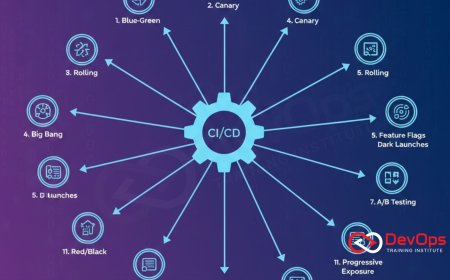
Releasing new code should be a routine and stress-free event. Cloud-native DevOps utilizes advanced deployment strategies to minimize the risk to users. One popular method is the canary release, where a new version of the software is rolled out to a tiny percentage of users first. If no errors are detected in the logs, the rollout continues to the rest of the population. This allows you to catch bugs in a production environment with minimal impact on your overall customer base.
Another powerful tool is the use of feature flags, which decouple the deployment of code from the release of a feature. You can deploy code to production but keep the feature hidden behind a toggle. This allows for safer testing in a live environment and gives the business team the power to turn features on or off without needing a new deployment. Learning how do feature flags enable safe continuous deployment is a game-changer, as it provides an ultimate safety net. It allows for a more experimental and user-centric approach to development, where you can gather feedback quickly and iterate on your product with absolute confidence.
- Automated rollbacks that trigger if high error rates are detected during a deployment.
- Immutable infrastructure where you never patch a running server but instead replace it with a new, updated version.
- A clear shift-left testing strategy that catches bugs early in the pipeline when they are cheapest to fix.
- Standardized CI/CD pipelines that provide a consistent "golden path" for all engineering teams.
Frequently Asked Questions
What is cloud-native DevOps?
Cloud-native DevOps is a set of practices designed to build and run applications that fully exploit the advantages of the cloud computing model.
Why are containers important for DevOps?
Containers provide a consistent environment for applications, ensuring they run the same way on a developer's machine as they do in production.
How does Infrastructure as Code prevent errors?
IaC eliminates manual configuration errors by using version-controlled files to define and provision infrastructure automatically and consistently every single time.
What is the difference between monitoring and observability?
Monitoring tells you if a system is healthy, while observability helps you understand why it is behaving a certain way using detailed data.
What does FinOps stand for?
FinOps stands for Financial Operations, a practice that brings financial accountability to cloud spending through collaboration between engineering and finance teams.
How does chaos engineering help reliability?
Chaos engineering proactively finds and fixes weaknesses in a system by injecting controlled failures before they cause real-world outages for users.
What is a canary release?
A canary release is a strategy where you deploy new software to a small subset of users to verify its stability before rolling it out to everyone.
How do feature flags improve deployment safety?
Feature flags allow you to turn features on or off instantly without redeploying code, providing a safety net if a new feature causes issues.
What is GitOps?
GitOps is a methodology that uses Git repositories as the single source of truth for infrastructure and application configurations and automated syncs.
Why should I use microservices?
Microservices allow you to scale and update different parts of your application independently, improving speed and reducing the risk of widespread failures.
What is shift-left testing?
Shift-left testing involves moving testing earlier in the development process to catch bugs when they are easier and cheaper to resolve.
Is DevSecOps just about security tools?
No, DevSecOps is a culture of shared responsibility where security is integrated into every stage of the software development lifecycle by everyone.
How can I start with cloud-native DevOps?
Start by containerizing your application and implementing a basic CI/CD pipeline, then gradually add observability and automated infrastructure management tools over time.
What role does automation play in cloud-native DevOps?
Automation is the engine of DevOps, handling repetitive tasks like testing, provisioning, and scaling so engineers can focus on high-value innovation.
Can small teams adopt cloud-native DevOps?
Yes, many cloud-native tools offer managed services that reduce the operational burden, making these advanced practices accessible to teams of any size.
What's Your Reaction?
 Like
0
Like
0
 Dislike
0
Dislike
0
 Love
0
Love
0
 Funny
0
Funny
0
 Angry
0
Angry
0
 Sad
0
Sad
0
 Wow
0
Wow
0


![100+ Azure DevOps Interview Questions and Answers [Updated 2025]](https://www.devopstraininginstitute.com/blog/uploads/images/202509/image_140x98_68c40aa9a3834.jpg)






![Future Scope of DevOps Careers in Pune [Updated 2025]](https://www.devopstraininginstitute.com/blog/uploads/images/202510/image_140x98_68e3a84652312.jpg)