

![Kong Interview Preparation Guide [2025]](https://www.devopstraininginstitute.com/blog/uploads/images/202509/image_430x256_68dbb95326997.jpg)

10 Cloud Compliance Tools for DevOps Teams
Ensure continuous compliance and robust security posture with the 10 best cloud compliance tools for DevOps teams in 2025. This guide covers essential solutions for validating Infrastructure as Code (IaC) against standards like CIS and SOC 2, automating runtime policy enforcement, and simplifying audits. Learn how tools for Policy-as-Code, configuration management, and vulnerability scanning integrate into your CI/CD pipeline to enable continuous assurance, reducing manual governance toil and accelerating secure deployments across AWS, Azure, and Google Cloud while adhering to strict regulatory requirements.
Introduction
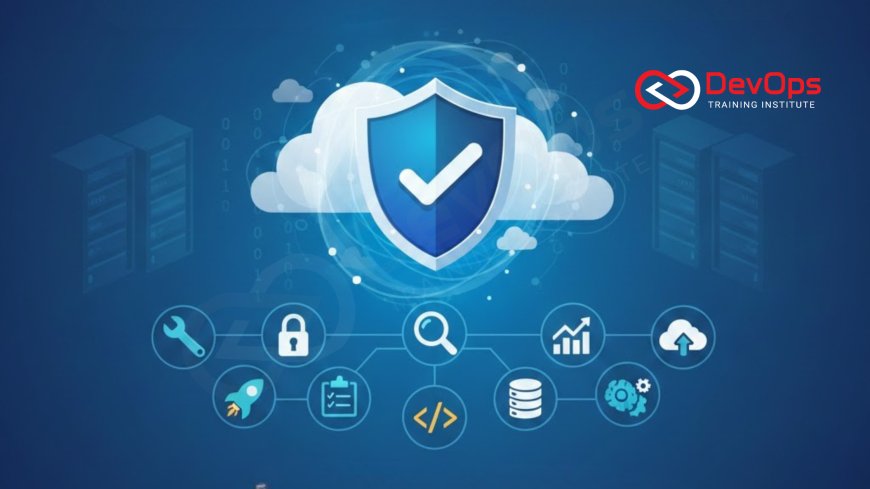
In the age of cloud-native and high-velocity DevOps, achieving continuous compliance is a significant, non-negotiable challenge. Organizations are required to adhere to complex regulatory standards like HIPAA, GDPR, SOC 2, and various industry benchmarks (like the CIS Benchmarks). When infrastructure changes daily through automated pipelines, relying on manual audits or periodic security checks creates massive compliance gaps and severely bottlenecks the release cycle. The solution lies in Compliance as Code (CaC), which integrates security and governance checks directly into the DevOps workflow.
The core philosophy of CaC is to define compliance rules using code, automate the validation of infrastructure and application configurations against those rules, and enforce them before changes reach production. This "shift-left" strategy transforms compliance from a reactive, annual burden into a proactive, continuous capability. It empowers developers to be policy enforcers by providing immediate feedback on policy violations, thereby reducing the risk of accidental misconfigurations that lead to security breaches or regulatory fines.
This guide explores 10 of the best cloud compliance tools that every DevOps team should leverage in 2025. These tools fall into three main categories: IaC Validation, Runtime Enforcement, and Continuous Monitoring. By implementing a layered approach using these solutions, you can achieve a state of continuous assurance, ensuring that your cloud infrastructure and applications are always secure, traceable, and compliant, even at high-velocity deployment speeds. Mastering these tools is crucial for scaling secure and compliant operations across multi-cloud environments, ensuring the integrity of your entire system.
Category I: Infrastructure as Code (IaC) Validation and Pre-Deployment
The most effective place to enforce compliance is before infrastructure is even provisioned. IaC validation tools scan Terraform, CloudFormation, or Kubernetes manifests for policy violations and security misconfigurations. Catching these errors at the commit or pull request stage is fast, cheap, and prevents the creation of non-compliant resources in the cloud, embodying the core principle of Compliance as Code.
1. Checkov
Checkov is an open-source static analysis tool for Infrastructure as Code (IaC). It scans Terraform, CloudFormation, Kubernetes, and other IaC types for security and compliance issues against hundreds of built-in policies based on standards like the CIS Benchmarks. It provides immediate feedback on misconfigurations, such as open ports, unencrypted storage, or overly permissive IAM roles, directly in the developer's environment or pull request.
Compliance Benefit: Enables shift-left security by providing rapid, non-deployable validation. Integrates easily into any CI workflow, ensuring compliance checks run automatically with every code change, preventing the creation of insecure infrastructure configurations.
2. Open Policy Agent (OPA) / Conftest
The Open Policy Agent (OPA) is a general-purpose policy engine that allows governance policies to be defined using the Rego language. Conftest is a utility that uses OPA to test configuration files (like IaC and Kubernetes manifests) against defined policies. This allows organizations to write custom compliance rules specific to their regulatory requirements, offering highly flexible governance.
Compliance Benefit: Provides a flexible, centralized engine for Policy-as-Code. It enforces organizational and regulatory-specific policies at the CI/CD pipeline stage, acting as a mandatory gate that prevents the deployment of non-compliant resources based on the specific rules of the organization, ensuring strict adherence to internal and external mandates.
3. Inspec (by Chef)
Inspec is an open-source framework for testing and auditing the compliance and security of systems. It allows you to write human-readable, executable tests that check for configuration compliance, such as ensuring specific packages are installed, firewall rules are set, or security patches are applied. While often used for runtime testing, its ability to codify compliance makes it valuable for IaC validation, especially for ensuring operating system level adherence.
Compliance Benefit: Provides auditable, reusable code for compliance requirements, acting as documentation and a verification tool simultaneously. It ensures that host configuration adheres to standards like those found in RHEL 10 hardening best practices, making it perfect for validating base images and worker node security configuration before deployment.
Category II: Runtime Monitoring and Continuous Assurance (CSPM)
Even with strict IaC validation, configurations can drift over time, or a manually provisioned resource might violate policy. Cloud Security Posture Management (CSPM) tools continuously monitor the live cloud environment to detect non-compliant resources, security misconfigurations, and drift, providing crucial runtime enforcement. These tools ensure continuous assurance by constantly auditing the live state against best practices and security mandates.
4. Cloud Custodian
Cloud Custodian is an open-source tool used to manage cloud environments through simple, declarative YAML policies. It focuses on governance and automated remediation, allowing teams to define rules for security (e.g., block unencrypted S3 buckets), operations (e.g., tag enforcement), and cost optimization (e.g., auto-terminate idle VMs). It continuously monitors cloud resource APIs and triggers actions based on policy violations.
Compliance Benefit: Provides automated remediation and governance. It enforces policies post-provisioning and automatically corrects drift, such as terminating resources that violate naming conventions or disabling public access on storage containers, ensuring continuous adherence to security policy and FinOps controls.
5. Fugue
Fugue is a commercial cloud security and compliance platform that focuses on keeping cloud infrastructure continuously compliant. It identifies infrastructure drift and enforces compliance through automated policy checks. Its unique capability is the ability to compare the live cloud environment against the desired state defined in the original IaC code, providing a clear audit trail from code to cloud.
Compliance Benefit: Offers drift detection and automatic remediation. It ensures that the runtime configuration matches the approved IaC definition, providing continuous compliance assurance and preventing operational and security issues caused by unauthorized changes or configuration drift in the live environment, which is vital for maintaining system integrity and resilience.
6. ScoutSuite
ScoutSuite is an open-source multi-cloud auditing tool that gathers configuration data from cloud accounts (AWS, Azure, GCP) and audits it against defined security baselines. It provides an intuitive report highlighting risks, misconfigurations, and non-compliant settings, prioritizing potential attack vectors for remediation.
Compliance Benefit: Provides periodic security audits and risk prioritization. It gives a clear, point-in-time snapshot of the current security posture across multiple cloud accounts, helping teams identify major security gaps and non-compliant configurations that need immediate attention and policy definition.
Category III: Kubernetes and Container Security
Kubernetes and container orchestration introduce new compliance challenges, requiring specialized tools to ensure that pods, network policies, and runtime settings adhere to security best practices. These tools enforce the least-privilege principle and validate container configuration to prevent runtime compromises.
7. Falco
Falco, a CNCF project, is the industry standard for runtime threat detection in containers and Kubernetes environments. It uses custom rules to monitor the behavior of containers and applications at the kernel level, instantly alerting on suspicious activity, such as a shell opening inside a running container, a sensitive file being accessed, or a process attempting to establish an unauthorized network connection. This is critical for preventing security breaches.
Compliance Benefit: Provides real-time runtime threat detection. It is an essential component of the security monitoring layer, ensuring that even if a misconfiguration allows an unauthorized process to run, that process's behavior is instantly detected and alerted upon, providing a critical last line of defense against exploitation and potential security incidents.
8. Kube-bench
Kube-bench is an open-source tool that checks whether Kubernetes components (master and worker nodes) are configured securely according to the CIS Kubernetes Benchmark. This is a critical compliance requirement for securing the orchestration platform itself. It runs tests on the host and the kubelet configuration, providing detailed reports on deviations from the best practices.
Compliance Benefit: Automates Kubernetes host hardening validation. It ensures the underlying cluster infrastructure adheres to the highest security standards, preventing common misconfigurations that could allow cluster takeover or privilege escalation. Running Kube-bench in the CI/CD pipeline acts as a mandatory pre-deployment gate for all new cluster setups.
9. Trivy (Image and IaC Scanner)
Trivy is a simple, comprehensive, and fast open-source scanner that checks container images for vulnerabilities, but it also scans configuration files (like IaC and Kubernetes manifests) and dependencies. Trivy's speed makes it ideal for integrating into CI/CD pipelines, providing near-instantaneous security feedback, which is crucial for maintaining pipeline velocity.
Compliance Benefit: Provides rapid, comprehensive vulnerability and misconfiguration scanning. It ensures that both the application code's dependencies and the deployment manifests themselves are secure, preventing the deployment of images with known vulnerabilities and enforcing security policy across multiple layers simultaneously, ensuring a highly resilient and secure environment.
Category IV: Foundational Integration and Auditing
The final crucial tools ensure that compliance is integrated into the core security controls of the operating system and that the entire compliance posture is traceable and auditable. Compliance involves not just checking configurations but proving that the environment is hardened and that all actions are logged immutably for forensic analysis and regulatory auditing purposes.
10. Security Modules and Configuration Management (SELinux/Ansible)
The ultimate control often lies at the operating system level. Tools like Ansible are used to automate the configuration and deployment of critical security modules like SELinux and `firewalld` on host nodes. The compliance policy must ensure that these OS-level defenses are correctly configured and active. For example, the policy might dictate that no container can run with network host privileges, a check enforced by both Kubernetes policy and the underlying SELinux module. This layered approach provides defense-in-depth, relying on the operating system's built-in controls.
Compliance Benefit: Provides OS-level policy enforcement. It ensures that the host operating system's security features are enabled and correctly configured, providing a critical line of defense below the container layer. Compliance checks must verify the correct state of these modules to achieve true end-to-end security and meet hardening requirements. This is where RHEL 10 security enhancements are verified.
Conclusion
Achieving continuous cloud compliance in a DevOps environment is a multi-layered undertaking. It requires integrating a powerful suite of tools into the CI/CD pipeline to establish Compliance as Code (CaC). By adopting the 10 best practices and tools discussed—from IaC validators like Checkov and policy engines like OPA to runtime monitors like Falco and configuration auditors like Kube-bench—organizations can shift governance left, achieving continuous assurance across their infrastructure and applications.
The core strategy is to automate every check and enforce policy as an immutable, mandatory gate. This not only significantly reduces the organization's security risk and eliminates costly manual audits but also accelerates deployment velocity. When security and compliance are automated and continuous, teams are empowered to move faster, secure in the knowledge that their infrastructure changes adhere to all internal and external mandates. This continuous assurance is the hallmark of a mature DevSecOps practice.
Ultimately, these tools transform security from a release bottleneck into an integral accelerator. Invest in the automation, training, and integration required to adopt these solutions comprehensively. Your commitment to Policy-as-Code will ensure that your cloud-native systems are resilient, trustworthy, and always ready for audit, securing your systems against misconfiguration and making your cloud compliance posture an asset, not a liability, for your organization's success and reputation.
Frequently Asked Questions
What is Policy-as-Code (PaC), and which tool uses it?
PaC defines security and governance rules using code (like Rego in OPA), which is automatically enforced by the pipeline before deployment, preventing policy violations.
What problem do CSPM tools solve in continuous compliance?
CSPM (Cloud Security Posture Management) tools continuously monitor the live cloud environment to detect configuration drift and non-compliant resources post-deployment.
How does Checkov enable "shift-left" security for IaC?
Checkov scans IaC files for security misconfigurations during the pull request phase, providing immediate feedback to the developer before the code is merged.
Why is Falco essential for compliance in Kubernetes?
Falco provides real-time runtime threat detection by monitoring container behavior at the kernel level, ensuring compliance with strict security behavior mandates and alerting on policy violations.
How does Inspec help with auditing the host operating system?
Inspec uses executable, human-readable tests to audit the compliance and security configuration of host systems (like RHEL 10 post-installation checklist status), verifying that security patches and configuration hardening are applied correctly.
What is the benefit of automating remediation with Cloud Custodian?
Cloud Custodian automatically corrects non-compliant resources (e.g., disables public access to storage or terminates idle VMs) immediately after detecting a policy violation, reducing manual governance toil.
How do API Gateways contribute to compliance?
API Gateways centralize authentication and authorization at the edge, simplifying security enforcement and providing a single, auditable ingress point for all traffic, which simplifies regulatory tracing.
Why is continuous threat modeling important for compliance tool selection?
Threat modeling ensures that compliance tools and policies are focused on the highest-risk areas of the application and infrastructure, making the security investment most effective against evolving threats.
How does Trivy ensure artifact integrity?
Trivy rapidly scans container images and dependencies for known vulnerabilities, acting as a mandatory gate to prevent the deployment of insecure artifacts to production, enforcing security standards.
What is the purpose of Kube-bench?
Kube-bench automatically checks Kubernetes cluster nodes and components against the strict security configurations defined in the CIS Kubernetes Benchmark, ensuring infrastructure compliance.
How does configuration management (e.g., Ansible) integrate with compliance tools?
Configuration management tools provision host security configurations (like enabling SELinux), and compliance tools (like Inspec) then verify that the configurations were applied correctly and remain in compliance.
Why must the CI/CD pipeline enforce the running of containers as a non-root user?
Running as non-root minimizes the damage an attacker can inflict if the container is compromised, adhering to the principle of least privilege for application runtime security.
What are the key security features verified by RHEL 10 security enhancements checks in a compliance pipeline?
These checks verify the correct application of kernel hardening, security modules (like SELinux), and default host access controls, ensuring a minimal and secured operating system attack surface.
What is the role of continuous auditing in meeting compliance standards like SOC 2?
Continuous auditing provides an immutable, traceable record of all changes and security checks, which is necessary to demonstrate adherence to controls and processes required by regulatory bodies like SOC 2.
How does SELinux strengthen compliance at the host level?
SELinux provides mandatory access controls, restricting what every process can do, even if it's running inside a container. Compliance tools verify its active and correct policy enforcement.
What's Your Reaction?
 Like
0
Like
0
 Dislike
0
Dislike
0
 Love
0
Love
0
 Funny
0
Funny
0
 Angry
0
Angry
0
 Sad
0
Sad
0
 Wow
0
Wow
0

![100+ Azure DevOps Interview Questions and Answers [Updated 2025]](https://www.devopstraininginstitute.com/blog/uploads/images/202509/image_140x98_68c40aa9a3834.jpg)





![Future Scope of DevOps Careers in Pune [Updated 2025]](https://www.devopstraininginstitute.com/blog/uploads/images/202510/image_140x98_68e3a84652312.jpg)