

![Kong Interview Preparation Guide [2025]](https://www.devopstraininginstitute.com/blog/uploads/images/202509/image_430x256_68dbb95326997.jpg)

10 DevOps AI Tools Improving Productivity
Discover the top ten DevOps AI tools currently revolutionizing software engineering productivity and operational efficiency in twenty twenty five. This comprehensive guide explores how artificial intelligence is being integrated into CI/CD pipelines, incident management, and infrastructure as code to reduce developer toil and accelerate release cycles. Learn about leading platforms like GitHub Copilot, Datadog, and Harness that use machine learning for predictive monitoring, automated code reviews, and self healing systems. Stay ahead of the curve by mastering the essential AI augmented toolchains that are defining the future of high performance DevOps teams and modern cloud native application development today.
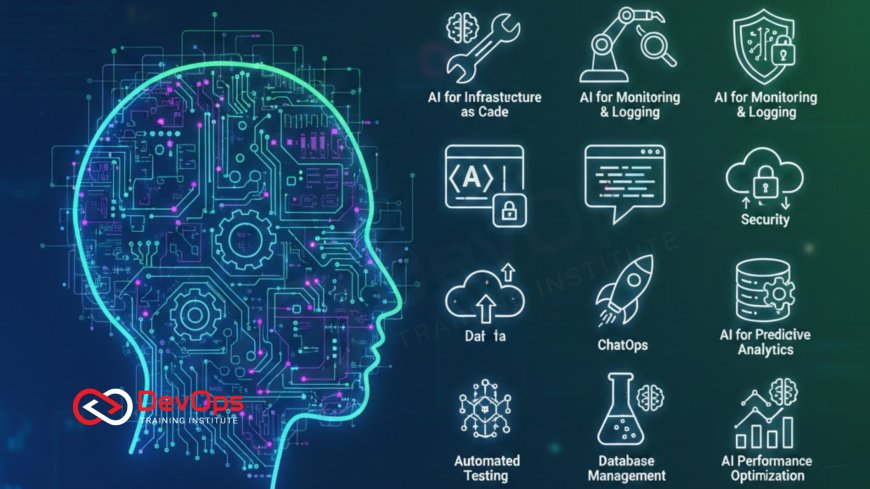
Introduction to AI-Powered DevOps Productivity
The integration of artificial intelligence into DevOps workflows represents a fundamental paradigm shift from reactive to predictive operations. As systems become increasingly complex, traditional manual processes are often insufficient to maintain the speed and reliability required by modern digital enterprises. AI tools are stepping in to fill this gap by automating repetitive tasks, identifying hidden patterns in telemetry data, and providing intelligent suggestions that help engineers make better decisions faster. This evolution is not just about replacing human effort but about augmenting it to allow teams to focus on high value innovation rather than routine maintenance.
By twenty twenty six, the use of AI augmented devops tools will be a standard requirement for competitive engineering organizations. These tools are transforming every stage of the software development lifecycle, from the initial lines of code to the ongoing monitoring of production environments. Whether it is a coding assistant that suggests entire functions or an observability platform that predicts a system failure before it happens, the impact on productivity is profound. Understanding how to leverage these tools effectively is the key to reducing mean time to resolution and increasing deployment frequency in a rapidly changing technical landscape.
Intelligent Coding Assistants for Faster Development
Intelligent coding assistants like GitHub Copilot and Amazon Q Developer have become essential for developers looking to boost their daily output. These tools use large language models to provide real time code suggestions, complete repetitive boilerplate sections, and even generate entire unit tests based on the context of the project. By reducing the time spent on syntax and common patterns, developers can dedicate more energy to solving complex architectural problems and business logic. This shift in focus directly leads to a higher quality codebase and a significantly faster time to market for new features and updates.
Beyond simple code completion, these assistants are now capable of performing sophisticated code reviews and identifying potential security vulnerabilities as the code is being written. This "shift left" approach ensures that quality is built in from the start, rather than being added as an afterthought during a separate testing phase. For teams aiming for cultural change, these tools act as a virtual pair programmer that shares best practices and helps onboard new members by providing instant technical context. It is a powerful way to democratize high level engineering skills across the entire development team while maintaining a consistent and secure standard of code production.
AIOps for Advanced Incident Management
AIOps, or Artificial Intelligence for IT Operations, is revolutionizing how teams handle system alerts and incidents. Tools like PagerDuty and BigPanda use machine learning to correlate thousands of disparate alerts into a single, actionable incident. This drastically reduces "alert fatigue" by filtering out the noise and highlighting the root cause of a problem across complex, distributed systems. When an outage occurs, these tools can automatically suggest remediation steps or even trigger automated runbooks to resolve the issue without human intervention. This proactive approach to incident handling is vital for maintaining the high availability required by modern users.
Furthermore, AIOps platforms provide predictive insights that allow teams to address potential bottlenecks before they impact the user experience. By analyzing historical performance data, these tools can identify subtle anomalies that might escape traditional monitoring thresholds. Integrating these insights into your ChatOps techniques ensures that the entire team has real time visibility into the health of the system directly within their communication channels. This transparency fosters a more collaborative and efficient response to technical challenges, ultimately leading to a more resilient and stable production environment for the business.
Automating Infrastructure with Generative AI
Generative AI is making a significant impact on how teams manage and provision their infrastructure as code (IaC). Tools like Ansible Lightspeed and various AI plugins for Terraform allow engineers to generate complex configuration scripts using simple natural language prompts. This lowers the barrier to entry for cloud automation and ensures that infrastructure is defined consistently across different environments. By automating the creation of these scripts, teams can rapidly scale their cloud architecture patterns to meet changing demands while reducing the risk of manual misconfigurations that lead to security holes.
In addition to script generation, AI tools can continuously monitor your infrastructure for configuration drift and compliance violations. They can automatically suggest fixes or even apply updates to bring the system back into its desired state as defined in version control. This level of automated governance is essential for managing large scale, multi cloud environments where human oversight alone is not enough. By utilizing these AI driven IaC tools, organizations can achieve a higher degree of agility and security, ensuring that their underlying platform is always optimized for performance, cost, and reliability in a dynamic digital world.
Top DevOps AI Tools for High Productivity
| Tool Name | Primary Category | Key AI Feature | Impact Area |
|---|---|---|---|
| GitHub Copilot | Coding Assistant | Real-time code generation | Developer Velocity |
| Datadog AI | Observability | Automated anomaly detection | System Reliability |
| Harness | CI/CD Platform | Predictive rollback logic | Deployment Safety |
| Snyk DeepCode | Security | Semantic vulnerability analysis | DevSecOps Compliance |
| Kubiya | Virtual Assistant | Natural language operations | Operational Ease |
Enhancing CI/CD Pipelines with Predictive Analytics
Modern CI/CD pipelines are benefiting immensely from AI driven predictive analytics that identify potential failures before they occur. Tools like Harness use machine learning to analyze historical deployment data and predict the risk of a new release based on the complexity of the changes and past performance. If a high risk is detected, the pipeline can automatically trigger additional testing phases or suggest a smaller, incremental rollout. This intelligence significantly reduces the change failure rate and ensures that only the most stable code reaches your production users, protecting your brand reputation and system integrity.
Furthermore, AI can optimize the testing process itself by intelligently selecting which tests to run based on the specific code changes. This "test impact analysis" avoids the need to run an entire massive test suite for every minor update, drastically shortening the feedback loop for developers. Integrating these advanced release strategies with GitOps principles allows for a highly automated and self correcting delivery engine. By leveraging AI to manage the "boring" parts of the pipeline, your engineering talent is freed up to focus on innovative feature development and complex system improvements that drive real business value for the organization.
Strengthening DevSecOps with AI Scanning
Security is a top priority in any DevOps strategy, and AI is playing a crucial role in hardening the software supply chain. AI powered security tools like Snyk and AWS CodeGuru perform deep semantic analysis of code to find vulnerabilities that traditional pattern matching scanners might miss. These tools understand the flow of data through an application, allowing them to identify complex logic flaws and potential zero day exploits. By providing developers with instant feedback and "auto fix" suggestions within their IDE, AI helps teams maintain high security standards without slowing down the development process.
In the production environment, AI driven security systems can detect suspicious behavior and potential threats in real time. They monitor network traffic and user interactions, using admission controllers and behavioral analysis to block malicious activity before it can cause damage. This continuous monitoring is essential for protecting sensitive data in a world of ever evolving cyber threats. By integrating secret scanning tools into the AI workflow, you can ensure that credentials are never accidentally exposed, creating a robust and proactive security posture for your entire cloud native application stack.
The 10 Best AI Tools for DevOps Productivity
- GitHub Copilot: A leading AI pair programmer that provides context aware code suggestions to accelerate the development cycle significantly.
- Datadog: An observability platform that uses AI to correlate metrics, logs, and traces for rapid incident detection and root cause analysis.
- Harness: An AI native CI/CD platform that automates deployments and uses machine learning for continuous verification and automated rollbacks.
- Snyk: A developer first security tool that utilizes AI to find and fix vulnerabilities in code, dependencies, and infrastructure configurations.
- PagerDuty: An incident response platform that uses AIOps to group alerts and provide intelligent context for faster resolution of production issues.
- AWS CodeGuru: An ML powered service that offers automated code reviews and performance profiling to improve application quality and efficiency.
- Ansible Lightspeed: A generative AI service that helps developers write Ansible playbooks for automated IT orchestration and configuration management.
- Kubiya: An AI virtual assistant for DevOps that allows teams to manage infrastructure and workflows using natural language conversational interfaces.
- Dynatrace: A full stack observability tool with a deterministic AI engine that provides precise root cause analysis for large scale cloud environments.
- TestIntelligence: A feature in various platforms that uses AI to run only relevant tests, reducing the time and resources needed for CI/CD pipelines.
Choosing the right mix of these tools depends on your team's specific pain points and current technical maturity. Most organizations start by integrating an AI coding assistant and then gradually expand into AIOps and automated security as they scale. It is important to remember that AI is most effective when it is compatible with your underlying containerd runtime and cloud provider. By following modern release strategies and keeping a close eye on your cluster states, you can create a highly productive and resilient DevOps ecosystem that leverages the best of human expertise and artificial intelligence for superior business results.
Conclusion on AI-Driven DevOps Success
In conclusion, the integration of AI tools into the DevOps lifecycle is no longer a luxury but a necessity for teams aiming for high productivity and system reliability. From the early stages of coding with intelligent assistants to the late stages of production with AIOps and automated security, AI provides a powerful multiplier for human effort. These tools help eliminate bottlenecks, reduce error rates, and allow engineers to spend their time on truly creative work. By adopting a proactive and predictive mindset, organizations can transform their delivery pipelines into strategic assets that drive continuous innovation and competitive advantage.
As you look to implement these tools, remember that continuous verification is the ultimate goal. By using continuous verification strategies, you ensure that every change meets your quality standards in real time. The journey toward a fully AI augmented DevOps toolchain is an iterative process of learning and optimization. Stay informed about release strategies that maximize your impact while maintaining safety. The future of DevOps is here, and it is powered by a new generation of intelligent tools that are reshaping how we build and run software in the modern cloud era. Embrace the change and lead your team to a new level of engineering excellence today.
Frequently Asked Questions
What is the primary benefit of using AI in a DevOps environment?
The primary benefit is the reduction of manual toil through automation, which allows engineers to focus on more complex and strategic technical tasks.
Can AI coding assistants replace human developers in the near future?
No, they are designed to augment developers by handling repetitive tasks, but humans are still needed for high-level architectural design and business logic.
How does AIOps help in reducing alert fatigue for operations teams?
AIOps uses machine learning to group related alerts and filter out noise, ensuring that teams only see the most critical and actionable incidents.
Is it safe to let AI automatically roll back failed deployments?
Yes, when configured with proper thresholds, automated rollbacks are a safe and effective way to maintain system stability during a deployment failure.
What is "shift left" security in an AI context?
It refers to using AI tools to identify security vulnerabilities during the coding phase, rather than waiting for late-stage testing or production monitoring.
How does AI improve the performance of CI/CD pipelines?
AI can predict pipeline failures, optimize test selection, and provide insights that help engineers identify and remove bottlenecks in the delivery process.
Do I need special training to use AI DevOps tools?
Most modern AI tools are designed to be intuitive, but a basic understanding of AI concepts and data management is helpful for senior engineers.
Can AI tools help in optimizing cloud infrastructure costs?
Yes, AI can analyze usage patterns and suggest instance rightsizing or the shutdown of unused resources to significantly reduce monthly cloud spending costs.
What is the role of natural language processing in DevOps?
NLP allows engineers to interact with their infrastructure and tools using simple conversational commands, making operational tasks more accessible to everyone involved.
How do AI tools stay up to date with new security threats?
AI models are continuously trained on global threat data and community channels, allowing them to identify new and emerging vulnerabilities in real time.
What is the difference between AI-augmented and AI-native DevOps?
AI-augmented tools add AI features to existing systems, while AI-native tools are built with AI as a core, non-optional component of their architecture.
Is my source code safe when using AI coding assistants?
Most enterprise versions of AI tools offer data privacy guarantees, ensuring that your code is not used to train models for other companies.
Can AI help in creating better documentation for technical projects?
Yes, AI can summarize pull requests, generate API documentation, and even create post-mortem reports based on incident data and logs automatically.
How does AI help in managing Kubernetes cluster states?
AI can monitor cluster health, suggest scaling actions, and identify misconfigurations that might lead to instability or security issues within the environment.
What is the first step to take when adopting AI in DevOps?
The best first step is to identify a single repetitive pain point, such as slow code reviews, and implement a targeted AI tool.
What's Your Reaction?
 Like
0
Like
0
 Dislike
0
Dislike
0
 Love
0
Love
0
 Funny
0
Funny
0
 Angry
0
Angry
0
 Sad
0
Sad
0
 Wow
0
Wow
0

![100+ Azure DevOps Interview Questions and Answers [Updated 2025]](https://www.devopstraininginstitute.com/blog/uploads/images/202509/image_140x98_68c40aa9a3834.jpg)





![Future Scope of DevOps Careers in Pune [Updated 2025]](https://www.devopstraininginstitute.com/blog/uploads/images/202510/image_140x98_68e3a84652312.jpg)