



![Kong Interview Preparation Guide [2025]](https://www.devopstraininginstitute.com/blog/uploads/images/202509/image_430x256_68dbb95326997.jpg)



12 DevOps Documentation Tools for Better Knowledge Sharing
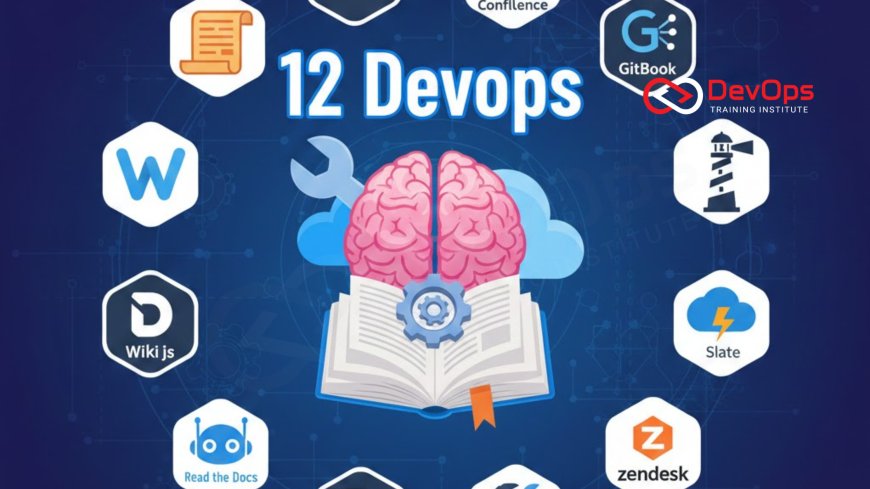
Unlock the full potential of your engineering team by exploring the twelve most effective DevOps documentation tools for twenty twenty six. This comprehensive guide provides professional insights into platforms designed for technical knowledge sharing, automated API documentation, and infrastructure as code mapping. Learn how to bridge the gap between development and operations by implementing a "documentation as code" culture that reduces technical debt and speeds up developer onboarding. Whether you are managing complex cloud architectures or simple microservices, these essential tools will empower your organization to build a resilient, transparent, and highly collaborative technical environment that supports continuous innovation and rapid global scaling today.
Introduction to DevOps Documentation Culture
In the fast paced technical landscape of twenty twenty six, documentation is no longer just a static set of files; it is a vital component of the automated software delivery lifecycle. High performing DevOps teams recognize that knowledge sharing is the key to reducing silos and preventing "single point of failure" scenarios where critical system information is trapped in an individual's head. Effective documentation tools enable teams to record architectural decisions, incident response procedures, and deployment workflows in a way that is searchable, versioned, and easily accessible to all stakeholders. This transparency is the foundation of a healthy technical culture.
The shift toward "documentation as code" has transformed how engineers create and maintain technical records. By using the same version control and automation tools for documentation as they do for application code, teams ensure that their records stay in continuous synchronization with the live environment. This guide explores twelve essential tools that facilitate better knowledge sharing, ranging from collaborative wikis to automated API portals. By choosing the right mix of these tools, you can create a "paved road" for information, allowing your developers to spend less time asking questions and more time building innovative solutions for your business.
The Power of Documentation as Code
Documentation as code is a philosophy that treats documentation files as part of the software project, typically written in Markdown or reStructuredText and stored in a Git repository. This approach allows developers to use their familiar editors and workflows to update technical records during the development process. Static site generators like Docusaurus and MkDocs are leading this trend, allowing teams to transform these text files into beautiful, searchable websites automatically. This integration ensures that documentation is peer reviewed and versioned just like the underlying cloud architecture patterns it describes.
By treating documentation as a first class citizen in the CI/CD pipeline, organizations can automate the validation and deployment of their technical records. This eliminates the "documentation drift" that occurs when system records are kept in separate, manual silos that are rarely updated. For teams managing cluster states in complex Kubernetes environments, having a versioned history of infrastructure changes is invaluable for troubleshooting and auditing. It fosters a culture of accountability and continuous improvement, where every technical change is accompanied by the necessary context to help future maintainers understand the original intent.
Collaborative Wikis for Team Knowledge
While code centric documentation is great for engineers, collaborative wikis remain essential for high level project management and cross departmental knowledge sharing. Tools like Confluence and Notion provide a flexible environment where developers, product managers, and operations staff can collaborate on requirements, roadmaps, and meeting notes. These platforms offer rich text editing, integrated media, and powerful search capabilities, making them the central hub for organizational "tribal knowledge." They are particularly effective for documenting the cultural change and leadership strategies that drive DevOps adoption.
The latest versions of these wiki tools feature deep integrations with popular DevOps platforms like Jira and GitHub. This allows teams to embed live build statuses or ticket lists directly into their documentation pages, providing a real time view of project health. When used correctly, a collaborative wiki acts as the organizational memory, recording the outcomes of blameless post mortems and architectural reviews. It ensures that the "why" behind technical decisions is never lost, providing a valuable resource for onboarding new hires and maintaining consistency across a growing engineering organization in a busy and global digital market.
Automated API Documentation for Microservices
In a microservices architecture, the interfaces between services are the most critical points of documentation. Manual API records are notoriously difficult to keep accurate, which is why automated tools like Swagger (OpenAPI) and Redocly have become industry standards. These tools generate interactive documentation directly from your service's source code or specification files. This ensures that every time a developer updates an endpoint, the public or internal documentation is updated in continuous synchronization, preventing the frustration of broken integrations and outdated information for the team.
Interactive API portals allow developers to test endpoints directly from the documentation, which significantly speeds up the integration process. This "self service" approach to developer experience is a key driver of technical productivity in twenty twenty six. Furthermore, by utilizing admission controllers to enforce OpenAPI compliance, organizations can ensure that every new service meets the required documentation standards before it is allowed to run in production. This automated enforcement of quality ensures that your service catalog remains clean, consistent, and easy to navigate for all engineering squads.
Comparison of Leading DevOps Documentation Tools
| Tool Name | Primary Category | Key Feature | Best For |
|---|---|---|---|
| Docusaurus | Static Site Generator | Markdown to Website | Technical Guides |
| Confluence | Collaborative Wiki | Deep Jira Integration | Enterprise Knowledge |
| Swagger | API Documentation | Auto-generated UI | Microservices APIs |
| GitBook | Knowledge Platform | Git-Sync Workflow | User Facing Docs |
| Notion | All-in-One Workspace | Flexible Block System | Small Teams/Startups |
Documentation Tools for Infrastructure as Code
As infrastructure becomes increasingly programmable, the need to document Terraform modules, Kubernetes clusters, and cloud networks has grown. Specialized tools like Terraform-docs and Kube-score automatically extract metadata from your configuration files to generate clear, structured documentation. This ensures that the technical details of your cloud architecture patterns are always accurate and up to date. By including these tools in your CI/CD pipelines, you can automatically publish infrastructure diagrams and resource lists every time your environment changes, providing a clear visual record of your technical state.
Visualizing cloud infrastructure is particularly important for incident handling and security audits. Tools like Lucidchart and IcePanel can integrate with your cloud providers to generate live architecture diagrams that reflect the actual state of your resources. This visual documentation helps engineers quickly understand the relationships between services and identify potential single points of failure. By utilizing GitOps to manage these visual assets, you ensure that your diagrams evolve alongside your code. This high level overview is essential for maintaining system resilience and ensuring that all team members are aligned on the current technical direction.
Enhancing the Developer Experience (DevEx)
The ultimate goal of documentation tools is to improve the developer experience by making information easy to find and digest. Modern platforms like ReadMe and Stoplight go beyond simple text by providing interactive sandboxes, code snippet generators, and personalized onboarding flows. These "developer portals" act as a storefront for your technical platform, encouraging adoption and reducing the support burden on your core engineering teams. When developers have access to high quality, interactive documentation, they can be productive from day one, which is a major competitive advantage in a fast paced market.
In twenty twenty six, we are seeing the rise of AI augmented devops documentation where intelligent assistants can answer developer questions based on the existing knowledge base. By integrating AI augmented devops capabilities into your documentation portals, you can provide real time guidance and troubleshoot common issues without human intervention. This proactive approach to support ensures that your engineers stay focused on innovation rather than searching for answers. It is the final piece of the puzzle in creating a truly modern, self service technical environment that empowers every member of the organization to contribute to the overall success of the business.
Best Practices for Knowledge Sharing Tools
- Enable Searchability: Choose tools with powerful global search capabilities to ensure that team members can find the information they need in seconds.
- Version Your Records: Always keep technical documentation in version control to track changes and allow for rollbacks if a record becomes inaccurate.
- Standardize Templates: Use standard templates for meeting notes, post mortems, and README files to ensure consistency across different teams and projects.
- Protect Sensitive Data: Use secret scanning tools to ensure no credentials or sensitive customer data are accidentally included in your documentation pages.
- Mandatory Peer Reviews: Treat documentation changes with the same rigor as code changes by requiring a peer review before any major record is updated or published.
- Incentivize Writing: Create a cultural change where writing documentation is recognized and rewarded as a core part of the engineering role, not just an afterthought.
- Verify After Deployment: Incorporate continuous verification strategies to confirm that your automated documentation tools are correctly reflecting the live environment.
Effective knowledge sharing is a continuous process that requires both the right tools and the right mindset. As your organization grows, you should regularly review your documentation stack to ensure it is still meeting the needs of your developers and stakeholders. By utilizing ChatOps techniques, you can bring documentation updates directly into your team's communication channels, ensuring that everyone is aware of the latest technical changes. This collaborative and transparent approach is what builds a resilient engineering organization that can thrive in an increasingly complex and automated world. Documentation is the legacy of your engineering efforts, and investing in it today ensures a brighter and more efficient future for your entire team.
Conclusion: Building a Transparent Technical Future
In conclusion, the twelve DevOps documentation tools and strategies discussed in this guide provide a robust framework for building a transparent and collaborative technical environment. From the automated precision of Swagger to the collaborative power of Confluence and the technical flexibility of Docusaurus, these tools are essential for mastering the modern software delivery lifecycle. By embracing a "documentation as code" philosophy, you ensure that your technical records remain a living, breathing part of your system rather than a dusty archive. The goal is to make knowledge sharing so easy and integrated that it becomes a natural part of the daily engineering rhythm.
As you move forward, remember that who drives cultural change within your organization will be the deciding factor in the success of your documentation initiatives. Transitioning to a knowledge first culture is an ongoing journey of learning and refinement. By staying informed about release strategies that prioritize clear communication, you can ensure that your team remains aligned and productive. Ultimately, the best documentation is the one that actually gets read and used. By prioritizing searchability, automation, and accuracy today, you are building a future proof technical foundation that will support your organization's growth and innovation for years to come.
Frequently Asked Questions
What is the "Documentation as Code" philosophy?
It is the practice of treating documentation with the same tools and processes as software code, including version control, Markdown, and CI/CD pipelines.
Why is Confluence popular in DevOps teams?
Confluence offers deep integration with Jira and a flexible wiki structure that makes it easy for technical and non-technical stakeholders to collaborate effectively.
What is a static site generator (SSG) for documentation?
An SSG like Docusaurus takes text files (Markdown) and transforms them into a fast, searchable, and hostable website for technical records and guides.
How does automated API documentation save time?
Tools like Swagger generate documentation directly from the code, ensuring it is always accurate and eliminating the need for manual updates and record keeping.
What role does Markdown play in DevOps documentation?
Markdown is a lightweight markup language that is easy for developers to write in any text editor and is natively supported by most Git platforms.
Can I use Notion for technical documentation?
Yes, Notion is highly popular for its flexible block system and all-in-one workspace, though it may lack some advanced "as code" features for large teams.
How do I prevent documentation drift?
Drift is prevented by using automated tools that sync with your code and infrastructure, ensuring that the documentation is updated during every deployment cycle.
What is a developer portal?
A developer portal is a specialized website that provides a centralized location for APIs, guides, and tools to improve the developer experience and onboarding.
Should I version my documentation?
Absolutely, versioning allows you to see the history of technical changes and ensures that developers can find records for older versions of the software.
What is the best tool for documenting Terraform?
Terraform-docs is a widely used tool that automatically generates documentation for your Terraform modules based on the defined variables and outputs and records.
How does ChatOps help with knowledge sharing?
ChatOps can automatically notify the team in Slack or Teams whenever a documentation page is updated, keeping everyone informed of latest technical system changes.
What is a blameless post-mortem?
It is a documentation process after an incident where the focus is on technical and process failures rather than blaming individuals for the system outage.
Can AI help in writing technical documentation?
Yes, AI can summarize complex code, suggest edits, and even answer developer questions based on the existing documentation base to speed up the process.
What is the first step in improving our documentation?
The first step is usually to create a standard README template for all repositories to ensure a consistent baseline of information across the engineering organization.
How often should we review our documentation?
Technical records should be reviewed during every pull request, while high-level wiki pages should undergo a more thorough audit at least once a quarter.
What's Your Reaction?
 Like
0
Like
0
 Dislike
0
Dislike
0
 Love
0
Love
0
 Funny
0
Funny
0
 Angry
0
Angry
0
 Sad
0
Sad
0
 Wow
0
Wow
0

![100+ Azure DevOps Interview Questions and Answers [Updated 2025]](https://www.devopstraininginstitute.com/blog/uploads/images/202509/image_140x98_68c40aa9a3834.jpg)






![Future Scope of DevOps Careers in Pune [Updated 2025]](https://www.devopstraininginstitute.com/blog/uploads/images/202510/image_140x98_68e3a84652312.jpg)