





![Kong Interview Preparation Guide [2025]](https://www.devopstraininginstitute.com/blog/uploads/images/202509/image_430x256_68dbb95326997.jpg)





10 Git Strategies Used by Large-Scale Teams
Discover the 10 essential Git strategies and version control techniques leveraged by large-scale engineering teams and high-performing organizations to maintain code quality, accelerate continuous delivery, and minimize integration risk. This in-depth guide covers everything from the foundational Trunk-Based Development (TBD) and flexible GitFlow variants to advanced practices like monorepos, automated code review gates, and seamless GitOps implementation. Learn how strategic branching models, combined with rigorous automation, ensure dozens of teams can collaborate on a single codebase efficiently, driving velocity and resilience across complex, multi-service environments.
Introduction
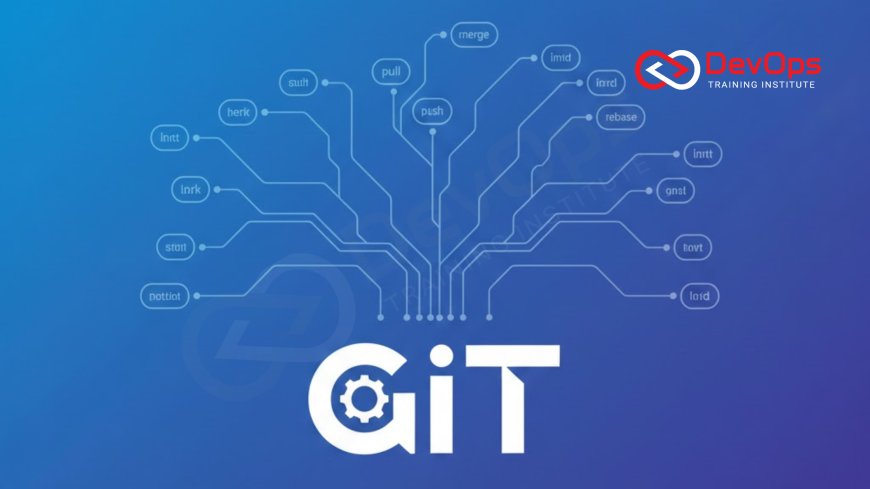
Git is universally recognized as the bedrock of modern software development, but for large-scale engineering teams—those comprised of dozens or even hundreds of developers working simultaneously on massive codebases—simply knowing the basic commands of Git is insufficient. The complexity inherent in a continuous, high-velocity environment demands a deliberate and meticulously enforced Git strategy. This strategy dictates how, when, and where code is merged, reviewed, and ultimately released to production. An ill-fitting or poorly enforced strategy can lead to chaotic "integration hell," slow down continuous delivery, and introduce massive, high-risk merge conflicts that cripple a team's efficiency and reliability goals.
The core objective of a large-scale Git strategy is two-fold: first, to maintain a consistently stable, "shippable" state on the main branch at all times; and second, to enable multiple independent teams to collaborate effectively while minimizing the potential for disruptive integration issues. The strategic models adopted by high-performing organizations, particularly those utilizing DevOps methodology for rapid deployment, prioritize fast feedback loops and small, frequent code changes. This philosophical alignment ensures that the version control system serves as an accelerator, not a bottleneck, to the overall software development lifecycle.
This guide explores the ten most crucial and highly effective Git strategies and organizational practices used by large-scale teams today, detailing how these patterns manage complexity, enforce quality, and directly contribute to the high deployment frequency that defines a world-class engineering organization. Mastering the rationale behind these strategies is essential for any DevOps Engineer or software leader aiming to drive velocity and resilience in a complex, multi-service environment, ensuring every code change moves safely and predictably from commit to customer.
Core Branching Models: Speed vs. Isolation
The choice of a primary branching model is the single most important decision governing a team’s velocity and stability. Large organizations typically choose between two fundamental philosophies: Trunk-Based Development (TBD), which favors speed and integration, and variants of GitFlow, which favor isolation and governed releases. The decision depends heavily on the project's complexity, regulatory constraints, and the frequency of required production deployments.
Trunk-Based Development (TBD): This strategy is favored by high-velocity organizations like Google and Amazon. In TBD, all developers commit code to a single main branch (the "trunk") very frequently, often multiple times a day. Feature development happens on short-lived branches (typically lasting less than a day) that are immediately merged back into the trunk. This rapid integration ensures that merge conflicts are small, trivial, and resolved instantly, keeping the trunk perpetually clean and in a deployable state. TBD is the foundational strategy for achieving true Continuous Integration and Continuous Deployment (CI/CD), as it eliminates the massive effort required to integrate large, long-lived feature branches, maximizing deployment frequency.
The GitFlow Variant: GitFlow is a more structured, release-based model that utilizes two main long-lived branches (main for production releases and develop for integration) and dedicated branches for features, releases, and hotfixes. While popular for projects with strict versioning (like desktop software or mobile apps with formal App Store releases), pure GitFlow often proves too slow and complex for high-velocity web services. Large teams using this model typically adopt streamlined variants—such as using only main and short-lived feature branches while reserving dedicated release branches only for the final quality assurance and sign-off phase—to reduce the complexity and integration bottlenecks inherent in the original, multi-branch model.
Achieving Velocity: Short-Lived Branches and Feature Flags
Regardless of the chosen core branching model, high-performing large teams rely on the rigorous enforcement of short-lived feature branches and the strategic use of feature flags to manage complexity and decouple the development cycle from the actual release to the user. This combination is essential for minimizing risk and maintaining a constant flow of code into the main codebase, which is crucial for achieving enterprise-grade velocity.
- Enforcing Short-Lived Feature Branches: Whether in TBD or a simplified GitFlow, large teams mandate that feature branches survive no longer than a day or two. This organizational discipline forces developers to break down large tasks into small, incremental chunks that are merged frequently. This drastically reduces the surface area for merge conflicts, making integration a continuous, trivial background task rather than a chaotic, high-risk event that slows down the deployment pipeline for everyone else in the organization.
- Decoupling Deployment from Release via Feature Flags: The strategic use of Feature Flags is non-negotiable in the TBD world. Feature flags are simple switches embedded in the application code that allow a feature to be deployed to production (Deployment) without being immediately visible to the end-user (Release). This practice minimizes risk by allowing large-scale teams to merge incomplete or untested features into the stable main branch and test them silently in production, ensuring the stability of the entire system remains high while simultaneously allowing teams to innovate quickly.
Quality Gates: Automated Review and CI Integration
To ensure that the high velocity generated by strategies like TBD does not compromise code quality or introduce severe bugs, large teams implement automated quality gates at the Pull Request (PR) or Merge Request (MR) stage. These gates are mandatory checkpoints that must be successfully cleared before any code is allowed to enter the main branch, moving beyond simple human review to systematic, automated validation of every proposed code change.
These gates are essential for the integrity of the release:
Automated Build and Test Execution: A core requirement is linking the version control system directly to the Continuous Integration (CI) engine. Every PR must automatically trigger a full build, run unit tests, and execute integration tests on dedicated CI runners (e.g., Jenkins agents, GitLab CI runners). Only a successful, green build is permitted to be merged, preventing broken code from ever contaminating the main branch.
Static Analysis and Security Scanning: Large teams integrate tools that perform security and quality checks at the PR level. This includes Static Application Security Testing (SAST) to detect common security flaws in code and scanning of dependencies (vulnerability scanning) to check for known security issues in third-party libraries. This proactive integration of security checks is the essence of DevSecOps and acts as a mandatory guardrail for all code entering the system.
The Monorepo Strategy for Unified Governance
A growing number of tech giants, including Google, Facebook, and Twitter, rely on the Monorepo pattern—a strategy where all the company's code (applications, libraries, infrastructure configurations) is stored in a single Git repository. This contrasts sharply with the traditional approach of using many separate, smaller repositories ("polyrepo"), and while it introduces complexity, it provides massive advantages for large, highly collaborative teams.
| Strategy Category | Git Strategy | Primary Goal | CI/CD Impact |
|---|---|---|---|
| Branching Model | Trunk-Based Development (TBD) | Maintain a single, perpetually shippable main branch. | Maximizes deployment frequency and minimizes merge conflicts. |
| Integration Control | Mandatory Pull Request Reviews | Enforce quality and collaboration before code enters main. | Acts as a manual quality gate and knowledge transfer point. |
| Release Management | Feature Flags | Decouple code deployment from feature release activation. | Enables testing in production and instant, low-risk rollbacks. |
| Architecture | Monorepo Strategy | Centralize all code for atomic changes and unified dependency management. | Simplifies dependency updates and improves cross-team consistency. |
| Operational Flow | GitOps Workflow | Use Git as the single source of truth for declarative infrastructure. | Automates environment provisioning and ensures drift detection for infrastructure. |
Consistency and Automation: The GitOps Mandate
For infrastructure and configuration management, the GitOps workflow has become the definitive best practice. GitOps mandates that Git is the single source of truth for the entire declarative state of the system—not just the application code, but also the infrastructure definition (Terraform files), Kubernetes manifest YAMLs, and deployment rules. Changes to the infrastructure are made by submitting a Pull Request to the configuration repository, which is reviewed, merged, and then automatically applied to the live cloud environment by specialized tooling like Argo CD or Flux.
This strategy provides enormous benefits for large teams: it offers a robust audit log (every change is a Git commit), enables simple rollbacks (reverting a commit), and eliminates manual command-line configuration changes on servers, enhancing security. The declarative nature of the configuration, combined with the immutable audit trail of Git, ensures that environment consistency is automatically enforced, reducing the risk of manual configuration drift between development and production environments, and is crucial for securing the automated application deployment process.
Managing Code History: Rebasing vs. Merging
While often seen as a philosophical debate, the choice between rebasing and merging when integrating feature branches carries practical implications for large teams regarding code history and auditability. The decision is usually driven by the need for a clean, linear history versus the need for clear historical context of a feature's full development timeline.
Squash and Rebase Strategy: Many TBD teams prefer the squash and rebase strategy for merging short-lived feature branches into main. Rebasing creates a linear history, removing unnecessary "merge commit" noise and simplifying the commit history, making it easier to read and audit. Squashing condenses all changes from the feature branch into a single, atomic commit on the main branch. This practice ensures that the main branch history is clean, readable, and represents a series of functional, validated steps, which is highly valuable for production monitoring and automated change management tracking.
Three-Way Merge Strategy: Alternatively, some organizations prefer a simple three-way merge (often via a non-fast-forward merge) because it explicitly records the *history* of the feature branch, preserving all original commits and showing exactly when and where the merge occurred. While this creates a more complex, non-linear history, it can be useful for regulatory or compliance reasons that require a full, unedited audit trail of every developer's intermediate changes, including all the steps of their local process.
Standardization: Commit Messages and Templates
In a large team, consistency in documentation and workflow is crucial for collaboration and automation. Enforcing standardized commit messages and using explicit Pull Request templates are necessary techniques to ensure that human input remains organized, readable, and machine-parsable.
Conventional Commits: This standardization uses a lightweight convention (e.g., `feat: added user authentication`, `fix: corrected login bug`) that provides semantic meaning to every commit. This allows tooling to automatically generate changelogs, calculate the next semantic version number (e.g., major, minor, patch), and filter commits for specific release notes, significantly automating the release management process. A non-standardized commit history is useless for automation, slowing down releases.
Pull Request Templates: Requiring every PR to follow a template ensures that essential information—such as risk assessment, necessary manual testing steps, links to design documentation, and proof of passing local security scans—is captured for the reviewers and the Release Manager. This discipline is paramount for governance and quality assurance in complex systems, ensuring no critical step is missed during the rapid-fire workflow, proving that the technical solution understands its operational context, much like how one understands the Linux file system hierarchy before administering a server.
Managing Dependencies: Atomic Commits and Monorepo Benefits
Dependencies between internal services and libraries are a massive source of breakage in large systems. An effective Git strategy, particularly the Monorepo pattern, addresses this by ensuring that related changes across multiple services are grouped, tested, and merged together atomically.
In a Monorepo, a change to a shared internal library and the corresponding updates to the dozens of microservices that consume that library can all be committed, reviewed, and merged in a single Pull Request. This guarantees that the entire system moves from one stable state to the next without introducing breaking changes between component services, which is the key reason large teams adopt this pattern. The atomic nature of the change—where related code lives in the same repository—simplifies dependency management and ensures that the CI system tests the *entire* dependent graph for resilience and compatibility, which is a major engineering win for high-scale organizations.
The Cultural Component: Collaboration and Review
The Git strategy is fundamentally a statement about a team's culture. Strategies like TBD and enforced quality gates prioritize continuous, small-scale collaboration over isolated work. The mandatory pull request review is not just a technical step; it is a mechanism for knowledge transfer, mentorship, and collective code ownership. This emphasis on early and continuous feedback ensures that code quality is high, and that the team operates with a unified understanding of the overall system's state.
The goal is to move from a workflow where developers work in isolation for weeks, leading to massive, painful integration sessions, to one where code is continuously integrated and reviewed in small, digestible chunks. This reduces the risk of complex integration failures and fosters the cultural trust required for safe, high-velocity deployments, transforming the Git workflow into the engine of organizational synergy. By making collaboration a technical requirement, the Git strategy ensures that every engineer contributes to the stability of the final product.
Conclusion
For large-scale teams operating within the highly demanding constraints of continuous delivery, the chosen Git strategy is the single most powerful tool for ensuring efficiency, stability, and speed. The shift toward high-frequency models like Trunk-Based Development (TBD), coupled with advanced automation strategies like GitOps and standardized quality gates, minimizes integration friction and maintains a perpetually shippable main branch. These ten strategies—from using feature flags to decouple deployment from release, to adopting the Monorepo for atomic dependency management—are not just theoretical concepts. They are battle-tested, operational blueprints that enable the world's most successful engineering organizations to deploy thousands of changes daily with confidence, transforming their version control system into the cornerstone of their overall business advantage.
Frequently Asked Questions
What is the primary goal of Trunk-Based Development (TBD)?
The primary goal of TBD is to maintain a single, constantly shippable main branch by integrating very small changes frequently and immediately, minimizing merge conflicts.
How do feature flags reduce deployment risk?
Feature flags decouple code deployment from feature release, allowing teams to deploy new, untested code to production but keep it hidden from users until verified, reducing risk.
What problem does the Monorepo strategy solve for large teams?
The Monorepo strategy solves the dependency problem by centralizing all code, allowing related changes across multiple services to be grouped, tested, and merged atomically, ensuring system consistency.
What is the core principle of the GitOps workflow?
The core principle is using Git as the single source of truth for the entire declarative state of the infrastructure and application, automating deployment and reconciliation from the repository.
What are automated quality gates at the Pull Request stage?
They are mandatory automated checks, such as running all unit tests, integration tests, and security scans, which must pass before a code change is permitted to merge into the main branch.
What is the difference between rebasing and merging?
Rebasing creates a clean, linear commit history by moving commits; merging preserves the full, non-linear history of when and where the feature branch was merged.
Why do large teams prefer short-lived feature branches?
Short-lived branches prevent large, complex merge conflicts and ensure that integration is continuous and trivial, which is critical for maintaining high deployment velocity.
How does standardized commit messaging help automation?
Standardized commit messaging allows tooling to automatically generate accurate changelogs and determine the next semantic version number for the application release.
How does TBD relate to Continuous Deployment?
TBD is the essential prerequisite for Continuous Deployment because it keeps the main branch perpetually stable, enabling every commit that passes automated tests to be automatically pushed to production.
What does it mean when a senior engineer champions a collaborative Git culture?
It means they lead by example, promoting small commits, frequent merges, and treating Pull Request reviews as essential knowledge transfer and mentorship opportunities.
Why is Linux expertise relevant to a Monorepo strategy?
Large Monorepos often use custom-built command-line tools for efficiency (e.g., Bazel), which require deep familiarity with Linux and open source concepts for debugging and optimization.
What is the risk of using pure GitFlow for high-velocity software?
The risk is that long-lived feature and release branches create massive, time-consuming merge conflicts and slow down the release process due to complex integration cycles.
What is the connection between virtualization and Git strategies?
The containerized environments used in the CI pipeline often rely on virtualization technology (like KVM or VMware hypervisors), which must be consistently provisioned via IaC defined in Git.
How does the Monorepo simplify dependency management?
The Monorepo simplifies it by grouping dependent services, allowing changes to a shared library and all its consumers to be updated, tested, and merged in a single, atomic operation.
What are the security benefits of using Git for IaC configurations?
Using Git for IaC provides an immutable audit trail for every infrastructure change, enables mandatory code reviews, and simplifies rollbacks in case of a security misconfiguration.
What's Your Reaction?
 Like
0
Like
0
 Dislike
0
Dislike
0
 Love
0
Love
0
 Funny
0
Funny
0
 Angry
0
Angry
0
 Sad
0
Sad
0
 Wow
0
Wow
0

![100+ Azure DevOps Interview Questions and Answers [Updated 2025]](https://www.devopstraininginstitute.com/blog/uploads/images/202509/image_140x98_68c40aa9a3834.jpg)






![Future Scope of DevOps Careers in Pune [Updated 2025]](https://www.devopstraininginstitute.com/blog/uploads/images/202510/image_140x98_68e3a84652312.jpg)