










![Kong Interview Preparation Guide [2025]](https://www.devopstraininginstitute.com/blog/uploads/images/202509/image_430x256_68dbb95326997.jpg)







10 Observability Patterns Used in Modern Cloud
Explore the 10 essential observability patterns that define modern cloud and microservices monitoring, ensuring system health and operational excellence. This comprehensive guide details the core concepts of the three pillars (Metrics, Logs, Traces) and advanced patterns like distributed tracing, unified observability platforms, and self-service dashboards. Learn how to architect your cloud environment to move beyond simple monitoring, enabling proactive debugging, faster incident response, and deep insight into complex system behavior. Essential for SREs, DevOps professionals, and cloud architects seeking to build resilient, high-performance distributed applications and securely manage system data.
Introduction
The operational landscape of modern cloud applications is characterized by volatility, complexity, and ephemerality. Traditional monitoring, which focused on alerting when known failures occurred (like high CPU usage or low disk space), is simply insufficient for microservices, serverless functions, and dynamic containerized environments. The sheer number of components and the intricate ways they interact mean that failures often stem from unknown, complex interactions rather than simple, predictable errors. Observability is the evolutionary leap beyond monitoring. It is the practice of designing a system so that its internal state can be inferred solely from its externally generated data. This capability is essential for debugging and understanding complex systems without ever needing to log into a server, a critical requirement in ephemeral cloud infrastructure.
Achieving true observability requires more than just installing a few tools; it demands the implementation of fundamental architectural and operational patterns. These 10 patterns are the secrets that empower elite DevOps and SRE teams to ask arbitrary questions about their running systems, enabling them to troubleshoot entirely novel failures and maintain extremely high levels of service reliability. This guide will meticulously detail these patterns, showing how they transform mountains of operational data into actionable intelligence. By embracing these patterns, organizations can move from reactive fire-fighting to proactive system optimization, a necessary transition for success in the demanding world of cloud-native development.
The Foundation: The Three Pillars Pattern
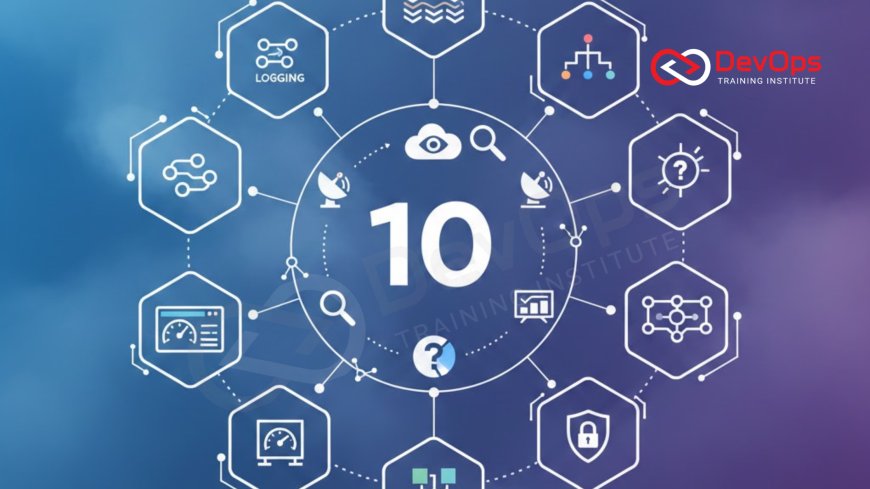
The most foundational pattern in observability defines the three essential types of telemetry data that must be collected from every single service and component. Often referred to as the "Three Pillars," these data types—Metrics, Logs, and Traces—each provide a unique lens through which to view the system. True observability relies on the presence and seamless correlation of all three, as relying on any single pillar leaves critical blind spots in the understanding of a distributed system's behavior. The collection of this data must be integrated directly into the application and infrastructure from the very beginning of the development process.
Metrics: Metrics are time-series data points, typically aggregated numerical measurements collected at regular intervals. They are the best tool for quantitative analysis, providing clear answers to "what" questions (e.g., "What is the average latency of the API?" or "What is the error rate?"). Metrics are efficient to store and query, making them ideal for long-term trending, capacity planning, and generating proactive alerts. Common metrics include request rates, latency distributions, and resource utilization (CPU, memory, network). They are usually generated by monitoring agents or via instrumentation libraries that expose the application's internal state in a structured format, enabling fast, high-level system health checks. Metrics are the first line of defense in identifying a problem.
Logs: Logs are discrete, time-stamped text records of events that occurred within an application or service. They are the best tool for providing contextual details and answering "why" and "who" questions (e.g., "Why did this specific transaction fail?" or "Which user initiated this action?"). Logs are unstructured or semi-structured (often JSON), making them expensive to store and search due to their high volume. Logs require a centralized aggregation pattern to be useful, as they are scattered across numerous servers. They are essential for detailed debugging and security auditing, providing the necessary audit trail for system events, which often requires strict **access control** to ensure the integrity and confidentiality of the recorded data.
Traces: Distributed Traces are records of the complete journey of a single request or transaction as it propagates across multiple services in a distributed system. They are the best tool for analyzing the flow of execution and understanding inter-service dependencies. A trace consists of spans, where each span represents an operation (like an HTTP request or a database query) within a service. Traces answer the "where" and "how long" questions (e.g., "Where did the latency spike occur?" or "How did the request move through the five services?"). They are indispensable for debugging latency issues in microservices, as they provide an end-to-end view of the transaction flow, something metrics and logs cannot easily achieve alone. The correlation of these three pillars is the true power of this foundational pattern.
Data Management and Correlation Patterns
The efficiency of an observability system hinges on its ability to manage massive data volumes and, most importantly, correlate the three data types seamlessly. Since Metrics, Logs, and Traces often reside in separate data stores (e.g., Prometheus for metrics, Elasticsearch for logs, Jaeger for traces), patterns for linking them together are vital for effective debugging. Without this linkage, an engineer discovering a metric alert (high latency) would have no immediate way to find the corresponding logs or traces, forcing a manual, time-consuming search that increases Mean Time to Recover (MTTR).
Pattern Correlation by Context: This pattern mandates that every service must inject a common set of identifying attributes into all three types of telemetry data it emits. This context includes a trace ID (the unique identifier for the request journey), a Span ID (the identifier for the current operation), and common attributes like the service name, version, and the environment. By ensuring the trace ID is present in every log line and every metric associated with that request, observability tools can automatically link them together. An engineer can then jump directly from a problematic span in a trace to the exact log lines generated during that operation, vastly accelerating the diagnosis of complex issues. This pattern requires meticulous **application instrumentation** and discipline from development teams to ensure all data is tagged correctly.
Pattern Centralized Logging Aggregation: Given the ephemeral nature of containers and serverless functions, this pattern dictates that local log files are immediately streamed to a scalable, dedicated central logging system (e.g., ELK stack, Loki). Log data is collected, parsed into a structured format (like JSON), and indexed for fast searching. This not only makes debugging easier but is a critical security requirement, as it ensures that logs are retained for auditing even if the source container is destroyed. The implementation of this pattern relies on agents like Fluentd or Filebeat, which efficiently forward the logs from the source to the central store, minimizing the risk of losing valuable operational history. This aggregated data forms the primary source for post-mortem analysis and security investigations, reinforcing **secure data archives** best practices.
Pattern Standardization with OpenTelemetry: The complexity of instrumenting applications across multiple languages and frameworks with different vendor-specific libraries led to the emergence of this critical standardization pattern. OpenTelemetry (OTel) is an open-source project that provides a single set of APIs, libraries, and agents for generating, collecting, and exporting all three types of telemetry data. By adopting OTel, organizations decouple their application instrumentation from the specific observability backend tool they use (e.g., Datadog, Jaeger, Prometheus). This prevents vendor lock-in, simplifies development, and guarantees that all services across the organization generate consistent, standardized data, which is essential for effective cross-service correlation and analysis. OTel is rapidly becoming the industry standard for telemetry generation.
Observability Patterns for Resiliency and Debugging
These patterns focus on how observability data is used to actively build more resilient systems and enable deeper, more efficient debugging. Moving beyond simple alerting on symptoms, these patterns help engineers understand the *why* behind system failures and continuously improve the application’s fault tolerance. They involve specialized data collection techniques and proactive analysis that goes beyond simple threshold monitoring to truly predict and prevent outages.
Pattern Distributed Tracing and Call Graphs: This pattern provides the end-to-end visibility necessary for microservices environments. It involves generating a unique Trace ID at the entry point of a request (e.g., the API Gateway) and propagating that ID through every single service the request touches. The system then renders a call graph, which visually shows the sequence of services called, the time spent in each service (latency), and where any errors or failures occurred. This visualization is invaluable for identifying bottlenecks (which service is slow) and understanding the complex dependency map of the system, transforming a chain of events into a coherent story. Tools like Jaeger or Zipkin implement this pattern effectively, turning a complex network of inter-service communication into a simple, traversable graph.
Pattern Service Level Objectives (SLOs) and Error Budgets: This pattern is a critical SRE practice that shifts the focus of monitoring from technical health to business-critical user experience. An SLO defines a target level of service reliability (e.g., 99.95% of requests must respond in under 300ms). The difference between the actual reliability and the SLO is the Error Budget. The pattern dictates that when the error budget is running low (meaning the system is close to violating the SLO), the team must pause feature development and dedicate effort to improving reliability. This use of SLOs and error budgets, typically tracked using metrics, provides a powerful, business-aligned mechanism for prioritizing stability over feature velocity, ensuring that the necessary reliability is maintained. The focus on user experience is a key secret behind the success of elite organizations.
Pattern White-Box Instrumentation (Code): This pattern mandates that application code be instrumented (equipped with logging and metrics collection) to expose *internal* application details (e.g., queue lengths, cache hit ratios, garbage collection frequency). This is in contrast to Black-Box monitoring, which only checks external behavior (e.g., pings or HTTP response codes). White-Box instrumentation, typically achieved using client libraries for OTel or Prometheus, provides the deep context necessary for advanced debugging. When an issue occurs, the internal state metrics tell the engineer not just *that* the service is slow, but *why* it is slow (e.g., cache misses, database connection pool exhaustion), dramatically speeding up root cause analysis and ensuring the necessary internal variables are tracked reliably for later analysis, often requiring careful handling of **user permissions** for access control.
Observability and Analysis Patterns
| Pattern Name | Pillar(s) Used | Primary Goal | Example Technology |
|---|---|---|---|
| The Three Pillars | Metrics, Logs, Traces | Comprehensive system visibility and data triangulation. | Prometheus, Loki, Jaeger |
| Correlation by Context | All Three | Link disparate data streams using common IDs (Trace ID). | OpenTelemetry (OTel) Semantic Conventions |
| Distributed Tracing | Traces | Map the end-to-end request flow and pinpoint latency in microservices. | Jaeger, Zipkin |
| SLOs and Error Budgets | Metrics | Tie reliability targets to business outcomes and manage engineering priorities. | Prometheus Alertmanager, Grafana |
| Unified Observability Platform | All Three | Provide a single-pane-of-glass UI for all telemetry data. | Datadog, Grafana/Tempo/Loki |
| Self-Service Dashboards | Metrics, Logs | Empower developers to own and monitor their service's health. | Grafana, Kibana |
| Healthcheck Endpoints | Black-Box Metrics | Provide a reliable, simple signal for load balancers and deployment tools. | Kubernetes Readiness/Liveness Probes |
Operationalization and Cultural Patterns
The final layer of observability patterns focuses on the processes and cultural shifts required to effectively utilize the gathered data. Even the most sophisticated tooling is useless if it is only managed by a specialized operations team. Observability must be baked into the DevOps culture, making every developer an owner of their service's reliability. These patterns bridge the gap between technical data collection and organizational effectiveness, ensuring that the investment in tools translates directly into faster incident response and continuous improvement cycles.
Pattern Unified Observability Platform: This pattern stresses the importance of having a single interface, or a "single pane of glass," where all three telemetry data types can be viewed, queried, and correlated. This eliminates the need for engineers to jump between multiple, disparate tools (e.g., logging platform, metrics system, tracing UI) to diagnose a single issue. A unified platform reduces cognitive load and accelerates debugging, as the context is maintained across different data types. Commercial providers like Datadog excel at this, but open-source stacks like Grafana combined with Prometheus, Loki, and Tempo can also achieve this unity, which is critical for **operational efficiency** and speed of resolution. The ability to see everything in one place is a huge accelerator during high-pressure incidents.
Pattern Self-Service Dashboards: This pattern empowers developers to create and customize their own dashboards and alerts for the services they own. Moving away from monolithic, centralized monitoring teams, self-service allows the domain experts (the developers) to define what is important to monitor and how to visualize it. When a team owns a service end-to-end, they are best positioned to know its internal failure modes and success indicators. This fosters a sense of ownership, directly improving code quality and accountability, as the team that writes the code is responsible for creating and maintaining the visibility into its production behavior. This is an essential cultural component of the SRE mindset, reducing the dependency on central monitoring teams.
Pattern Healthcheck Endpoints: This is a critical pattern for deployment and traffic management. Every service must expose dedicated HTTP endpoints for status checking. These include a simple Liveness Probe (does the service process respond?) and a more complex Readiness Probe (is the service ready to take traffic, e.g., has it connected to its database and initialized its caches?). These checks are used by load balancers and container orchestrators (like Kubernetes) to determine which instances should receive traffic. This reliable, automated signal is what enables zero-downtime deployment strategies like Rolling Updates, ensuring that traffic is never routed to an instance that is either down or simply not yet ready to process user requests, which is crucial for **high availability** and reliable service delivery.
Security and Compliance Observability Patterns
Observability data is not just for debugging application performance; it is a powerful tool for security auditing and compliance verification. These patterns ensure that the visibility system itself adheres to high security standards and that the data it collects is used to actively detect and prevent security threats. Given the sensitivity of some log and trace data, proper security measures around the observability stack are just as important as securing the production application itself.
Pattern Auditable Data Retention: This pattern addresses the need to securely retain log data for regulatory compliance (e.g., HIPAA, PCI DSS). Logs must be stored in an immutable, tamper-proof system for a defined period, often one or more years. While real-time logs are stored in expensive, indexed systems, older data must be moved to low-cost, archival storage (like AWS S3 or GCP Cloud Storage). The process requires a secure, automated system for offloading and managing this archival data, often using methods that involve **secure file compression** and data segmentation to meet retention and access requirements. The integrity of this archival process is crucial for passing external compliance audits, ensuring that records of system access and activity are preserved. This is where tools facilitating **tar and gzip security** practices are invaluable for maintaining verifiable, long-term data integrity.
Pattern Access Control for Telemetry: Due to the sensitive nature of logs and traces (containing IPs, internal data structures, and sometimes personal data), this pattern mandates strict, role-based access control (RBAC) on the observability platform itself. Not all users should be able to view all data. Access must be governed by **group management** and user permissions, ensuring that only security teams can view security logs, and only authorized developers can view customer-specific trace data. This protection ensures the integrity of the collected information and prevents unauthorized exposure of internal system details, which is a key component of a robust DevSecOps strategy. Strict governance of who can read the data is as vital as ensuring the data is collected correctly.
Pattern Anomaly and Outlier Detection: Going beyond simple threshold alerting (e.g., alert if CPU > 80%), this pattern employs machine learning and statistical analysis to detect unusual behavior in the telemetry data. Anomaly detection identifies deviations that do not fit the historical pattern, such as a sudden change in user behavior, an unexpected drop in traffic to a specific endpoint, or an unusual increase in latency on a typically fast service. This allows teams to catch entirely new, unknown failure modes or subtle security threats (like a compromised account) that traditional alerting would miss. By proactively alerting on these "unknown unknowns," this pattern helps SREs maintain service integrity and predict system issues before they escalate, providing a powerful layer of defense against subtle failures.
Conclusion
The 10 observability patterns detailed here collectively form the required blueprint for managing and maintaining complex, highly available applications in the modern cloud. They start with the foundational mandate to collect the Three Pillars (Metrics, Logs, Traces) and build upward through critical processes like **Correlation by Context** and **Distributed Tracing** that enable engineers to debug quickly. Crucially, these patterns extend beyond mere technology, embedding cultural shifts like **SLOs and Error Budgets** and **Self-Service Dashboards** that empower every team member to become a stakeholder in service reliability, transforming the entire organization's approach to operations and development.
For leaders, the implementation of these patterns represents the core investment in operational resilience and future agility. By standardizing instrumentation with **OpenTelemetry**, ensuring data governance through **Access Control**, and guaranteeing data safety with **Auditable Data Retention**, organizations can ensure their telemetry system is not only powerful for debugging but also secure and compliant. Mastering these patterns is the definitive way to move beyond reactive monitoring, providing the deep, continuous insight necessary to maintain high performance, achieve excellent reliability, and sustain the continuous delivery velocity that defines elite cloud-native organizations. The shift from simply watching infrastructure to truly observing application behavior is the most fundamental secret to operational excellence in the demanding world of modern cloud computing.
Frequently Asked Questions
What are the three pillars of observability?
The three pillars are Metrics, Logs, and Traces. They provide quantitative, contextual, and relational data about a running system.
What is the primary purpose of Distributed Tracing?
Its primary purpose is to map the path of a single request across multiple microservices and pinpoint where latency occurs.
How does Correlation by Context link logs and metrics?
It links them by ensuring a common unique identifier, such as the Trace ID or a session ID, is present in all three data streams.
What does OpenTelemetry (OTel) standardize?
OTel standardizes the APIs and libraries used to generate and collect all three types of telemetry data, simplifying instrumentation.
What is an SLO in the context of observability?
An SLO (Service Level Objective) is a target level of reliability or performance defined from the user's perspective, such as 99.9% uptime.
How does the Error Budget pattern influence feature development?
It dictates that if the service is close to violating its reliability target, the team must prioritize fixing stability over new feature work.
Why are Healthcheck Endpoints important for ZDD?
They provide reliable signals for load balancers and orchestrators to ensure traffic is only routed to instances that are fully ready.
What data is typically collected using the White-Box Instrumentation pattern?
Internal application details are collected, such as internal queue sizes, cache hit ratios, and database connection pool utilization.
What is the difference between monitoring and observability?
Monitoring tells you if the system is working. Observability allows you to ask arbitrary questions about why it is not working.
How does Auditable Data Retention support compliance?
It ensures that historical log data is securely and immutably preserved for mandatory periods to satisfy regulatory audit trails.
What security concern does Access Control for Telemetry address?
It addresses the risk of unauthorized personnel viewing sensitive internal data contained within the collected logs and traces.
How do Self-Service Dashboards improve developer ownership?
They empower developers to define and maintain the monitoring for the services they own, increasing accountability and improving visibility.
What is the key benefit of a Unified Observability Platform?
The key benefit is a single-pane-of-glass interface that reduces cognitive load and accelerates debugging by showing all data types together.
What is Anomaly Detection primarily used for?
It is used to proactively detect subtle, novel failures or security threats that deviate from the established historical behavior patterns.
Which pattern requires strict enforcement of Linux group management practices?
The Access Control for Telemetry pattern requires strict group management to define and enforce who can access sensitive log and trace data.
What's Your Reaction?
 Like
0
Like
0
 Dislike
0
Dislike
0
 Love
0
Love
0
 Funny
0
Funny
0
 Angry
0
Angry
0
 Sad
0
Sad
0
 Wow
0
Wow
0


![100+ Azure DevOps Interview Questions and Answers [Updated 2025]](https://www.devopstraininginstitute.com/blog/uploads/images/202509/image_140x98_68c40aa9a3834.jpg)






![Future Scope of DevOps Careers in Pune [Updated 2025]](https://www.devopstraininginstitute.com/blog/uploads/images/202510/image_140x98_68e3a84652312.jpg)