

![Kong Interview Preparation Guide [2025]](https://www.devopstraininginstitute.com/blog/uploads/images/202509/image_430x256_68dbb95326997.jpg)

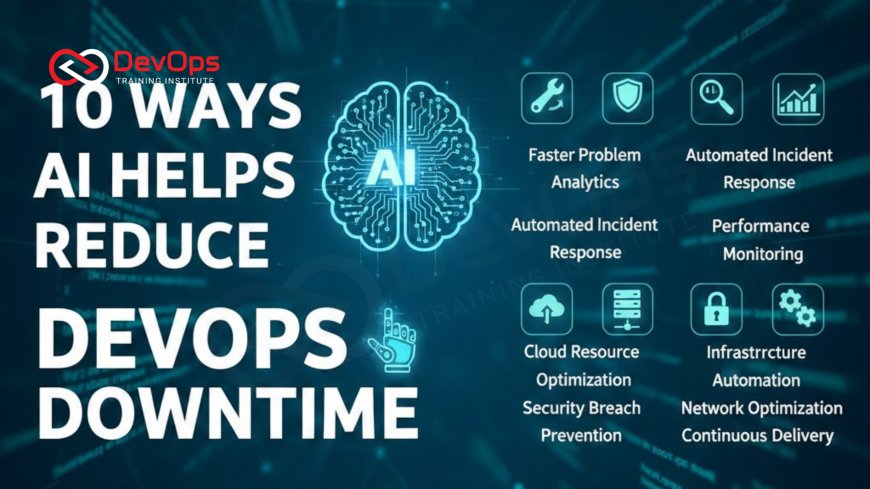
10 Ways AI Helps Reduce DevOps Downtime
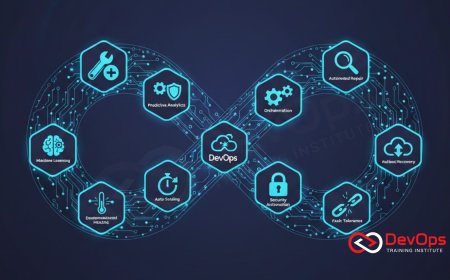
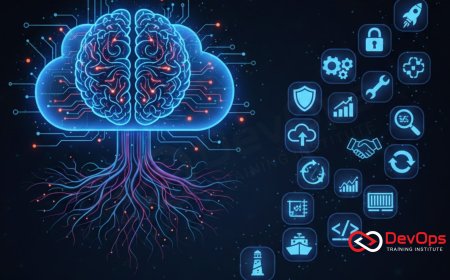
As we move into 2026, the intersection of artificial intelligence and operations—commonly known as AIOps—has become the primary defense against system instability. This comprehensive guide explores ten transformative ways AI helps reduce DevOps downtime, from predictive anomaly detection and automated root cause analysis to self-healing infrastructure and smart incident management. Learn how machine learning models analyze vast streams of telemetry data to identify potential outages before they impact users, reducing mean time to recovery (MTTR) by up to 80%. Discover how to integrate AI-augmented workflows that empower your engineering team to transition from reactive firefighting to proactive, intelligent system governance in today’s complex, multi-cloud digital environment.
Introduction to AI-Driven Reliability
In the high-pressure world of modern software delivery, downtime is the ultimate enemy of business growth and customer trust. As systems grow increasingly complex and distributed, traditional monitoring tools often fail to keep pace, leading to alert fatigue and delayed incident response. However, the integration of artificial intelligence is fundamentally reshaping the landscape of system reliability. AI-augmented DevOps is no longer a futuristic concept; by 2026, it has become the standard engine for maintaining high availability across global enterprise infrastructures. By processing millions of data points in real-time, AI identifies patterns that are invisible to the human eye, providing a level of foresight that manual operations simply cannot match.
Reducing downtime through AI involves a shift from a reactive "break-fix" model to a predictive and autonomous operational framework. This evolution allows engineering teams to stop firefighting and start focusing on strategic innovation. AI helps bridge the gap between development and operations by providing a unified, intelligent layer of observability that spans the entire lifecycle. In this guide, we will explore ten critical ways that AI technologies—ranging from machine learning to generative troubleshooting—are empowering DevOps teams to build more resilient systems, minimize service interruptions, and deliver a seamless experience to their users in an increasingly automated world.
Technique One: Predictive Anomaly Detection
Traditional monitoring relies on static thresholds—for example, sending an alert when CPU usage exceeds 90%. However, these thresholds often lead to false positives or missed incidents because they don't account for context or seasonal patterns. AI-powered anomaly detection uses machine learning to establish a dynamic baseline of "normal" behavior for every component in your stack. By analyzing historical telemetry data, the AI can distinguish between a harmless spike in traffic during a marketing campaign and a subtle deviation in memory usage that indicates a burgeoning memory leak. This foresight allows teams to intervene hours before a failure actually occurs.
By 2026, these models have become highly sophisticated, capable of correlating signals across logs, metrics, and traces simultaneously. When the system detects a deviation that matches a known failure signature, it can trigger a proactive incident handling workflow. This predictive capability is a cornerstone of AI augmented devops, enabling organizations to achieve predictive maintenance for their digital assets. It ensures that your monitoring is as dynamic as your cloud environment, providing a reliable early warning system that protects your cluster states and ensures continuous service delivery even under the most unpredictable conditions.
Technique Two: Automated Root Cause Analysis (RCA)
When an outage occurs, the most time-consuming phase is often the "war room" investigation, where engineers manually sift through mountains of data to find the source of the problem. AI dramatically accelerates this process through automated root cause analysis. By mapping the complex dependencies of a microservices architecture, AI can build a causal graph that traces a failure from the end-user error back to the specific misconfigured load balancer or faulty code commit. This turns a multi-hour investigation into a multi-second insight, drastically reducing the Mean Time to Recovery (MTTR) for the business.
Modern RCA tools use natural language processing to present these findings in clear, actionable plain language. Instead of a cryptic error code, the team receives a report stating exactly what failed, why it failed, and what steps are needed to fix it. This technique is particularly powerful for managing cascading failures, where one small error triggers a series of downstream issues. By utilizing ChatOps techniques, these AI-generated insights can be delivered directly to the team's primary communication channel, allowing for instant collaboration and a much faster return to a stable production state for all users.
Technique Three: Intelligent Alert Grouping and Suppression
Alert fatigue is a major contributor to downtime; when a system is overwhelmed by hundreds of low-priority notifications, critical signals are often ignored. AI addresses this by intelligently grouping related alerts into a single, comprehensive incident. For example, if a database failure triggers fifty separate alerts from different services, the AI recognizes the underlying relationship and presents them as one event. This prevents "noise" from obscuring the "signal," ensuring that on-call engineers can focus their full attention on the real issue at hand without being distracted by redundant notifications.
Furthermore, AI can automatically suppress alerts for known maintenance windows or non-critical issues that don't impact the user experience. This selective filtering is a key part of observability 2.0, moving away from "notifying on everything" to "notifying on what matters." By reducing the cognitive load on your engineers, you improve their response accuracy and reduce the likelihood of human error during a crisis. This intelligent prioritization is vital for maintaining a healthy technical culture and ensuring that your continuous synchronization efforts are always backed by a focused and effective operations team that is ready to act on genuine threats to system stability.
Technique Four: AI-Powered Automated Rollbacks
Deployment failures are a leading cause of unplanned downtime. AI helps mitigate this risk by acting as an intelligent quality gate during the rollout process. By monitoring key health metrics in real-time—such as error rates, latency, and user sentiment—the AI can determine if a new version is performing correctly. If the AI detects a regression that exceeds safety thresholds, it can automatically trigger a rollback to the previous stable version without human intervention. This ensures that a buggy release is "undone" in seconds, minimizing the impact on your customer base and maintaining a high standard of deployment quality.
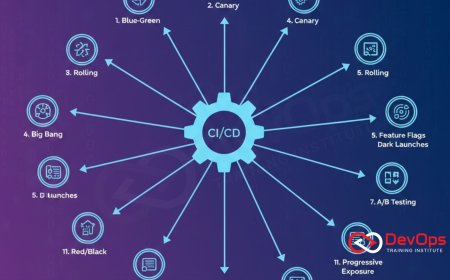
This technique is often used in conjunction with release strategies like canary deployments or blue-green releases. The AI acts as the "referee," analyzing data from the new version and comparing it against the stable baseline. If the "canary" version shows any signs of distress, the AI halts the rollout immediately. By automating this critical decision-making process, you remove the delay of manual verification and ensure that your production environment remains resilient. It turns your CI/CD pipeline into a self-protecting mechanism that prioritizes system availability above all else, which is essential for any high-growth digital enterprise.
How AI Reduces Downtime Across the DevOps Lifecycle
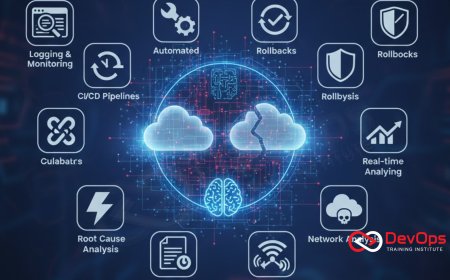
| DevOps Stage | AI Technique | Primary Reliability Benefit | Downtime Impact |
|---|---|---|---|
| Monitoring | Anomaly Detection | Early warning of failures | Proactive Prevention |
| Incident Response | Automated RCA | Rapid root cause identification | Reduced MTTR |
| Deployment | Intelligent Rollbacks | Instant recovery from bugs | Zero-Downtime Releases |
| Infrastructure | Predictive Scaling | Prevents resource exhaustion | Improved Stability |
| Security | Threat Detection | Stops breaches in real-time | Risk Mitigation |
Technique Five: Predictive Scaling and Resource Management
Resource exhaustion is a frequent cause of performance degradation and downtime. Traditional auto-scaling reacts to current load, which can be too slow to handle sudden spikes. AI-driven predictive scaling analyzes historical usage patterns to forecast future demand, allowing the cluster to scale up resources before the traffic arrives. This ensuring that your application has the necessary compute power to handle a morning surge or a seasonal event without hitting the ceiling. By optimizing resource management through AI, you maintain a smooth user experience while also reducing costs by scaling down during idle periods.
This technique is particularly effective in containerized environments like Kubernetes, where AI can optimize pod placement and cluster capacity based on anticipated needs. By utilizing architecture patterns that prioritize elasticity, organizations can build systems that are truly "right-sized" at all times. Predictive scaling eliminates the "cold start" problems and latency issues that often plague reactive systems, providing a rock-solid foundation for high-performance applications. It turns infrastructure management from a manual chore into an autonomous, cost-effective service that works in perfect harmony with your business objectives.
Technique Six: Self-Healing Infrastructure and Remediation
The ultimate goal of AIOps is to move beyond identification to autonomous remediation. Self-healing infrastructure uses AI to automatically resolve common, well-understood issues without human intervention. For example, if a service becomes unresponsive, the AI can automatically restart the container, clear a full temporary disk, or reroute traffic to a healthy region. These "low-level" fixes handle up to 70% of routine operational tasks, freeing up your human talent for more complex and innovative work. This autonomous response ensures that your system remains available even when the on-call team is asleep.
Self-healing is often implemented through AI agents that have direct access to your cluster states and cloud APIs. These agents follow pre-approved runbooks but can adapt their actions based on the specific context of the incident. By integrating continuous verification into this loop, the system can confirm that a remediation action was successful before closing the incident. This level of automation is a major cultural change for engineering teams, requiring a shift toward trust in automated systems. When executed correctly, it provides an unparalleled level of system resilience and uptime, even in the face of localized failures.
Technique Seven: AI-Augmented Security and Threat Detection
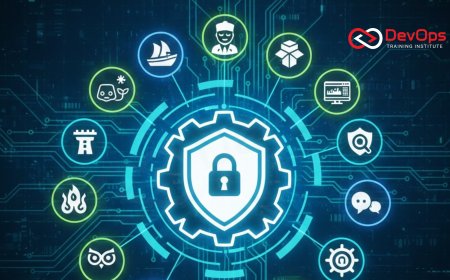
Security breaches are a major source of critical downtime. AI enhances DevOps security by providing continuous, real-time threat detection that traditional tools cannot match. By establishing a baseline of normal user and network behavior, AI can instantly flag suspicious activity—such as an unusual API call pattern or an unauthorized data transfer—that might indicate a breach in progress. These DevSecOps tools can automatically block the offending IP or isolate the compromised container, preventing an attack from spreading and causing a system-wide outage.
Beyond active detection, AI helps improve the security of your software supply chain. By scanning code, container images, and cloud configurations for vulnerabilities, AI identifies risks long before they reach production. Implementing admission controllers that utilize AI analysis ensures that only hardened and compliant workloads are allowed to run in your cluster. This proactive security posture is essential for protecting your organization's digital assets and maintaining the trust of your users. It ensures that security is an integrated part of your high-quality delivery process, reducing the likelihood of downtime caused by external attacks or internal misconfigurations.
Best Practices for Implementing AI to Reduce Downtime
- Prioritize Data Quality: AI models are only as good as the data they consume; ensure your logs, metrics, and traces are clean, structured, and consistent across all services.
- Start with Non-Critical Tasks: Build trust in AI by starting with simple automations, such as alert grouping or resource scaling, before moving to autonomous remediation.
- Ensure Model Interpretability: Choose AI tools that provide clear explanations for their decisions, allowing your human engineers to validate and learn from the AI's insights.
- Maintain Human Oversight: Use AI to augment your team, not replace them; always have a "human in the loop" for critical architectural decisions or high-risk remediations.
- Protect Your Secrets: Use secret scanning tools to ensure no credentials are exposed in the data fed to AI models or in the AI-generated configurations.
- Sync with GitOps: Ensure that any infrastructure changes suggested or made by AI are reflected in your GitOps repository to maintain a clear audit trail and history.
- Optimize Container Runtimes: Ensure your underlying compute layer, such as containerd, is tuned for the rapid restarts and scaling actions that AI may trigger.
Adopting AI is a journey of continuous learning and refinement. As your team becomes more comfortable with these tools, you will find that your operational speed and accuracy increase significantly. It is important to foster a culture of transparency and collaboration where developers and operations teams work together to tune and improve the AI models. By prioritizing these best practices today, you are positioning your organization for long-term success in an increasingly automated world. AI turns your DevOps practice into a proactive and resilient powerhouse, allowing you to deliver faster innovation without compromising on the high standards of quality and uptime your users expect.
Conclusion: The Future of Autonomous Reliability
In conclusion, the ten ways AI helps reduce DevOps downtime represent a fundamental paradigm shift in how we manage technical systems. From the predictive foresight of anomaly detection to the rapid response of automated root cause analysis and self-healing infrastructure, AI provides the tools needed to master the complexities of modern cloud environments. By moving beyond reactive firefighting, organizations can achieve a level of system resilience that was previously impossible. The integration of AI into DevOps is not just about efficiency; it is about building a foundation for sustainable growth and innovation in the digital age.
As we look toward the future, the role of AI augmented devops will only continue to expand. Staying informed about AI augmented devops trends will be critical for any forward-thinking engineer or leader. By embracing these ten techniques today, you are preparing your team for the challenges of tomorrow, ensuring that your organization remains a leader in a world where uptime is the ultimate competitive advantage. Start by identifying your biggest source of downtime, apply an AI-driven solution, and watch your system availability reach new heights of excellence and reliability.
Frequently Asked Questions
How does AI specifically help in reducing the Mean Time to Recovery (MTTR)?
AI helps by instantly correlating data across logs and metrics to identify the root cause, providing answers in seconds rather than hours of manual work.
What is AIOps and why is it important for DevOps teams?
AIOps is the application of AI to IT operations; it is important because it allows teams to manage increasingly complex systems through intelligent automation.
Can AI predict an outage before it actually happens?
Yes, by analyzing historical patterns and telemetry data, AI can identify early signs of system distress and alert teams to intervene before failure occur.
How do automated rollbacks improve the safety of a deployment?
They monitor the health of a new release and instantly revert to a stable version if issues are detected, protecting users from buggy code changes.
Does using AI for monitoring lead to fewer alerts for engineers?
Yes, AI groups related alerts and suppresses noise, ensuring that only truly critical and unique incidents reach the on-call team for their attention.
What is "self-healing infrastructure" in a DevOps context?
It is a system that can automatically detect and fix common issues, such as restarting a failed service, without any manual human intervention required.
Is it safe to let an AI automatically scale my cloud resources?
Yes, when configured with proper limits and based on predictive historical data, AI-driven scaling is highly reliable and prevents system overloads effectively.
How does AI contribute to DevSecOps and cluster security?
AI identifies anomalous user and network behavior in real-time, allowing for immediate automated responses to block threats and protect the cluster state.
What role does ChatOps play in AI-driven incident management?
ChatOps provides a collaborative interface where AI-generated insights and remediation actions are delivered to the entire team for rapid coordination and response.
Can small teams benefit from AI-powered DevOps tools?
Absolutely, AI tools allow small teams to achieve enterprise-grade reliability and monitoring without needing a massive internal team of specialized operations experts.
How do I start implementing AI in my existing DevOps workflow?
Start by identifying a single repetitive task, such as alert grouping, and use a specialized AI tool to automate and optimize that process first.
What is the difference between reactive and predictive operations?
Reactive operations fix things after they break, while predictive operations use AI to identify and mitigate risks before they ever become real problems.
Does AI in DevOps require a lot of manual training?
Many modern AIOps tools use pre-trained models that can learn your specific environment's behavior automatically within a few days of being deployed.
What is "anomaly detection" in simple terms?
It is the ability of an AI to recognize when a system's behavior deviates from its normal baseline, suggesting a potential problem or failure.
Will AI eventually replace the need for on-call engineers?
No, AI handles the routine and predictable tasks, but human engineers are still vital for complex problem-solving, architectural strategy, and creative system design.
What's Your Reaction?
 Like
0
Like
0
 Dislike
0
Dislike
0
 Love
0
Love
0
 Funny
0
Funny
0
 Angry
0
Angry
0
 Sad
0
Sad
0
 Wow
0
Wow
0

![100+ Azure DevOps Interview Questions and Answers [Updated 2025]](https://www.devopstraininginstitute.com/blog/uploads/images/202509/image_140x98_68c40aa9a3834.jpg)





![Future Scope of DevOps Careers in Pune [Updated 2025]](https://www.devopstraininginstitute.com/blog/uploads/images/202510/image_140x98_68e3a84652312.jpg)