


![Kong Interview Preparation Guide [2025]](https://www.devopstraininginstitute.com/blog/uploads/images/202509/image_430x256_68dbb95326997.jpg)



12 Container Security Tools to Protect Your Cloud Apps
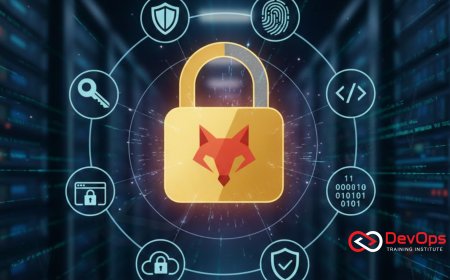
Explore the 12 essential container security tools for 2025 to safeguard your cloud applications. From vulnerability scanning and runtime protection to compliance checks, these solutions help DevOps teams mitigate risks in Kubernetes and Docker environments effectively.
Introduction
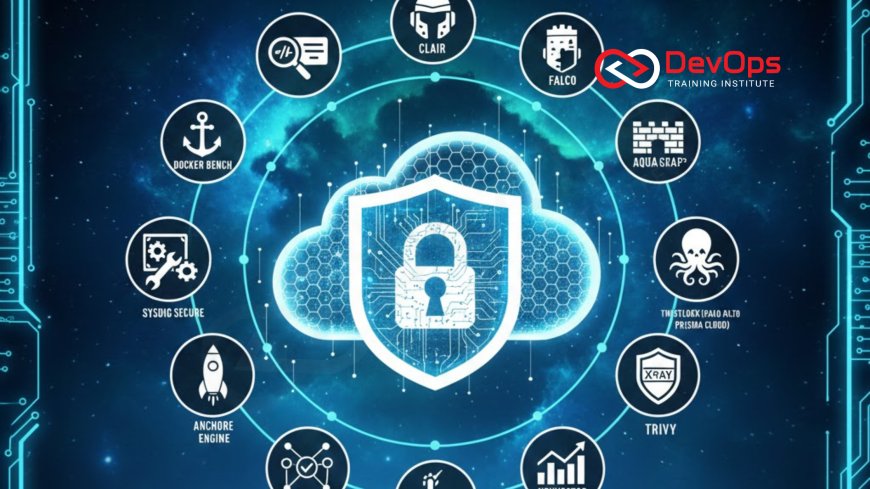
Containers have revolutionized how we build and deploy cloud applications, offering speed, scalability, and portability. However, this shift introduces unique security challenges, from vulnerable images to runtime threats in dynamic environments like Kubernetes. Protecting your cloud apps means adopting tools that scan for vulnerabilities, enforce policies, and monitor behavior in real time. This guide highlights 12 top container security tools for 2025, blending open-source gems and enterprise platforms to help you secure your containerized workloads without slowing down development, especially when using AWS Lambda and other serverless functions.
1. Trivy
- Fast, lightweight vulnerability scanner for containers, filesystems, and git repos
- Supports OS packages, application dependencies, and infrastructure as code
- Easy integration with CI/CD pipelines like GitHub Actions and Jenkins
- Generates SBOMs and detects misconfigurations in Kubernetes manifests
- Comprehensive database updated daily with CVEs and other threats
- Open-source with no licensing costs, ideal for small to medium teams
- Command-line tool that outputs results in JSON, SARIF, or table formats
2. Clair
Clair stands out as a robust open-source tool for static vulnerability analysis in container images. Developed by Red Hat, it integrates seamlessly with registries like Docker Hub and supports multiple vulnerability databases. Teams appreciate its API-driven design, allowing automated scans during build processes. While it excels at identifying known CVEs, pairing it with tools like Klar enhances its usability in CI/CD workflows.
3. Falco
- Runtime security tool using Linux kernel events for threat detection
- Rule-based engine to spot anomalous behavior like unauthorized file access
- Supports Kubernetes, containers, and cloud environments out of the box
- Outputs alerts to Slack, Elasticsearch, or custom webhooks
- Extensible with custom rules written in YAML for tailored policies
- Low overhead with eBPF-based monitoring for high performance
- Part of the CNCF, ensuring community-driven evolution and reliability
4. Aqua Security
Aqua Security offers a full-spectrum platform for container protection, from image scanning to runtime defense. Its Trivy integration provides free open-source scanning, while the enterprise edition adds risk prioritization and compliance reporting. Aqua shines in multi-cloud setups, helping teams reduce attack surfaces through automated policy enforcement and image assurance.
5. Snyk Container
- Developer-first scanner focused on fixing vulnerabilities with actionable remediation
- Integrates with IDEs, CLI, and CI/CD for shift-left security
- Supports Docker, Kubernetes, and serverless containers
- Prioritizes exploits based on exploitability scores and business impact
- Free tier for open-source projects with unlimited scans
- Generates detailed reports and pull requests for fixes
- Strong ecosystem with plugins for major languages and frameworks
6. Anchore (Grype & Syft)
Anchore provides SBOM-driven security with Syft for inventory generation and Grype for vulnerability scanning. This open-source duo excels in supply chain transparency, detecting issues in layers and dependencies. Enterprise users benefit from policy engines and deep integrations with Harbor registries, making it a staple for compliance-heavy industries like finance.
7. Sysdig Secure
- Comprehensive CNAPP with runtime threat detection and compliance monitoring
- Leverages Falco rules plus proprietary behavioral analytics
- Unified dashboard for metrics, logs, and security events
- Supports multi-cloud and hybrid environments seamlessly
- Automated drift detection to spot configuration changes
- Scalable for thousands of nodes with minimal resource impact
- Features like posturing and benchmarking for Kubernetes best practices
8. Prisma Cloud (Palo Alto Networks)
Prisma Cloud delivers enterprise-grade container security as part of a broader CNAPP. It scans images, enforces network policies, and monitors runtime with AI-powered anomaly detection. Ideal for large organizations, it integrates with Palo Alto's ecosystem for end-to-end protection, ensuring compliance with standards like PCI-DSS and HIPAA.
9. Wiz
- Agentless scanning for quick deployment across cloud accounts
- Graph-based visualization of attack paths and vulnerabilities
- Supports containers, VMs, and serverless with contextual risk scoring
- Automated prioritization based on business criticality
- Integrates with ticketing systems for streamlined remediation
- Strong focus on cloud-native threats like IAM misconfigurations
- Real-time alerts with detailed forensic evidence
10. Kubescape
Kubescape is an open-source tool tailored for Kubernetes security, scanning clusters against NSA and MITRE guidelines. It identifies misconfigurations, RBAC issues, and secrets in manifests. With CLI and Helm chart options, it's perfect for DevOps teams embedding security in GitOps workflows, offering clear, actionable reports to improve posture and debug Lambda functions using CloudWatch Logs effectively.
11. Twistlock (Check Point CloudGuard)
Twistlock, now part of Check Point's CloudGuard, provides unified protection for containers and cloud workloads. It features image scanning, runtime defense, and compliance dashboards. Teams value its low false-positive rates and integration with CI/CD, making it suitable for regulated environments requiring audit-ready logs and policy automation.
12. Notary
- Tool for signing and verifying container images to prevent tampering
- Implements The Update Framework (TUF) for secure distribution
- Integrates with Docker Content Trust for metadata validation
- Supports threshold signatures for distributed trust models
- CLI-based with options for custom root keys
- Essential for supply chain security in multi-team setups
- Open-source under Apache license with active community
Quick Comparison Table
| Tool | Focus Area | Open Source | Pricing |
|---|---|---|---|
| Trivy | Image Scanning | Yes | Free |
| Clair | Static Analysis | Yes | Free |
| Falco | Runtime Protection | Yes | Free / Enterprise |
| Aqua Security | Full Lifecycle | Partial | Paid |
| Snyk Container | Developer Security | Partial | Freemium |
| Anchore | SBOM & Scanning | Yes | Free / Enterprise |
| Sysdig Secure | CNAPP | Partial | Paid |
| Prisma Cloud | Cloud Native | No | Paid |
| Wiz | Agentless Scanning | No | Paid |
| Kubescape | K8s Compliance | Yes | Free |
| Twistlock | CloudGuard | No | Paid |
| Notary | Image Signing | Yes | Free |
Conclusion
In 2025, container security is non-negotiable for cloud apps facing evolving threats. From Trivy's quick scans to Wiz's agentless insights, these 12 tools offer diverse options to match your needs, whether open-source simplicity or enterprise depth. Start by assessing your pipeline's weak spots, integrate scanning early with best practices for scalable Lambda functions, and layer runtime protections for robust defense. With the right mix, you'll boost compliance, cut risks, and keep deployments agile.
Frequently Asked Questions
What is container security and why does it matter?
Container security involves protecting images, runtime environments, and orchestration from vulnerabilities and attacks, ensuring cloud apps remain resilient and compliant.
Which tool is best for beginners in container scanning?
Trivy offers a simple CLI with broad coverage, making it ideal for new teams to start scanning without complex setups.
How does runtime security differ from image scanning?
Image scanning checks static vulnerabilities pre-deployment, while runtime tools like Falco monitor live behaviors to catch threats in action.
Are open-source tools sufficient for enterprise use?
Yes, tools like Anchore and Falco scale well, but enterprises often add commercial support for advanced features and SLAs.
How can I reduce Lambda cold start times in containerized workloads?
Use lightweight base images, provisioned concurrency, and tools like Sysdig or Wiz to monitor and optimize performance.
How can I integrate these tools into CI/CD?
Most, like Snyk and Trivy, have plugins for Jenkins, GitLab, and GitHub Actions to automate scans on every build.
Is agentless scanning reliable for containers?
Tools like Wiz provide effective agentless coverage via API access, reducing overhead while maintaining visibility.
What compliance standards do these tools support?
Many align with NIST, CIS benchmarks, and GDPR; Kubescape excels in Kubernetes-specific NSA and MITRE guidelines.
Can I use multiple tools together?
Absolutely, combining image scanners with runtime monitors creates layered defense for comprehensive protection.
What's new in container security for 2025?
Trends include AI-driven prioritization, eBPF enhancements, and deeper CNAPP integrations for holistic cloud coverage.
What's Your Reaction?
 Like
0
Like
0
 Dislike
0
Dislike
0
 Love
0
Love
0
 Funny
0
Funny
0
 Angry
0
Angry
0
 Sad
0
Sad
0
 Wow
0
Wow
0

![100+ Azure DevOps Interview Questions and Answers [Updated 2025]](https://www.devopstraininginstitute.com/blog/uploads/images/202509/image_140x98_68c40aa9a3834.jpg)





![Future Scope of DevOps Careers in Pune [Updated 2025]](https://www.devopstraininginstitute.com/blog/uploads/images/202510/image_140x98_68e3a84652312.jpg)