













![Kong Interview Preparation Guide [2025]](https://www.devopstraininginstitute.com/blog/uploads/images/202509/image_430x256_68dbb95326997.jpg)







12 Data Encryption Tools for DevOps Security
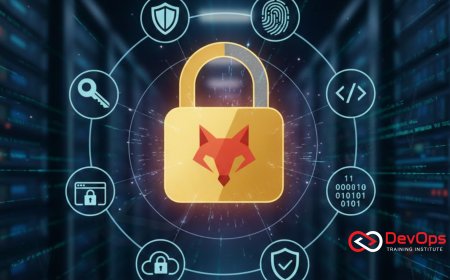
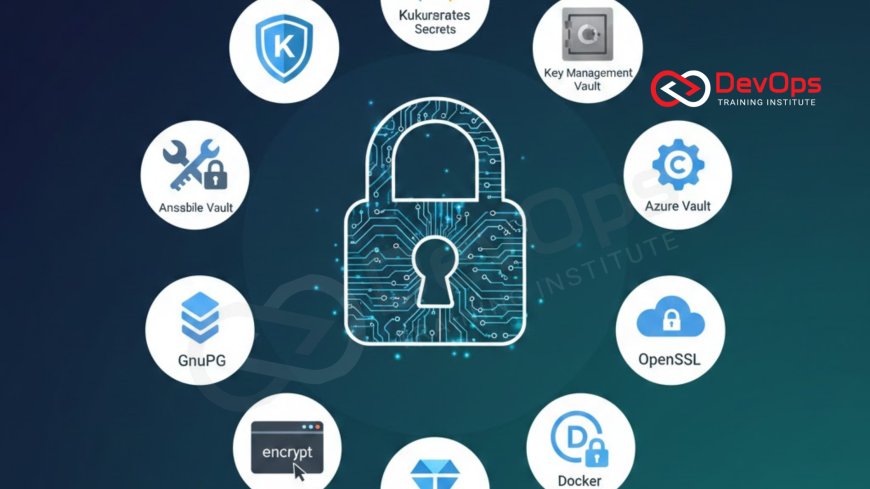
Discover the top 12 data encryption tools designed for DevOps security in this comprehensive guide. We explore essential solutions for managing secrets, protecting data at rest, and securing communications in transit within automated pipelines. From HashiCorp Vault to AWS KMS and Kubernetes-native tools like Sealed Secrets, learn how these technologies help teams integrate robust cryptographic practices into their DevSecOps lifecycle to prevent breaches and ensure compliance in 2025.
Introduction to DevOps Data Encryption
In the modern era of rapid software delivery, security can no longer be a final checkbox before a release. As organizations move toward faster deployment cycles, the risk of sensitive data exposure increases significantly. Data encryption has become a foundational pillar of any successful security strategy, ensuring that even if unauthorized individuals gain access to storage or network traffic, the information remains unreadable and useless to them. This is especially critical in cloud-native environments where data moves constantly between microservices and distributed databases.
DevOps teams must balance the need for speed with the necessity of robust protection. Integrating encryption tools directly into automated pipelines allows for security by design. This approach ensures that every piece of sensitive information, from API keys to customer records, is protected from the moment it is created. In this article, we will explore twelve essential tools that help bridge the gap between high-velocity engineering and rigorous data protection, providing a clear path for teams to achieve operational excellence while maintaining the highest levels of safety and trust.
The Crucial Role of Secret Management
Secret management is the practice of securely storing and controlling access to sensitive information like passwords, tokens, and certificates. In a traditional setup, these secrets might have been hardcoded into configuration files, leading to major vulnerabilities if those files were ever leaked. Modern tools solve this by centralizing secret storage and providing dynamic access. This means that applications only receive the credentials they need at the moment they need them, significantly reducing the attack surface for potential hackers.
By using a dedicated secret management solution, teams can automate the rotation of passwords and keys without manual intervention. This reduces human error and ensures that long-lived credentials do not become a permanent liability. This systematic approach to protecting sensitive values is a fundamental part of how devsecops works in high-performing organizations. It transforms security from a manual bottleneck into an automated service that supports developers, allowing them to focus on building features while knowing that their credentials are safe and managed according to the latest industry standards.
Protecting Data at Rest and in Transit
Security experts often categorize data protection into two main areas: data at rest and data in transit. Data at rest refers to information stored on disks, databases, or cloud storage buckets. Protecting this data usually involves disk-level encryption or application-level cryptographic libraries. On the other hand, data in transit is information moving over a network, such as between a user's browser and a web server or between two internal services. This requires strong protocols like TLS to ensure that the data cannot be intercepted or tampered with during its journey.
Professional DevOps teams use a variety of tools to manage both types of encryption automatically. For example, cloud providers offer managed services that handle the heavy lifting of key management and rotation. This allows teams to focus on their core logic rather than the underlying mathematics of cryptography. Implementing these controls is essential for meeting regulatory requirements and protecting user privacy. It also provides a level of observability that allows teams to audit who accessed which data and when, providing a clear trail for security forensics and compliance reporting.
Cloud-Native Key Management Services
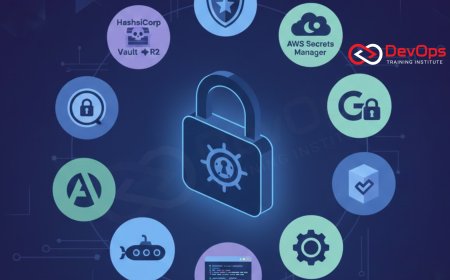
Cloud-native Key Management Services (KMS) have revolutionized how teams handle encryption keys. Tools like AWS KMS, Azure Key Vault, and Google Cloud KMS offer a centralized place to create, rotate, and manage the lifecycle of cryptographic keys. These services are deeply integrated into the cloud provider's ecosystem, allowing you to encrypt S3 buckets, RDS databases, and even EBS volumes with a single configuration. Because these services use Hardware Security Modules, the actual key material never leaves a secure environment, providing a very high level of protection.
Integrating these services into your deployment pipeline allows for automated resource provisioning that is secure from day one. You can use tools like Terraform to define your encryption policies alongside your infrastructure code. This ensures that every new database or storage bucket is automatically encrypted with the correct key and follows the organization's security standards. This level of automation is a key benefit of platform engineering as it provides developers with a secure-by-default environment, reducing the cognitive load required to implement complex security controls manually across hundreds of different services.
Table: Comparison of Top Encryption and Secret Management Tools
| Tool Name | Primary Category | Key Feature | DevOps Benefit |
|---|---|---|---|
| HashiCorp Vault | Secrets Management | Dynamic secrets and lease-based access. | Reduces risk of long-lived credential leaks. |
| AWS KMS | Key Management | Hardware-backed key storage and rotation. | Seamless integration with AWS services. |
| cert-manager | TLS/SSL Automation | Automated issuance and renewal of certs. | Prevents outages due to expired certificates. |
| Mozilla SOPS | File Encryption | Encrypts specific keys in YAML/JSON files. | Allows storing encrypted secrets in Git safely. |
| Sealed Secrets | Kubernetes Security | One-way encryption for K8s Secret objects. | Perfect for GitOps-based secret management. |
TLS and SSL Certificate Automation
Managing SSL and TLS certificates manually is a recipe for disaster. Expired certificates are one of the most common causes of unexpected application downtime. In a modern DevOps environment, teams use tools to automate the entire certificate lifecycle, from issuance to renewal. This ensures that all communication channels remain encrypted without requiring manual checks by engineers. It also allows for the use of shorter-lived certificates, which improves security by reducing the window of opportunity for an attacker to use a stolen private key.
Tools like cert-manager have become the industry standard for managing certificates within Kubernetes clusters. They can automatically request certificates from authorities like Let's Encrypt or HashiCorp Vault and inject them into your application's ingress controllers. This automation removes the toil of manual certificate management and provides a more resilient infrastructure. This proactive approach to preventing outages is similar to the principles found in chaos engineering as it helps teams build systems that are inherently resistant to common operational failures like certificate expiration.
Encryption for GitOps and Version Control
As more teams adopt GitOps, a major challenge has emerged: how do you store sensitive configuration in a public or private Git repository safely? You cannot store plaintext passwords in Git, but you need your automation to be able to read those values during a deployment. Encryption tools specifically designed for version control solve this by allowing you to commit encrypted files. These files can only be decrypted by your deployment pipeline or your Kubernetes cluster, ensuring that even if someone gains access to your source code, they cannot read your production secrets.
Tools like Mozilla SOPS and Bitnami Sealed Secrets are incredibly popular for this purpose. SOPS allows you to encrypt specific values within a YAML or JSON file while keeping the keys visible, making it easy to manage configurations. Sealed Secrets takes a different approach by providing a one-way encryption mechanism where only the controller running in your cluster can decrypt the secret. This ensures a tight loop of security that fits perfectly with gitops principles. These tools enable teams to maintain a single source of truth for their entire infrastructure without compromising on the safety of their most sensitive data.
Database and Application Level Encryption
Sometimes, disk-level encryption is not enough, especially when dealing with highly sensitive user data like credit card numbers or health records. In these cases, application-level encryption is required. This involves encrypting individual data fields before they are even sent to the database. This ensures that even a database administrator with full access cannot read the sensitive fields without the correct decryption key. Many modern encryption libraries and tools provide easy-to-use APIs that handle the complexities of algorithm selection and padding automatically.
For DevOps teams, managing the keys for application-level encryption is a critical task. This is where "Encryption as a Service" comes into play, allowing applications to send plaintext data to a secure service and receive back the ciphertext. This offloads the cryptographic burden from the application code and centralizes security logic. This strategy is an excellent example of shift left testing for security, as it allows developers to integrate data protection early in the coding process, ensuring that security is a functional requirement from the very first line of code written.
Continuous Security Monitoring and Auditing
Encryption is not a "set it and forget it" task. You must continuously monitor your systems to ensure that encryption is actually being used and that keys are being rotated according to policy. Security auditing tools can automatically scan your cloud environments to find unencrypted storage buckets or weak TLS configurations. These tools provide real-time alerts when a change violates a security policy, allowing teams to react quickly and fix the issue before it can be exploited by an attacker.
Integrating these audits into your CI and CD pipelines ensures that insecure configurations are never even deployed. For instance, you can use policy-as-code tools to block any deployment that creates an unencrypted database. This automated governance provides a strong safety net for the organization. It also allows for more experimentation, as developers can use feature flags to roll out new security features to a small group of users first, verifying that the new encryption logic does not negatively impact performance or user experience before a full global rollout.
- Automated scanning for unencrypted S3 buckets and RDS instances.
- Real-time alerting for certificate expiration and weak cipher suites.
- Policy-as-code to prevent the creation of insecure resources.
- Detailed audit logs for all key management operations.
Cost Optimization in Security Operations
While security is paramount, the cost of managed encryption services and certificate authorities can add up, especially at scale. Professional teams use various strategies to optimize their security spending without compromising on protection. This includes choosing the right tier of service for different environments and automating the cleanup of unused keys and certificates. Understanding the pricing models of cloud KMS and secret managers is essential for maintaining a sustainable budget while scaling your infrastructure.
This intersection of security and financial management is a growing field. By applying finops principles to your security stack, you can identify areas of waste, such as maintaining expensive HSM-backed keys for development environments that only require simple software-based encryption. This balanced approach ensures that the organization gets the best possible protection for its investment. It allows the security team to justify their budget by showing clear data on resource utilization and the cost-effectiveness of their chosen encryption tools and strategies across the entire enterprise.
Conclusion
Securing a modern DevOps environment requires a comprehensive and automated approach to data encryption. We have explored twelve essential tools and strategies that help protect sensitive information at rest, in transit, and within version control. From the centralized power of HashiCorp Vault to the cloud-native ease of AWS KMS and the automated resilience of cert-manager, these tools provide a robust foundation for any DevSecOps initiative. By integrating encryption into every stage of the software delivery lifecycle, teams can build trust with their users and ensure compliance with global regulations. The journey toward a secure infrastructure is ongoing, but with the right tools and a commitment to automation, any organization can achieve a state of high-velocity, low-risk engineering. As you move forward, prioritize the removal of hardcoded secrets, automate your certificate renewals, and always look for ways to make security a seamless part of the developer experience. By doing so, you will not only prevent data breaches but also create a more resilient and efficient engineering culture that is ready for the challenges of tomorrow.
Frequently Asked Questions
What is the best tool for secrets management?
HashiCorp Vault is widely considered the industry leader for managing secrets due to its robust features and support for dynamic credentials.
How does encryption at rest work in the cloud?
Cloud providers use managed keys to automatically encrypt your data before it is written to physical disks in their data centers.
What is cert-manager used for in Kubernetes?
It is used to automatically issue and renew TLS certificates for your applications, ensuring secure communication without any manual effort.
Can I store secrets in Git?
You should never store plaintext secrets in Git, but you can use tools like Mozilla SOPS to store encrypted versions safely.
What is the difference between symmetric and asymmetric encryption?
Symmetric uses one key for both encryption and decryption, while asymmetric uses a pair of public and private keys for those tasks.
Why is key rotation important?
Rotating keys regularly limits the amount of data that would be compromised if a single key were ever stolen or leaked.
Does encryption impact application performance?
Modern encryption algorithms are very efficient, but there is always a small overhead that should be measured during performance testing.
What is a Hardware Security Module (HSM)?
An HSM is a physical device that safeguards and manages digital keys for strong authentication and provides high-level cryptographic processing.
How do I encrypt a database field?
You can use application-level encryption libraries or database-native features to encrypt sensitive columns before the data is saved to disk.
What is TLS?
Transport Layer Security is a protocol that provides communication security over a computer network, ensuring that data in transit is private.
How do cloud providers handle key management?
Providers like AWS and Azure offer managed Key Management Services that automate the generation, storage, and rotation of your encryption keys.
What is a Sealed Secret?
It is a Kubernetes-native object that allows you to store encrypted data in Git that only your cluster can eventually decrypt.
Is data encryption required for compliance?
Most major regulations like GDPR, HIPAA, and PCI-DSS require encryption to protect sensitive user data and maintain strict privacy standards.
Can I use feature flags for security rollouts?
Yes, you can use feature flags to gradually enable new encryption logic and verify its impact before a full deployment.
How can I learn more about DevSecOps?
You can read about how does devsecops integrate security to understand the broader cultural and technical shifts in the industry.
What's Your Reaction?
 Like
0
Like
0
 Dislike
0
Dislike
0
 Love
0
Love
0
 Funny
0
Funny
0
 Angry
0
Angry
0
 Sad
0
Sad
0
 Wow
0
Wow
0



![100+ Azure DevOps Interview Questions and Answers [Updated 2025]](https://www.devopstraininginstitute.com/blog/uploads/images/202509/image_140x98_68c40aa9a3834.jpg)






![Future Scope of DevOps Careers in Pune [Updated 2025]](https://www.devopstraininginstitute.com/blog/uploads/images/202510/image_140x98_68e3a84652312.jpg)