


![Kong Interview Preparation Guide [2025]](https://www.devopstraininginstitute.com/blog/uploads/images/202509/image_430x256_68dbb95326997.jpg)

12 Real-Time DevOps Insights Using AI Analytics
Discover how 12 real-time DevOps insights using AI analytics are revolutionizing the way engineering teams monitor, deploy, and secure their cloud-native applications. This detailed guide explores the intersection of artificial intelligence and operational excellence, highlighting how machine learning models identify anomalies, optimize cloud spending, and accelerate delivery cycles. Learn how to leverage predictive data to improve system reliability, enhance developer productivity, and maintain a competitive edge in today's rapidly evolving and complex digital landscape through intelligent automation and deep technical visibility.
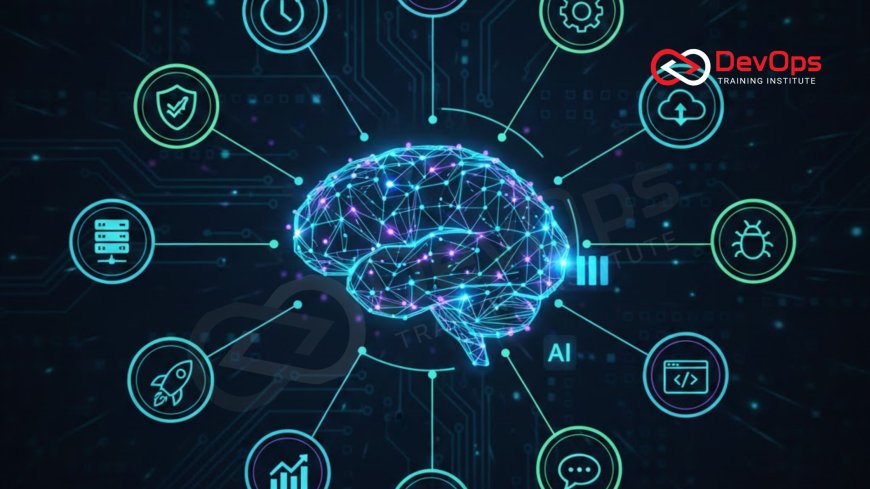
Introduction to AI-Driven DevOps Intelligence
The modern landscape of software development is moving faster than ever before. For years, teams relied on manual monitoring and reactive troubleshooting to keep their systems running. However, as applications grow into massive distributed architectures with thousands of moving parts, the sheer volume of data has become overwhelming for human operators. This is where artificial intelligence and machine learning step in to provide clarity, turning raw data into actionable real-time insights that help teams make better decisions almost instantly.
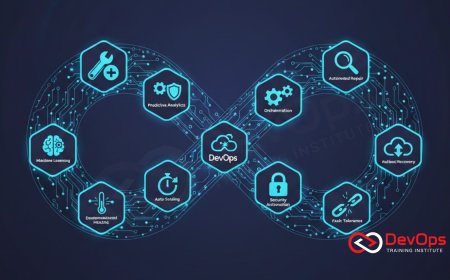
In this comprehensive exploration, we will look at how 12 real-time DevOps insights using AI analytics are changing the game for engineering organizations. By integrating AI into the heart of the delivery pipeline, companies can move beyond simply knowing that a problem exists to understanding why it happened and how to prevent it in the future. This shift toward intelligent operations allows developers and site reliability engineers to focus on innovation rather than repetitive maintenance, creating a more resilient and efficient software factory for the digital age.
Predictive Anomaly Detection in System Performance
Traditional monitoring tools often rely on static thresholds, such as sending an alert when CPU usage hits eighty percent. The problem is that these static rules don't account for normal fluctuations in traffic or specific application behaviors. AI analytics solve this by learning the unique heartbeat of your system. By analyzing historical patterns, the AI can distinguish between a healthy spike in traffic during a marketing campaign and a genuine anomaly that indicates a memory leak or a failing database connection.
These real-time insights allow teams to identify issues before they impact the end user. When the AI detects a slight deviation from the norm, it can trigger an early warning, giving engineers time to investigate and resolve the situation proactively. This predictive capability is a fundamental part of modern platform engineering where the goal is to build self-healing systems. Instead of waking up to a massive outage at midnight, teams receive smart notifications that point toward the likely root cause, allowing for a much faster and more relaxed resolution process.
Real-Time Root Cause Analysis for Rapid Recovery
When a complex system fails, the first few minutes are usually spent in a state of confusion as engineers sift through thousands of logs and metrics across dozens of services. AI analytics can perform this heavy lifting in seconds by correlating events from across the entire stack. By identifying a sequence of errors that led to a crash, the AI can present a clear timeline of the incident, pinpointing the exact microservice or configuration change that started the chain reaction of failures.
This automated root cause analysis drastically reduces the mean time to recovery. It moves the conversation from "what is happening" to "how do we fix it" almost immediately. This level of insight is essential for maintaining high availability in production. By leveraging deep technical visibility, teams can understand the observability of their systems at a granular level. The AI acts as a digital assistant that has seen every previous incident and can quickly match current patterns to known solutions, ensuring that the team doesn't repeat the same mistakes or waste time on dead-end troubleshooting paths.
Optimizing Delivery Pipelines with Predictive Analytics
Continuous Integration and Continuous Delivery pipelines are the engines of modern software development, but they can often become bottlenecks. AI analytics can monitor every step of the pipeline in real time, identifying stages that are consistently slow or prone to failure. By analyzing the history of code commits and build results, machine learning models can even predict the likelihood of a build failing before it even starts, allowing developers to address potential issues earlier in the process.
These insights allow teams to fine-tune their automation for maximum efficiency. For example, the AI might suggest rearranging test suites to run the most critical checks first or identify specific dependencies that are causing recurring delays. This proactive optimization ensures that the flow of code remains smooth and predictable. It also supports a shift left testing strategy by providing immediate feedback on quality and security, allowing developers to maintain a high velocity without sacrificing the stability or integrity of the final application being delivered to customers.
Table: Impact of AI Insights on DevOps Key Metrics
| DevOps Insight Category | AI Analytical Action | Primary Benefit | Metric Improved |
|---|---|---|---|
| Incident Management | Automated correlation and grouping. | Reduces alert fatigue for engineers. | Mean Time to Resolution (MTTR) |
| Deployment Risk | Pattern matching on code changes. | Catches bugs before they reach prod. | Change Failure Rate |
| Cost Governance | Predictive resource forecasting. | Prevents budget overruns automatically. | Cloud ROI / Spend efficiency |
| Security Auditing | Real-time threat behavior analysis. | Identifies zero-day vulnerabilities. | Security Compliance Score |
| Pipeline Velocity | Bottleneck detection in CI/CD. | Speeds up the feedback loop. | Deployment Frequency |
Real-Time Security Threat Intelligence
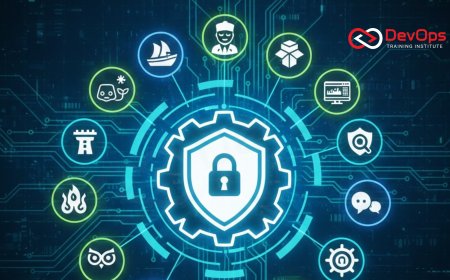
In today's hostile digital environment, security cannot be a final check at the end of the development cycle. It must be a continuous, real-time process. AI analytics excel at identifying suspicious patterns of behavior that traditional security tools might miss. By monitoring network traffic, API calls, and user access patterns, the AI can detect a potential data breach or a distributed denial-of-service attack as it begins, allowing for immediate automated mitigation actions to be taken before any real damage is done.
This integration of security into the operational flow is the core of how devsecops works. AI provides real-time insights into the security posture of every running container and microservice. It can automatically flag insecure configurations or detect when a piece of software is behaving in a way that suggests it has been compromised. This proactive defense mechanism ensures that the application remains safe and compliant at all times, providing peace of mind for both the engineering team and the business stakeholders who are responsible for protecting sensitive customer data.
AI-Driven Cloud Cost and Resource Governance
As organizations move more of their workloads to the cloud, managing expenses becomes a significant challenge. It is very easy for cloud bills to spiral out of control due to over-provisioned resources or idle services that are left running. AI analytics can monitor your cloud usage in real time, identifying exactly where money is being wasted. By analyzing traffic patterns, the AI can suggest the optimal instance sizes and even automate the process of scaling resources up and down to match actual demand throughout the day.
These financial insights are a cornerstone of finops, which aims to bring financial accountability to the cloud. Instead of waiting for a monthly bill to discover that you've overspent, AI provides real-time visibility into your current and projected costs. This allows teams to make data-driven decisions about their infrastructure investments. By optimizing resource allocation through intelligent automation, companies can achieve a much higher return on investment and ensure that their technical operations are as cost-effective as they are performant and reliable.
Advanced Deployment Risk Prediction
Every time a new version of an application is deployed, there is an inherent risk that something might go wrong. AI analytics can significantly reduce this risk by analyzing the results of previous deployments and comparing them to the current set of changes. If the AI detects a combination of code modifications and environment factors that have led to failures in the past, it can flag the current deployment as high-risk, prompting a more thorough manual review or suggesting additional automated tests.
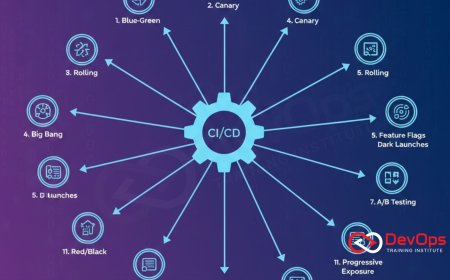
During the rollout itself, AI can monitor key performance indicators in real time. If any negative trends are detected, the system can automatically trigger a rollback. This capability is especially useful when using sophisticated strategies like canary releases. The AI can manage the weight of the traffic sent to the new version, slowly increasing it only as long as the system remains healthy. This automated safety net allows teams to deploy new features with much higher confidence and frequency, knowing that the AI is constantly watching for any signs of trouble.
Resilience Testing Through Intelligent Chaos
A truly resilient system is one that has been tested against failure. AI can play a major role in this by automating the practice of injecting faults into a system to see how it recovers. By using machine learning to identify the most critical and vulnerable paths in an architecture, the AI can design chaos experiments that are most likely to uncover hidden weaknesses. This proactive approach to reliability helps teams build systems that are capable of surviving real-world disasters without impacting the experience of the end users.
Integrating chaos engineering with real-time AI analytics provides a powerful feedback loop. As the AI observes the system's response to injected failures, it can suggest architectural improvements or automated recovery scripts to handle those specific scenarios in the future. This transforms the infrastructure into a self-learning organism that becomes more robust over time. Instead of fearing failure, engineering teams can embrace it as a way to learn and grow, ultimately delivering a much more dependable and high-quality product to their global user base.
Streamlining Operations with Intelligent Automation
The ultimate goal of using AI in DevOps is to create a seamless, self-managing environment where human effort is reserved for high-value creative work. Real-time AI insights enable a level of automation that was previously impossible. From automatically updating documentation as code changes to managing complex gitops workflows, AI acts as the intelligent orchestration layer that keeps everything in sync and functioning at peak performance across diverse cloud environments.
- AI provides real-time feedback on developer productivity and code quality trends.
- Automated incident response scripts can be triggered by AI when specific failure patterns are identified.
- Intelligent workload placement allows for better performance and lower latency for global users.
- AI can manage the complex lifecycle of feature flags, ensuring they are removed once they are no longer needed.
As these tools continue to mature, the boundary between the human engineer and the AI assistant will become increasingly blurred. The insights provided by AI are not just about finding errors; they are about understanding the entire ecosystem of software delivery. By embracing these 12 real-time DevOps insights, organizations can foster a culture of data-driven excellence. This allows for faster innovation, more stable deployments, and a significantly improved experience for both the people building the software and the customers who rely on it every day for their personal and professional lives.
Conclusion
In conclusion, the integration of 12 real-time DevOps insights using AI analytics represents a fundamental shift in how we approach software delivery and operations. We have seen how AI can transform raw data into a strategic asset, providing clarity during incidents, optimizing cloud costs, and accelerating the delivery of high-quality code. By leveraging predictive models for anomaly detection and deployment risk, teams can move from a reactive state of firefighting to a proactive state of engineering excellence. These intelligent tools do not replace the human engineer; instead, they empower them with the visibility and automation needed to manage the overwhelming complexity of modern cloud-native systems. As AI technology continues to evolve, those organizations that embrace these real-time insights will be the ones that stay ahead of the curve, delivering faster, more reliable, and more secure software to their users. The journey toward an intelligent, self-driving DevOps lifecycle is well underway, and the benefits for those who join are truly transformative, paving the way for a new era of technical innovation and operational resilience across the entire industry.
Frequently Asked Questions
What are real-time DevOps insights?
They are actionable data points generated by AI analytics during the software development and operations lifecycle to help teams make immediate decisions.
How does AI help in DevOps?
AI helps by automating repetitive tasks, predicting system failures, optimizing resource usage, and providing deep root cause analysis during incidents.
What is the difference between AIOps and DevOps?
DevOps is a cultural and professional movement, while AIOps is the specific application of AI to automate and improve IT operations within that framework.
Can AI predict system outages?
Yes, by analyzing historical patterns and real-time performance data, AI can identify early warning signs of a failure before it actually happens.
How does AI reduce cloud costs?
AI monitors resource usage in real time and can automatically scale services or shut down idle instances to ensure cost efficiency.
What is anomaly detection in DevOps?
It is the process of using machine learning to identify unusual behavior in a system that deviates from established healthy performance baselines.
How does AI improve security?
AI can detect zero-day threats and unusual user behavior in real time, allowing for faster response and mitigation of potential security breaches.
What is predictive root cause analysis?
It is the use of AI to correlate error logs and metrics across services to instantly identify the source of a system failure.
How does AI assist in CI/CD pipelines?
AI analyzes build and test history to identify bottlenecks, suggest optimizations, and predict the success of future code deployments.
What role does AI play in Chaos Engineering?
AI helps design effective experiments by identifying the most critical paths in a system and analyzing the results for resilience improvements.
Can AI help with alert fatigue?
Yes, AI groups related alerts into single incidents and filters out non-actionable noise, ensuring engineers only focus on genuine system problems.
How does AI support shift-left testing?
AI provides immediate feedback on code quality and security during the development phase, allowing bugs to be fixed when they are cheapest.
What is the benefit of AI in Canary Releases?
AI monitors the health of the canary version in real time and can automatically stop the rollout if negative impacts are detected.
Does AI improve developer productivity?
By automating maintenance and troubleshooting, AI allows developers to spend more time writing code and building new features for their users.
Is AI suitable for small DevOps teams?
Yes, many AI-driven DevOps tools are accessible to small teams, providing them with the expertise and efficiency usually found in much larger organizations.
What's Your Reaction?
 Like
0
Like
0
 Dislike
0
Dislike
0
 Love
0
Love
0
 Funny
0
Funny
0
 Angry
0
Angry
0
 Sad
0
Sad
0
 Wow
0
Wow
0

![100+ Azure DevOps Interview Questions and Answers [Updated 2025]](https://www.devopstraininginstitute.com/blog/uploads/images/202509/image_140x98_68c40aa9a3834.jpg)





![Future Scope of DevOps Careers in Pune [Updated 2025]](https://www.devopstraininginstitute.com/blog/uploads/images/202510/image_140x98_68e3a84652312.jpg)