










![Kong Interview Preparation Guide [2025]](https://www.devopstraininginstitute.com/blog/uploads/images/202509/image_430x256_68dbb95326997.jpg)






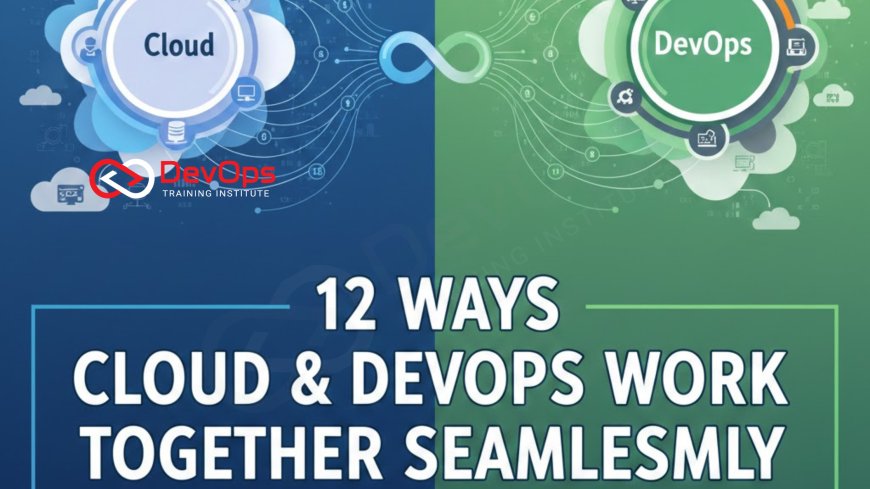
12 Ways Cloud & DevOps Work Together Seamlessly
Discover the 12 powerful ways Cloud and DevOps reinforce each other in 2025. From infrastructure as code and CI/CD at scale to GitOps, serverless pipelines, cost governance, and self-healing systems, learn how the perfect marriage of cloud platforms and DevOps practices delivers speed, reliability, and massive cost savings.
Introduction
Cloud and DevOps are no longer separate disciplines; they are two sides of the same coin. The cloud provides infinite, programmable infrastructure while DevOps delivers the culture and tools to exploit it safely at high velocity. Together they enable organizations to ship hundreds of times per day, auto-heal failures, and optimize spend in real time, often starting with highly available Multi-AZ architectures.
1. Infrastructure as Code (IaC) Becomes Reality
- Terraform, CDK, Pulumi, and Crossplane treat cloud resources as versioned code
- Peer reviews and automated testing catch misconfigurations early
- Drift detection ensures production matches Git
- Enables self-service environments in minutes
- Eliminates snowflake servers forever
- Used by Netflix, Airbnb, and Capital One
2. CI/CD Pipelines Run Natively in the Cloud
GitHub Actions, GitLab CI, AWS CodePipeline, and Azure DevOps execute builds, tests, and deployments directly in the cloud with unlimited concurrency. No more on-prem Jenkins bottlenecks. Pay-per-use pricing and OIDC trust make them secure and cost-effective at massive scale.
3. GitOps Turns Cloud Clusters into Declarative Systems
- ArgoCD and Flux continuously reconcile Git with live Kubernetes
- Every change is auditable, reversible, and automated
- Works across AWS EKS, Azure AKS, and GCP GKE seamlessly
- Used by Intuit, Adobe, and BlackRock for zero-trust delivery
- Eliminates manual kubectl apply mistakes
4. Serverless Removes Operations Overhead
AWS Lambda, Azure Functions, and Google Cloud Run let developers ship code without managing servers. Combined with EventBridge/SNS triggers and Step Functions, entire applications become fully DevOps-managed with zero infrastructure toil.
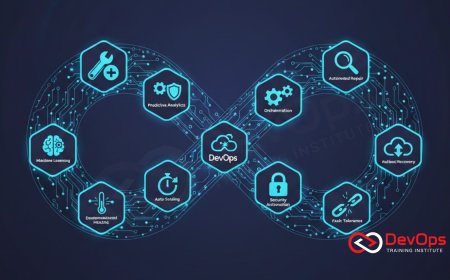
5. Auto-Scaling and Self-Healing Become Default
| Feature | Cloud Enables | DevOps Implements |
|---|---|---|
| Horizontal Pod Autoscaler | Infinite nodes on demand | Proper CPU/memory requests & liveness probes |
| Cluster Autoscaler + Karpenter | Spot & reserved instances | Node taints and pod disruption budgets |
| AWS Auto Scaling Groups | Predictive scaling | Health checks and rolling updates |
6. Observability Spans Entire Stack
- Cloud-native metrics (CloudWatch, Azure Monitor, Stackdriver)
- OpenTelemetry auto-instrumentation
- Distributed tracing across Lambda, containers, and VMs
- Real-time dashboards and anomaly detection
- Used with advanced RDS monitoring for complete visibility
7. Security and Compliance Are Automated
Policy-as-code tools like OPA/Gatekeeper, AWS Config Rules, and Azure Policy continuously enforce compliance. Secrets live in Vault or cloud secret managers. SAST/DAST runs in every pipeline. Zero-trust networking is default.
8. Cost Optimization Runs Continuously
- Kubecost, CloudHealth, and AWS Cost Explorer provide visibility
- Automated rightsizing and spot instance usage
- FinOps teams collaborate with engineers via tools
- Some companies cut cloud bills 40-60% while scaling
- Uses RDS cost optimization patterns
9. Multi-Cloud and Hybrid Become Practical
Terraform + Crossplane abstract providers. Anthos and Azure Arc manage on-prem Kubernetes the same way as cloud. Disaster recovery across regions and clouds is automated and tested quarterly.
10. Platform Teams Deliver Golden Paths
- Internal Developer Platforms (Backstage + Crossplane)
- Self-service cluster and database provisioning
- Pre-approved secure templates
- Reduces ticket wait time from days to seconds
- Adopted by Spotify, American Airlines, and ING
11. Disaster Recovery Is Push-Button
Pilot Light, Warm Standby, or Multi-Region Active-Active; all defined in code. Route53 health checks, RDS read replicas, and S3 cross-region replication make failover automatic and tested regularly.
12. Innovation Speed Reaches New Levels
Teams deploy 100+ times per day. Experimentation is cheap and safe. Features reach customers in hours, not months. Companies using full cloud + DevOps stack consistently outperform competitors by massive margins.
Conclusion
Cloud without DevOps is just expensive hosting. DevOps without cloud is painfully slow. Together they create a flywheel of speed, reliability, security, and cost efficiency that modern digital businesses run on. The organizations winning in 2025 aren’t choosing between cloud and DevOps; they’ve fully embraced both as a single, seamless operating model.
Frequently Asked Questions
Do I need DevOps if I'm fully serverless?
Yes. You still need CI/CD, testing, observability, security scanning, and cost governance; serverless just removes server management.
Can DevOps work without cloud?
Yes, but velocity and resilience drop dramatically. Cloud is the force multiplier for DevOps practices.
Which cloud is best for DevOps?
All three major providers (AWS, Azure, GCP) have excellent DevOps tooling. Choose based on existing investments and team skills.
Is GitOps only for Kubernetes?
Primarily, but tools like Terraform Cloud and AWS Proton bring GitOps concepts to VMs and serverless too.
How long does full cloud + DevOps adoption take?
6-18 months for most enterprises, but benefits appear within weeks of the first automated pipeline.
What's Your Reaction?
 Like
0
Like
0
 Dislike
0
Dislike
0
 Love
0
Love
0
 Funny
0
Funny
0
 Angry
0
Angry
0
 Sad
0
Sad
0
 Wow
0
Wow
0


![100+ Azure DevOps Interview Questions and Answers [Updated 2025]](https://www.devopstraininginstitute.com/blog/uploads/images/202509/image_140x98_68c40aa9a3834.jpg)






![Future Scope of DevOps Careers in Pune [Updated 2025]](https://www.devopstraininginstitute.com/blog/uploads/images/202510/image_140x98_68e3a84652312.jpg)