

















![Kong Interview Preparation Guide [2025]](https://www.devopstraininginstitute.com/blog/uploads/images/202509/image_430x256_68dbb95326997.jpg)






14 Automation Hacks for Git-Based Workflows
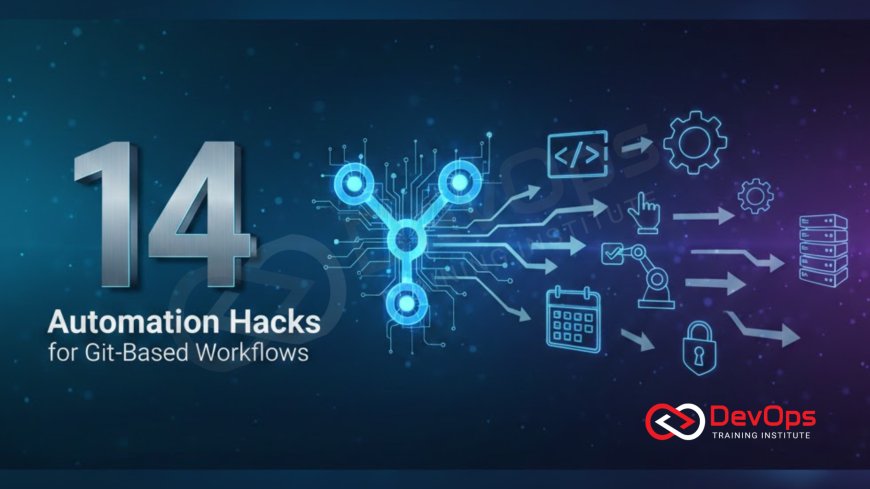
Unlock the full potential of your development cycle with these fourteen essential automation hacks for Git-based workflows. This comprehensive guide explores how to streamline code integration, enhance security protocols, and improve team collaboration through intelligent automation. Learn practical techniques for utilizing git hooks, automating pull requests, and integrating sophisticated deployment strategies to ensure your software delivery is faster, more reliable, and significantly less prone to manual errors in modern cloud environments.
Introduction to Git Automation
In the modern era of software engineering, Git has become much more than just a place to store code. It serves as the single source of truth for both application logic and infrastructure configurations. However, managing a repository manually can quickly become a burden as teams grow and projects become more complex. Automation is the key to transforming Git from a passive storage system into an active participant in your development lifecycle, helping you maintain high quality and speed simultaneously.
By implementing intelligent automation hacks, teams can eliminate repetitive tasks that often lead to developer burnout and human error. From automatically formatting code before it is committed to triggering complex deployment pipelines upon a merge, these hacks ensure that your workflow remains fluid and predictable. This guide will walk you through fourteen powerful ways to supercharge your Git experience, making it easier for your team to focus on what truly matters: building great features and solving real user problems.
The Power of Git Hooks for Quality Control
Git hooks are built in scripts that run automatically when certain events happen in your repository, such as committing code or pushing to a server. These are perhaps the most immediate way to introduce automation into your daily routine. For example, a pre commit hook can be configured to run a linter or a suite of unit tests. If the code does not meet the required standards, the commit is blocked, preventing "dirty" code from ever leaving the developer's local machine.
This proactive approach is a fundamental part of a critical strategy for high performing teams. By catching errors at the source, you reduce the load on your central integration servers and ensure that the main branch remains stable at all times. This is where shift left testing truly shines, as it empowers individual developers to maintain high standards without waiting for feedback from a separate quality assurance department or a long running build pipeline.
Streamlining Pull Requests and Code Reviews
Pull requests are the heart of collaborative development, but they can often become bottlenecks if they require too much manual intervention. Automation can help by automatically assigning reviewers based on the files changed or by adding labels that indicate the size and complexity of the changes. Furthermore, automated bots can comment on common issues, such as missing documentation or poorly named variables, allowing human reviewers to focus on the high level logic and architecture.
By automating the initial stages of a code review, you can significantly decrease the time it takes for a feature to move from a developer's branch to the production environment. This level of efficiency is vital when managing canary releases, where quick iterations and rapid feedback loops are necessary to ensure that new code is behaving correctly for a small subset of users before a full global rollout occurs.
Infrastructure as Code and GitOps Integration
The concept of GitOps has revolutionized how we think about infrastructure management by treating environment configurations exactly like application code. In a GitOps workflow, any change to your infrastructure is made via a Git commit. Automation tools then watch the repository and automatically apply those changes to your cloud environment, ensuring that the live state always matches the desired state defined in your version control system.
This approach enhances infrastructure automation by providing a clear audit trail and making it easy to roll back changes if something goes wrong. It eliminates the need for manual configuration through cloud consoles, which is often a source of inconsistency and security vulnerabilities. By making Git the center of your operations, you create a more transparent and resilient system that can be easily managed and scaled by the entire engineering team regardless of their physical location.
Table: Git Automation Hacks Comparison
| Hack Category | Specific Tool/Method | Primary Benefit | Implementation Effort |
|---|---|---|---|
| Local Validation | Pre-commit Hooks | Prevents bad code from being committed. | Low |
| Review Support | PR Automation Bots | Speeds up the code review cycle. | Medium |
| Security Scanning | Secret Scanners | Prevents API key leaks in commits. | Low |
| Infrastructure | GitOps Controllers | Synchronizes Git state with the cloud. | High |
| Release Management | Semantic Versioning Tools | Automates tagging and changelog creation. | Medium |
Automating Security in the Git Pipeline
Security should never be an afterthought, and Git automation provides several ways to bake protection directly into your workflow. Automated secret scanners can run on every push to ensure that no developer has accidentally committed sensitive information like database passwords or private API keys. If a secret is detected, the push can be rejected immediately, preventing a potentially devastating security breach before it even happens.
This integration is a vital part of how DevSecOps integrate security into the software delivery process. By making security checks a standard part of the Git workflow, you remove the friction that often exists between development and security teams. It creates a "fail fast" environment where vulnerabilities are identified and remediated in real time, leading to a much more robust and trustworthy product for your end users and stakeholders.
Advanced Branch Management and Cleanup
As a project grows, it is common to end up with hundreds of stale branches that clutter the repository and make it difficult to find relevant information. Automation scripts can be used to identify branches that have already been merged into the main branch and delete them automatically. This keeps the repository clean and ensures that the Git history remains readable and easy to navigate for new team members joining the project.
- Scripts can identify branches older than thirty days with no recent activity and notify the owners.
- Automated tagging systems can mark branches based on their purpose, such as bugfix, feature, or hotfix.
- Branch protection rules can be enforced through automation to ensure that no code is merged without passing all required status checks.
- Automatic rebase scripts can help keep feature branches up to date with the latest changes from the main branch, reducing merge conflicts.
Effective branch management is a key responsibility within platform engineering as it directly impacts the daily productivity of every developer. By removing the manual burden of repository maintenance, you allow engineers to focus on creative work. This also plays a role in FinOps by reducing the storage costs associated with bloated repositories and the computational costs of running CI pipelines on unnecessary branches.
Automated Testing and Resilience Checks
Git automation is the perfect trigger for running sophisticated resilience tests. When code is merged into a staging branch, automation can trigger experiments that test how the application handles unexpected failures. This proactive approach ensures that the system is not just functional but also robust enough to survive the chaotic nature of real world production environments where things frequently go wrong.
By utilizing chaos engineering as part of your Git-based automation, you can uncover hidden weaknesses in your architecture before they cause actual downtime. The results of these tests can be automatically posted back to the Git commit or pull request, providing developers with immediate insights into the stability of their changes. This creates a virtuous cycle of continuous improvement that significantly elevates the overall quality and reliability of the software being delivered.
Release Automation and Feature Toggles
The final step in a Git-based workflow is the release of the software to the users. Automation can handle the entire process of creating release tags, generating changelogs from commit messages, and updating version numbers. This ensures that every release is consistent and well documented. However, sometimes you want to merge code without immediately making the new feature visible to all users. This is where automated feature flags become incredibly powerful.
Feature flags allow you to decouple the deployment of code from the release of features. You can merge your code into the main branch and deploy it to production while keeping the feature "turned off" behind a flag. This enables safe continuous deployment and allows for gradual rollouts and A/B testing. Automation can manage the lifecycle of these flags, ensuring they are removed once a feature is fully released, thus preventing technical debt from accumulating in your codebase over time.
Conclusion
In conclusion, automating your Git-based workflows is not just about saving time; it is about creating a more disciplined, secure, and resilient development environment. By implementing these fourteen hacks, you can ensure that your team maintains a high velocity without compromising on quality or security. From the local protection provided by Git hooks to the high level synchronization of GitOps and the safety of feature flags, each layer of automation adds a vital safety net to your process. As your project evolves, continue to look for ways to eliminate manual toil and integrate your tools more deeply with your version control system. The goal is to make the "right way" of doing things the "easiest way" through intelligent automation. By embracing these practices, you set your team up for long term success, allowing them to deliver exceptional value to users with confidence and ease. Remember that the best automation is invisible, supporting the team in the background while they focus on the art of engineering. Start small with a few hooks, and gradually build a robust automated ecosystem that grows with your needs and the complexities of the modern cloud landscape.
Frequently Asked Questions
What are Git hooks?
Git hooks are scripts that run automatically during specific events like committing or pushing code to ensure standards are met.
How does GitOps benefit teams?
GitOps provides a single source of truth for infrastructure which makes deployments more predictable and rollbacks much easier to handle.
Can I automate code formatting?
Yes you can use pre-commit hooks to automatically format code using tools like Prettier or Black before it is committed.
What is a secret scanner?
A secret scanner is an automated tool that checks your Git commits for sensitive information like API keys and passwords.
How do feature flags help?
Feature flags allow you to merge and deploy code while keeping features hidden enabling safer and more controlled release cycles.
What is the best way to clean up branches?
You can use automated scripts or built in platform tools to delete branches that have already been merged into main.
Can I generate changelogs automatically?
Yes by using tools that parse your commit messages you can automatically generate detailed changelogs for every new software release.
Why use shift left testing?
Shift left testing catches bugs early in the development cycle which reduces the cost and time needed to fix them later.
What is a canary release?
A canary release is a deployment strategy where a new version is rolled out to a small percentage of users first.
How do I prevent bad merges?
You can set up branch protection rules that require all automated tests to pass before a pull request can be merged.
Is Git automation difficult to set up?
Starting with simple Git hooks is very easy and you can gradually add more complex automation as your team's needs grow.
Does automation improve security?
Yes by integrating automated scans into your workflow you can catch vulnerabilities and leaks before they ever reach your production environment.
Can Git trigger cloud deployments?
Most modern CI CD tools are designed to trigger automated deployment pipelines as soon as they detect a new commit.
What are the costs of Git automation?
The main cost is the engineering time for initial setup but the long term savings in time and error reduction are massive.
How do I manage large repositories?
Automation helps manage large repos by enforcing strict branch naming conventions and performing regular automated maintenance and cleanup tasks daily.
What's Your Reaction?
 Like
0
Like
0
 Dislike
0
Dislike
0
 Love
0
Love
0
 Funny
0
Funny
0
 Angry
0
Angry
0
 Sad
0
Sad
0
 Wow
0
Wow
0





![100+ Azure DevOps Interview Questions and Answers [Updated 2025]](https://www.devopstraininginstitute.com/blog/uploads/images/202509/image_140x98_68c40aa9a3834.jpg)






![Future Scope of DevOps Careers in Pune [Updated 2025]](https://www.devopstraininginstitute.com/blog/uploads/images/202510/image_140x98_68e3a84652312.jpg)