







![Kong Interview Preparation Guide [2025]](https://www.devopstraininginstitute.com/blog/uploads/images/202509/image_430x256_68dbb95326997.jpg)




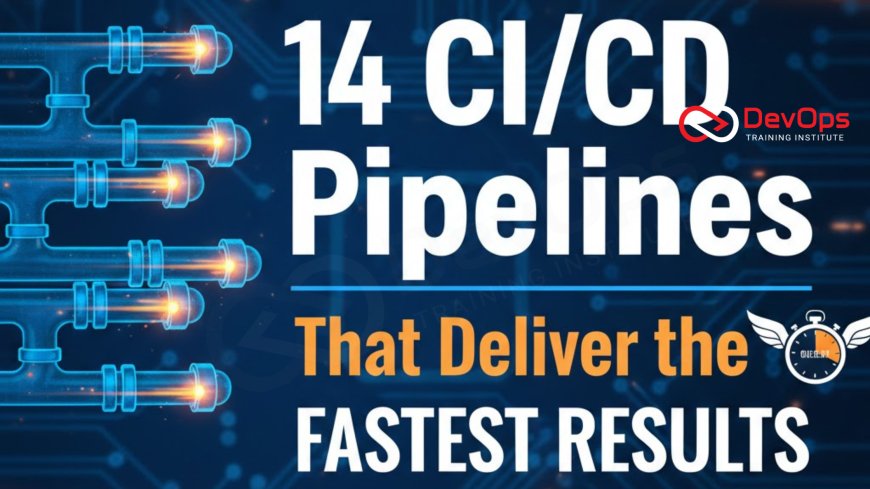
14 CI/CD Pipelines That Deliver the Fastest Results
In the high-velocity engineering landscape of 2026, speed is the ultimate competitive advantage for modern DevOps teams. This comprehensive guide details fourteen CI/CD pipelines designed to deliver the fastest results, from AI-augmented autonomous testing and trunk-based development to Kubernetes-native GitOps and ephemeral build environments. Discover how to leverage advanced caching, massive parallelism, and zero-downtime deployment strategies to reduce lead times and eliminate production bottlenecks. Whether you are building microservices on AWS or managing a global enterprise stack, these proven pipeline patterns will empower your engineering organization to ship code with unprecedented efficiency, absolute reliability, and peak performance today.
Introduction to High-Velocity CI/CD in 2026
The standard for software delivery in 2026 has evolved from "deploying often" to "deploying instantly." High-velocity CI/CD pipelines are no longer a luxury for elite teams; they are a fundamental requirement for any business that wants to survive in a rapidly shifting digital market. A fast pipeline provides the rapid feedback loop that developers need to iterate on features, fix critical bugs, and respond to user needs in real-time. Without this speed, the "paved road" of DevOps becomes a bottleneck, stalling innovation and increasing the risk of technical debt across the organization.
Achieving these results requires more than just powerful servers; it requires a strategic combination of modern toolchains, optimized workflows, and a culture that prioritizes efficiency. From the rise of AI-powered autonomous testing to the maturity of GitOps and serverless automation, the options for building high-speed pipelines have never been more robust. In this guide, we will explore fourteen specific pipeline patterns and techniques that are currently delivering the fastest results for top-tier engineering teams globally. These strategies are designed to help you shave minutes off your builds and hours off your releases, ensuring your delivery engine is always running at peak performance.
Pipeline One: Trunk-Based Development for Instant Feedback
Trunk-based development is a high-speed branching strategy where all developers merge small, frequent updates to a single "trunk" branch (usually main). This approach eliminates the long-lived feature branches that lead to "merge hell" and slow down the integration process. By triggering a CI pipeline on every small commit, teams get near-instant feedback on code quality and compatibility. This is the fastest way to maintain continuous synchronization across a large engineering team, ensuring that the primary codebase is always in a deployable state.
This pipeline is most effective when paired with automated quality gates and feature flags. Developers can merge code that is not yet ready for users, keeping it hidden behind a toggle while the CI system verifies that it doesn't break existing functionality. This decouple deployment from release, allowing for a continuous flow of changes into production. Trunk-based pipelines are the backbone of many elite DevOps organizations, enabling them to achieve multiple deployments per day with a very low change failure rate. It is a fundamental cultural change that prioritizes collective ownership and rapid integration over isolated development silos.
Pipeline Two: AI-Augmented Autonomous Testing
Testing is traditionally the longest stage of any CI/CD pipeline, but in 2026, AI-augmented autonomous testing is changing the game. Tools like TestSprite and Harness use machine learning to automatically generate, execute, and heal test scripts based on your application's behavior. This eliminates the manual effort of writing and maintaining complex test suites, allowing your pipeline to move from build to deploy in a fraction of the time. AI can also intelligently select only the relevant tests to run based on the specific code changes, further reducing the execution duration.
These intelligent pipelines can also perform automated "root cause analysis" when a test fails, providing developers with an instant diagnosis and suggesting fixes. This reduces the time spent on debugging and keeps the delivery engine moving. By integrating AI augmented devops capabilities, teams can achieve high test coverage without the performance penalty of traditional manual or scripted approaches. It ensures that quality is maintained at the speed of modern development, providing a resilient and fast feedback loop for every engineer in the organization.
Pipeline Three: Kubernetes-Native GitOps with ArgoCD
For teams operating in the cloud, a Kubernetes-native GitOps pipeline is one of the fastest ways to manage deployments. By using tools like ArgoCD or Flux, you can ensure that your cluster states are always in sync with your Git repository. The moment a pull request is merged, the GitOps controller detects the change and automatically reconciles the live environment. This "pull-based" model is significantly faster and more secure than traditional "push-based" scripts, as it eliminates the need for external access to your production clusters.
GitOps pipelines also provide a lightning-fast rollback mechanism. If a deployment causes an issue, reverting the change in Git will trigger an immediate restoration of the previous stable state. This level of automation is essential for maintaining deployment quality and high availability. By utilizing GitOps, you turn your repository into the ultimate source of truth, allowing your DevOps team to manage complex, multi-cluster environments with unparalleled speed and precision in a modern cloud native landscape.
Fastest CI/CD Pipeline Tool Comparison 2026
| Pipeline Tool | Speed Advantage | Ideal Environment | Learning Curve |
|---|---|---|---|
| CircleCI | Extreme parallelism & caching | Cloud-native startups | Low |
| GitHub Actions | Native repo event triggers | GitHub-centric teams | Low |
| GitLab CI/CD | All-in-one platform speed | Unified DevSecOps teams | Medium |
| Tekton | K8s-native task execution | Complex K8s ecosystems | High |
| Harness | AI-driven deployment analytics | Enterprise scaling | Medium |
Pipeline Four: Massive Parallelism and Matrix Builds
One of the most effective ways to speed up a pipeline is to stop doing things one after another and start doing them at the same time. Massive parallelism involves splitting your test suites and build tasks across hundreds of distributed workers. Matrix builds take this further by automatically generating and running combinations of environments, such as testing multiple versions of Node.js or Python simultaneously. This ensures that your lead time for changes remains constant even as your application grows in complexity and supported platforms.
Tools like CircleCI and GitHub Actions excel at this, allowing you to define parallel execution strategies in simple YAML files. By reducing the "wall-clock time" of your pipeline, you provide developers with the fast feedback they need to stay in the flow. This approach is particularly valuable for large-scale microservices where a single change might impact dozens of different components. By utilizing architecture patterns that support decoupling, you can build pipelines that are as fast as they are scalable, providing a high-performance delivery engine for your global engineering organization.
Pipeline Five: Ephemeral Build Environments
Static build servers are a common source of slowness and "dirty" builds due to leftover files and configuration drift. Ephemeral build environments solve this by spinning up a fresh, isolated container for every single job and destroying it immediately after. This ensures that your builds are always consistent and reproducible, eliminating the "it worked on the build server" errors. By using lightweight runtimes like containerd, these ephemeral environments can start in milliseconds, ensuring that your pipeline is always ready to run.
These short-lived environments also improve security by ensuring that no sensitive data or secrets persist between builds. You can utilize secret scanning tools and automated cleanup scripts to maintain a pristine workspace for every commit. Ephemeral environments allow for extreme horizontal scaling, as you can spin up as many runners as you have cloud budget for, effectively eliminating build queues. This "serverless build" model is the gold standard for modern DevOps, providing the agility and safety needed to deliver high-quality software at the speed of a startup with the reliability of an enterprise.
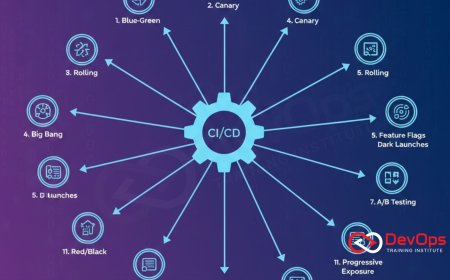
Pipeline Six: Blue-Green and Canary Deployment Patterns
Speed is not just about the build; it is also about how fast you can release safely. Blue-green and canary deployment patterns allow you to transition traffic to new versions instantly or gradually with minimal risk. In a blue-green setup, you maintain two identical production environments; you deploy to the "green" one, test it, and then flip the load balancer. If an issue is discovered, you flip back instantly. This zero-downtime strategy provides a fail-safe way to release at high frequency. Canary releases take this further by exposing the new version to a small subset of users first.
These release strategies are critical for maintaining deployment quality while moving fast. They rely on advanced observability and automated health checks to decide whether to continue the rollout or trigger a rollback. By utilizing ChatOps techniques, your team can receive real-time updates and take manual control if needed during a high-stakes release. This combination of speed and safety allows you to experiment with new features and respond to market feedback faster than ever before, turning your deployment process into a strategic asset for the business.
14 High-Speed CI/CD Pipeline Techniques
- Aggressive Build Caching: Store and reuse dependencies and intermediate build artifacts to avoid redundant work and save minutes on every run.
- Incremental Builds: Only recompile and retest the specific components that have changed since the last successful build in your monorepo.
- Test Sharding: Split your test suite into multiple batches and run them in parallel across a fleet of runners to reduce total test duration.
- Optimized Container Images: Use multi-stage builds and minimal base images like Alpine or Distroless to speed up image pushing and pulling.
- Security as Code: Integrate secret scanning tools and SAST/DAST directly into the pipeline to catch vulnerabilities without slowing down the release.
- Automated Rollbacks: Define clear health metrics that trigger an immediate revert if a new deployment causes errors or latency spikes.
- Pipeline-as-Code: Manage your pipeline definitions in Git alongside your application to ensure versioning, review, and repeatability.
- Serverless Task Execution: Use serverless functions to handle lightweight, event-driven pipeline tasks for instant scaling and lower costs.
- Direct-to-Cloud Deployment: Leverage cloud-native deployment tools like AWS CodeDeploy or Google Cloud Build for seamless integration with your infrastructure.
- Continuous Verification: Use continuous verification to constantly monitor production health and provide a feedback loop for deployment quality.
- Infrastructure-as-Code (IaC): Automate environment provisioning using Terraform or Pulumi to ensure your pipeline always has a consistent target.
- Database Migration Automation: Include schema changes as versioned scripts in your pipeline using tools like Flyway or Liquibase for safe, fast updates.
- Admission Controllers: Use admission controllers to enforce security and compliance policies automatically at the Kubernetes cluster level.
- ChatOps Integration: Use ChatOps to bring pipeline status and control into your team's primary communication channels for faster collaboration.
Successfully implementing these fourteen techniques requires a disciplined approach to technical governance and a commitment to continuous improvement. It is important to regularly audit your pipeline performance to identify new bottlenecks as your application evolves. By making speed a visible and trackable metric, you encourage your team to prioritize efficiency in their daily work. As you move toward more AI-driven automation, you can expect even greater results, with systems that can optimize themselves based on historical data and real-time performance. High-speed CI/CD is a journey, and these fourteen pipelines are your map to reaching the destination of elite engineering performance.
Conclusion: Shipping at the Speed of 2026
In conclusion, the fourteen CI/CD pipelines and techniques discussed in this guide provide a robust framework for any team aiming to deliver the fastest results in 2026. From the rapid integration of trunk-based development to the intelligent automation of AI-augmented testing and GitOps, the focus is on eliminating waste and maximizing flow. By prioritizing speed without sacrificing quality or security, you create a delivery engine that can sustain rapid innovation and global growth. These pipelines are the foundation of a modern, agile organization that is ready to tackle the challenges of a digital-first world with confidence and technical excellence.
As you prepare for the future, remember that the most successful pipelines are those that empower the human engineer. Technology is a powerful tool, but it must be supported by a culture of collaboration and shared responsibility. By staying informed about AI augmented devops trends and the latest cloud native developments, you can ensure your pipeline remains a competitive advantage. The future of software delivery is fast, automated, and secure, and these fourteen pipelines are your building blocks to help you reach that ultimate goal for your digital engineering organization. Speed is your currency—spend it wisely to drive maximum value for your users and your business.
Frequently Asked Questions
What is the fastest CI/CD branching strategy for small teams?
Trunk-based development is generally the fastest for small teams as it encourages frequent, small merges and eliminates complex merge conflicts.
How does build caching improve pipeline speed?
It saves time by storing previously downloaded dependencies and compiled artifacts, so the system only rebuilds what has changed since the last run.
What is the difference between continuous delivery and continuous deployment?
Continuous delivery automates the release process up to the staging environment, while continuous deployment pushes every passing change automatically to production.
Why should I use ephemeral build environments?
They provide a clean, isolated, and consistent workspace for every build, preventing configuration drift and improving both security and reliability for teams.
How can AI reduce the time spent on software testing?
AI can automatically generate tests, heal broken scripts, and intelligently select which tests to run based on code changes to minimize execution time.
What role does GitOps play in high-speed deployments?
GitOps automates the synchronization between your code repository and your cluster, allowing for rapid, version-controlled, and safe deployments at scale.
Is it possible to achieve zero-downtime deployments without complex tools?
While basic tools can help, zero-downtime usually requires advanced strategies like blue-green or canary releases managed by an intelligent orchestrator.
What is a matrix build in a CI/CD pipeline?
A matrix build allows you to run multiple jobs with different environment configurations simultaneously, significantly speeding up cross-platform validation and testing.
How do admission controllers enhance pipeline security?
They act as a gatekeeper at the Kubernetes API level, ensuring that only deployments meeting your security and compliance policies are allowed in the cluster.
What is the "lead time for changes" DORA metric?
It measures the time it takes for a code commit to reach the production environment, serving as a key indicator of your pipeline's overall speed.
Can I use ChatOps to trigger pipeline rollbacks?
Yes, many teams integrate their chat platforms with their CI/CD tools to allow for one-click manual rollbacks directly from a shared conversation channel.
What is the benefit of a monorepo for CI/CD speed?
A monorepo can simplify dependency management but requires advanced tools like Bazel or Nx to ensure only changed components are rebuilt and tested.
How does containerization speed up the delivery process?
Containers provide a consistent environment from development to production, reducing the "it works on my machine" errors and making deployments faster and safer.
What is the most common bottleneck in slow pipelines?
Automated testing is frequently the slowest stage, especially when tests are run serially or rely on slow, external dependencies and legacy environments.
How often should I audit my CI/CD pipeline speed?
You should review your pipeline metrics at least monthly to identify new bottlenecks and opportunities for optimization as your application and team grow.
What's Your Reaction?
 Like
0
Like
0
 Dislike
0
Dislike
0
 Love
0
Love
0
 Funny
0
Funny
0
 Angry
0
Angry
0
 Sad
0
Sad
0
 Wow
0
Wow
0

![100+ Azure DevOps Interview Questions and Answers [Updated 2025]](https://www.devopstraininginstitute.com/blog/uploads/images/202509/image_140x98_68c40aa9a3834.jpg)






![Future Scope of DevOps Careers in Pune [Updated 2025]](https://www.devopstraininginstitute.com/blog/uploads/images/202510/image_140x98_68e3a84652312.jpg)