

![Kong Interview Preparation Guide [2025]](https://www.devopstraininginstitute.com/blog/uploads/images/202509/image_430x256_68dbb95326997.jpg)

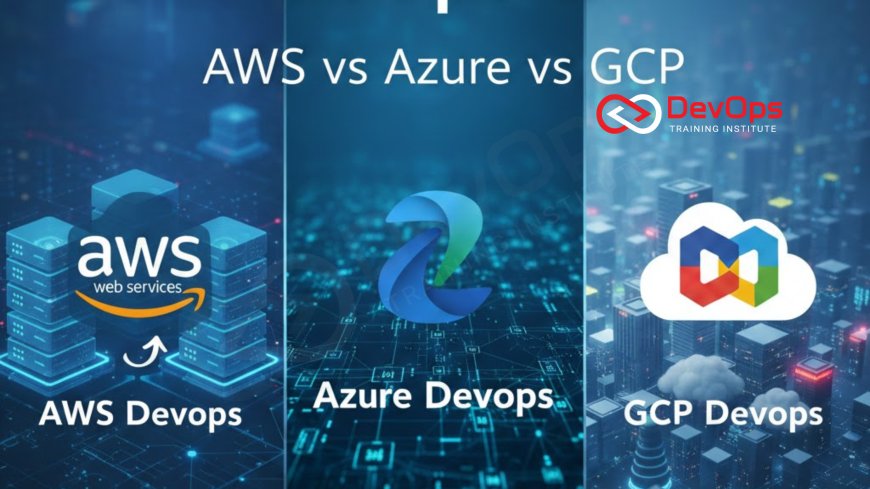
14 DevOps Cloud Tools Compared: AWS vs Azure vs GCP
Choosing the right tools for your DevOps pipeline in a multi-cloud environment is critical for enterprise success. This comprehensive guide compares 14 essential cloud-native DevOps services across AWS, Azure, and GCP, detailing their strengths in CI/CD, container orchestration, Infrastructure as Code, and serverless computing. Learn how Amazon CodePipeline, Azure DevOps, and Google Cloud Build stack up against each other, helping you select the best cloud tools to maximize automation, enforce security, and streamline development workflows, ensuring high-velocity delivery and optimal cloud performance for your organization, regardless of the chosen provider.
Introduction: The Cloud DevOps Landscape
The successful implementation of DevOps practices is now fundamentally inseparable from the public cloud. As organizations migrate their applications and infrastructure to platforms like Amazon Web Services (AWS), Microsoft Azure, and Google Cloud Platform (GCP), they transition from using traditional, on-premise tools to leveraging the rich, integrated suite of cloud-native services offered by these hyperscalers. Each provider offers a comprehensive, yet uniquely structured, set of tools designed to automate the entire software delivery lifecycle, from continuous integration (CI) and continuous delivery (CD) to serverless computing and deep operational monitoring. Understanding the competitive landscape of these tools is crucial for any DevOps Engineer, whether you are planning a migration, choosing a provider for a greenfield project, or navigating a complex multi-cloud environment.
While open-source tools like Jenkins and Terraform provide essential cross-platform compatibility, the cloud-native offerings deliver unparalleled depth of integration, security, and lower management overhead, making them the preferred choice when operating exclusively within a single cloud environment. This deep integration simplifies tasks such as resource provisioning, secrets management, and access control (IAM), which are often cumbersome when stitching together disparate third-party solutions. However, committing to a cloud-native tool requires acknowledging the potential for vendor lock-in, a key strategic consideration that must be balanced against the significant operational benefits gained from leveraging fully managed services.
This guide provides a direct, head-to-head comparison of 14 essential DevOps services across AWS, Azure, and GCP. We will examine the core categories that define the modern DevOps pipeline—CI/CD orchestration, container management, Infrastructure as Code, and Serverless Compute—helping you understand the strengths and weaknesses of each provider's offering and enabling you to make data-driven decisions that align with your organizational cloud strategy and goals.
CI/CD Pipeline and Orchestration Tools
The engine of modern DevOps is the CI/CD pipeline, which automates the build, test, and deployment of applications. Each cloud giant offers a powerful, fully managed pipeline service designed to integrate seamlessly with its ecosystem, reducing the administrative burden traditionally associated with self-hosted solutions like Jenkins. These managed services provide the centralized control plane necessary for enforcing governance, managing releases, and providing real-time audit trails for compliance.
- 1. AWS CodePipeline: AWS's fully managed service for orchestrating software releases. It is highly modular, acting as a workflow tool that connects AWS services like CodeCommit (Git), CodeBuild (CI), and CodeDeploy (CD). Its primary strength is its deep, zero-configuration integration within the AWS ecosystem, making it the most seamless choice for organizations that are all-in on AWS. The entire process is defined through JSON or YAML templates and is natively secured by AWS IAM.
- 2. Azure Pipelines (part of Azure DevOps): This is Microsoft's robust, cross-platform CI/CD solution, supporting deployment to Azure, AWS, GCP, and on-premises environments. Its major differentiator is its tight integration with the broader Azure DevOps suite (Repos, Boards, Test Plans), providing an integrated Application Lifecycle Management (ALM) solution. It uses flexible YAML pipelines and offers free unlimited build minutes for open-source projects, making it a powerful hybrid solution.
- 3. Google Cloud Build: GCP's serverless CI/CD offering. It executes builds extremely fast using Docker containers, running source code from any language. Its key advantage is its speed and "pay-per-use" model, eliminating the need to provision or manage build servers entirely. It integrates natively with GCP’s Container Registry and deployment targets like GKE and Cloud Run, making it the top choice for cloud-native applications on Google Cloud that require high-speed, serverless compilation.
Container Orchestration Services
Containerization, primarily driven by Docker and Kubernetes, is essential for application portability and scalability. All three providers offer enterprise-grade managed Kubernetes services, offloading the complexity of managing the Kubernetes Control Plane to the cloud provider. The competition here centers on ecosystem integration, ease of cluster setup, and native security features, as these services are the compute engine for most modern microservices architectures.
4. AWS EKS (Elastic Kubernetes Service): EKS is AWS's managed Kubernetes offering. It boasts deep integration with core AWS services like IAM for authentication, VPC for networking, and Fargate (serverless compute for EKS nodes), making it exceptionally robust for users committed to AWS. Its strength lies in its maturity and large ecosystem of complementary tools, leveraging the long history of AWS in cloud infrastructure. Its high configurability makes it a popular choice for complex, large-scale enterprise deployments.
5. Azure AKS (Azure Kubernetes Service): AKS is Microsoft's managed Kubernetes offering. It provides seamless integration with Azure Active Directory (Azure AD) for identity management and governance, a massive advantage for organizations already utilizing Microsoft's enterprise identity solutions. AKS emphasizes ease of use and streamlined management, often having simpler deployment wizards than its AWS counterpart, making it a strong contender for companies prioritizing integrated security and simplified management within the Microsoft cloud ecosystem.
6. GCP GKE (Google Kubernetes Engine): As Kubernetes originated at Google, GKE is often considered the most technologically advanced managed Kubernetes service. It offers automatic upgrades, built-in security hardening via GCP Security tools, and advanced cluster management features. Its unique feature, Autopilot mode, automates node provisioning and scaling based on workload needs, providing the most hands-off and optimized experience for container orchestration on the market, appealing to teams prioritizing cutting-edge efficiency and advanced orchestration features.
Infrastructure as Code (IaC) Tooling
While cross-platform tools like Terraform are preferred for multi-cloud IaC, each provider offers a native declarative solution that is often simpler to start with and has the deepest, fastest access to all new service features within that specific cloud. Knowing the differences between these native tools is key for maximizing deployment speed and managing resources most efficiently within a single cloud environment.
7. AWS CloudFormation: AWS's native IaC service uses declarative JSON or YAML templates to provision and manage AWS resources as a single unit called a "stack." Its main advantage is its guaranteed safety and reliability, as it automatically handles resource dependencies and provides native rollback capabilities if any part of the stack creation or update fails. It also has native support for virtually every AWS service from day one of its release, ensuring no lag in feature adoption.
8. Azure Resource Manager (ARM/Bicep): ARM templates use declarative JSON to define Azure infrastructure. Microsoft has since introduced Bicep, a domain-specific language that offers a cleaner, more readable syntax which transpiles directly into ARM templates. Bicep addresses many of the complexities of raw JSON ARM templates, making Microsoft's native IaC solution much more developer-friendly and significantly easier to author and maintain at enterprise scale.
9. GCP Cloud Deployment Manager: GCP's native IaC solution allows engineers to define resources using YAML or Python templates. While less widely adopted than its competitors, it excels at managing the deployment of complex solutions defined by configuration files, using the declarative model to create and manage resource collections, offering a simple yet powerful way to manage cloud resources within the Google Cloud ecosystem efficiently.
| Category | AWS Tool | Azure Tool | GCP Tool | Key Strength |
|---|---|---|---|---|
| CI/CD Orchestration | CodePipeline | Azure Pipelines | Cloud Build | AWS integration, Hybrid support, Serverless speed. |
| Managed Kubernetes | EKS | AKS | GKE | Maturity/Ecosystem, Azure AD Integration, Advanced Automation (Autopilot). |
| Infrastructure as Code | CloudFormation | ARM/Bicep | Deployment Manager | Native rollback, Developer-friendly syntax (Bicep), Simple YAML integration. |
| Serverless Compute | Lambda | Azure Functions | Cloud Functions | Ecosystem Size, Language Support, Native GCP Eventing. |
| Monitoring/Observability | CloudWatch | Azure Monitor | Cloud Monitoring | Deep AWS Metrics, Integrated Log Analytics (KQL), Integrated Tracing (Cloud Trace). |
Serverless Compute and Functions
Serverless computing, which allows developers to run code without provisioning or managing underlying servers, is a major pillar of DevOps automation and cost optimization. Each provider offers a managed function-as-a-service (FaaS) solution that scales automatically based on demand, enabling event-driven architecture and accelerating the deployment of specialized automation scripts and application logic without the operational overhead of virtual machines.
10. AWS Lambda: Lambda is the veteran and market leader in the FaaS space. Its ecosystem size, support for virtually every programming language (via custom runtimes), and deep, native integration with other AWS services (S3, DynamoDB, SNS/SQS) make it an incredibly flexible and powerful tool for building event-driven applications and custom DevOps automation. Its maturity and vast user base contribute to a large volume of community support and readily available code examples, ensuring a smooth developer experience.
11. Azure Functions: Microsoft's FaaS offering provides excellent support for the C# and .NET ecosystem, which is highly beneficial for enterprise development teams. Its tight integration with Visual Studio and the broader Azure platform, particularly Azure Event Grid and Azure Storage, allows developers to build event-driven solutions that seamlessly connect across Microsoft's entire cloud platform. It offers flexible hosting options, including consumption plans (pay-per-use) and dedicated app service plans for consistent performance.
12. GCP Cloud Functions: Google's offering focuses on simplicity and its tight integration with GCP's eventing ecosystem. It provides native support for Node.js, Python, and Go, emphasizing simple deployment and integration with services like Cloud Storage and Pub/Sub. Its strength lies in its ability to quickly deploy simple, event-driven microservices that leverage the performance and scalability of the underlying Google infrastructure, often being deployed for lightweight data processing and real-time backend functionality.
Monitoring and Observability Solutions
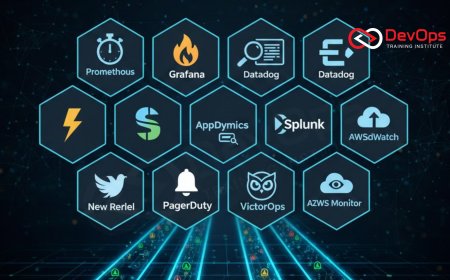
Continuous monitoring and observability are essential for maintaining the high reliability and availability demanded by modern applications. These services are crucial for collecting, analyzing, and visualizing performance metrics, application logs, and traces, providing the crucial data needed for both SRE teams and automated health checks in CI/CD pipelines. While third-party tools like Prometheus and Grafana are often used for multi-cloud, the native tools offer the deepest telemetry integration and the most integrated alerting capabilities within each cloud.
13. AWS CloudWatch: CloudWatch is AWS's unified monitoring service, collecting metrics, logs, and events from virtually every AWS resource and application. Its strength lies in the depth and granularity of the metrics it collects and its sophisticated alerting and automated remediation features (via CloudWatch Events or Lambda). It provides a high degree of customization for dashboards and is the central hub for defining alerts based on service-level indicators across the entire AWS environment.
14. Azure Monitor: Azure Monitor offers a comprehensive platform for collecting, analyzing, and acting on telemetry data from Azure and hybrid environments. It features Log Analytics, which uses the powerful Kusto Query Language (KQL) for complex log data analysis and troubleshooting. Its tight integration with Azure Security Center and Azure AD makes it a strong contender for centralized security auditing and governance, especially when managing resources across hybrid cloud setups.
GCP Cloud Monitoring & Cloud Trace: GCP provides a robust, integrated observability suite. Cloud Monitoring offers infrastructure metrics and uptime checks, while Cloud Logging provides centralized log analysis. Its true strength lies in Cloud Trace, which natively provides distributed tracing, helping engineers visualize the latency and performance of application requests across microservices. This integrated tracing capability is key for quickly diagnosing performance bottlenecks in complex, distributed cloud-native applications, proving the benefit of Linux's open-source philosophy in driving advanced observability features.
Strategic Tool Selection: Beyond the Features
When comparing these 14 tools, the choice often comes down to strategic priorities rather than isolated feature parity. For a DevOps Engineer choosing a primary cloud environment, the following strategic considerations are critical. If your company is already heavily invested in Microsoft technologies and identity management (Active Directory), Azure's tight integration (AKS, Azure Pipelines) provides unmatched operational efficiency and simplified governance. Conversely, if you prioritize the largest ecosystem, the most mature set of managed services, and a huge community, AWS (EKS, Lambda) offers the most established and feature-rich environment. Finally, if cutting-edge container automation, simplified operations (Autopilot), and a focus on speed are key, GCP (GKE, Cloud Build) often leads in technical innovation, benefiting from its deep Kubernetes heritage.
The choice of a primary cloud inevitably dictates the most efficient choice of native DevOps tools. However, for organizations pursuing a multi-cloud or hybrid strategy, the native tools are often used in conjunction with platform-agnostic solutions (Terraform, Spinnaker) to manage the entire deployment process consistently. The strategic decision hinges on whether the operational simplicity gained from using a fully integrated cloud-native tool outweighs the risk and difficulty associated with potential vendor lock-in. Understanding the history of Linux's open-source movement and its role in shaping these cloud technologies provides essential context for making informed architectural choices today.
Conclusion
The DevOps Engineer today operates in a complex arena defined by the rapid innovation of cloud-native tools. The head-to-head comparison of 14 essential services across AWS, Azure, and GCP reveals intense competition and strategic specialization: AWS leads in ecosystem breadth and maturity, Azure excels in enterprise identity and hybrid integration, and GCP innovates in serverless CI/CD and Kubernetes automation. The correct choice depends entirely on the unique needs and existing technology footprint of the organization, determining whether operational efficiency within a single cloud, or ultimate flexibility across multiple clouds, is the priority.
Ultimately, proficiency in these cloud-native tools is mandatory for any modern DevOps Engineer, as they represent the highest level of automation and managed service delivery available. By understanding the subtle differences between CloudFormation and Bicep, or EKS and GKE, engineers can design and execute continuous delivery pipelines that are fast, secure, and resilient, maximizing the benefits of their chosen cloud platform. The future belongs to those who can master the cloud-native toolset to drive continuous innovation and streamline development workflows efficiently, ensuring optimal cloud performance and delivery speed.
Frequently Asked Questions
What is the primary strength of Azure Pipelines?
Its primary strength is hybrid deployment support and deep integration with the Azure DevOps suite and Azure Active Directory for streamlined enterprise governance.
How does GCP GKE Autopilot differ from AWS EKS?
GKE Autopilot automatically manages node provisioning, scaling, and maintenance entirely, offering a more hands-off, serverless-like experience compared to standard EKS nodes.
Which cloud has the most mature Serverless Function service?
AWS Lambda is generally considered the most mature FaaS service due to its extensive ecosystem integration, large community, and long history in the serverless market.
Why is Bicep preferred over raw ARM templates?
Bicep provides a cleaner, more readable, and developer-friendly syntax compared to the verbose JSON structure of raw ARM templates, simplifying IaC authorship and maintenance.
What is the key advantage of using Cloud Build?
The key advantage of Cloud Build is its serverless CI execution model, which ensures very fast build times and a pay-per-use cost structure without managing build servers.
Which platform excels at integrated log analysis?
Azure Monitor excels at integrated log analysis through its Log Analytics feature, which uses the powerful Kusto Query Language (KQL) for complex querying.
How does CloudFormation help with DevOps automation?
CloudFormation enables DevOps automation by defining infrastructure declaratively, automatically handling resource dependencies, and providing native, reliable rollback capabilities if deployment fails.
What tool provides distributed tracing in GCP?
GCP Cloud Trace natively provides distributed tracing, helping engineers visualize request latency and diagnose performance bottlenecks across interconnected microservices.
What is the main strength of AWS EKS security?
The main strength of EKS security is its deep integration with AWS IAM, allowing granular control over authentication and authorization within the Kubernetes cluster, leveraging strong identity management.
Which platform has better support for the .NET ecosystem?
Azure typically provides the best support for the .NET ecosystem through tools like Azure Functions and deep integration with Visual Studio, catering to enterprise developers who rely heavily on Microsoft technologies.
How do cloud-native monitoring tools differ from open-source tools?
Cloud-native tools offer deeper, zero-configuration telemetry integration with all native cloud services, providing a seamless managed experience, while open-source tools often require more setup and configuration.
What is the primary role of a serverless function in DevOps?
The primary role is to execute event-driven DevOps automation tasks, such as custom alerts, resource tagging, or cleanup scripts, without managing any underlying server infrastructure, reducing operational burden.
Why is understanding Linux's history relevant for cloud tools?
Understanding Linux's open-source movement is relevant because it explains why Linux is the foundation for virtually all cloud services, containers, and orchestration tools, underpinning the entire modern cloud architecture.
What security tool is most integrated with AKS?
Azure Security Center is the security tool most integrated with AKS, providing centralized compliance checks, threat detection, and security recommendations tailored for the Kubernetes environment.
What is the main disadvantage of committing to a cloud-native tool?
The main disadvantage is the risk of vendor lock-in, making it difficult and costly to migrate workloads or automation pipelines to a different cloud provider later on.
What's Your Reaction?
 Like
0
Like
0
 Dislike
0
Dislike
0
 Love
0
Love
0
 Funny
0
Funny
0
 Angry
0
Angry
0
 Sad
0
Sad
0
 Wow
0
Wow
0

![100+ Azure DevOps Interview Questions and Answers [Updated 2025]](https://www.devopstraininginstitute.com/blog/uploads/images/202509/image_140x98_68c40aa9a3834.jpg)




![Future Scope of DevOps Careers in Pune [Updated 2025]](https://www.devopstraininginstitute.com/blog/uploads/images/202510/image_140x98_68e3a84652312.jpg)