








![Kong Interview Preparation Guide [2025]](https://www.devopstraininginstitute.com/blog/uploads/images/202509/image_430x256_68dbb95326997.jpg)





14 DevOps Leadership Qualities for Engineering Managers
Unlock the fourteen most essential DevOps leadership qualities that every engineering manager must cultivate to lead high performing teams in twenty twenty six. This comprehensive guide explores critical traits such as psychological safety, empathy, and technical vision that bridge the gap between development and operations. Learn how to drive cultural change, automate complex workflows, and foster a spirit of continuous improvement within your organization. Discover the roadmap to becoming an influential leader who can balance rapid innovation with system stability while empowering individual engineers to reach their full potential in the modern, fast paced digital landscape today.
Introduction to Modern Engineering Leadership
The role of an engineering manager has evolved significantly with the rise of DevOps, moving away from traditional command and control structures toward a model based on empowerment and collaboration. In twenty twenty six, a successful leader is no longer just a technical expert but a cultural architect who designs the environment in which innovation can thrive. This requires a unique blend of soft skills and technical understanding to navigate the complexities of modern software delivery. Leadership in this context is about removing obstacles, fostering trust, and ensuring that every team member is aligned with the broader business goals of the organization.
Transitioning to a DevOps leadership style is a journey that involves unlearning many legacy management habits. It requires a shift in focus from individual output to collective outcomes and from rigid hierarchy to fluid communication. As engineering managers, the qualities you demonstrate daily will directly impact the speed, quality, and morale of your team. This guide outlines the fourteen most critical qualities that define top tier DevOps leaders today. By mastering these traits, you can build a resilient and high performing engineering culture that is capable of tackling the most difficult challenges in the cloud native era with confidence and clarity.
Fostering a Culture of Psychological Safety
Psychological safety is perhaps the most fundamental quality of a DevOps leader. It is the belief that one can take risks and be vulnerable in front of their teammates without fear of negative consequences or embarrassment. In a high stakes engineering environment, this safety is essential for innovation and rapid problem solving. When engineers feel safe to admit mistakes or voice concerns, the team can identify and resolve issues much faster, leading to a more stable and resilient system overall. It is the bedrock upon which all successful cultural change is built within an organization.
Leaders can cultivate this safety by practicing blameless post mortems and encouraging open dialogue during every phase of the development cycle. Instead of looking for someone to blame when a deployment goes wrong, a DevOps leader asks what was missing in the process that allowed the failure to happen. This shift in perspective encourages honesty and continuous learning, which are vital for maintaining high performance. By prioritizing psychological safety, you create a loyal and engaged team that is not afraid to push boundaries and explore new cultural change initiatives that drive the business forward.
Leading with Radical Transparency and Trust
Transparency is the lifeblood of a healthy DevOps organization. Engineering managers must be willing to share information openly, from the strategic goals of the company to the technical challenges facing the infrastructure. This openness builds trust and ensures that everyone is working with the same set of facts. When team members understand the "why" behind a decision, they are more likely to support it and contribute their own ideas for improvement. Transparency also helps in breaking down silos between different departments, fostering a more unified and collaborative working environment for everyone involved.
Trust is the natural byproduct of transparency and is essential for delegating authority effectively. A DevOps leader trusts their engineers to make technical decisions and take ownership of their work. This empowerment leads to higher job satisfaction and faster decision making, as teams do not have to wait for management approval at every step. By combining transparency with trust, you enable a model of distributed leadership where expertise is valued over title. This approach is particularly effective when managing complex cluster states or large scale migrations where local knowledge is often more valuable than top down direction from the executive suite.
The Importance of Strategic Technical Vision
While an engineering manager may not be writing code every day, they must possess a strong strategic technical vision. This means understanding the long term implications of architectural choices and staying ahead of industry trends. A leader must be able to articulate how specific technologies, like AI augmented devops, will benefit the organization in the coming years. This vision provides the team with a sense of purpose and direction, helping them prioritize their work in a way that aligns with the future needs of the business and the evolving market.
Having a clear vision also helps in managing technical debt and balancing the need for new features with the requirement for system stability. A visionary leader knows when it is time to invest in refactoring or when to adopt a new release strategies to improve delivery speed. They act as a bridge between the technical team and the business stakeholders, translating complex engineering challenges into clear business outcomes. This ability to see the "big picture" is what allows engineering managers to guide their teams through periods of rapid growth and technological change without losing focus on what matters most to the users and the company.
DevOps Leadership Impact Matrix
| Leadership Trait | Daily Action | Team Outcome | Business Value |
|---|---|---|---|
| Empathy | Active listening in 1-on-1s | Reduced burnout | Higher retention |
| Decisiveness | Resolving technical stalemates | Increased velocity | Faster time to market |
| Humility | Admitting own mistakes | Stronger trust | Better risk management |
| Mentorship | Career development coaching | Skill growth | Internal talent pipe |
| Resilience | Staying calm during outages | Steady focus | System reliability |
Empathy as a Core Management Skill
Empathy is often undervalued in technical leadership, but it is one of the most powerful tools an engineering manager can possess. Empathy allows you to understand the challenges and frustrations of your team members, enabling you to provide the right support at the right time. Whether an engineer is struggling with a difficult bug or feeling overwhelmed by a deadline, an empathetic leader can help them navigate these situations with grace and understanding. This builds a strong emotional connection that fosters loyalty and encourages people to bring their whole selves to work every day.
Practicing empathy also helps in resolving conflicts and managing diverse personalities within a team. By seeing things from another person's perspective, you can find common ground and facilitate more productive conversations. This is particularly important during intense incident handling where emotions can run high and clear communication is essential. An empathetic leader stays calm and focused, ensuring that everyone feels heard and valued even under pressure. This quality is the secret ingredient that transforms a group of talented individuals into a cohesive and supportive high performing unit.
The Drive for Continuous Improvement
A true DevOps leader is never satisfied with the status quo and is always looking for ways to improve the system and the team. This drive for continuous improvement, or Kaizen, is a core principle of DevOps that must be modeled by the engineering manager. This involves regularly reviewing processes, experimenting with new tools, and encouraging the team to find more efficient ways of working. It is about creating a culture where "the way we've always done it" is constantly questioned in favor of "the way that works best for us now."
This commitment to improvement also applies to the manager's own leadership style. Seeking feedback from the team and being willing to adapt your approach is a sign of a mature and effective leader. By promoting continuous verification of both code and culture, you ensure that the organization stays agile and responsive to change. This mindset encourages engineers to take ownership of their professional growth and contribute to the collective intelligence of the team. It is a virtuous cycle that leads to constant innovation and a high quality engineering environment that attracts and retains the best talent in the industry.
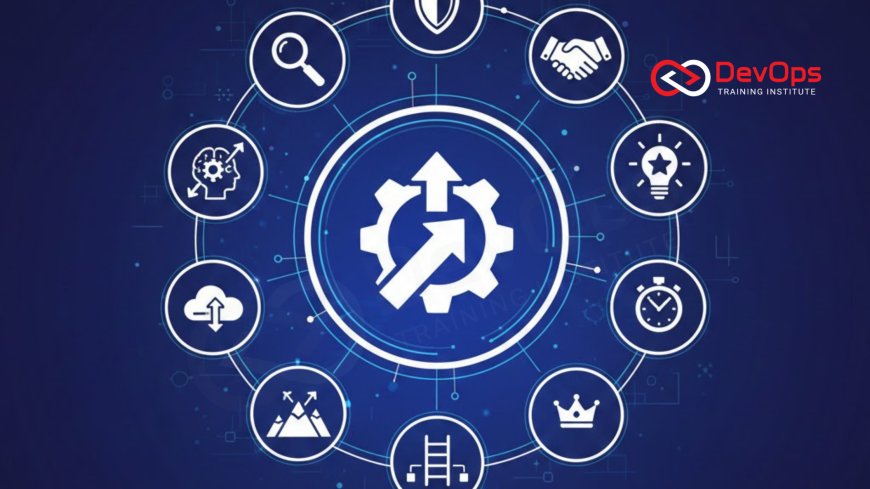
14 Essential Qualities for DevOps Leaders
- Psychological Safety: Creating an environment where engineers can take risks and fail without fear of retribution or blame.
- Radical Transparency: Being open about goals, challenges, and decisions to build deep trust across the entire organization.
- Empathy: Understanding the human side of engineering and supporting team members through their personal and professional struggles.
- Technical Vision: Providing a clear roadmap for the future that inspires the team and aligns with business objectives.
- Servant Leadership: Focusing on removing blockers and providing the resources the team needs to be successful every day.
- Decisiveness: Being able to make tough calls quickly when the team is stuck or during a critical system incident.
- Humility: Admitting when you are wrong and being open to better ideas regardless of where they come from in the team.
- Mentorship: Actively coaching team members to help them reach their career goals and develop new technical and soft skills.
- Conflict Resolution: Facilitating healthy debates and resolving disagreements in a way that strengthens team relationships and productivity.
- Resilience: Maintaining a calm and positive attitude during high pressure situations like outages or major technical migrations.
- Inclusivity: Ensuring that all voices are heard and that the team culture is welcoming to people from all backgrounds and experiences.
- Accountability: Taking responsibility for the team's failures while giving them full credit for all of their successes and innovations.
- Communication Skills: Being able to explain complex technical concepts to non technical stakeholders clearly and persuasively at any level.
- Strategic Thinking: Balancing short term delivery needs with long term architectural health and organizational sustainability for the future.
Embodying these qualities is a lifelong practice that requires constant self reflection and a genuine passion for people and technology. As an engineering manager, your goal is to be the leader you wish you had when you were an individual contributor. By using GitOps to manage your technical states and ChatOps techniques to manage your communication, you can stay organized and responsive. Remember that your leadership is the catalyst for the team's success; when you grow as a leader, your team grows with you, creating a legacy of engineering excellence that lasts far beyond any single project or release cycle.
Conclusion: Leading into the Future
In conclusion, the fourteen DevOps leadership qualities discussed here provide a comprehensive framework for engineering managers who want to excel in the modern technical landscape. By prioritizing psychological safety, empathy, and continuous improvement, you can build a culture that is not only highly productive but also deeply rewarding for your team. The transition to this style of leadership is essential for navigating the complexities of twenty twenty six and beyond, where human collaboration is just as important as technical automation. Your role is to guide your team through these changes with confidence and integrity.
As you move forward, keep exploring how release strategies can be optimized to empower your developers and how secret scanning tools can be integrated to protect your infrastructure. The future of engineering management is bright for those who are willing to embrace the human side of DevOps. By staying curious, remaining humble, and putting your team first, you will not only achieve your technical goals but also build a world class engineering organization that stands the test of time. Lead with purpose, inspire with vision, and watch as your team transforms the digital world one deployment at a time.
Frequently Asked Questions
What is the most important quality for a new engineering manager?
The most important quality is empathy, as it allows you to build the trust and relationships necessary to lead people effectively through challenges.
How can I improve psychological safety on my team?
Start by holding blameless post mortems and openly admitting your own mistakes to show that it is safe for others to do the same.
What is servant leadership in a DevOps context?
It means the manager's primary job is to support the team by removing technical blockers and providing the necessary tools for their success.
Why is transparency so critical for engineering teams?
Transparency ensures everyone has the same information, which reduces confusion and helps the team make better, more informed technical and business decisions.
How do I balance technical debt with new feature requests?
Use your technical vision to explain the long term cost of technical debt to stakeholders and schedule regular time for refactoring and maintenance.
Can an engineering manager still be technical?
Yes, but the focus shifts from writing code to understanding architectural patterns and guiding the team's overall technical strategy and vision effectively.
How do I handle a high-performing but toxic engineer?
Address the toxic behavior immediately, as the damage to team culture and psychological safety far outweighs any individual technical contribution in the long run.
What is the best way to give feedback to an engineer?
Give feedback regularly and privately, focusing on specific behaviors and their impact rather than personal attributes, while also providing a path for improvement.
How do I stay calm during a major production outage?
Focus on the process of resolution rather than the severity of the problem, and use your resilience to keep the team steady and organized.
What role does mentorship play in management?
Mentorship is vital for helping team members grow their skills and advance their careers, which improves team capability and increases overall job satisfaction.
How can I promote inclusivity within my engineering team?
Actively seek out diverse perspectives during meetings and ensure that all team members have equal opportunities for growth and high profile project assignments.
What is the difference between management and leadership?
Management is about processes and tasks, while leadership is about inspiring people and setting a vision that others want to follow and achieve.
How do I manage remote engineering teams effectively?
Focus on outcomes rather than hours worked, and use digital collaboration tools to maintain high levels of transparency and constant communication with everyone.
Why should I encourage the team to experiment?
Experimentation leads to innovation and helps the team find better solutions; it is a key part of the continuous improvement mindset in DevOps.
How do I measure my own success as a manager?
Measure your success by the growth of your team members, the stability of your systems, and the overall happiness and retention of your engineers.
What's Your Reaction?
 Like
0
Like
0
 Dislike
0
Dislike
0
 Love
0
Love
0
 Funny
0
Funny
0
 Angry
0
Angry
0
 Sad
0
Sad
0
 Wow
0
Wow
0



![100+ Azure DevOps Interview Questions and Answers [Updated 2025]](https://www.devopstraininginstitute.com/blog/uploads/images/202509/image_140x98_68c40aa9a3834.jpg)






![Future Scope of DevOps Careers in Pune [Updated 2025]](https://www.devopstraininginstitute.com/blog/uploads/images/202510/image_140x98_68e3a84652312.jpg)