

![Kong Interview Preparation Guide [2025]](https://www.devopstraininginstitute.com/blog/uploads/images/202509/image_430x256_68dbb95326997.jpg)



14 DevOps Roles in High-Performing IT Teams
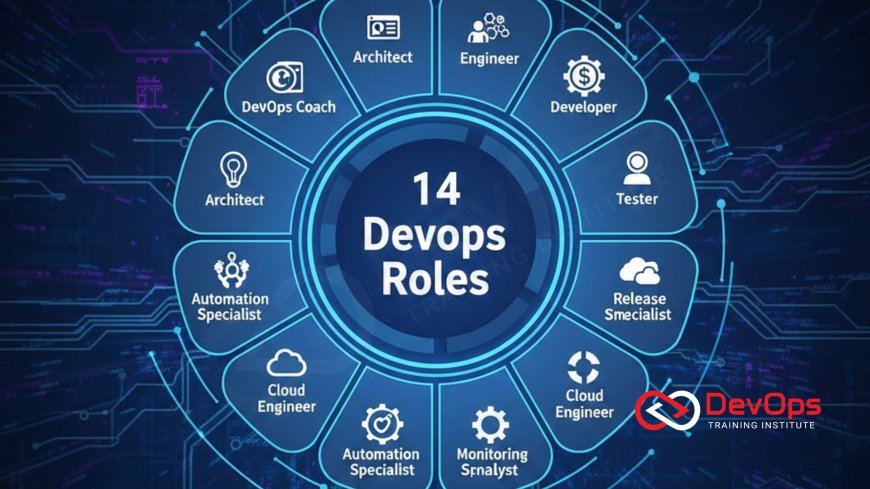
The success of a DevOps initiative relies on specialized roles that bridge the gap between development, operations, and security. This comprehensive guide explores 14 essential DevOps roles, detailing their responsibilities in automating pipelines, managing cloud infrastructure, and fostering a culture of continuous improvement. From the visionary DevOps Architect to the resilient Site Reliability Engineer and the vigilant Cloud Security Specialist, understand how each role contributes to accelerated software delivery and operational stability, transforming traditional IT silos into cohesive, high-velocity product teams focused on reliability and speed. Mastering these roles is key to achieving true organizational excellence and growth.
Introduction
DevOps is often described as a philosophy and a set of practices, yet to put those principles into action, organizations require specific roles and skill sets dedicated to bridging the gaps between historically siloed teams. High-performing IT teams have moved beyond the generic "DevOps Engineer" title to adopt specialized roles that focus on distinct areas of the Continuous Integration/Continuous Delivery (CI/CD) pipeline, automation, and operational stability. This specialization is necessary because the sheer breadth of modern software delivery—encompassing cloud architecture, container orchestration, security scanning, and automated testing—is too vast for a single individual to master fully. The resulting team structure is a collaborative web of professionals, each providing deep expertise in a critical layer of the technology stack.
The true power of this specialized structure lies not in the individual job descriptions, but in how these roles interact and integrate their efforts to form a unified value stream. Each role is designed to eliminate friction points, embed quality and security early in the lifecycle, and ensure that operational feedback cycles back efficiently to development. Understanding these 14 distinct roles provides a clearer picture of the career paths available in modern technology organizations and offers a blueprint for companies looking to transition to a truly high-velocity operational model. Success in this environment is measured by deployment frequency, lead time for changes, and the mean time to recovery, all metrics improved through highly focused specialization.
Leadership and Cultural Drivers
The success of any DevOps implementation hinges on strong leadership that drives cultural change and architectural vision across the entire organization. These leadership roles are tasked with breaking down organizational barriers, championing new ways of working, and ensuring that technical efforts remain strategically aligned with business goals. They often act as the primary evangelists for the cultural shift required to make the practice sustainable. Their focus extends far beyond technical execution, concentrating instead on organizational design and continuous process improvement.
The following roles set the direction and ensure adherence to the cultural model:
1. DevOps Evangelist/Architect: This individual is the visionary responsible for defining the overarching DevOps strategy, architecture, and technology roadmap. They advocate for cultural change, mentor other teams on adopting best practices, and evaluate new tools and technologies. The Architect designs the entire toolchain, ensuring components like IaC, CI/CD, and monitoring systems integrate seamlessly across the enterprise, serving as the ultimate technical authority on how systems should be built and deployed for maximum efficiency and security.
2. DevOps Team Lead: The Team Lead focuses on the day-to-day execution and management of the dedicated DevOps or Platform team. They translate the Architect's vision into actionable tasks, manage backlogs, mentor junior engineers, and, crucially, act as the liaison between the development, operations, and product teams. This role requires strong communication skills to manage priorities and expectations, ensuring the team's work directly supports the product delivery needs while simultaneously working to foster collaboration and mutual understanding among all stakeholders.
Core Infrastructure and Automation
These roles are the backbone of the DevOps pipeline, specializing in defining, provisioning, and maintaining the underlying cloud and server resources. Their work is characterized by declarative configuration and a commitment to treating infrastructure with the same rigor as application code. They ensure environments are stable, reproducible, and scalable on demand, eliminating the inconsistencies that often plague traditional server management. This automation focus provides the speed and reliability necessary for continuous delivery at scale.
The technical specializations crucial for infrastructure are:
3. Infrastructure Engineer (IaC Specialist): Focused almost entirely on Infrastructure as Code (IaC), this engineer is responsible for writing and maintaining Terraform, CloudFormation, or Pulumi scripts that provision and manage compute, network, and storage resources across the chosen cloud platforms. Their expertise ensures that all environments, from development sandboxes to production clusters, are deployed consistently and can be reliably spun up or torn down on demand, which is the key to cost optimization and environment parity.
4. Release Manager/Train Engineer: This role sits at the intersection of business and technology, defining and governing the release process itself. They manage release schedules, coordinate deployments across multiple dependent teams, minimize deployment risk, and own the final decision on whether a build is ready to go to production. In larger, scaled agile environments, they often function as a Release Train Engineer, coordinating the flow of value through multiple interconnected delivery teams while managing rollback procedures.
5. Cloud Security Engineer (DevSecOps Specialist): This specialist integrates security into every phase of the CI/CD pipeline, implementing the "Shift Left" principle. They automate security scans, manage secrets, enforce access controls (IAM), and work with developers to remediate vulnerabilities discovered early in the process. Their core responsibility is to ensure that automation and speed do not come at the expense of robust security, helping the organization define and enforce stringent security policies automatically as code is being deployed.
Delivery Pipeline Specialists
These engineers are the mechanics of the software assembly line, dedicated to optimizing the velocity and efficiency of the CI/CD pipeline. They focus on the tools, scripts, and processes that take code from a developer's repository and transform it into a deployed, tested, and running application. Their work ensures that the flow of value is smooth, fast, and highly reliable, enabling small, frequent changes to be pushed to production without human intervention. They are often the ones who implement the sophisticated deployment strategies like canary releases and blue/green deployments.
The specialized roles focusing on the delivery process include:
6. CI/CD Engineer (Pipeline Master): This engineer designs, builds, and maintains the entire continuous integration and continuous delivery system using tools like Jenkins, GitLab CI, or GitHub Actions. They are responsible for automating builds, setting up triggers for automated testing, packaging artifacts, and ensuring the pipeline stages execute quickly and reliably. Their expertise is paramount in maintaining the continuous flow of code, which directly impacts the organization’s overall deployment frequency and release readiness.
7. Automation Engineer (Test/Build Automation): While the CI/CD Engineer builds the pipeline shell, the Automation Engineer writes the code that runs inside it, particularly focusing on automated testing and build optimization. This includes writing infrastructure tests, performance tests, and high-level end-to-end tests that ensure the application not only deploys correctly but also functions as expected under load. By minimizing the need for manual quality assurance, they accelerate the cycle time and improve the code's quality before it reaches production environments.
8. Toolchain Specialist: This person manages and integrates the myriad of non-pipeline tools that support the DevOps process, such as version control systems (Git), artifact repositories (Nexus, Artifactory), and collaboration platforms. Their expertise ensures that all these supporting systems are secure, accessible, and correctly linked into the main delivery pipeline. This role is essential in large organizations with heterogeneous tool environments, ensuring a consistent and governed experience across multiple development teams.
9. SRE (Site Reliability Engineer): While distinct, the SRE role is highly integrated with DevOps teams, focusing on the ultimate reliability, scalability, and performance of the production system. SREs apply software engineering principles to operations problems, often writing code to automate manual tasks (reducing "toil") and defining service level objectives (SLOs) and service level indicators (SLIs). Their primary goal is to ensure the reliability of the system through rigorous measurement and proactive engineering, bridging the final gap between high deployment velocity and production stability. The concepts of SRE and DevOps are highly complementary.
| Role Title | Primary Focus | Key Tool Expertise |
|---|---|---|
| DevOps Architect | Designing the integrated toolchain and driving cultural change. | Cloud Architecture (AWS/Azure/GCP), Strategy, Organizational Design. |
| Infrastructure Engineer | Defining and provisioning environments as code for consistency. | Terraform, CloudFormation, Ansible, Kubernetes, infrastructure management. |
| CI/CD Engineer | Building and maintaining the automated software delivery pipeline. | Jenkins, GitLab CI, GitHub Actions, Scripting (Groovy/Bash/Python). |
| SRE (Site Reliability Engineer) | Ensuring production reliability, scaling, and managing operational toil. | Python, Go, Prometheus, Grafana, Alerting Systems, Observability. |
| Cloud Security Engineer | Integrating security practices and automated scanning into the pipeline. | IAM, Vault, SAST/DAST tools, Security Auditing, Policy-as-Code. |
Operations, Monitoring, and Support
Once an application is in production, a specialized set of roles takes ownership of its performance, health, and availability. These roles ensure that the infrastructure remains stable and that any potential issues are detected and remediated automatically or with minimal manual effort. They are the eyes and ears of the production environment, translating raw data and logs into actionable insights that feed back into the development lifecycle. Their input is crucial for maintaining the operational reliability that enables developers to continue releasing at high velocity, knowing the system is resilient.
These roles ensure continuous operational stability:
10. Monitoring and Observability Specialist: This engineer designs and implements the full observability stack, collecting metrics (Prometheus), logs (ELK/Splunk), and traces (Jaeger/OpenTelemetry) from all services. They create meaningful dashboards and, most importantly, configure proactive alerting and notification systems based on Service Level Objectives (SLOs). Their goal is to turn massive amounts of operational data into clear, actionable intelligence that enables high-velocity root cause analysis and immediate incident response when necessary.
11. Platform Engineer: The Platform Engineer builds and manages the internal "paved road" or self-service tools used by developers. This might include maintaining the internal Kubernetes distribution, managing the self-service deployment portal, or ensuring centralized logging and secret management systems are available and easy to use. By providing robust, standardized internal platforms, they dramatically increase developer autonomy and efficiency, allowing product teams to focus purely on application code rather than underlying infrastructure complexity, which is key to scaling DevOps practices.
12. Database Administrator (DBA) (DevOps-focused): While traditional DBAs focused on manual provisioning, the DevOps DBA embraces automation. They treat schema changes as code, integrate database migrations into the CI/CD pipeline, and provision database infrastructure (like RDS or managed PostgreSQL) using IaC. Their focus shifts from manual maintenance to ensuring the database layer is highly available, scalable, and resilient, minimizing downtime and supporting continuous application deployments without service interruption. They are critical for the reliability of stateful applications.
Development Integration Roles
The DevOps model fundamentally requires developers to possess a greater understanding of operations, and for QA to move from manual testing to automation engineering. These two roles, while traditionally housed in the development column, are essential cogs in the integrated DevOps team structure. Their skills evolve to embrace the principles of automation, quality, and ownership that define a high-performing team, ensuring that reliability and operational awareness are built into the application code from the very first commit rather than being an afterthought late in the delivery cycle.
13. Application Developer (with DevOps Skills): This developer is proficient not only in writing application code but also in containerizing their applications (Docker), writing basic infrastructure configuration (YAML), and implementing observability tools (metrics/tracing code) within their application. They take ownership of their code all the way through to production, participating in on-call rotation and troubleshooting, demonstrating a comprehensive understanding of the entire system lifecycle, which is the core ideal of the DevOps movement and its holistic approach to software delivery.
14. Quality Assurance (QA) Engineer (with Automation Focus): The modern QA engineer in a DevOps team is primarily an automation specialist. They write and maintain complex automated test suites (unit, integration, end-to-end, performance) that are executed automatically within the CI pipeline. By shifting testing left, they provide rapid feedback to developers on the health of the code and the overall system, eliminating the lengthy manual testing cycles that traditionally bottleneck software releases. Their work guarantees that speed is maintained without compromising the quality of the final product.
The Interdisciplinary Nature of High-Performing Teams
A high-performing DevOps team does not see these 14 roles as isolated job titles but as a set of rotating, shared responsibilities and specialized skill sets that must be brought to bear at different stages of the product lifecycle. In smaller companies, one person might wear several hats, serving as the Infrastructure Engineer, CI/CD Engineer, and SRE all at once. In contrast, large enterprises have dedicated individuals for each role, allowing for deeper, more specialized expertise. The cultural success metric is not whether the titles exist, but whether the required skills and accountability are present and correctly applied to achieve the desired outcomes of speed, quality, and stability.
The fluidity between these roles allows for cross-training and knowledge sharing, creating a resilient team that avoids single points of failure. For example, the SRE frequently collaborates with the Application Developer to reduce manual toil through code, while the CI/CD Engineer works closely with the Cloud Security Engineer to embed automated vulnerability scanning checks. This intentional overlap and integration of skills is what truly defines a high-performing team, enabling them to respond to complex challenges quickly and holistically, which is a necessary step in the continuous organizational transformation.
Conclusion
The adoption of DevOps requires more than just acquiring new tools; it demands a restructuring of IT teams around a collaborative, outcome-focused model. The 14 roles outlined here demonstrate the necessary specialization required to manage the complexity of modern cloud infrastructure and high-velocity continuous delivery pipelines. By integrating leaders who champion the culture, specialists who automate the infrastructure, engineers who streamline the pipeline, and professionals who guarantee reliability and security, organizations can finally realize the full benefits of the DevOps philosophy, moving away from slow, risky releases to rapid, predictable delivery.
Ultimately, every role in a high-performing DevOps team is focused on accelerating the delivery of value while simultaneously ensuring the stability and resilience of the production environment. These specialized job functions eliminate the traditional friction between development and operations, ensuring that expertise is applied where it is needed most, whether it is defining IaC templates, writing automated tests, or designing better monitoring dashboards. Recognizing and cultivating these distinct skill sets is the blueprint for building the next generation of highly efficient and reliable software organizations.
Frequently Asked Questions
What is the difference between a DevOps Engineer and an SRE?
A DevOps Engineer focuses on building the CI/CD pipelines, while an SRE applies software engineering to operational tasks to ensure system reliability and availability.
Does every small company need all 14 DevOps roles?
No, smaller companies often have one or two engineers who cover the core responsibilities of multiple roles, prioritizing automation and platform management.
What is the primary goal of the Release Manager?
The primary goal is to minimize risk and coordinate the timely, reliable release of new application versions to production environments with minimal disruption.
How does the Platform Engineer support the Application Developer?
They build self-service infrastructure platforms and tools, allowing developers to deploy and manage their services without needing deep operational knowledge.
What tool is essential for the Infrastructure Engineer role?
Terraform is essential, as it allows them to provision and manage cloud infrastructure using a declarative code approach across different providers.
What does "Shift Left" mean for the Cloud Security Engineer?
Shift Left means integrating security scanning, policy checking, and vulnerability detection early into the development and CI/CD process.
What is the key responsibility of the Monitoring Specialist?
Their key responsibility is designing and maintaining the observability stack (logs, metrics, tracing) to ensure proactive alerting based on SLOs.
Should developers participate in the on-call rotation?
Yes, in a mature DevOps culture, developers participate in on-call rotation to gain firsthand knowledge of how their code performs in production.
How is the QA Engineer's role changed in DevOps?
The QA role shifts from manual testing to writing and maintaining automated test suites that run continuously within the CI pipeline.
What is the main challenge for the DevOps Team Lead?
The main challenge is fostering effective communication and breaking down the cultural silos between the traditional development and operations teams.
Do these roles require specialized cloud certification?
While not mandatory, specialized cloud certifications (e.g., AWS, Azure) are highly valued as they confirm deep technical expertise in specific cloud platforms.
What does a Toolchain Specialist manage?
They manage supporting tools like Git repositories, artifact registries (Artifactory), and centralized documentation that integrate with the delivery pipeline.
Why are DBAs now focused on automation?
DBAs focus on automation (Database-as-Code) to ensure schema changes and database provisioning are reliable and integrated into the CI/CD pipeline for high availability.
What is the core difference between the DevOps Architect and the Team Lead?
The Architect focuses on strategic vision and future design, while the Team Lead focuses on daily operational execution and team management.
How does the SRE role reduce "toil"?
The SRE role reduces toil by identifying and automating repetitive, manual operational tasks that consume valuable engineer time and often lead to human errors.
What's Your Reaction?
 Like
0
Like
0
 Dislike
0
Dislike
0
 Love
0
Love
0
 Funny
0
Funny
0
 Angry
0
Angry
0
 Sad
0
Sad
0
 Wow
0
Wow
0


![100+ Azure DevOps Interview Questions and Answers [Updated 2025]](https://www.devopstraininginstitute.com/blog/uploads/images/202509/image_140x98_68c40aa9a3834.jpg)





![Future Scope of DevOps Careers in Pune [Updated 2025]](https://www.devopstraininginstitute.com/blog/uploads/images/202510/image_140x98_68e3a84652312.jpg)