


















![Kong Interview Preparation Guide [2025]](https://www.devopstraininginstitute.com/blog/uploads/images/202509/image_430x256_68dbb95326997.jpg)








14 Zero Trust Security Tools for DevOps
Discover the most effective 14 zero trust security tools designed specifically for modern DevOps environments to protect your digital assets. This comprehensive guide explains how to implement a never trust always verify architecture to secure microservices, cloud infrastructure, and sensitive data. Learn about identity management, network micro-segmentation, and secrets protection solutions that help prevent unauthorized access and minimize the blast radius of potential security breaches in your delivery pipeline today.

Introduction to Zero Trust in Modern Engineering
In the past, many companies relied on a perimeter based security model, often described as a castle with a moat. This meant that once someone was inside the internal network, they were generally trusted to access most resources. However, with the rise of cloud computing and remote work, this traditional model is no longer effective. Zero trust is a security framework that operates on the principle of never trust, always verify. Every request for access to a system or data must be authenticated, authorized, and continuously validated, regardless of where the request originates.
For engineering teams, implementing zero trust is about moving away from broad network permissions and toward granular, identity based controls. This shift is essential in a fast paced world where applications are broken down into hundreds of smaller services. By treating every connection as potentially hostile, organizations can significantly reduce their risk of data breaches. This guide will walk you through fourteen essential tools that help teams integrate these principles into their daily workflows, ensuring that security is not a bottleneck but a foundational element of the software delivery lifecycle.
The Core Principles of Never Trust Always Verify
The zero trust model is built on three main pillars: verify explicitly, use least privileged access, and assume breach. Verifying explicitly means always authenticating and authorizing based on all available data points, including user identity, location, and device health. Least privileged access ensures that users and services only have the minimum permissions they need to perform their specific tasks. Assuming breach means designing your systems as if an attacker is already present, focusing on limiting their movement and protecting critical data through constant monitoring and encryption.
Integrating these principles into a delivery pipeline requires a cultural shift as much as a technical one. It involves moving security checks earlier in the process, a practice often referred to as shift left testing for security. When security is part of the initial design phase, it becomes much easier to maintain. This proactive approach ensures that vulnerabilities are caught before they reach production, saving time and resources while building a more resilient organization. By using the right tools, teams can automate these checks and maintain a high velocity without compromising on safety.
Identity and Access Management for Microservices
In a world of microservices, managing who can talk to what is a monumental task. Identity and Access Management tools serve as the gatekeepers for your services. Instead of relying on IP addresses, which can change frequently in a containerized environment, these tools assign unique identities to every service. This allows for fine grained control over communication paths, ensuring that a compromised frontend service cannot easily access a sensitive database unless explicitly permitted by a strictly defined policy.
Tools like Okta, Ping Identity, and Auth0 provide robust solutions for managing user identities, while technologies like SPIFFE and SPIRE manage service identities. These tools ensure that every interaction is backed by a verified identity. This level of control is a key component of platform engineering in scalable environments, as it allows infrastructure teams to provide secure by default services to developers. By centralizing identity management, organizations can enforce consistent policies across their entire ecosystem, reducing the likelihood of configuration errors that lead to unauthorized access.
Secrets Management and Sensitive Data Protection
One of the most common causes of data breaches is the exposure of secrets such as API keys, passwords, and encryption tokens. Zero trust tools for secrets management ensure that these sensitive pieces of data are never hardcoded in source files or stored in insecure locations. Instead, they are stored in a centralized, encrypted vault and provided to applications only when needed. This approach minimizes the exposure window and makes it much easier to rotate credentials regularly without breaking the application.
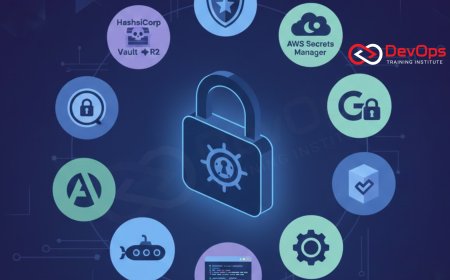
HashiCorp Vault and AWS Secrets Manager are leading examples in this category. They provide dynamic secrets, which are temporary credentials that expire shortly after use. This means even if a secret is intercepted, it would be useless to an attacker after a very short time. Managing secrets effectively is a critical part of how does devsecops integrate security into every stage of the devops lifecycle. It moves away from the old way of manual secret handling and toward a fully automated, secure, and auditable process that satisfies both developers and compliance officers.
Table: Top Zero Trust Tools for DevOps Teams
| Tool Name | Category | Key Functionality | DevOps Benefit |
|---|---|---|---|
| HashiCorp Vault | Secrets Management | Encrypted storage and dynamic credential generation. | Eliminates hardcoded secrets in code. |
| Istio | Service Mesh | Mutual TLS and service-to-service authorization. | Secures communication in Kubernetes. |
| Teleport | Access Plane | Secure access to SSH nodes, K8s, and databases. | Provides unified, audited remote access. |
| Cloudflare Access | Zero Trust Network | Identity-aware proxy for web applications. | Replaces traditional VPNs for teams. |
| Checkov | IaC Security | Static analysis for infrastructure as code. | Finds misconfigurations before deployment. |
| Opa (Open Policy Agent) | Policy Engine | Unified toolset for policy enforcement. | Decouples policy from application logic. |
| Twingate | Network Access | Hidden networks with identity-based access. | Low latency, secure internal connectivity. |
Network Micro-segmentation and Service Meshes
Network micro-segmentation is the process of dividing a network into smaller, isolated zones to prevent lateral movement by attackers. In a traditional flat network, an attacker who gains access to one server can often reach every other server in the network. Zero trust tools like service meshes enable micro-segmentation at the application layer. They ensure that even if two services are running on the same physical hardware, they are isolated from each other unless a specific policy allows them to communicate.
Service meshes like Istio and Linkerd provide mutual TLS (mTLS) by default, which means all traffic between services is encrypted and authenticated. This ensures that even if the network itself is compromised, the data being sent between services remains private. These tools also provide powerful observability features, allowing teams to see every connection in real time. This visibility is essential for identifying unusual patterns that might indicate a security incident. By making the network invisible to unauthorized users, service meshes provide a robust layer of defense in a zero trust architecture.
Infrastructure as Code Security Scanning
As teams move toward automating their infrastructure, the risk of a single misconfiguration causing a massive security hole increases. Infrastructure as Code (IaC) security tools scan your configuration files for security best practices before they are applied to the cloud. This automated audit ensures that your virtual machines, databases, and networks are set up with zero trust principles in mind, such as ensuring that storage buckets are not public and that only necessary ports are open to the internet.
Tools like Checkov and Terrascan are designed to be integrated into CI and CD pipelines. This ensures that every change is verified before it is deployed. This approach is highly compatible with gitops because the desired state of the infrastructure is checked for security compliance in the repository itself. By catching errors early, teams can avoid expensive and dangerous mistakes in production. This automated governance provides a safety net that allows developers to move quickly while maintaining a high standard of security across the entire organization.
Policy as Code and Continuous Compliance
Maintaining security at scale requires a way to enforce rules consistently across hundreds of projects. Policy as Code allows organizations to define their security and compliance rules in a machine readable format. These policies can then be enforced automatically by a central engine, ensuring that no resource is created unless it meets the required standards. This removes the need for manual security reviews for every small change, significantly speeding up the delivery process while ensuring constant vigilance.
The Open Policy Agent (OPA) is a leading tool in this space, providing a unified way to manage policies across Kubernetes, cloud providers, and custom applications. By using policy as code, teams can implement complex rules, such as requiring all deployments to use canary releases for high risk updates. This ensures that operational best practices are followed every time. Automated policy enforcement provides a level of consistency that is impossible to achieve through manual processes alone, helping teams stay compliant with industry regulations and internal security standards effortlessly.
Resilience and Proactive Security Testing
A zero trust architecture is not just about keeping people out; it is also about ensuring the system remains functional and secure when things go wrong. Proactive security testing involves deliberately challenging your security controls to find weaknesses. This can include simulating attacks or intentionally causing system failures to see how the security layers respond. This practice helps teams understand their "blast radius" and refine their isolation boundaries to prevent localized issues from spreading.
- Simulated Breach: Regularly testing how far an attacker can move within the network if a single service is compromised.
- Fault Injection: Using scripts to drop network packets or delay responses to verify that security timeouts and failovers work correctly.
- Access Auditing: Periodically reviewing who has access to what and using automation to remove permissions from inactive accounts.
- Red Teaming: Allowing a dedicated security group to try and bypass the zero trust controls to find hidden vulnerabilities.
By integrating how can chaos engineering improve resilience in devops pipelines with security testing, teams can build a much more robust system. This disciplined approach to failure helps identify architectural flaws that static scans might miss. It ensures that the security controls are not just theoretical but are proven to work under real world stress. This continuous improvement cycle is what makes zero trust a living framework rather than a one time project, allowing organizations to adapt to new threats as they emerge in the digital landscape.
Conclusion
The transition to a zero trust security model is a journey that requires the right combination of tools, processes, and mindset. We have explored fourteen essential categories of tools that empower DevOps teams to implement a never trust always verify architecture effectively. From managing service identities and secrets to securing the infrastructure through code scanning and policy enforcement, these solutions provide a comprehensive defense against modern cyber threats. By moving security earlier in the lifecycle and automating the verification of every request, organizations can achieve a higher level of safety without sacrificing the speed of innovation. Furthermore, integrating these practices with FinOps to optimize cloud spend ensures that security remains cost effective. As applications continue to grow in complexity, the ability to maintain granular control over every interaction will be the defining factor in technical success. Embracing zero trust tools allows your team to build more resilient systems that protect your most valuable data while supporting a high velocity development culture. Start by identifying your most critical assets and applying these tools to build strong, verified boundaries around them for long term success.
Frequently Asked Questions
What is Zero Trust security?
Zero Trust is a security framework that assumes no user or service is trusted by default, requiring continuous verification for every access request.
Why do DevOps teams need Zero Trust?
Modern DevOps uses cloud-native and microservices architectures where traditional perimeter-based security is no longer sufficient to protect against lateral movement by attackers.
What is a Service Mesh in Zero Trust?
A service mesh manages service-to-service communication, providing automated encryption via mutual TLS and granular authorization policies between different microservices.
How do secrets management tools work?
They centralize and encrypt sensitive data like API keys, providing them to applications at runtime and allowing for automated credential rotation.
What is Policy as Code?
Policy as Code is the practice of defining security and compliance rules in code, allowing for automated enforcement across all infrastructure and applications.
Does Zero Trust slow down development?
When implemented with automated tools, Zero Trust actually speeds up development by providing safe-by-default paths and reducing manual security review hurdles.
What is SPIFFE and SPIRE?
SPIFFE is an open standard for service identity, and SPIRE is the implementation that provides and rotates these identities in dynamic environments.
Can I implement Zero Trust on-premise?
Yes, Zero Trust principles can be applied to on-premise data centers, hybrid clouds, and multi-cloud environments using the same identity-centric approach.
What is the "blast radius" in security?
Blast radius refers to the extent of the damage that can be caused if a specific component or service is compromised by an attacker.
How does mTLS enhance security?
Mutual TLS ensures that both the client and server verify each other's certificates, encrypting the data and preventing man-in-the-middle attacks.
What is micro-segmentation?
It is the practice of dividing a network into very small, isolated zones to strictly control the traffic allowed between individual services.
Should I use a VPN with Zero Trust?
Zero Trust is designed to replace traditional VPNs with more secure, identity-aware proxies that provide access to specific applications rather than the whole network.
How do I start with Zero Trust?
Begin by identifying your sensitive data, mapping your transaction flows, and implementing multi-factor authentication and identity-based access controls for your services.
What is IAM?
IAM stands for Identity and Access Management, which is the framework of policies and technologies for ensuring that the right people have the right access.
How do feature flags help security?
Using feature flags allows you to turn off a compromised feature instantly without a full redeploy, acting as an emergency kill switch.
What's Your Reaction?
 Like
0
Like
0
 Dislike
0
Dislike
0
 Love
0
Love
0
 Funny
0
Funny
0
 Angry
0
Angry
0
 Sad
0
Sad
0
 Wow
0
Wow
0




![100+ Azure DevOps Interview Questions and Answers [Updated 2025]](https://www.devopstraininginstitute.com/blog/uploads/images/202509/image_140x98_68c40aa9a3834.jpg)






![Future Scope of DevOps Careers in Pune [Updated 2025]](https://www.devopstraininginstitute.com/blog/uploads/images/202510/image_140x98_68e3a84652312.jpg)