

![Kong Interview Preparation Guide [2025]](https://www.devopstraininginstitute.com/blog/uploads/images/202509/image_430x256_68dbb95326997.jpg)

15 DevSecOps Tools for Security-first Delivery
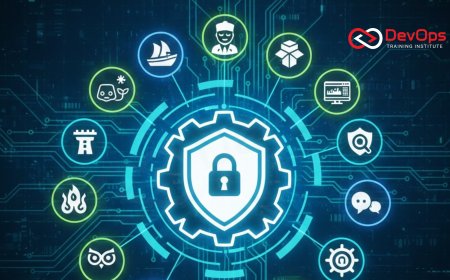
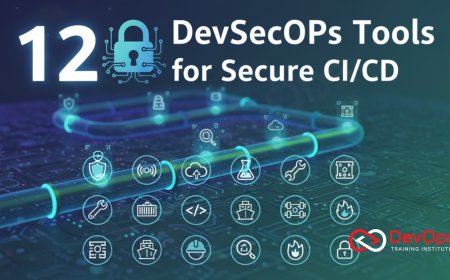
Integrate security seamlessly into your software delivery lifecycle with this definitive guide to 15 essential DevSecOps tools. We explore critical security measures across the entire CI/CD pipeline, from static code analysis and dependency checking to infrastructure as code scanning and runtime protection. These tools help shift security left, enabling developers to find and fix vulnerabilities early, dramatically reducing risk and cost. Understanding and implementing this toolchain is crucial for organizations aiming for high-velocity, secure, and compliant cloud-native deployments, ensuring that security is a continuous, automated process, not a final roadblock before release.
Introduction
In the high-speed world of DevOps, where code changes are deployed multiple times a day, traditional security practices have become an unacceptable bottleneck. The concept of performing a comprehensive, manual security audit just before a production release is not only inefficient but highly risky. DevSecOps, or "shifting left," addresses this challenge by integrating security automation and culture across every phase of the Continuous Integration and Continuous Delivery (CI/CD) pipeline. It transforms security from a compliance checkpoint at the end of the development cycle into a shared, continuous responsibility, ensuring that security is an inherent quality of the application, not an afterthought.
The success of a DevSecOps transformation hinges entirely on the toolchain implemented. Automation is the engine that allows security checks to keep pace with rapid development cycles. The right tools must be seamlessly integrated into development environments and CI systems, providing immediate, actionable feedback to developers without slowing them down. This proactive approach not only significantly reduces the number of vulnerabilities that reach production, but it also lowers the overall cost of fixing those vulnerabilities, as issues are resolved at the source, where they are easiest and cheapest to address. The selection of tools must cover the entire lifecycle, from the developer’s local machine to the running production environment, ensuring end-to-end security coverage.
Phase I: Securing the Code and Dependencies
The earliest phase of the development lifecycle, where code is being written and dependencies are being included, represents the most opportune moment to inject security checks. Finding and fixing issues at this stage is exponentially cheaper and faster than discovering them later in staging or, worse, in production. This phase requires tools that analyze the source code itself, both proprietary logic and third-party components, without actually running the application. These tools empower developers to own their security outcomes, providing instant feedback on code commits and pull requests, making security a natural part of their daily workflow rather than a disruptive task.
Static Application Security Testing (SAST) tools analyze source code, bytecode, or binary code to find security vulnerabilities without executing the program. They are language-specific and excel at detecting common flaws like SQL injection, cross-site scripting (XSS), and insecure cryptographic practices. Tools like SonarQube (which also handles code quality) and Bandit (specifically for Python code) are essential for this phase. SAST reports provide detailed location and context for the vulnerability, guiding developers to fix the problem correctly. By running SAST on every pull request, teams enforce the rule that no new vulnerability should ever be merged into the main development branch.
Software Composition Analysis (SCA) tools are equally critical, focusing on third-party libraries and dependencies. Modern applications are built on open-source code, and vulnerabilities in these external components pose a massive risk. SCA tools like Snyk or Dependabot automatically scan dependency manifests (like package.json, pom.xml) to identify known vulnerabilities (CVEs), license compliance issues, and outdated components. They integrate directly into the version control system, automatically creating remediation pull requests that update vulnerable libraries. Securing the supply chain is paramount, and SCA ensures that the trust placed in third-party code is continuously verified throughout the pipeline, drastically reducing the attack surface introduced by unpatched libraries.
Phase II: Security During Build and Testing
Once the code has passed the static analysis and dependency checks, it moves into the build and testing phase within the CI pipeline. This is where dynamic testing and deeper security checks, which require the application to be running, come into play. Integrating these tools into the build process ensures that a vulnerable artifact is never created or promoted, treating security failures just like any other test failure that stops the build. These checks act as the crucial middle gates of the pipeline, providing validation that the code and the live execution environment are sound before release.
The following tools execute during this phase:
- Dynamic Application Security Testing (DAST): Tools like OWASP ZAP or Burp Suite (professional version) actively test the running application from the outside, simulating an attacker. They probe for common vulnerabilities and logic flaws that SAST might miss, as DAST sees the application's actual behavior in a running environment. DAST is typically run against the application deployed in a staging or testing environment, ensuring the entire stack, including network and configuration, is scrutinized.
- Interactive Application Security Testing (IAST): IAST tools, such as the built-in features offered by security platforms, work from inside the application. They monitor application behavior during a standard quality assurance (QA) test run, analyzing code execution paths and data flow in real-time. By combining the speed of SAST with the execution context of DAST, IAST provides highly accurate vulnerability reports with fewer false positives, dramatically improving developer trust in the security feedback.
- Secret Scanning: Tools like git-secrets or integrated CI pipeline scanners are essential for ensuring no sensitive data, such as API keys, database credentials, or private certificates, are inadvertently committed to the source code repository. Even if code passes SAST, an exposed credential is a catastrophic vulnerability. These tools scan commit messages and diffs to prevent secrets from being pushed, which complements practices for user account creation and privilege management on the deployment hosts.
Phase III: Container and Infrastructure Security
In modern cloud-native environments, the application is packaged in containers and the infrastructure is provisioned using code (Infrastructure as Code or IaC). Security checks must therefore extend beyond the application code into these defining layers. A perfectly secure application running on a misconfigured or vulnerable container or infrastructure is still a massive security risk. This phase focuses on verifying the integrity of the deployment artifacts themselves, ensuring that both the packaging and the deployment environment adhere to strict security baselines before they ever reach production.
Container Image Scanning is mandatory for any deployment using Docker or Kubernetes. Tools like Clair and Trivy scan container images for known operating system and programming language package vulnerabilities. Since container images are often built on base images (like Ubuntu or Alpine) that contain hundreds of packages, vulnerability scanning must be run as a mandatory gate in the CI pipeline. If the image contains a critical vulnerability, the build must fail. Furthermore, scanning must check for misconfigurations within the Dockerfile itself, such as images running as root or exposing unnecessary ports, which relates directly to understanding special permissions on the host system.
Infrastructure as Code (IaC) Scanning addresses the risk introduced by configuration files. Tools like Checkov or Checkmarx KICS scan declarative infrastructure templates (Terraform, CloudFormation, Kubernetes YAML, Ansible) for security misconfigurations. Common findings include insecure firewall rules, unencrypted storage buckets, overly permissive IAM policies, or the disabling of logging features. By scanning the IaC template before deployment, the team prevents the creation of insecure cloud resources, which is vital for maintaining a secure and auditable cloud environment. This practice automates the enforcement of security standards, catching configuration flaws that could undermine the integrity of the application even with perfectly secure code.
15 DevSecOps Tools Overview
| Tool Category | Tool Examples (15 Total) | Primary Function | Integration Phase |
|---|---|---|---|
| Static Analysis (SAST) | SonarQube, Bandit, Checkmarx SAST | Code analysis for security bugs and quality defects without execution. | Code Commit/Pull Request |
| Software Composition Analysis (SCA) | Snyk, Dependabot, Renovate | Identifies vulnerabilities and license issues in third-party and open-source dependencies. | Code Commit/Build |
| Dynamic Analysis (DAST) | OWASP ZAP, Burp Suite, Invicti | Attacks the running application to find security issues in real-time. | Testing/Staging Deployment |
| IaC Security Scanning | Checkov, Bridgecrew, Checkmarx KICS | Scans Terraform, CloudFormation, and Kubernetes files for misconfigurations. | Build/Deployment Pipeline |
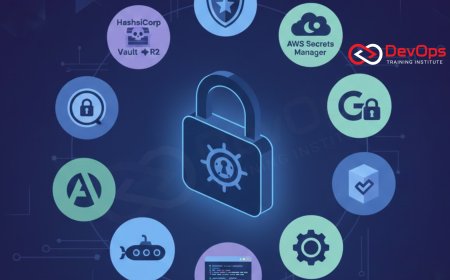
| Secrets Management | HashiCorp Vault, AWS Secrets Manager, git-secrets | Securely stores, rotates, and manages credentials, tokens, and API keys. | Runtime/Deployment |
| Container Security | Clair, Trivy, Docker Bench for Security | Scans container images for OS vulnerabilities and configuration issues. | Build/Registry |
| Runtime Protection (Behavioral) | Falco, Security Hub (CSPM), AppSensor | Monitors container and host activity for abnormal behavior and security events. | Runtime/Operations |
Phase IV: Securing the Deployment Pipeline
The integrity of the CI/CD pipeline itself is a critical security concern. A compromised pipeline can allow an attacker to inject malicious code, bypass security gates, or even gain control over the production environment infrastructure. Securing the pipeline requires tight access controls, immutability of build artifacts, and robust auditing. Tools that manage access and ensure the provenance of the code throughout the entire journey from commit to deployment are essential for preventing supply chain attacks, which have become an increasingly prominent threat vector for modern software organizations worldwide.
One of the most powerful ways to secure the pipeline is through the meticulous management of credentials and access rights. Every service account, every deployment agent, and every human user needs the principle of least privilege applied. This is why tools like HashiCorp Vault are indispensable. Vault is designed to secure, store, and tightly control access to tokens, passwords, certificates, and encryption keys. By integrating Vault, teams eliminate hardcoded secrets in their CI/CD scripts and applications, instead providing ephemeral, time-limited credentials just for the duration of the deployment or task. This significantly reduces the window of exposure if a credential is ever leaked or compromised, enforcing a zero-trust model for the pipeline itself. This control over credentials and the necessity of managing privileged access is a non-negotiable security requirement.
Furthermore, the concept of secure archives and immutable artifacts is crucial. Once an application is built and scanned, the resulting artifact (e.g., a Docker image) must be signed and stored in a secure registry. Any modification to this artifact must be prevented. Tools that verify the integrity and provenance of the artifact at every stage of the pipeline ensure that the code deployed to production is the exact same code that passed all security and quality checks in staging. This prevents tampering and is a key factor in ensuring compliance and trust across the deployment environments, preventing subtle manipulation of the final deliverable without proper verification.
Phase V: Runtime Protection and Observability
Even with the most rigorous "shift left" tools in place, production environments remain the ultimate target, and zero-day exploits or logic flaws can always emerge. Runtime protection tools provide the final line of defense, monitoring the live environment to detect and respond to threats in real-time. This phase leverages the operational maturity of DevOps, turning rich operational data (logs, metrics, events) into actionable security intelligence. The goal is to detect abnormal behavior that signifies a breach or an attack in progress, allowing for immediate automated or manual mitigation to minimize the damage and exposure.
Runtime Security Monitoring tools like Falco (the Cloud Native Computing Foundation’s behavioral activity monitor) specialize in detecting unauthorized activity within Linux systems and Kubernetes containers. Falco monitors system calls to identify suspicious activities like a web server spawning a shell, a container trying to access sensitive directories, or unauthorized changes to critical configuration files. Because it monitors behavior, it can catch threats that static signatures might miss, providing a crucial layer of defense for containerized workloads. It integrates with orchestration platforms, enabling quick policy enforcement and automated responses, such as terminating a compromised pod, which is paramount for container security.
Cloud Security Posture Management (CSPM) tools provide continuous visibility into the security and compliance status of the cloud environment itself. These tools audit cloud configurations (e.g., S3 buckets, security groups, IAM roles) against industry benchmarks (like CIS) and organizational policies. They alert on misconfigurations such as public-facing storage or overly permissive network access, essentially scanning the "live" IaC that was deployed. By continuously checking the environment, CSPM tools, often provided by the cloud vendors themselves (like AWS Security Hub or GCP Security Command Center), ensure that security drift is immediately identified and corrected. They provide the centralized compliance dashboard that leaders rely on to prove adherence to security standards.
Phase VI: The Human and Cultural Elements
Tools are powerful, but the success of DevSecOps is ultimately a cultural matter. The most common failures stem not from the lack of tools, but from a failure to integrate them effectively and a lack of security awareness among development teams. Security must become an intuitive part of the developer workflow, and this requires continuous learning, clear metrics, and shared accountability. Therefore, the DevSecOps toolchain must include platforms that facilitate training, measure security outcomes, and foster collaboration between security and engineering teams, transforming organizational behavior as much as technical processes. This often involves defining clear roles and responsibilities related to group management and ownership.
One critical tool is the Security Champion Program combined with platforms for continuous security training. These platforms provide gamified, hands-on training for common vulnerabilities, helping developers understand why a tool like SAST flagged their code and how to fix the underlying weakness. By empowering developers as "Security Champions," organizations shift the responsibility for triage and fixing left, integrating security knowledge directly into the feature team. This proactive education significantly reduces the number of security findings in later stages of the pipeline, which is a key metric for DevSecOps maturity, ensuring developers are proficient in identifying and preventing security risks early in the development process.
Another crucial tool is a robust Security Metrics Dashboard. Leaders need to track KPIs that measure the effectiveness of the DevSecOps program, such as vulnerability volume over time, mean time to remediate (MTTR), and the percentage of findings fixed in the development phase versus production. Tracking these metrics ensures that the security team can prove the ROI of the "shift left" strategy. If the MTTR is high, it signals a process bottleneck, likely a cultural or tooling failure in the remediation process. These dashboards are the communication tools that align engineering efforts with security goals, proving that security investment directly translates to reduced risk and improved development velocity, which is far more effective than simply auditing technical read, write, and execute permissions manually.
Conclusion
Implementing a comprehensive DevSecOps strategy is non-negotiable for any organization operating in the cloud. The 15 tools discussed in this guide represent the critical automation layers needed to ensure security-first delivery across the entire software supply chain. From the initial commitment of code (SAST and SCA) to the securing of the infrastructure layer (IaC Scanning) and the final real-time defense (Runtime Protection), these tools enable security to be a continuous, integrated, and collaborative process. They empower developers with immediate feedback, enforce policies programmatically, and provide security teams with the visibility required to manage risk at the speed of DevOps.
The successful integration of this toolchain hinges on organizational commitment, particularly the transition from security as an audit function to security as an enabler of speed and quality. Key practices, such as strictly managing secrets with tools like Vault and continuously monitoring runtime behavior with Falco, move organizations toward a secure, zero-trust framework. By focusing on automating security checks and fostering a culture of shared responsibility, leaders can transform their teams into high-performing units that deploy faster, more securely, and with greater confidence. Ultimately, the future of software delivery is secure, and the mastery of these DevSecOps tools is the definitive roadmap to achieving that future, ensuring that every deployment enhances the product without increasing organizational exposure to risk. These tools automate the enforcement of critical security checks that human beings often overlook, such as ensuring proper system configurations and adherence to the principle of least privilege, making security scalable with business growth.
Frequently Asked Questions
What does "shift left" mean in the context of DevSecOps?
Shift left means integrating security testing and practices earlier into the development lifecycle, typically starting at the code writing and commit phases.
How do SAST tools differ from DAST tools in security testing?
SAST analyzes code without running it, finding static flaws. DAST analyzes the running application from the outside, probing for dynamic vulnerabilities.
Why is Software Composition Analysis (SCA) critical for modern applications?
SCA is critical because modern applications rely heavily on open-source libraries, which often contain known vulnerabilities that must be automatically identified and patched.
What is the primary role of HashiCorp Vault in a secure pipeline?
Vault's primary role is to securely store, manage, and rotate sensitive credentials, eliminating hardcoded secrets in code and configuration files.
How does IaC scanning enhance cloud security?
IaC scanning prevents insecure cloud resources from being provisioned by checking configuration files (like Terraform) for misconfigurations before deployment.
What specific behavior does the runtime tool Falco monitor in Kubernetes?
Falco monitors container system calls to detect abnormal behavior, such as a web server spawning a shell or unauthorized access to sensitive files.
Why must teams focus on automating backups as a security measure?
Automating backups is essential for quick data recovery and resilience, ensuring business continuity after a major security incident or ransomware attack.
What are the benefits of integrating security training platforms for developers?
Training platforms increase security awareness, enabling developers to proactively write more secure code and efficiently fix vulnerabilities found by tools.
Which metric is most crucial for measuring the effectiveness of a DevSecOps program?
Mean Time to Remediate (MTTR) is a crucial metric, showing how quickly the team can fix a vulnerability once it has been identified.
What is the risk of using long-lived user accounts in the CI/CD pipeline?
Long-lived user accounts are high-risk because they increase the window of exposure and the potential damage if the corresponding credentials are leaked or compromised.
What are the security benefits of using container image signing?
Image signing verifies the integrity of the image, ensuring that the code deployed to production is exactly the one that passed all pre-deployment checks.
How can leaders prove the ROI of DevSecOps tools?
Leaders prove ROI by demonstrating a reduction in the Change Failure Rate and a significant decrease in the cost of fixing vulnerabilities in later stages.
What is a common security issue that secrets scanning tools help prevent?
Secrets scanning prevents accidental committing of sensitive credentials (API keys, passwords) directly into version control systems, preventing immediate exposure.
Why is group management and ownership important for DevSecOps?
Proper group management ensures that only authorized teams and automated pipelines have the necessary permissions to access and modify critical resources or code.
What is a CSPM tool and what does it check?
CSPM (Cloud Security Posture Management) tools continuously audit cloud configurations against compliance standards, checking for misconfigurations in the live environment.
What's Your Reaction?
 Like
0
Like
0
 Dislike
0
Dislike
0
 Love
0
Love
0
 Funny
0
Funny
0
 Angry
0
Angry
0
 Sad
0
Sad
0
 Wow
0
Wow
0

![100+ Azure DevOps Interview Questions and Answers [Updated 2025]](https://www.devopstraininginstitute.com/blog/uploads/images/202509/image_140x98_68c40aa9a3834.jpg)





![Future Scope of DevOps Careers in Pune [Updated 2025]](https://www.devopstraininginstitute.com/blog/uploads/images/202510/image_140x98_68e3a84652312.jpg)