

![Kong Interview Preparation Guide [2025]](https://www.devopstraininginstitute.com/blog/uploads/images/202509/image_430x256_68dbb95326997.jpg)

20 Tools That Help Scale DevOps in Enterprise Environments
Scaling DevOps in a large enterprise environment requires more than just automation; it demands strategic tool selection to handle complexity, governance, and thousands of distributed resources. Explore the top 20 essential tools across Continuous Integration, Infrastructure as Code, Observability, and Orchestration that enable large organizations to maintain agility, enforce policy, and accelerate delivery at scale. This guide is a crucial resource for engineering leadership and architects seeking to unify fragmented toolchains, manage multi-cloud infrastructure, and establish efficient workflows across numerous independent teams.
Introduction Scaling from Startup to Enterprise Complexity
The journey from a small, agile team running a single application to a large enterprise supporting hundreds of interconnected services, diverse legacy platforms, and thousands of developers is characterized by an exponential increase in complexity. Traditional DevOps principles—automation, culture, and measurement—remain the same, but the implementation challenges are magnified by organizational silos, stringent governance requirements, and the sheer volume of infrastructure. Scaling DevOps in this context means moving beyond basic automation and adopting a powerful, standardized, and resilient toolchain capable of handling multi-cloud deployments, high-volume transactional data, and the need for comprehensive auditing.
In an enterprise setting, the goal of scaling DevOps tools is not just to make code deploy faster, but to ensure that the process is predictable, secure, and auditable across all teams and environments. Fragmentation, where different teams use different tools for the same job, becomes a significant roadblock to efficiency and knowledge sharing. The right set of tools must facilitate management standardization while remaining flexible enough to support diverse application stacks. This requires platforms that specialize in orchestration, centralized configuration management, and deep observability to provide the crucial single pane of glass for monitoring an increasingly complex system of dependencies and services.
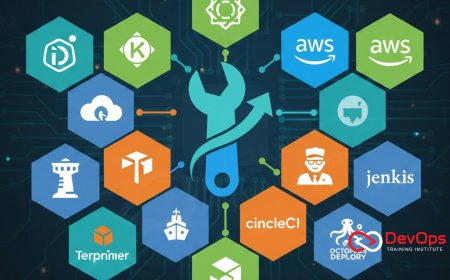
The 20 tools detailed in this guide are instrumental in tackling the biggest bottlenecks of enterprise DevOps. They are chosen not just for their individual capabilities, but for their ability to integrate seamlessly with one another, enforce Policy as Code, and operate effectively in distributed environments. By investing in these foundational platforms, enterprises can transform their fragmented tool ecosystem into a unified, scalable, and high-performing software delivery machine, ensuring that agility is maintained even as the organization expands its digital footprint.
The Core Foundation Continuous Integration and Delivery
At the heart of scaling DevOps is the ability to maintain rapid, reliable, and auditable Continuous Integration and Continuous Delivery (CI/CD) pipelines across a large number of development teams. Enterprise CI/CD must go beyond simply running tests; it needs robust features for pipeline-as-code definition, distributed build agents, complex deployment strategies (like canary and blue/green), and centralized reporting. When thousands of engineers are committing code daily, the CI system must be highly available and infinitely scalable, capable of spinning up ephemeral environments on demand.
Tools in this category must integrate deeply with version control servers, provide secure secrets management, and offer extensibility through plugins or native APIs. They often serve as the central orchestration point for the entire software delivery value stream, triggering security scans, infrastructure provisioning, and monitoring setup. Selecting a mature, industry-tested CI/CD tool reduces the operational risk associated with managing mission-critical deployment processes. These platforms move the focus from manual deployments to automated release management, which is the cornerstone of scaling efficiency in any large organization.
Here are five tools crucial for enterprise CI/CD scaling:
- Jenkins: The open source automation server known for its massive plugin ecosystem. In the enterprise, Jenkins scales through its distributed master-agent architecture, enabling build capacity to be distributed across many servers and operating systems, which is vital for polyglot environments.
- GitLab CI/CD: Offers a complete, single-application DevSecOps platform, simplifying the management of the entire pipeline from code to security. Its integrated approach is excellent for enforcing standardization and providing end-to-end auditability across large, distributed teams.
- GitHub Actions: Highly popular for its deep integration with the GitHub ecosystem, allowing CI/CD workflows to be defined directly alongside code. Its reusable workflows and marketplace simplify process standardization across multiple repositories and teams.
- CircleCI: A cloud-native CI/CD platform known for its speed, scalability, and robust configuration-as-code features. It excels at parallel execution of tests and builds, which significantly cuts down lead time for changes in large, busy codebases.
- Harness: An intelligent software delivery platform that focuses on automating the complex Continuous Delivery (CD) stage. It uses machine learning to verify deployments automatically, reducing the risk of bad releases and automating rollbacks, which is indispensable at enterprise scale.
Infrastructure as Code The Governance and Provisioning Layer
Manual infrastructure provisioning and configuration management are non-starters in the enterprise due to the high risk of inconsistency, human error, and non-compliance. Infrastructure as Code (IaC) is the practice that solves this by defining all infrastructure components—from virtual machines and networks to security policies—in version-controlled code. At scale, IaC is the only way to manage multi-cloud environments, ensure environment parity (dev, test, prod), and provide a clear audit trail for every change made to the foundational architecture.
IaC tools are central to scaling DevOps because they enable the creation of reusable modules and templates. This modularity allows different application teams to provision complex environments with a single, standardized command, while the central platform team enforces governance through controlled templates. Furthermore, the use of IaC makes environments disposable and self-service, reducing operational toil and accelerating the feedback loops that define modern DevOps practices. They are critical for automating the creation of secure, compliant resources at a massive scale.
Here are five tools essential for enterprise IaC and Configuration Management:
- Terraform: The de facto standard for IaC, offering cloud-agnostic provisioning using its declarative HashiCorp Configuration Language (HCL). Its strength at scale is its module ecosystem, which enables centralized teams to build reusable, standardized, and secure infrastructure building blocks.
- Ansible: An agentless configuration management tool known for its simplicity and human-readable YAML playbooks. In enterprises, Ansible is used for configuration drift detection, patching, and application deployment orchestration across thousands of nodes and complex operating system environments.
- Chef: A robust configuration management platform that uses a Ruby-based domain-specific language (DSL) to define infrastructure state using "recipes" and "cookbooks." Chef provides powerful features for continuous compliance and large-scale configuration enforcement across diverse legacy and modern servers.
- Puppet: Another mature configuration management tool that uses a declarative language to enforce desired state across large fleets of servers. Puppet excels at model-based control, making it a strong choice for organizations with strict change management and compliance requirements.
- AWS CloudFormation/CDK: AWS's native IaC tools. CloudFormation uses declarative templates, while the Cloud Development Kit (CDK) allows defining infrastructure using popular programming languages. Their tight integration with the AWS ecosystem makes them the standard for teams operating exclusively on that cloud platform.
Containerization and Orchestration The Scaling Engine
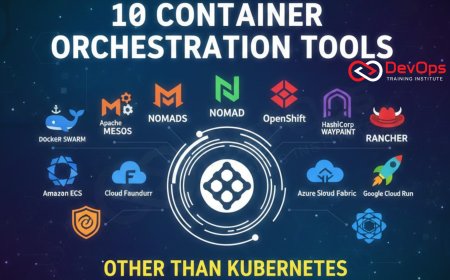
At the enterprise level, the ability to deploy applications consistently across thousands of servers requires an abstraction layer that decouples the application from the underlying operating system. Containerization, primarily with Docker, achieves this consistency, while orchestration tools, especially Kubernetes, handle the massive scaling, self-healing, and load-balancing required to run mission-critical applications across distributed clusters. Kubernetes is widely considered the ultimate scaling tool for modern applications.
These tools are fundamental to scaling because they enable high-density resource utilization and provide a standardized platform for application deployment, regardless of whether the underlying hardware is bare metal, a public cloud virtualization service, or a regional data center. Orchestrators simplify the complexity of running microservices by managing networking, storage, secrets, and health checks automatically. Furthermore, the ecosystem around Kubernetes supports sophisticated deployment patterns and policy enforcement through tools that are purpose-built to manage its declarative nature, ensuring that the desired state is maintained across every cluster.
The three most vital tools in this category are:
- Docker: The container platform that provides the core technology for packaging applications and their dependencies into portable images. At scale, Docker ensures that the application behaves identically in development, testing, and production, eliminating the infamous "it works on my machine" problem.
- Kubernetes: The de facto standard for container orchestration. Kubernetes automates the deployment, scaling, and management of containerized applications. It is the core scaling mechanism for microservices, providing resilience through self-healing and elasticity through automated scaling based on load.
- Argo CD: A Kubernetes-native continuous delivery tool that embraces the GitOps principle. Argo CD continuously monitors Git repositories for the desired infrastructure state and ensures that all clusters—from development to production—are synchronized, making large-scale cluster management predictable and auditable.
DevOps Scaling Tool Categorization
The transition to enterprise DevOps necessitates a toolchain that is integrated and traceable. This table summarizes the functional role of the 20 tools and how they address the unique challenges of scaling within large, complex organizations.
| Category | Key Tools | Enterprise Challenge Addressed |
|---|---|---|
| CI/CD Orchestration | Jenkins, GitLab CI/CD, GitHub Actions | Automating releases across thousands of artifacts and enforcing pipeline standardization. |
| Configuration Management | Ansible, Chef, Puppet | Ensuring configuration consistency and compliance across massive, heterogeneous fleets of servers. |
| Infrastructure as Code (IaC) | Terraform, AWS CloudFormation, Pulumi | Managing multi-cloud resource provisioning and providing auditable, repeatable infrastructure changes. |
| Container Orchestration | Kubernetes, Argo CD, Docker | Automating application scaling, self-healing, and deployment across distributed compute clusters. |
| Observability & Monitoring | Prometheus, Grafana, Datadog | Gaining a single, correlated view of metrics, logs, and traces across the vast, complex service landscape. |
Observability The Key to Maintaining Operational Health
As the number of microservices and deployment targets increases, the complexity of diagnosing and resolving incidents grows exponentially. Observability tools are the lifeblood of scaled DevOps, providing the ability to ask arbitrary questions about the system's state through logs, metrics, and traces. Without a centralized, high-volume monitoring solution, large organizations operate with massive blind spots, leading to prolonged Mean Time to Resolution (MTTR) and costly downtime. Enterprise-grade observability must handle petabytes of data and provide correlation across application performance, infrastructure health, and business metrics.
The goal is to move beyond simple "is it up?" checks to deep, contextual analysis of why a service is slow or why an error occurred. This is achieved by standardizing on metric collection agents and log formats across all development teams. The dashboard and alerting layer must be intelligent, reducing alert fatigue by correlating related events and providing actionable insights. By embedding observability into the CI/CD pipeline, teams ensure that every service deployed is emitting the necessary telemetry from day one, making the vast infrastructure manageable and transparent.
Here are four tools critical for enterprise observability:
- Prometheus: The open source tool for time-series metrics collection and alerting. Its pull-based model is highly efficient for scraping metrics from Kubernetes and other dynamic environments, making it the industry standard for cloud-native metric gathering at scale.
- Grafana: The open source visualization layer that connects to numerous data sources (including Prometheus and ElasticSearch) to create standardized, shareable dashboards. Its templating feature allows SRE teams to create unified dashboards that can be instantly applied across hundreds of services.
- ELK Stack (Elasticsearch, Logstash, Kibana): The powerful stack for log aggregation, search, and analysis. Elasticsearch and Logstash handle the ingestion and indexing of massive volumes of logs, while Kibana provides the visual interface for security analysis and advanced troubleshooting across the entire system.
- Datadog: A commercial full-stack observability platform that unifies metrics, logs, and tracing into a single agent and interface. Datadog excels at providing a simple, integrated experience for multi-cloud monitoring, making it a strong choice for reducing the operational complexity of large, hybrid environments.
Security, Access, and Incident Management at Scale
Security and access controls become more complex with every new team, service, and environment. In enterprise DevOps, security must be automated and embedded into the pipeline (DevSecOps), and access to sensitive servers and databases must be strictly controlled and auditable. Furthermore, when incidents inevitably occur, the organization needs a robust, reliable system for managing alerts and coordinating response across geographically distributed and siloed teams.
These tools automate the governance and human factors of scaling. They ensure that only authorized personnel have access to production resources, eliminate the need for shared SSH keys, and provide a clear audit log of all activities. Incident management tools are essential for cutting through alert noise, ensuring that the right on-call person is notified immediately, and orchestrating the response process efficiently. These platforms are the crucial final layer that maintains stability, compliance, and rapid recovery at the immense scale of enterprise operations.
Here are four tools focused on scaling security, access, and incident response:
- StrongDM: A secure infrastructure access platform that centralizes and audits access to all technical resources (databases, servers, Kubernetes clusters). It eliminates VPNs and shared credentials, enforcing least-privilege access and providing a comprehensive, non-repudiable audit trail of every command and query, which is vital for compliance.
- HashiCorp Vault: A dedicated secrets management tool that securely stores, controls access to, and dynamically generates sensitive data like API keys and database credentials. It is a critical component for eliminating hard-coded secrets from codebases across the entire enterprise.
- PagerDuty: A leading incident management platform that intelligently routes alerts from monitoring tools (like Prometheus or Datadog) to the correct on-call teams. It automates escalation policies, on-call schedules, and conference bridge creation, significantly reducing MTTR during critical failures across the organization.
- Slack/Microsoft Teams: While primarily communication tools, they are essential for DevOps at scale. They integrate with monitoring and incident management tools to create automated communication channels for alerts and incident coordination, breaking down communication silos between development, operations, and business teams.
Conclusion The Unified Enterprise Toolchain
Scaling DevOps in an enterprise environment is a monumental task that cannot be accomplished by simply adding more tools or people; it requires a deliberate, strategic investment in platforms that standardize processes, enable self-service, and enforce governance through automation. The 20 tools presented here represent the industry-leading solutions for achieving this level of operational maturity, spanning every phase of the software delivery lifecycle from code commitment to production monitoring and incident recovery.
The successful enterprise infrastructure uses these tools not in isolation, but as an interconnected chain. Terraform provisions the virtualization layer, Kubernetes runs the containers, Jenkins automates the build, Argo CD deploys the state, and Prometheus/Grafana provide the continuous feedback loop. By unifying these functions and standardizing the usage of these platforms across business units, organizations can successfully break down the traditional silos, mitigate the risk inherent in managing vast, complex systems, and ensure that their development velocity remains agile and competitive, regardless of the organization's immense scale and complexity.
Frequently Asked Questions
What is the biggest roadblock to scaling DevOps in large companies?
The biggest roadblock is organizational and cultural silos, followed by fragmented toolchains and reliance on manual approval processes.
What are the DORA metrics, and why are they important for scaling?
DORA metrics measure software delivery performance, providing standardized metrics to track velocity and stability across teams.
How does Kubernetes aid in enterprise DevOps scaling?
Kubernetes automates scaling, deployment, and health checks of containerized applications, managing complexity across many servers automatically.
What is the function of Terraform in a scaled environment?
Terraform manages and provisions all infrastructure across multiple public and private clouds using standardized, reusable code modules.
Why is the use of an open source tool like Jenkins still common in large enterprises?
Jenkins' massive plugin ecosystem allows it to integrate with virtually any proprietary or legacy system needed in an enterprise environment.
What is Configuration Management (CM) used for in a large company?
CM tools like Ansible and Puppet enforce consistent, compliant configurations across thousands of geographically distributed servers reliably.
What is the difference between CM and IaC?
IaC provisions the raw infrastructure, while CM configures the software and settings running on that infrastructure system itself.
How does GitOps, using Argo CD, improve deployment governance?
GitOps makes Git the single source of truth for the desired state, ensuring all deployments are auditable, verifiable, and automatically synchronized.
What is virtualization’s role now that containers are popular?
Virtualization still hosts the underlying operating system and kernel upon which containers run, providing the necessary hardware abstraction layer.
What is the main benefit of observability over simple monitoring?
Observability allows teams to ask arbitrary questions about the system state, enabling root cause analysis rather than just reporting known failures.
How does StrongDM enhance enterprise security access?
StrongDM centralizes and audits all privileged access, enforcing least privilege and eliminating the need for shared credentials across teams.
Why is standardized logging so important at scale?
Standardized logging allows tools like the ELK stack to aggregate and correlate events from hundreds of different servers and services efficiently.
What is the purpose of PagerDuty in a DevOps workflow?
PagerDuty manages incident response by routing urgent alerts and automating on-call escalations to reduce Mean Time to Recovery (MTTR).
How do operating system differences affect tool choice at scale?
Enterprise tools must support a heterogeneous mix of operating systems (Linux, Windows) for management, requiring cross-platform compatibility from tools like Ansible.
What is the primary role of HashiCorp Vault in enterprise scaling?
Vault securely manages and distributes secrets, ensuring sensitive credentials are never hard-coded and are only provisioned at the time of deployment.
What's Your Reaction?
 Like
0
Like
0
 Dislike
0
Dislike
0
 Love
0
Love
0
 Funny
0
Funny
0
 Angry
0
Angry
0
 Sad
0
Sad
0
 Wow
0
Wow
0

![100+ Azure DevOps Interview Questions and Answers [Updated 2025]](https://www.devopstraininginstitute.com/blog/uploads/images/202509/image_140x98_68c40aa9a3834.jpg)




![Future Scope of DevOps Careers in Pune [Updated 2025]](https://www.devopstraininginstitute.com/blog/uploads/images/202510/image_140x98_68e3a84652312.jpg)