

















![Kong Interview Preparation Guide [2025]](https://www.devopstraininginstitute.com/blog/uploads/images/202509/image_430x256_68dbb95326997.jpg)









Top 12 DevOps Best Practices for High-Performance Teams
Discover the top 12 proven DevOps best practices that leading engineering teams use in 2025-2026 to ship faster, reduce downtime, improve security, and achieve true continuous delivery. Perfect for engineering managers, SREs, and platform teams building high-performance cultures.

Introduction
DevOps is no longer optional. In 2025, high-performance organizations deploy multiple times per day, recover from incidents in minutes, and maintain near-zero unplanned downtime. The difference between average teams and elite performers comes down to consistently applying a small, proven practices. This guide shares the exact 12 DevOps best practices that top companies like Google, Netflix, Amazon, and fast-moving startups follow. A secure and well-architected Virtual Private Cloud (VPC) forms the foundation for most modern production workloads.
1. Implement Infrastructure as Code (IaC)
- Use Terraform or Pulumi as the single source of truth for all environments
- Store all IaC in Git with proper code reviews and automated testing
- Enforce immutable infrastructure – never make manual changes to running systems
- Apply the same IaC across dev, staging, and production
- Use modules and DRY principles to avoid configuration drift
- Run plan/apply in CI pipelines before any merge
- Tag and version everything for audit and rollback
2. Shift Security Left (DevSecOps)
Security must be everyone’s job from day one. Integrate automated security scanning into every stage of the pipeline: SAST, DAST, SCA, container scanning, and secret detection. Make security gates non-negotiable but fast. High-performance teams fix vulnerabilities before code reaches main, not after production incidents.
3. Adopt Trunk-Based Development
- Keep branches short-lived (less than 24 hours)
- Commit directly to main/trunk at least daily
- Use feature flags to hide incomplete features
- Never use long-lived release or environment branches
- Pair this with comprehensive automated testing
- Enable faster feedback and fewer merge conflicts
4. Automate Everything (Especially Testing)
Manual processes kill velocity. Elite teams automate unit, integration, contract, performance, chaos, and security tests. Tests run on every commit. If tests take longer than 10 minutes, parallelize or optimize them. Fast, reliable feedback loops are the heartbeat of high-performance DevOps.
5. Build Observability, Not Just Monitoring
- Collect metrics, logs, traces, and profiles in one platform
- Use OpenTelemetry for standardized instrumentation
- Create meaningful SLOs and error budgets
- Implement distributed tracing across services
- Set up intelligent alerting with runbooks
- Enable on-call engineers to debug in minutes
- Regularly review and refine dashboards
Proper network segmentation using public and private subnets is essential for observability and security in production.
6. Practice Blameless Post-Mortems
Incidents will happen. The goal is to learn, not punish. Every production incident gets a written post-mortem with timeline, root cause, impact, and action items. Focus on system improvements, not individual blame. Teams that master blameless culture recover faster and prevent repeat issues.
7. Reduce Toil Through Automation
- Measure and track toil weekly
- Automate repetitive manual tasks first
- Build self-service tools for developers
- Create golden paths and paved roads
- Empower developers to deploy without tickets
- Target less than 50% engineer time on toil
Self-service platforms often rely on secure outbound connectivity through NAT Gateways so private workloads can pull updates safely.
8. Use GitOps for All Deployments
Git is the single source of truth. All infrastructure and application changes flow through pull requests. Tools like ArgoCD or Flux automatically sync desired state from Git to clusters. This gives full audit trail, rollback capability, and eliminates configuration drift forever.
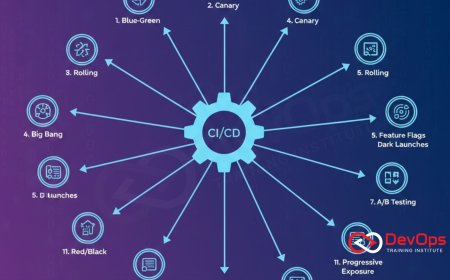
9. Implement Progressive Delivery
- Use feature flags for dark launches
- Roll out changes to 1% of traffic first
- Employ canary deployments and automated rollbacks
- Test in production with real traffic safely
- Combine with observability for instant feedback
- Reduce blast radius of bad releases dramatically
- Achieve zero-downtime deployments routinely
Traffic routing for canaries and blue/green deployments is made possible by intelligent route tables and Internet Gateways working together inside the VPC.
10. Foster a Platform Engineering Mindset
Treat internal developer platforms as products. Platform teams build golden paths, self-service portals, and standardized tooling so application teams can move fast without reinventing wheels. Great platform engineering can improve developer productivity by 2-3x.
11. Measure DORA Metrics Religiously
- Track deployment frequency
- Measure lead time for changes
- Monitor change failure rate
- Watch time to restore service (MTTR)
- Use these four metrics as North Star
- Review trends monthly with leadership
Multi-region or multi-account setups often use VPC Peering to keep latency low while maintaining isolation.
12. Cultivate Psychological Safety
None of the technical practices work without trust. Teams with high psychological safety experiment more, report incidents faster, and innovate quicker. Leaders must model vulnerability, celebrate learning from failure, and protect team members who take smart risks.
Conclusion
These 12 DevOps best practices separate elite engineering organizations from the rest. Start with culture and psychological safety, automate relentlessly, measure everything that matters, and never stop improving. When implemented together, they create a flywheel of faster delivery, higher reliability, and happier teams. Pick three practices to focus on this quarter – small consistent wins compound into extraordinary performance over time.
Frequently Asked Questions
What are the four DORA metrics?
Deployment Frequency, Lead Time for Changes, Change Failure Rate, and Time to Restore Service.
Is DevOps still relevant in 2025?
More than ever. Elite performers are 2-3x faster and more reliable than average teams.
Should we do DevOps or platform engineering?
Both. DevOps is the culture and practices; platform engineering is how you scale them.
What's better: monorepo or multi-repo?
Most high-performance teams use monorepos with strong trunk-based practices.
How many deploys per day is good?
Elite teams deploy multiple times per day; low performers deploy monthly or less.
Can small teams practice DevOps?
Yes. The practices scale down beautifully and often give small teams outsized advantages.
Feature flags or feature branches?
Feature flags with trunk-based development is the winning pattern in 2025.
Is Kubernetes required for DevOps?
No. Many elite teams run serverless or simple VMs with excellent DevOps practices.
How long does it take to see results?
Most teams see meaningful improvements within 3-6 months of focused effort.
Who owns DevOps in the organization?
Everyone. DevOps is a culture, not a job title or team.
What's Your Reaction?
 Like
0
Like
0
 Dislike
0
Dislike
0
 Love
0
Love
0
 Funny
0
Funny
0
 Angry
0
Angry
0
 Sad
0
Sad
0
 Wow
0
Wow
0



![100+ Azure DevOps Interview Questions and Answers [Updated 2025]](https://www.devopstraininginstitute.com/blog/uploads/images/202509/image_140x98_68c40aa9a3834.jpg)






![Future Scope of DevOps Careers in Pune [Updated 2025]](https://www.devopstraininginstitute.com/blog/uploads/images/202510/image_140x98_68e3a84652312.jpg)