










![Kong Interview Preparation Guide [2025]](https://www.devopstraininginstitute.com/blog/uploads/images/202509/image_430x256_68dbb95326997.jpg)






10 Kubernetes CrashLoopBackOff Fixes You Must Know
Mastering Kubernetes requires a deep understanding of common errors like the dreaded CrashLoopBackOff status. This comprehensive guide explores ten essential fixes to stabilize your cluster environment, covering everything from resource limits and environment variables to liveness probe configurations and permission issues. By following these professional troubleshooting steps, you can ensure high availability and seamless performance for your containerized applications across any cloud infrastructure or local development environment today.
Introduction to Kubernetes Stability
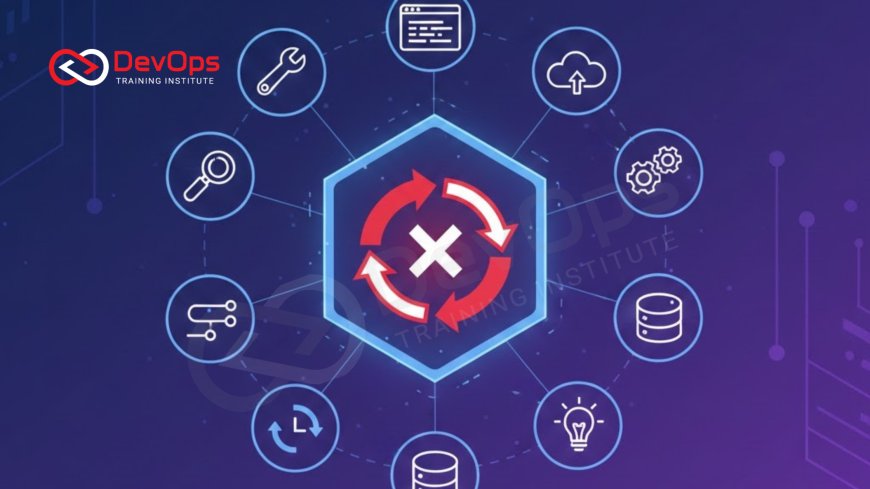
Kubernetes has revolutionized the way we deploy and manage applications by providing a robust framework for container orchestration. However, even the most experienced engineers frequently encounter the frustrating CrashLoopBackOff error message when deploying new services. This status indicates that a pod is repeatedly failing to start, forcing the system to wait between restart attempts to prevent overloading the entire cluster infrastructure.
Understanding the root causes of these failures is essential for maintaining a healthy production environment and ensuring that your users experience no downtime. When a container crashes, Kubernetes attempts to restart it automatically, but if the underlying issue persists, the wait time between restarts increases exponentially. This cycle can be broken by systematically investigating logs, configurations, and resource allocations to identify the specific reason why the application cannot maintain a running state.
Analyzing Container Logs for Hidden Errors
The first step in any troubleshooting journey involves looking inside the container to see what the application is reporting right before it terminates. By using the command line interface, developers can retrieve the standard output and error streams which often contain descriptive messages about missing files or database connection failures. These logs act as a window into the runtime environment and are usually the quickest way to pinpoint a software bug or a configuration mismatch.
In many cases, the application might be failing because it cannot find a specific configuration file or an environment variable that it expects to be present at startup. When you examine the logs, look for stack traces or specific exit codes that indicate whether the crash was intentional or caused by an unhandled exception. Identifying these patterns allows you to make precise adjustments to your deployment manifests without guessing which part of the system is currently broken.
Managing Resource Limits and Memory Constraints
Resource management is a critical aspect of containerized applications, as providing too little memory or CPU can cause the operating system to kill the process. If a container exceeds its defined memory limit, the Kubernetes node will trigger an Out Of Memory event, leading to an immediate termination and a subsequent restart loop. Monitoring the resource usage of your pods ensures that they have enough breathing room to handle peak traffic loads effectively.
Conversely, setting resource limits too high can lead to inefficient cluster utilization and higher costs for your organization. Striking the right balance involves profiling your application under load and setting realistic requests and limits in your YAML files. This practice not only prevents CrashLoopBackOff issues but also helps the Kubernetes scheduler place your pods on nodes that have sufficient capacity to support their operational requirements over long periods.
Verifying Environment Variables and Secrets
Applications often rely on external data such as API keys, database credentials, and feature flags to function correctly in different environments. If these variables are missing or incorrectly formatted, the application may fail to initialize and enter a crash loop immediately upon deployment. It is vital to cross-reference the keys defined in your deployment manifest with the actual values stored in your Kubernetes secrets and configmaps.
A common mistake is a simple typo in the name of a secret or a missing entry in a configuration map that the application expects. When debugging, you should check if the pod has the necessary permissions to access these secrets, as Role Based Access Control policies might be restricting the service account. Ensuring that all dependencies are correctly injected into the container at runtime is a fundamental step in achieving a stable and predictable deployment process.
Summary of Common CrashLoopBackOff Causes
| Error Type | Typical Symptom | Primary Fix |
|---|---|---|
| OOMKilled | Memory limit exceeded | Increase memory limits |
| Config Error | Missing environment variable | Update ConfigMap or Secret |
| Probe Failure | Liveness probe timeout | Adjust probe delay or threshold |
| File Not Found | Path error in entrypoint | Verify Dockerfile and volume mounts |
Correcting Liveness and Readiness Probe Misconfigurations
Kubernetes uses probes to determine the health of your containers and decide whether they should receive traffic or be restarted. If a liveness probe is configured too aggressively, it might kill a container that is simply taking a long time to start up or performing a heavy initial task. This creates a cycle where the pod is terminated just as it is about to become ready, leading to a permanent state of instability.
To fix this, you should review the initial delay seconds and the timeout settings for your probes to ensure they align with the actual startup time of your application. Sometimes it is helpful to increase the failure threshold to allow for temporary network glitches or slow database responses during the boot phase. Properly configured probes are essential for self healing systems, but they must be tuned carefully to avoid becoming the cause of the very failures they are meant to detect.
Checking Permissions and Security Contexts
Security is a top priority in modern cloud environments, and often pods fail because they do not have the right permissions to perform required actions. If your container needs to write to a specific directory or bind to a privileged port, it might be blocked by the security context defined in the pod specification. These restrictions are often enforced by admission controllers which monitor every request to the cluster.
Investigating the cultural change within a team often reveals that security policies have been tightened without updating the application manifests. You should verify that the user ID assigned to the container has the necessary file system permissions and that any required ServiceAccounts are correctly linked. Resolving these authorization issues is a key part of maintaining a secure yet functional cloud architecture that supports automated deployments.
Validating Container Images and Entrypoints
Sometimes the problem lies within the containerd runtime or the image itself rather than the Kubernetes configuration. If the entrypoint script has a syntax error or points to a non existent file, the container will exit immediately with an error code. It is a good practice to test your images locally using a standard container engine before pushing them to a remote registry for deployment in a cluster.
Common issues include incorrect file permissions on the start script or a mismatch between the base image architecture and the node hardware. When you are using GitOps workflows, ensure that the tags and digests in your repository match the versions you intend to deploy. Double checking the command and arguments passed to the container can save hours of debugging time by catching simple typos early in the release cycle.
Conclusion and Best Practices
Fixing CrashLoopBackOff errors is a fundamental skill for anyone working with Kubernetes, requiring a blend of log analysis, resource tuning, and configuration validation. By systematically working through the possible causes, from simple environment variable typos to complex memory leaks, you can build more resilient applications that thrive in dynamic cloud environments. Remember that every crash is an opportunity to learn more about how your application interacts with the underlying toolchains and infrastructure.
To maintain high availability, always implement comprehensive monitoring and alerting that can notify your team the moment a pod enters a restart loop. Using ChatOps can help your team collaborate more effectively during these incidents by bringing diagnostic data directly into your communication channels. Ultimately, a proactive approach to stability will reduce the frequency of these errors and allow your development team to focus on shipping features rather than fighting fires.
Frequently Asked Questions
What is the primary reason for a CrashLoopBackOff status in Kubernetes?
The primary reason is that a container starts and then crashes repeatedly, causing Kubernetes to delay the next restart attempt for safety.
How can I view the logs of a crashing pod?
You can use the kubectl logs command with the previous flag to see the output from the last failed instance of the container.
What does the OOMKilled error code signify in a pod?
This code means the container was terminated by the system because it tried to use more memory than its defined limit allowed for.
Can a missing secret cause a pod to restart infinitely?
Yes, if the application requires a secret to start and it is missing, the process will fail immediately and enter a restart loop.
How do I check if my liveness probe is failing?
Use the kubectl describe pod command to look at the events section which will explicitly list any failures related to configured health probes.
Is it possible for a pod to crash due to network issues?
Connectivity problems with databases or external APIs during the initialization phase can prevent an application from starting correctly and cause it to crash.
What is the difference between a restart and a CrashLoopBackOff?
A restart is the action of starting the container again while the backoff is the increasing delay between those repeated restart attempts.
How do I fix a permission denied error in a container?
You should check the security context in your YAML and ensure the container user has the rights to the files it needs.
Can an incorrect entrypoint script lead to this error?
Yes, if the script specified in the Dockerfile is missing or has the wrong path, the container will fail to launch every time.
Should I always set resource limits for my containers?
Yes, setting limits prevents a single malfunctioning container from consuming all the resources on a node and affecting other critical services or pods.
How does the scheduler react to a crashing pod?
The scheduler generally keeps the pod on the same node while it attempts to restart unless the node itself is under heavy pressure.
What role do environment variables play in pod stability?
Environment variables provide essential configuration data that allowed applications to connect to other services and operate correctly within the cluster environment.
How can I identify a crash loop using kubectl?
Running the kubectl get pods command will show the status column as CrashLoopBackOff and the restart count will be a high number.
Will updating a ConfigMap automatically fix a crashing pod?
Updating the map is necessary but you might need to restart the pod manually for it to pick up the new configuration values.
What is the best way to prevent CrashLoopBackOff in production?
Use thorough testing in staging environments and implement robust health checks to catch issues before they impact your actual users or customers.
What's Your Reaction?
 Like
0
Like
0
 Dislike
0
Dislike
0
 Love
0
Love
0
 Funny
0
Funny
0
 Angry
0
Angry
0
 Sad
0
Sad
0
 Wow
0
Wow
0




![100+ Azure DevOps Interview Questions and Answers [Updated 2025]](https://www.devopstraininginstitute.com/blog/uploads/images/202509/image_140x98_68c40aa9a3834.jpg)






![Future Scope of DevOps Careers in Pune [Updated 2025]](https://www.devopstraininginstitute.com/blog/uploads/images/202510/image_140x98_68e3a84652312.jpg)